What kind of driver are you raising? – Australian Campaign from TAC

What kind of driver are you raising? – Australian Campaign from TAC

Parents who expose their children to dangerous and aggressive driving are being targeted in a new road safety campaign, aimed at changing bad driving behaviours that are passed onto young people. Road safety attitudes often start from a young age and when parents act is bad role models to their children, road safety attitudes are often adopted by youth later on in their lives.

The Traffic Accident Commission’s (TAC) new advertising campaign highlights the link between behaviour young people are exposed to, and their own driving behaviour as adults. It draws on international research showing children aged between five and 12 who are exposed to dangerous drivers, often go onto drive dangerously themselves.

The adverts will be rolled out across Victoria, Australia from today, and show a young boy mimicking aggressive and dangerous driving from the back seat of a car.TAC spokesman Joe Calafiore said children under 12 were heavily influenced by the behaviour of their parents.

“You cannot underestimate the importance of parental influence,” he said.

“Your kids are watching you the whole time whether you’re conscious or subconscious of it and that’s what this campaign is really building on.”The campaign is aimed at reducing the number of young adults involved in crashes on the state’s roads.

In 2014, more than a fifth of the drivers killed on Victoria’s road were aged between 18 and 25, according to the TAC. The commission’s figures show that age group only makes up about 14 per cent of licence holders in Victoria.

Roads Minister Luke Donellan said aggressive, speeding or distracted drivers were a menace on the roads.”We’re trying to get parents to focus on their own behaviour, to ensure that while they’re driving the car, they’re doing the right thing,” he said.

“It’s very much about trying to encourage your children to look at your behaviour, to behave better on the road.”

This message also makes a big impression on young parents who are absorbed in the social media world, even while driving. Young parents with children who are sitting the car are passing on messages of bad road safety practise. It is in their hands to set a good example to their children from an early age. 

Hope for the most vulnerable: Zoleka Mandela on her child safety mission

Hope for the most vulnerable: Zoleka Mandela on her child safety mission

As part of the Huffington Post’s Global Motherhood feature with the tagline One Story, One World; Zoleka Mandela, granddaughter of the late great Nelson Mandela writes about her experience in road safety. Zoleka has been a passionate road safety advocate since the tragic death of her daughter Zenani, who died on a South African Road. Her piece in the Huffington Post draws poignant attention on the need to protect the most vulnerable in the world; children and places focus on the #SaveKidsLives campaign.

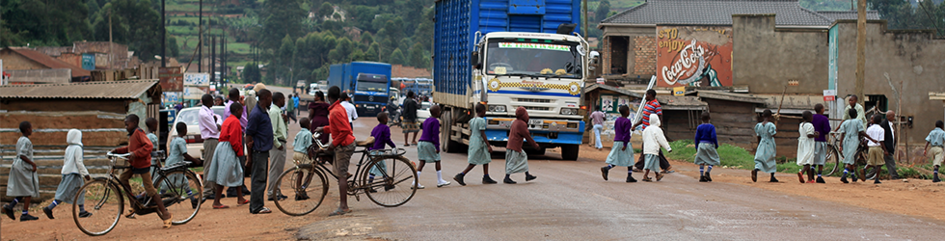
When I visited the Sivile Primary School in South Africa’s Western Cape, I was struck by a feeling. It was a feeling of the vulnerability of the children all around me, who are put at huge risk every single day. It is a threat and a risk they face for what should be a simple journey. Yet, they are placed in harm’s way just for trying to get to their school to gain an education.

Right in front of their houses in the very poor neighbourhood of Khayelitsha, sits a high speed road – the Jeff Masemola Highway. It’s a road that brings trucks and cars at 90 km/h right through the settlement, the traffic rattling the corrugated iron roofs of the shacks where the children live. And it is a road that brings fear and misery every day to the schoolchildren of Sivile Primary.

I visited the Sivile Primary last year, for the launch of the Safe Schools project which I am privileged to be involved in as part of my work campaigning for the UN Decade of Action for Road Safety. The project is the first of its kind in South Africa but is in line with similar initiatives supported by the Road Safety Fund globally, including in Tanzania, Mexico and Costa Rica.

When you stand at the Jeff Masemola Highway outside the school, you appreciate the difficulty the children of Khayelitsha face as they try to get to school early each day. Hundreds of children stand by the road every morning – running and then stopping to avoid trucks and cars that clatter by, inches from their faces. In fact, more than one in five children reported that they had been involved in a road crash in some way – a shockingly high number.

The Safe Schools project, which is being supported by Janssen and the FIA Foundation, is coordinated by ChildSafe South Africa, which is a member of Safe Kids Worldwide. It has researched the problem and has found solutions, including safe infrastructure, education, collaboration and sustainability. Now that these solutions are being implemented, the students at Sivile have a better chance of getting to school safely.

Zoleka Mandela takes a #Safie for the #SaveKidsLives Campaign

I helped launch the project in May 2014 with the FIA Foundation’s Road Safety Fund and our partners. For Janssen, the principal donor, the project continues its support for the Decade of Action for Road Safety. I was honoured to speak about the initiative during my presentation at the Safe Roads | Safe Kids Global Road Safety Summit, when leaders from 30 countries met in Washington, D.C. at the end of last year to collaborate on helping our most vulnerable road users. What struck me then was the momentum that is building around the world to support our children. The Summit was an opportunity to learn from others. And at the same time, it was encouraging to hear that much can be learned from our communities in South Africa.

Lots of people from around the world have already signed up the #SaveKidsLives Campaign

When I attended the launch at Sivile, I could sense the vulnerability of the students, but I could also feel a tremendous sense of hope for children in South Africa and around the world. Road traffic injury is a man-made epidemic and a serious burden on children and young people globally, but it is preventable. The vaccines for this epidemic are readily available: safe crossings, protected footpaths, and speed restrictions, together with well-designed education programmes. No child should be denied protection on our roads. With a clear voice we must call for global support to ensure that road safety becomes a development priority.

This is the message of “Save Kids Lives,” the global campaign for children’s road safety which I’ve been privileged to help launch. It calls on policymakers to take strong action to improve road safety for children everywhere. The campaign has been gathering thousands of supporters since it was launched, and our goal is to capture 100,000 signatures for the Child Declaration by Global Road Safety Week, from May 4 to May 10, 2015.

With projects like the Safe Schools initiative and the Save Kids Lives campaign, we are walking the walk, demonstrating how much can be achieved if we work together. We know that lives can be saved. Let’s collaborate and combat this leading killer of our children – the most vulnerable in our society, but who we value more than anything else. Together we can — and we must — Save Kids Lives.

—-

This article by Nelson Mandela’s granddaughter, Zoleka Mandela, was originally published by the Huffington Post’s Global Motherhood section in partnership with Johnson & Johnson.

Join the #SaveKidsLives campaign at www.savekidslives2015.org

Nelson Mandela’s granddaughter, Zoleka Mandela is an author, global advocate and South African campaigner on road safety and cancer. Her global road safety campaigning is in memory of her daughter, Zenani Mandela who was tragically killed in a road crash in 2010 aged only 13. Zoleka has been helping to lead the #SaveKidsLives campaign for UN Global Road Safety Week. Credits for this article go to the FIA Foundation.

Brasilia Declaration on Road Safety – open for input and recommendations

Brasilia Declaration on Road Safety – open for input and recommendations

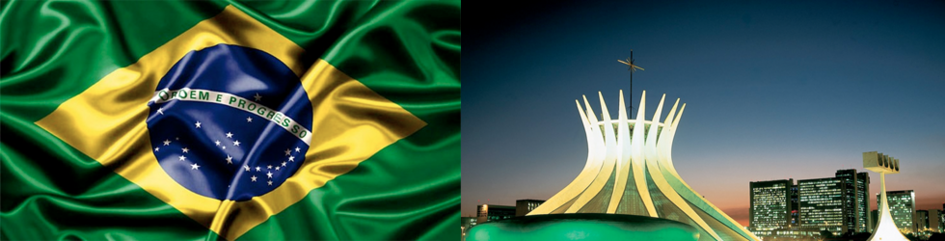
On 10 April 2014 the UN General Assembly adopted a resolution on “Improving global road safety”. The resolution was sponsored by the Russian Federation and co-sponsored by dozens of other countries. Among key decisions, the resolution welcomed the offer of the Government of Brazil to host the 2nd Global High Level Conference on Road Safety in 2015. The conference will be held in Brasilia, Brazil, on 18-19 November 2015.

Brazil would like to have a robust outcome document approved as a result of the Conference – the Brasilia Declaration – through a sound intergovernmental negotiation process involving consultation with other stakeholders.

Member States, UN organizations, intergovernmental organizations, NGOs and private sector entities are invited to share their comments and suggestions related to the zero draft of the “Brasilia Declaration on Road Safety”, which has been prepared through a preliminary process of consultation with the “Friends of the Decade”, in November 2014 and March 2015.

This web-based consultation will remain open until 2 May 2015, after which the negotiation process will be continued on an intergovernmental basis during June 2015, with finalization of the text expected in September/October 2015.

YOURS involvement in the meeting builds on the previous Ministerial Conference for Road Safety, Moscow, Russia.

Please send your submissions to the email roadsafetydeclar@who.int in a Word document. Please include your organization’s details (name, contact details) otherwise your submission will not be taken into consideration. Please refer to specific preamble and operative paragraphs in the Declaration by number (for example: add/exclude/change PP01, OP02, etc).

Submissions received after the deadline of the web-based consultation will not be considered.

All contributions received by email will be published on this website. All comments submitted will be subjected to review prior to them being posted on this web site and may need to be summarized and/or edited in consultation with the submitting party.

YOURS encourages the Youth Network for Road Safety to engage in this consultation process. We will also be working with the network to add comments and recommendations to the declaration.

FedEx publish Global Citizenship Report – road safety is key!

FedEx publish Global Citizenship Report – road safety is key!

Our friends at FedEx in United States have published their Global Citizenship Report for 2014. FedEx is a proud supporter of YOURS and we have supported our work since 2014. The report gives a focus on the depth of FedEx’s investment in communities around the world; they also focus on road safety.

FedEx annual global citizenship report covers FedEx enterprise-wide strategies, goals, programs and progress across four key pillars: Economic Development, Environment, Community and People. Data in this report covers each of their operating companies and all geographies.

FedEx global citizenship is about connecting the world responsibly and resourcefully. More than ever, we are aligning our citizenship goals with our business goals—to create the most far-reaching, impactful programs possible.

FedEx are one of the biggest company in the world with many trucks on the road. They care about road safety and invest in the cause.

FedEx’s business goals include strategic acquisitions, new hubs, and enhanced services to create a more profitable FedEx. But just as important, achieving such business goals strengthens the link between emerging economies and the global marketplace. FedEx are creating social and economic benefits for businesses from South Africa to South Korea. Growing our operations expands the possibilities for companies of a few employees to those with thousands on the payroll.

Last month, FedEx partnered with YOURS to run a pre-training workshop with NGOs at the Global Alliance of NGOs for Road Safety meeting in Marrakech, Morocco.

Pedestrian and Road Safety
With more than 90,000 FedEx trucks on the road, safety is one of our core values and top priorities. Every day, more than 3,200 people lose their lives and 136,000 are seriously injured in vehicle-related crashes around the globe. Almost half of those are “vulnerable” road users, including motorcyclists, pedestrians, and children.

FedEx have been working with Safe Kids Worldwide for over 15 years to prevent pedestrian injuries.

We share the road and the responsibility to make it a safer place by putting our logistics expertise to work. In addition to comprehensive internal driver safety policies, programs, and training, we support road safety initiatives around the world implemented by organizations such as:

  • Safe Kids Worldwide: a global network of organizations working together to prevent accidental injury.
  • EMBARQ: the World Resources Institute’s Center for Sustainable Transportation dedicated to connecting people to jobs safely and economically, including a Safety First driver training program in Mexico.
  • UN road safety programs: As a member of UN Road Safety Collaboration, we share safety information with governments, nonprofits, and businesses. We also support the UN Decade of Action for Road Safety in its goal to save five million lives by 2020.

FedEx is a proud supporter of YOURS and our efforts to #SaveKidsLives around the world. They recently assisted YOURS in delivering a pre-training workshop on NGO and Corporate Fundraising at the 4th Meeting of the Global NGO Alliance for Road Safety. A member of the UN Global Road Safety Collaboration, FedEx has ongoing road safety initiatives in more than 10 countries worldwide and has reached more than 10 million children with lifesaving road safety education programs.

TAC Cup in Australia targets youth with road safety messages

TAC Cup in Australia targets youth with road safety messages

The TAC Cup is an under 18 Australian rules football representative competition held in Victoria, Australia. It is based on geographic regions throughout country Victoria and metropolitan Melbourne with each team representing 12 Victorian regions. Sponsored by the Traffc Accident Commssion in Victoria,Australia.

The competition is one of the primary sources of recruitment for AFL clubs from Victoria. The TAC Cup provides an opportunity for talented regional players to participate in a high standard competition without having to relocate too far from their place of origin. The competition has a very successful pathway with players missing AFL selection often being recruited by semi-professional state, country and regional leagues throughout Australia.

The TAC Cup includes a strong road safety message and targets young drivers through sport.

The 2015 Youth Girls Academy Hoodie design was created by creative illustrator Marian Machismo. Watch the behind the scenes footage as Marian discusses the inspiration behind her design and the need to Be On The Ball when you’re behind the wheel. She talks about the need to focus when on the road using her sybmolic illustration work. This image has been transferred onto a hoodie for the Youth Girls Academy to remind them to ‘Be on the Ball’ behind the wheel too.

The 2015 TAC Cup Hoodie design was created by internationally recognized street style artist Travis Price. Travis created his hoodie design to make sure players understand the responsibility that comes with being on the road. His message is all about the tagline of the Cup, ‘Speed Hurts’.

TAC illustrate an inspiring and innovative fusion of sports, arts and road safety to drive their message home to young people.
 

Second Global High-Level Conference on Road Safety in Brazil

Second Global High-Level Conference on Road Safety in Brazil

In April 2014, the United Nations General Assembly (UNGA) welcomed the Brazilian Government’s offer to host the Second Global High-Level Conference on Road Safety through a resolution entitled “Improving global road safety”. The Conference will take place in Brasilia, Brazil on 18-19 November 2015, during the week in which many groups around the world mark the annual World Day of Remembrance for Road Traffic Victims. It is estimated that the Conference will bring together over 1,500 participants from 150 countries, among them Ministers of Health, Cities, Transport, and Interior; senior officials from United Nations agencies; representatives of civil society; and business leaders.

This Second Conference is inspired by and follows the First Global Ministerial Conference on Road Safety, held in Russia in 2009, which gathered more than 70 ministers and 1,500 participants from around the world. The main outcome was a Declaration urging the United Nations to call for the Decade of Action for Road Safety 2011-2020. Launched officially in May 2011, the Decade of Action aims at saving 5 million lives during this ten-year period. The Second Conference is a reaction to a serious public health problem that affects countries socially and economically, in particular low- and middle-income countries.

During the 67th United Nations General Assembly in September 2012, Brazil’s President Dilma Rousseff, welcomed the launch of the Decade of Action for Road Safety 2011-2020 and reaffirmed that “Brazil has mobilized actions to protect life, which will ensure the reduction of road traffic injuries, a leading cause of death among the world’s young population.” 

The First Global Ministerial Conference included a strong youth element including an opening speech by Floor Lieshout.

The Second Conference is timely, in that it takes place during the final negotiations of the goals which will be set as part of the post-2015 development agenda. It will also be an opportunity for Member States to exchange information and experiences on best practices in road safety. Delegates will review progress in implementation of the Global Plan for the Decade of Action for Road Safety 2011-2020 and identify concretely how to achieve its stated goal. It is a unique moment to bring a new impetus to the Decade of Action at its mid-point – a time to reaffirm commitments and propose new strategies for the next five years, in light of the scenario that should emerge from discussions on the new Sustainable Development Goals.

Main discussion items include:

  1. Key achievements in the Decade of Action
  2. Next steps in achieving the goal of the Decade of Action
  3. Road safety towards 2030
  4. Global targets and indicators for road safety
  5. Pillars of the Global Plan for the Decade of Action
  6. Emerging issues in road safety

The National Organizing Committee and the International Advisory Committee welcome the delegates of the Second Global High-Level Conference on Road Safety, and hope to meet you in Brasilia, Brazil. The conference takes place on the 18-19 November 2015. A youth element is planned for this event.