Unlimited speed limits in Northern Australia? Say no and sign the petition!

Unlimited speed limits in Northern Australia? Say no and sign the petition!

As a key risk factor to road safety, we know that over speeding on the roads leads to a higher risk of crashes and a higher risk of death or serious injury on collision. The facts are clear, if you speed, you have less control over your car, less chance of braking on time and more chance of death on collision. However, in the Northern Territory of Australia, proposals to reintroduce ‘unlimited speed limits’ on rural roads has caused an uproar amongst road safety campaigners.

It is clear that fatal crashes show a key correlation between speed increases. When speed is increased, fatal crashes also rise.

Recently, YOURS HQ was contacted by campaigners from Australia’s Northern Territory calling on international campaigners to unite and take a stand against the proposal to re-introduce unlimited speed limis. Back in 2006, unlimited speed limits existed in the Northern Terrority. This unlimited speed approach was repealed after the release of statistics from a damning report that found that three times as many people were killed on NT roads than elsewhere in Australia, per capita, with one person dying and nine seriously injured every week. Further, it found that 48% of fatal crashes in the country’s top end were non-alcohol related and that 2,613 cars ran red lights at 11 intersections in just 1 month.

Senior Research Fellow of Transport and Road Safety (TARS) Research at the University of New South Wales, Lori Mooren has begun an online petition calling for 1000 signatures to express to decision makers that international road safety campaigners, specialists and organizations are against this move. She said, ‘The risk of fatal crashes increases by 46% with a 5% increase in travel speed. Removal of speed limits would be a murderous act. And we can predict the number of bodies..’|

Concerted support against drugged driving is important – GHSA USA

Concerted support against drugged driving is important – GHSA USA

In the United States alone, studies have indicated that drugged driving has lead to a shocking correlation causing nearly a quarter of fatal crashes. The Office of National Drug Control Policy has bolstered its support to raise awareness and closely work with Federal partners, state and local authorities, community groups and organizations across the country to reduce drugged driving in America.

What is drugged driving?
“Have one [drink] for the road” was once a commonly used phrase in American culture. It has only been within the past 25 years that as a Nation, Americans and other nations have begun to recognize the dangers associated with drunk driving. And through a multipronged and concerted effort involving many stakeholders—including educators, media, legislators, law enforcement, and community organizations such as Mothers Against Drunk Driving—the Nation has seen a decline in the numbers of people killed or injured as a result of drunk driving. But it is now time that we recognize and address the similar dangers that can occur with drugged driving.

The principal concern regarding drugged driving is that driving under the influence of any drug that acts on the brain could impair one’s motor skills, reaction time, and judgment. Drugged driving is a public health concern because it puts not only the driver at risk but also passengers and others who share the road. However, despite the knowledge about a drug’s potentially lethal effects on driving performance and other concerns that have been acknowledged by some public health officials, policy officials, and constituent groups, drugged driving laws have lagged behind alcohol-related driving legislation, in part because of limitations in the current technology for determining drug levels and resulting impairment. *Source: DrugAbuse.gov

On September 6, 2012, GHSA announced its support of drugged driving per se laws and enhanced penalties for driving under the influence of multiple drugs.  With drugged driving per se laws, also known as zero tolerance laws,  a driver can be charged with impaired driving solely for having a drug is his/her system. Seventeen states currently have enacted these laws.  Additionally, GHSA is encouraging states to adopt an enhanced penalty for driving under the influence of multiple drugs, such as a combination of alcohol and another drug, or the combination of multiple drugs (other than alcohol).


“Drugged driving is a lot more complex than drunk driving because there are so many drugs and no national standards like there are for drunk driving. That makes it much more difficult for states to effectively address this growing problem. Drug per se laws are one of the few tools that states can use that will help get drugged drivers off the road.”
  – Barbara Harsha, GHSA Executive Director

In the United Kingdom, a focus on drugged driving has given rise to the ever creative Think! campaigns that raise awareness of drugging and driving and its impacts on driving. In a unique approach, the campaign illustrates how drivers who think concealing that they are drugged is much easier than concealing drink driving are challenged on that basis that ‘Your eyes will give you away’.

The UK’s drugged driving advert is featured in the right column.

Other myths challenged by the NZ Drug Foundation includes the notion that drugs will increase driving skills.

Some people think that if amphetamines work for fighter pilots then they must be good for my driving too. While amphetamines and other stimulant drugs may make you feel like you could fly a jet plane, there is a big difference between you heading out to party and an Air Force fighter pilot going into battle.  Fighter pilots are prescribed controlled doses of medical grade amphetamines and their health is constantly assessed and monitored. 

This is a far cry from the typical night out on the pills for a recreational stimulant drug user.  Many unknown factors around recreational stimulant use make it unsafe to drive – you can never be sure what it is you’re taking and how it’s going to affect you, you don’t know what dose you’ve taken, and chances are you’ve used other drugs during the course of the night and their effects could be masked by the stimulants you’re on.  Onto it you may feel, but a fighter pilot you are not!

Some factsResearchers put ecstasy users into a driving simulator after taking ecstasy, and they crashed more often than when they drove without any ecstasy in their systems[1]

  • Stimulant drugs were detected in the blood of 54 drivers who died on New Zealand roads between 2004 and 2009
  • One in ten potentially impaired drivers killed on New Zealand roads had a stimulant drug in their system when they crashed.
Brian’s Column: The tale of traffic lights and traffic police in Africa

Brian’s Column: The tale of traffic lights and traffic police in Africa

In most of the Western world the basic functionality of traffic lights are quite well respected. Most drivers will know that running a red light has the risk of a collision with on-coming traffic. In some cases running a red light automatically signals a camera flash and a subsequent fine at your door. However in Africa Brian explains that the traffic light is seldom respected and rather traffic flows are conducted like orchestra by traffic police. Room for modernization? Brian explores in his column…

Greetings to you superstars in solidarity with road safety – which is actually our safety. I hope by now, you have acquired your driving permits and that you didn’t ‘buy’ them! Because if you do, then you will precisely bring yourself to your creator sooner than you had imagined. And no one wants to hear of such news. We all would love to die a natural death (I hate to say that though). Lets avoid premature and avoidable deaths on the roads!

After recent elections in Somalia, the country is showing some signs of normality with the back to work stations of the traffic police.

Lets start with some good news from Somalia, Yipeeee! Traffic policemen are back on the streets of the Somali capital Mogadishu after a 20 year absence! That’s correct guys! Every one has known Somalia to be a home of a civil war but not any more because they got an elected president and their political environment seems to be getting sexier every minute that passes. Shukrannnnnnnn Allah!!! Now, the Somali traffic police aint messing around. They are professionally dealing with unlicensed drivers and cars with no number plates which are just some of the problems they face. Ok..now, lets go back to the topic:

Traffic police in some parts of Africa direct people even where there are traffic lights.

Africa’s urban roads are generally characterized by among many interesting features ‘non functional traffic lights’ and the ‘ever-smart traffic police’. This is no joke people. If you happen to be driving in the heart of many African cities, you will not miss seeing the traffic police directing the traffic to north, east, west and center. Good job these guys do, no?

Now, more interestingly, you will come to learn tha actually in the same place, there are traffic lights. These traffic lights are either non functional or they work but traffic give nothing about them. They may as well show red and all of a sudden, you will see the traffic police beckoning you to drive. Besides, the other drivers will have yelled already why you aint driving.

For female drivers, they are more patient and careful just in case you haven’t observed. The male drivers by then will have cursed the gods through their teeth and uttered all sorts of jibes and abuses. It even gets more interesting when it rains! Hahaha. Of course, you don’t expect the traffic police to be directing traffic in the rain. This coupled by non functional traffic lights (where they exist) bring in the much complained about ‘traffic jam’.

The ominous Africa traffic jam.

Now, we ask our selves. Who is cheaper? Hiring a traffic officer to direct traffic every day? Or Installing a traffic light which will work day and night? Is it rocket science that our planners can´t even reason this out? While we pedestrians and other road users will blame it all on our respective governments for successfully failing to ensure planned roads, it becomes our sole responsibility to ensure safety on our roads. Lets pledge to continue driving at recommended speeds and the absence of traffic lights or police officers shouldn’t be our primary reason to cause accidents on the roads. Much respects and stay safe!


Are teens mentally prepared to drive? A study from NOYS

Are teens mentally prepared to drive? A study from NOYS

The National Organization for Youth Safety (NOYS) regularly update us with the latest activities for youth and road safety issues in North America. Being the leading organization for youth safety; campaigns activities and studies, NOYS have published an article focusing on the cognitive abilities of teenagers to drive. Are teens mentally prepared to drive?

The teen brain – are they mentally prepared to drive?
An article by NOYS.

During the ages 12 and 25, the brain undergoes a massive reorganization. It undergoes extensive remodeling, resembling a network and wiring upgrade. Compared with adults, teens tend to make less use of brain regions that monitor performance, spot errors, plan, and stay focused – areas the adults seemed to bring online automatically. This lets the adults use a variety of brain resources and better resist temptation, while the teens used those areas less often and more readily gave in to the impulse – just as they’re more likely to look away from the road to read a text message.

Seeking Sensation

Seeking sensation isn’t necessarily impulsive. Teens might plan a sensation-seeking experience (a skydive or a fast drive) quite deliberately. Impulsivity generally drops throughout life, starting at about age 10, but this love of the thrill peaks at around age 15.

Also peaking during adolescence is risk-taking.

“In the brain, one chemical called dopamine stimulates needs and desires for excitement, and one called serotonin alerts the body to risk and prompts defensive actions.  In the brains of teens, dopamine far outweighs serotonin.  As one doctor has explained, dopamine is “the gas” and serotonin is “the brakes,” and teens are mostly gas and very little brake.” 
– Tim Hollister – There Is No Such Thing As A Safe Teen Driver

In research labs, teens take more chances in controlled experiments involving everything from card games to simulated driving. And it shows in real life, where the period from roughly age 15 to 25 brings peaks in all sorts of risky ventures, with 14- to 17-year-olds being the biggest risk takers. This age group dies of incidents of almost every sort at high rates. Most long-term drug or alcohol abuse starts during adolescence, and even people who later drink responsibly often drink too much as teens. Especially in cultures where teenage driving is common, this takes a gory toll: In the U.S., car crashes are the number one killer of teens.

Responding Strongly to Social Rewards
Teens take more risks not because they don’t understand the dangers but because they weigh risk versus reward differently. In situations where risk can get them something they want, they value the reward more heavily than adults do. With a still-immature ability to control impulses and the intensity of dopamine-enhanced feel-good emotions, teenagers frequently have an imbalanced risk/reward context. That results in bad decisions and foolish mistakes. Often, their decisions seemed right at the time, even if later, after something bad happens, they understand exactly why it was a bad decision.

A Challenge, but also an Opportunity

Many look at teens as the problems because of their irregular and irrational behavior and decision-making, but there is also an opportunity to reach teens during these difficult years. Understanding their own brain behavior at work may help the analytical side of their thinking put the brakes on dangerous driving.*

Parents can influence their teens in many ways and help deviate them from making dangerous decisions on the road. Parents should:

  • Start the conversation early and talk to their teens BEFORE they get their license.
  • Create a driving agreement that includes Graduated Driver’s Licensing (GDL) laws but is not limited to GDL laws.
  • Make sure the vehicle their teen is driving is safe and that their teen understands how to maintain the vehicle.
  • Apply distracted driving prevention technology to the car/phone.
  • Monitor their teen’s driving on a daily basis, especially during the first year.

Get dozens of FREE safe teen driving resources from reputable resources all from one place at the UnderYOURInfluence Parent Toolkit!

Sources Derived from:  
National Geographic 
FYIDriving 
Adolescent Brains are Works in Progress

What are you views?

95% of all crashes are human errors not accidents – Northern Ireland

95% of all crashes are human errors not accidents – Northern Ireland

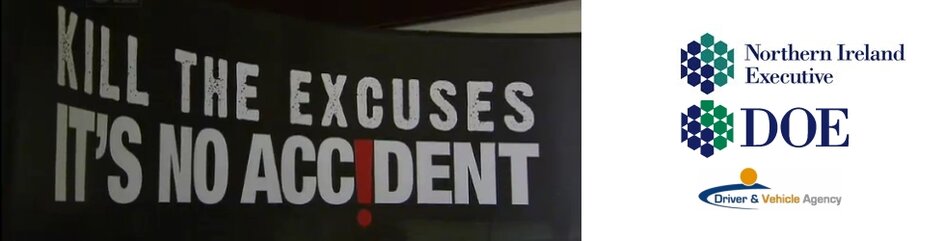
A new road safety campaign has been launched in Northern Ireland that focuses on the reality of road crashes; 95% of crashes in Northern Ireland are caused by human error and therefore could have been avoided. This challenges the notion that most crashes are ‘accidents’ that were unavoidable.


The ‘Excuses’ advert highlights that over 95% of collisions where someone is killed or seriously injured are the result of human error. The advert does not concentrate on speeding or drink driving, like previous campaigns.

“A crash is not fate; it is a man-made tragedy that cannot be denied by excuses. Crashes are preventable and we are all responsible. By treating the road as a shared space, we can reduce the risks of being involved in a collision,” said Northern Ireland Minister Alex Attwood.

The main causes of crashes are speeding, drink driving and driver carelessness and the advert also warns pedestrians, cyclists and motorcyclists not to take risks. Casualties are at their lowest point since 1931in Northern Ireland, with 28 people killed on our roads so far this year, but Chief Superintendent Peter Farrar said it is possible to further cut numbers.

“If everyone slowed down, did not drive after taking drink or drugs, wore a seatbelt and drove with more care and attention then the number of deaths and injuries will reduce,” he said.

The advert challenges the belief that crashes most crashes are accidents and unavoidable. This adverts explains that most crashes are caused by human error that were avoidable.

“Occasionally there will be times when something outside our control happens, like a flat tyre or a puncture, a dog walks out in front of the car; but 95% of the time it’s caused by human error.

“So I think all of us, if we look back, if we were in a collision, with hindsight would say well, actually there’s something I would do differently.”

Road Safety is no Accident – The theme of the World Youth Assembly 2007
The World Youth Assembly (WYA) that initatied the global youth movement for road safety brought together over 400 young people from over 100 countries to put road safety on the global agenda. This event operated under the banner of ‘road safety is no accident’.

Communications Officer, Manpreet Darroch said, ‘Calling avoidable crashes “accidents” gives the impression that the crash was not caused by human error but was rather fate. However, we know that if you are texting and driving, drink driving or undertaking other risky behaviour, a crash that is caused by this is not an accident. It is almost like proclaiming getting drunk was an accident while a person has been drinking all day’.

YOURS supports this campaign and urges drivers to challenge their own risky behaviour and be road safety models. There are no excuses to road safety and road safety is no accident.

View reactions to the advert at UTV Northern Ireland.

Take a Pledge for the #ItCanWait Campaign from AT&T and NOYS

Take a Pledge for the #ItCanWait Campaign from AT&T and NOYS

Over in North America, the campaign trail to stop texting and driving amongst young people is hotting up. The issue has become a major cause for concern in the United States and beyond and has been given national attention by ministers and governments in recent years. Now, AT&T the global mobile phone network has teamed up with NOYS (National Organization for Youth Safety) to promote

For every pledge, AT&T will donate $2 to NOYS to support their life-saving driving education programmes.

Texting while driving is no neglected issue in the United States and North America, lots of initatives here have potentially saved thousands of lives as well as preventing crashes and injuries. In recent news on the ‘anti-texting and driving’ pressure campaigns focused on young people, AT&T, the mobile network company have teamed up with NOYS to present the ‘It can wait’ campaign that calls on young people around the United States and beyond to pledge to never text and drive.

The It Can Wait website is dedicated uncovering the facts about texting and driving and urging people to pledge to never text and drive!

In addition to the pledge to stop texting behind the wheel, the campaign has equipped young people with a ‘Activation Kit’ which inlcudes statistics, research, tips and infographics such as the one below.

TEXTING TIPS
AT&T wants to inform all wireless users that safety comes first when you’re in the driver’s seat. Help keep all drivers safe on the road by following the tips:

  • Be Smart. Don’t text and drive. No text message is worth a life.
  • Be in control. Remember it’s your phone. You decide if and when to send and read texts so take control. Download AT&T DriveModeTM – an app designed to curb the urge to text and drive.*
  • Be Caring. Don’t send a text when you know your family member, friend or co-worker is driving.
  • Be Focused. Never use your phone to take pictures, send and read messages, record video, or watch TV while driving.
  • lol. cul8r. @wrk. ttyl. Texting has its own language. We use that language as a life line to connect to our friends, family and co-workers. We send pictures. We chat. We text.Be an Example. A recent survey2 found that 77 percent of teens say adults tell them not to text and drive – yet do it themselves “all the time.” Still, 89 percent of those teens said their own parents are good role models in terms of not texting while driving, so please lead by example.
  • Be Proactive. Take the pledge and commit to never text and drive: www.itcanwait.com.
  • Be Aware. If you have teens, some wireless companies offer parents an easy way to manage their teen’s phone functionality, such as the time of day the phone can be used for messaging, Web browsing or outbound calling. However, 911 calls are always allowed and parents can also set up “allowed numbers” that the teens can call as parents or others deem appropriate.