The Caravane launches in West Africa next week – find out more!

The Caravane launches in West Africa next week – find out more!

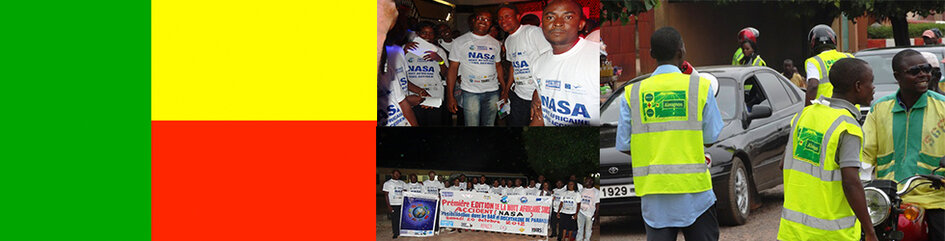
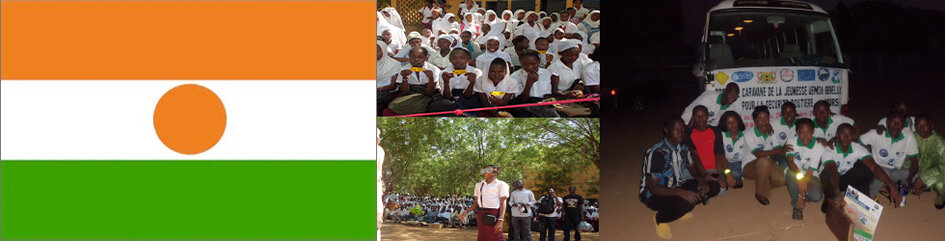
In partnership with the European Commission, RYD, African Road Safety NGOs and YOURS, the Caravane is a unique and exciting project that will begin its journey in Niger next week and head to 7 countries in North Western Africa disseminating information about road safety, training young people and working with locals to promote active road safety via a road safety caravan.

The First Caravan for Road Safety is taking place in countries part of the West African Economic and Monetary Union (UEMOA) and aims to officially launch the “Decade of Action for Road Safety 2011-2020” in the UEMOA and to promote youth participation in road safety and preventing road crashes in 7 African Member States!

The project is ambitious and unique and YOURS is proud to be partnered with the project hosting its online communications, social outreach and creating a legacy for the project via our YOURS style video trailers of the event as well as capturing the essence of the Caravane ‘live’ through out the project’s 60 day implementation.

As indicated in the map, the Caravane’s jouney is not a small one. Our specially fitted and adapted caravan will travel to 7 countries and bring road safety to these countries when it is welcomed with a specially organized concert and reception.

The site for Caravane is being hosted by YOURS at: www.youthforroadsafety.org/caravane and this will exist within the parametres of the YOURS website although updates from the ground as the Caravane reaches the 7 countries will be provided to us and a live updating of the Caravane site will take place through out the project’s implementation.

While the Caravane takes its journey seven countries who are all part of the West African Economic and Monetary Union (UEMOA), the Caravane aims to prevent road traffic injuries by:

  1. officially launching the `Decade of Action for Road Safety 2011-2020´ in the UEMOA region;
  2. promoting youth participation in road safety;
  3. allowing young Africans to share experiences and good practices in road safety;
  4. advocating for youth and road safety issues at high level officials;
  5. designing a common road safety campaign in the UEMOA region.

This project can also be read in conjunction with the EU Policy orientations for Road Safety 2011-2020 and with the European Youth in Action programme launched by the European Commission and called `Youth in the World´.  Therefore two NGOs based in the European Union will offer their help and share know-how from good practices used in the EU (thanks to RYD) and worldwide (thanks to YOURS).

YOURS will be travelling to Niamey – Niger next week to meet with the partners of the Caravane project and update them on the latest plans to publicise the programme online as well instructions for the video shooting. YOURS is proud that we will train the conductors of the Caravane’s journey in Peer Education and elements of the YOURS – Youth and Road Safety Action Kit. This will give the facilitators extra skills when dealing with young people in Africa via the Caravane. As well as this, YOURS has already drafted the African Youth Declaration for Road Safety that the Caravane’s implementors will use as they enter the countries and meet with heads of state, ministers for transport and road safety.

This project will be an exciting and engaging one and we are looking forward to keepin you updated. We will start with a report from the Niamey launch next week including interviews with the key players in the Caravane.

Road Safety in Canada – a view from our North American representatives

Road Safety in Canada – a view from our North American representatives

Our North American CORE Group representative Jennifer Heatley teamed up with Chair of the Canadian Road Safety Youth Committee, Sarah Blades to write about some of their experiences of road safety in Canada. Their article is candid and talks about the need for increased investment in young people’s participation in road safety. You can read their article here.

Motor vehicle collisions are the leading cause of death for young people in Canada. In 2009 alone, more than 500 young people between the ages of 15 and 24 were killed on Canada’s roads and almost 3000 experienced a serious injury. This age group makes up 23.4% of all driver fatalities in Canada yet are only approximately 13% of licensed drivers. They are highly over-represented in fatality data.

Like many other countries, Canada made rapid improvements in past decades with the introduction of legislation requiring the use of seatbelts and make impaired driving illegal. In past years though, we have seen a plateau rather than a decrease in fatalities and serious injuries. Impaired driving, speed, distraction and lack of seatbelt use continue to be the main contributing factors to fatal motor vehicle collisions. Youth continue to be over-represented in these statistics.

With some exceptions, the majority of road safety related legislation is sub-national meaning that is the responsibility of one of the 10 provinces or 3 territories that make up Canada. While this is not necessarily a bad thing, it does result in inconsistency with some provinces having stronger legislation than others. Canada’s Road Safety Strategy 2015 is a guide for provinces and territories with respect to policy and programming. Young drivers under the age of 25 are identified as a target population. Graduated drivers’ licensing (GDL) programs is one of the primary recommendations that is youth targeted. GDL allows for youth to learn to drive under the safest possible conditions such as during day time hours, with few passengers, and with zero blood alcohol. Several provinces currently have GDL programs although their strength and the components of the program vary. The Strategy does not require the provinces and territories to implement it or meet any of the targets. While this would be challenging, reducing death and injuries on Canada’s roads will require a strong political commitment to creating the conditions for safety.

Although there is programming and good work happening in the area of youth road safety, the lack of resources invested in the issue has been a challenge. One group that seeks to provide a youth voice into the structure and governance of the national layer of road safety, is the Canadian Road Safety Youth Committee, or the CRSYC. In recent months, the CRSYC has experienced a change in executive and an increase in interest for participation – however without sustained financial resources to operate, and attend national events across Canada’s more than 5000km span, staying engaged is challenging.

In the past, pockets of funding from the federal government had supported the CRSYC periodically; however with the recent erosion of spending programs for road safety education and information generally, federal funds are no longer an avenue for seeking support.

The good news is that several pre-existing national level committees have welcomed participation from the CRSYC, such as the Canadian Association of Road Safety Professionals, the Canadian Global Road Safety Committee, The Canadian Council of Motor Transport Administrators, and the planning committee of the Canadian Multidisciplinary Road Safety Conference, or CMRSC. The high level at which youth input is welcomed and valued in the CMRSC planning committee speaks well for the desire of the road safety community in Canada to engage with youth and young professionals. The CRSYC hopes to continue to collaborate on Canada’s largest gathering of Road Safety professionals, and imbed further into organizations that would like to engage a youth perspective on this serious public health issue for Canadians.

Unlimited speed limits in Northern Australia? Say no and sign the petition!

Unlimited speed limits in Northern Australia? Say no and sign the petition!

As a key risk factor to road safety, we know that over speeding on the roads leads to a higher risk of crashes and a higher risk of death or serious injury on collision. The facts are clear, if you speed, you have less control over your car, less chance of braking on time and more chance of death on collision. However, in the Northern Territory of Australia, proposals to reintroduce ‘unlimited speed limits’ on rural roads has caused an uproar amongst road safety campaigners.

It is clear that fatal crashes show a key correlation between speed increases. When speed is increased, fatal crashes also rise.

Recently, YOURS HQ was contacted by campaigners from Australia’s Northern Territory calling on international campaigners to unite and take a stand against the proposal to re-introduce unlimited speed limis. Back in 2006, unlimited speed limits existed in the Northern Terrority. This unlimited speed approach was repealed after the release of statistics from a damning report that found that three times as many people were killed on NT roads than elsewhere in Australia, per capita, with one person dying and nine seriously injured every week. Further, it found that 48% of fatal crashes in the country’s top end were non-alcohol related and that 2,613 cars ran red lights at 11 intersections in just 1 month.

Senior Research Fellow of Transport and Road Safety (TARS) Research at the University of New South Wales, Lori Mooren has begun an online petition calling for 1000 signatures to express to decision makers that international road safety campaigners, specialists and organizations are against this move. She said, ‘The risk of fatal crashes increases by 46% with a 5% increase in travel speed. Removal of speed limits would be a murderous act. And we can predict the number of bodies..’|

Concerted support against drugged driving is important – GHSA USA

Concerted support against drugged driving is important – GHSA USA

In the United States alone, studies have indicated that drugged driving has lead to a shocking correlation causing nearly a quarter of fatal crashes. The Office of National Drug Control Policy has bolstered its support to raise awareness and closely work with Federal partners, state and local authorities, community groups and organizations across the country to reduce drugged driving in America.

What is drugged driving?
“Have one [drink] for the road” was once a commonly used phrase in American culture. It has only been within the past 25 years that as a Nation, Americans and other nations have begun to recognize the dangers associated with drunk driving. And through a multipronged and concerted effort involving many stakeholders—including educators, media, legislators, law enforcement, and community organizations such as Mothers Against Drunk Driving—the Nation has seen a decline in the numbers of people killed or injured as a result of drunk driving. But it is now time that we recognize and address the similar dangers that can occur with drugged driving.

The principal concern regarding drugged driving is that driving under the influence of any drug that acts on the brain could impair one’s motor skills, reaction time, and judgment. Drugged driving is a public health concern because it puts not only the driver at risk but also passengers and others who share the road. However, despite the knowledge about a drug’s potentially lethal effects on driving performance and other concerns that have been acknowledged by some public health officials, policy officials, and constituent groups, drugged driving laws have lagged behind alcohol-related driving legislation, in part because of limitations in the current technology for determining drug levels and resulting impairment. *Source: DrugAbuse.gov

On September 6, 2012, GHSA announced its support of drugged driving per se laws and enhanced penalties for driving under the influence of multiple drugs.  With drugged driving per se laws, also known as zero tolerance laws,  a driver can be charged with impaired driving solely for having a drug is his/her system. Seventeen states currently have enacted these laws.  Additionally, GHSA is encouraging states to adopt an enhanced penalty for driving under the influence of multiple drugs, such as a combination of alcohol and another drug, or the combination of multiple drugs (other than alcohol).


“Drugged driving is a lot more complex than drunk driving because there are so many drugs and no national standards like there are for drunk driving. That makes it much more difficult for states to effectively address this growing problem. Drug per se laws are one of the few tools that states can use that will help get drugged drivers off the road.”
  – Barbara Harsha, GHSA Executive Director

In the United Kingdom, a focus on drugged driving has given rise to the ever creative Think! campaigns that raise awareness of drugging and driving and its impacts on driving. In a unique approach, the campaign illustrates how drivers who think concealing that they are drugged is much easier than concealing drink driving are challenged on that basis that ‘Your eyes will give you away’.

The UK’s drugged driving advert is featured in the right column.

Other myths challenged by the NZ Drug Foundation includes the notion that drugs will increase driving skills.

Some people think that if amphetamines work for fighter pilots then they must be good for my driving too. While amphetamines and other stimulant drugs may make you feel like you could fly a jet plane, there is a big difference between you heading out to party and an Air Force fighter pilot going into battle.  Fighter pilots are prescribed controlled doses of medical grade amphetamines and their health is constantly assessed and monitored. 

This is a far cry from the typical night out on the pills for a recreational stimulant drug user.  Many unknown factors around recreational stimulant use make it unsafe to drive – you can never be sure what it is you’re taking and how it’s going to affect you, you don’t know what dose you’ve taken, and chances are you’ve used other drugs during the course of the night and their effects could be masked by the stimulants you’re on.  Onto it you may feel, but a fighter pilot you are not!

Some factsResearchers put ecstasy users into a driving simulator after taking ecstasy, and they crashed more often than when they drove without any ecstasy in their systems[1]

  • Stimulant drugs were detected in the blood of 54 drivers who died on New Zealand roads between 2004 and 2009
  • One in ten potentially impaired drivers killed on New Zealand roads had a stimulant drug in their system when they crashed.
Brian’s Column: The tale of traffic lights and traffic police in Africa

Brian’s Column: The tale of traffic lights and traffic police in Africa

In most of the Western world the basic functionality of traffic lights are quite well respected. Most drivers will know that running a red light has the risk of a collision with on-coming traffic. In some cases running a red light automatically signals a camera flash and a subsequent fine at your door. However in Africa Brian explains that the traffic light is seldom respected and rather traffic flows are conducted like orchestra by traffic police. Room for modernization? Brian explores in his column…

Greetings to you superstars in solidarity with road safety – which is actually our safety. I hope by now, you have acquired your driving permits and that you didn’t ‘buy’ them! Because if you do, then you will precisely bring yourself to your creator sooner than you had imagined. And no one wants to hear of such news. We all would love to die a natural death (I hate to say that though). Lets avoid premature and avoidable deaths on the roads!

After recent elections in Somalia, the country is showing some signs of normality with the back to work stations of the traffic police.

Lets start with some good news from Somalia, Yipeeee! Traffic policemen are back on the streets of the Somali capital Mogadishu after a 20 year absence! That’s correct guys! Every one has known Somalia to be a home of a civil war but not any more because they got an elected president and their political environment seems to be getting sexier every minute that passes. Shukrannnnnnnn Allah!!! Now, the Somali traffic police aint messing around. They are professionally dealing with unlicensed drivers and cars with no number plates which are just some of the problems they face. Ok..now, lets go back to the topic:

Traffic police in some parts of Africa direct people even where there are traffic lights.

Africa’s urban roads are generally characterized by among many interesting features ‘non functional traffic lights’ and the ‘ever-smart traffic police’. This is no joke people. If you happen to be driving in the heart of many African cities, you will not miss seeing the traffic police directing the traffic to north, east, west and center. Good job these guys do, no?

Now, more interestingly, you will come to learn tha actually in the same place, there are traffic lights. These traffic lights are either non functional or they work but traffic give nothing about them. They may as well show red and all of a sudden, you will see the traffic police beckoning you to drive. Besides, the other drivers will have yelled already why you aint driving.

For female drivers, they are more patient and careful just in case you haven’t observed. The male drivers by then will have cursed the gods through their teeth and uttered all sorts of jibes and abuses. It even gets more interesting when it rains! Hahaha. Of course, you don’t expect the traffic police to be directing traffic in the rain. This coupled by non functional traffic lights (where they exist) bring in the much complained about ‘traffic jam’.

The ominous Africa traffic jam.

Now, we ask our selves. Who is cheaper? Hiring a traffic officer to direct traffic every day? Or Installing a traffic light which will work day and night? Is it rocket science that our planners can´t even reason this out? While we pedestrians and other road users will blame it all on our respective governments for successfully failing to ensure planned roads, it becomes our sole responsibility to ensure safety on our roads. Lets pledge to continue driving at recommended speeds and the absence of traffic lights or police officers shouldn’t be our primary reason to cause accidents on the roads. Much respects and stay safe!


Are teens mentally prepared to drive? A study from NOYS

Are teens mentally prepared to drive? A study from NOYS

The National Organization for Youth Safety (NOYS) regularly update us with the latest activities for youth and road safety issues in North America. Being the leading organization for youth safety; campaigns activities and studies, NOYS have published an article focusing on the cognitive abilities of teenagers to drive. Are teens mentally prepared to drive?

The teen brain – are they mentally prepared to drive?
An article by NOYS.

During the ages 12 and 25, the brain undergoes a massive reorganization. It undergoes extensive remodeling, resembling a network and wiring upgrade. Compared with adults, teens tend to make less use of brain regions that monitor performance, spot errors, plan, and stay focused – areas the adults seemed to bring online automatically. This lets the adults use a variety of brain resources and better resist temptation, while the teens used those areas less often and more readily gave in to the impulse – just as they’re more likely to look away from the road to read a text message.

Seeking Sensation

Seeking sensation isn’t necessarily impulsive. Teens might plan a sensation-seeking experience (a skydive or a fast drive) quite deliberately. Impulsivity generally drops throughout life, starting at about age 10, but this love of the thrill peaks at around age 15.

Also peaking during adolescence is risk-taking.

“In the brain, one chemical called dopamine stimulates needs and desires for excitement, and one called serotonin alerts the body to risk and prompts defensive actions.  In the brains of teens, dopamine far outweighs serotonin.  As one doctor has explained, dopamine is “the gas” and serotonin is “the brakes,” and teens are mostly gas and very little brake.” 
– Tim Hollister – There Is No Such Thing As A Safe Teen Driver

In research labs, teens take more chances in controlled experiments involving everything from card games to simulated driving. And it shows in real life, where the period from roughly age 15 to 25 brings peaks in all sorts of risky ventures, with 14- to 17-year-olds being the biggest risk takers. This age group dies of incidents of almost every sort at high rates. Most long-term drug or alcohol abuse starts during adolescence, and even people who later drink responsibly often drink too much as teens. Especially in cultures where teenage driving is common, this takes a gory toll: In the U.S., car crashes are the number one killer of teens.

Responding Strongly to Social Rewards
Teens take more risks not because they don’t understand the dangers but because they weigh risk versus reward differently. In situations where risk can get them something they want, they value the reward more heavily than adults do. With a still-immature ability to control impulses and the intensity of dopamine-enhanced feel-good emotions, teenagers frequently have an imbalanced risk/reward context. That results in bad decisions and foolish mistakes. Often, their decisions seemed right at the time, even if later, after something bad happens, they understand exactly why it was a bad decision.

A Challenge, but also an Opportunity

Many look at teens as the problems because of their irregular and irrational behavior and decision-making, but there is also an opportunity to reach teens during these difficult years. Understanding their own brain behavior at work may help the analytical side of their thinking put the brakes on dangerous driving.*

Parents can influence their teens in many ways and help deviate them from making dangerous decisions on the road. Parents should:

  • Start the conversation early and talk to their teens BEFORE they get their license.
  • Create a driving agreement that includes Graduated Driver’s Licensing (GDL) laws but is not limited to GDL laws.
  • Make sure the vehicle their teen is driving is safe and that their teen understands how to maintain the vehicle.
  • Apply distracted driving prevention technology to the car/phone.
  • Monitor their teen’s driving on a daily basis, especially during the first year.

Get dozens of FREE safe teen driving resources from reputable resources all from one place at the UnderYOURInfluence Parent Toolkit!

Sources Derived from:  
National Geographic 
FYIDriving 
Adolescent Brains are Works in Progress

What are you views?