Global Road Safety Film Festival – Youth Category selection begins

Global Road Safety Film Festival – Youth Category selection begins

Thank you to all participants who submitted their road safety films to the Youth Category of the Global Road Safety Film Festival 2013. There were videos sent in from all across the world from Russia to Africa, from UK to Canada. The jury will meet tomorrow (23rd April 2013) and select the best film for Wednesday’s Global Road Safety Film Festival.

The LASER International Global Road Safety Film Festival entry closed on 20th April 2013 and we are happy to announce that films have been entered from around the world. The official list has been provided by LASER International which illustrates a great ‘take up’ from youth in our Global Youth Network for Road Safety and beyond.

Tomorrow, the jury will meet and YOURS will sit alongside selected jury members from the international field of road safety and communications at UNESCO Paris. The LASER International Global Road Safety Film Festival is the most celebrated film festival for the field around the world. It recognizes innovations in the field of film-making in transmitting robust road safety messages. This year, LASER International have teamed up with YOURS to present a brand new category to the festival; the Youth Category!

This category focuses on ‘Youth Films for Road Safety by Youth’ focusing on films targeted at young people or produced by young people with road safety messages.

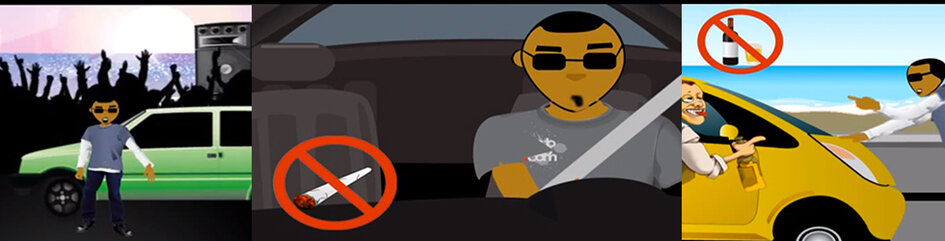
The Festival highlights the priority themes of the United Nations; pedestrian safety, helmet, speeding, driving under the influence of alcohol, wearing seatbelts, the use of safety devices for children and improvement of road safety infrastructure.

This specialist youth category is the first time to showcase the films produced and we are calling on filmmakers in our network who have produced road safety films to submit them to the Festival.

An international jury, made up of personalities of global reach and experts in road safety will evaluate and select the films. Each document presented to the jury is evaluated on the basis of a specific criteria:

  • Intrinsic qualities (clarity and relevance of the message, adaptation to the target audience, quality and originality of the script and reproducibility)
  • Technical qualities (sounds, sound track, camera work, editing)
  • Cost effectiveness ratio
  • Youth appeal and engagement
The Caravane movie is now live – road safety in 7 West African countries!

The Caravane movie is now live – road safety in 7 West African countries!

On the 15th October 2012, the Caravane began its 50 day journey across 7 UEMOA (Economic Union in West Africa) taking road safety to hundreds of thousands of young people. Alongside the project, volunteers captured the key stages of the event of video and YOURS was tasked with the production of the Caravane Movie which is now available to view now.

The First Caravane for Road Safety is taking place in seven countries who are all part of the West African Economic and Monetary Union (UEMOA). The Caravane aims to prevent road traffic injuries by:

  1. officially launching the `Decade of Action for Road Safety 2011-2020´ in the UEMOA region;
  2. promoting youth participation in road safety;
  3. allowing young Africans to share experiences and good practices in road safety;
  4. advocating for youth and road safety issues at high level officials;
  5. designing a common road safety campaign in the UEMOA region.

This project can also be read in conjunction with the EU Policy orientations for Road Safety 2011-2020 and with the European Youth in Action programme launched by the European Commission and called `Youth in the World´.  Therefore two NGOs based in the European Union will offer their help and share know-how from good practices used in the EU (thanks to RYD) and worldwide (thanks to YOURS). 

Communications Officer of YOURS, Mr Manpreet Darroch trained the camera people and guided them on the kinds of shots and footage needed to create a story of the Caravane in an official movie, he said,

“I was sent around 1,500 clips from the camera volunteers who shot this footage. Their clips illustrated the vibrancy and energy of this ambitious project and thanks to their fantastic footage, editing this video was easy and enjoyable. I’m very proud of their work”

YOURS trained facilitators begin their youth workshops in Kenya

YOURS trained facilitators begin their youth workshops in Kenya

In late November last year, YOURS worked with a group of inspiring youth leaders in Nairobi, Kenya and trained them to become road safety peer-educators and advocates. Since then, the freshly trained youth leaders have been planning their own workshops to reach out to young people in their country and started training youth in different regions of Kenya!

The YOURS Capacity Development Programme is based on the key understanding that it is young people themselves who can be part of the road safety solution to reduce the amount of youth killed on the world’s roads. Youth remain the biggest affected group for road crashes in the world and road traffic crashes are still the number one killer of young people aged 15-25 worldwide.

We know that empowering young people to be active road safety advocates and peer educators is an incredibly powerful method in changing the attitudes of young people towards road safety. With that in mind, last year YOURS ran a two week training with a selected group of youth leaders in Kenya. The young people successfully completed their training programme which focused on a range of topics enabling them to be able to train other young people in their country.

Since then, three of our facilitators have already delivered a training workshop reaching young people on the ground in Kenya with impressive results. The model of training facilitators is now creating ripples of action and education across Kenya.

The training of young people in Mombassa – Kenya by Michael Otieno

Training with Young People in Mombassa
On the 30th March 2013, trained facilitator Michael Otieno from the Kenya Red Cross, Mombassa Branch conducted a one day training with 33 young people aged 18-24 from a range of institutions in the region. The training focused on:

  • Scope of the road safety problem in Kenya and the world
  • Youth and road safety issues
  • The use of helmets and seat belts

The content of the workshop was based on the Youth and Road Safety Action Kit and the methodology was based on interaction and active engagement of participants using diverse tools such as role plays, group activities, question and answers, guided discussions and a range of activities.

Training with Boda Boda Drivers by facilitators John Mwikwabe and Joel Njoroge in Thika – Kenya

Risk Factor Training with Boda Boda Drivers Thika
On the 11th April 2013, our trained facilitators John Mwikwabe and Joel Njoroge two focal person for the road safety project in Naivasha/Thika District deliverd a workshop with Boda Boda (motocycle taxi drivers) in the region.

The workshop was conducted with help from the Traffic Department in Thika, Regional Finance officer Central Province, The District Ministry of Health Thika and the Base Commander-Thika, whom shared on different topics relevant to the training. Among the topics covered were, Helmet Use, Speeding, Haddons Matrix and Traffic Rules and Regulations. This was fully budgeted for and Funded by the RS10-KRCS Project in Kenya, with close supervision by the Project Assistant for both Thika/Naivasha.

This allowed for inclusion/Facilitation of Certificate, Lunch and Transport Reimbursements during the two day workshop. There will be a replica of the same in Naivasha from the 18th-19th of April this week. Full report will be shared after conclusion of the same.

John Mwikwabe said,

“The module used during the training were materials from the YOURS Workshop that was undertaken in December 2012. Thank you all for your continued support. So far 31 participants were trained in Thika”.

Floor Lieshout, Director of YOURS said,

“It is wonderful to see that our trained youth in Kenya are know putting their training into practice with the knowledge and skills we left behind in Kenya. To make this Programme sustainable, we need to develop the skills of great youth leaders on the ground, who know their country, region and people best”.

Road safety updates from Asia – GRSP Asia Road Safety Seminar 2013

Road safety updates from Asia – GRSP Asia Road Safety Seminar 2013

The 6th GRSP Asia Seminar and iRAP workshop took place in Manila, Philippines from 1st-4th April 2013 and offered an update on road saftey from the Asian continent. This year’s seminar brought together more than 150 participants from all over Asia and other regions. The seminar provided the opportunity to build and strengthen networks for future planning and implementation of road safety initiatives.

In line with the theme ‘Targeting Vulnerable Road Users’ the seminar inspired everyone to start or continue the year with more road safety initiatives. The Second United Nations Global Road Safety Week which will be held from 6 – 12 May 2013 is dedicated to Pedestrian Safety and this was  ideal platform to embark or strengthen initiatives to improve safety for pedestrians and all vulnerable road users.

The Seminar included a range of presentations and updates on road safety from across the Asia Region including a focus on the the recent Global Status Report on Road Safety 2013 and recommendations from Mr Jonathon Passmore, Technical Officer of the World Health Organization in Western Pacific Region. His recommendations following the report included:

Other presentations focused on initiatives from around Asia and road safety efforts in the region including:

A full list of presentation can be found in the link in the right column. As well as a focus on iniatives in the region, the Long Short Walk global campaign was shared to the seminar by Saul Billingsley of the FIA Foundation:

Read more about the seminar and access a whole host of resources about road safety in Asia here.

Brian’s Column: The use of the social media revolution in road safety

Brian’s Column: The use of the social media revolution in road safety

Brian is back with a new column on the use of social media in road safety. Social media platforms such as Facebook, Twitter, Linkedin and so forth offer a unique place to reach our target audience with road safety messages although it does pose some challenges too. Read what Brian thinks about the social media revolution in Africa here.

Happy new month every one! It’s been a while since we last had a chat. I extend my lung felt (I should say ‘heart-felt’ but am too smart to know that you will start questioning and drawing some hypotheses ha-ha) appreciations to these tweeps: @ManpreetDarroch @SkDb@YOURS_YforRS @Sheilativ @caseymareng@UNRSC @Make_Roads_Safe @dinhzarr @NOYSnoise @RYDrivers @SkDba @Amend @GenBois @DrIanClarke @carolbarebo @HumanityStrong and @RedCrossMbarara! I wish to take this chance to notify them that I spied on their timelines and they did a lot of commendable work especially during the #RoadSafetyChat event as well as sharing more opportunities and knowledge concerning the love of my life Miss Road Safety #PublicHealth.

Twitter and Facebook alongside other social media now dominates many young people’s lives.

For many of young people today, social media is the coolest way to stay in touch! In fact, from my experience, I find young people using Facebook and Twitter inboxes, like their email accounts; here, they are sharing opinions and news, which may be positive or critical. Social media is, without a doubt having a major impact around the world today in terms of how we communicate and interact. Oh, you may disagree with me…but wait a second…

Social media represents a shift from traditional media, which includes television, newspapers and radio but his doesn’t mean, that we have discarded traditional media though. What social media allows is for us, the mass public, to create written, audio or visual content on the Internet using computers or mobile phones and other digital devices. Social media provides a powerful platform for advocacy and engagement by allowing organizations, individuals, politicians, and others a direct voice to the public to create open dialogue and contribute their own personal accounts.

We can’t under estimate the power of using social media to spread road safety messages as well as sharing news and information in “real time” and it is opening a door to those who would, perhaps, not participate in such dialogue.

Social media offers the chance for those who wouldn’t have an opportunity to participate.

In Kenya, Namibia, and South Africa, I have seen them give safety  tips to motorists on how to use their indicators and mirrors, how to change lanes, anticipate the movements of pedestrians, watch out for animals including camels and other drivers, and how to navigate safely on the nation’s new eight lane highways. May be, we could have another campaign focusing on pedestrian safety? Say…yes!

In the words of Mr. Muiru-a Kenyan social media and road safety expert, “Social media is a cheaper option compared to doing newspaper or TV adverts to sensitize the pubic on road safety. The reason we started off with social media is because most Kenyans who are on social media interact with their followers even when driving. Our target is to reduce the number of road accidents and lives lost on the road,” Of course, you should never ever check your social media on mobiles or other media while driving, this issue this requires its own duty of care to ensure the message itself is not causing a problem for road users.

In a modern world, most major global organizations have online profiles on social media.

Dr Lee Jong-Wook, director-general, World Health Organization once said that ‘We must now use every day to act on road safety, and implement effective sustainable action to prevent injury and death on the world’s roads’ This shows that we must use every day to communicate and disseminate our road safety messages. It is important that road safety communicators stay in touch with the latest technology and that the newest tools of communication being used to convey road safety messages as best as possible.

In our mission to educate and motivate young people to become road safety role models and save young lives, we must take road safety to spaces young people inhabit, in technologically advanced world, this place is the internet.

Nevertheless, we should be aware of the fact that road crashes happen the most in low and middle income countries. Believe it or not, a big proportion of the world still has no access to the internet or have ever seen a computer. It is in these places that of course, social media is redundant.

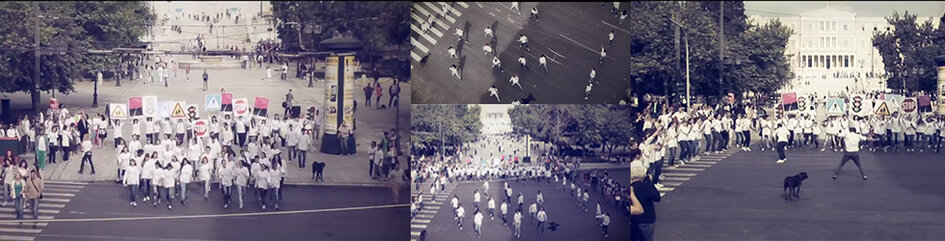
In any case, social media should complement road safety strategies rather than be an road safety entity in itself, we should never underestimate the power of face-to-face road safety action! Campaigns such as Embrace Life and The World Crossing Campaign are testament to showing that young people can unite across boundaries for road safety via social media!

Different to traditional social networks, online social media enables a level of interaction across geographical boundaries which is perfect for network such as the Global Youth Network for Road safety.

You may also be aware that, the Global status report on road safety 2013 was published last month! About 1.24 million people die each year on the world’s roads and between 20 and 50 million sustain non-fatal injuries. Young adults aged between 15 and 44 years account for 59% of global road traffic deaths. Aha…Young Adults, they are talking about me too, right. Texting while driving or using mobile phone while driving is somewhat becoming a kind of addiction to young people these days. Could this be because of the urge to use social media platforms like Facebook and Twitter? In more positive news the recent World Health Organization #RoadSafetyChat discussing the report pulled in a great amount of participation worldwide!

The media industry has undergone significant changes over the past 5 or so years and has given a voice to more than professional journalists. The new social media has opened a new world of communication – a world that can assist in changing driver behavior and enhance road safety if we use it with care. Shall we then tweet and Facebook more for #RoadSafety

Free online training in road safety from Johns Hopkins International

Free online training in road safety from Johns Hopkins International

The Johns Hopkins International Injury Research Unit is pleased to announce that their free online certificate training program, ‘Road Traffic Injury Prevention and Control in Low and Middle-Income Countries (RTIP) is now live and ready to be used right now! This new online training offers an insight into road safety around the world and inclues multimedia and lectures to train all interested for FREE.

The Johns Hopkins International Injury Research Unit (JH-IIRU) is pleased to offer for the first time a free, online training certificate program on Road Traffic Injury Prevention and Control in Low- and Middle-Income Countries (RTIP), hosted via the platform TRAMS.

Comprised of seven multimedia educational modules, this comprehensive program covers a wide range of topics, from the basics of road traffic injury prevention to setting up injury surveillance systems, evaluating road safety interventions and influencing policy on road traffic injuries (RTIs). The lectures are taught by a variety of instructors, including JH-IIRU faculty as well as experts in the field of injury prevention control and trauma care from around the world.

Modules in this training include:

  • RTIP Module 1: Fundamentals of Road Traffic Injury Prevention
  • RTIP Module 2: Concepts in Injury Prevention
  • RTIP Module 3: Assessing the Health and Economic Burden of RTIs
  • RTIP Module 4: Risk Factors and Choosing Interventions for Road Traffic Injuries
  • RTIP Module 5: Injury Surveillance Systems
  • RTIP Module 6: Evaluation of Road Safety Interventions
  • RTIP Module 7: Influencing Policy for Road Traffic Injury Prevention

The program is free of cost and open to policy makers, researchers, educators and anyone in the general public interested in learning more about RTIs.

The course does not offer academic credit, but does provide a certificate for completing course modules.

You can find out more about it here and take part in the course today!