The science of distracted driving and why it’s just so dangerous

The science of distracted driving and why it’s just so dangerous

A new article from Science Daily explains that talking while driving poses dangers that people seem unable to see. As a major contributor to road crashes worldwide, this epidemic is incredibly dangerous for a number of reasons. They are explored in science based study in the United States proposing ideas such as ‘tunnel vision’ and inattention blindness.

The original source for this story can be found at Science News.

“Keep your eyes on the road, your hands upon the wheel.”

The late rock and roll singer Jim Morrison was not a poster boy for public safety — and was no authority on safe driving. After all, later in “Roadhouse Blues,” he has beer for breakfast. But the opening line of that Doors’ song still resonates as sound guidance.

If only such good advice could stand the test of time. “Roadhouse Blues” hit the airwaves in 1970, long before the unlikely marriage of driving and talking on a cell phone. Millions of people now routinely conduct remote conversations while driving, despite research showing that it’s dangerous — even with two eyes on the road and both hands upon the wheel.

A meme of Jim Morrison from the lyrics of Road House Blues a song that was release years before distracted driving was considered a serious problem.

It turns out that hands don’t matter. It’s the conversation that can be lethal. Cell phone conversations impede what a driver sees and processes, a number of studies have shown. That, in turn, slows reactions and other faculties. This distracted state should be familiar to everyone. “That’s why you can drive home and not remember having driven home,” says Daniel Simons, a psychologist at the University of Illinois at Urbana-Champaign. “Just because you look at something doesn’t mean you see it.”

Braking badly
Undergraduate students in a driving simulator are slower to brake when given auditory tasks via a hands-free cell phone while driving (dual task) compared with just driving (single task).

Simons has shown that people assigned to observe certain activities in a lab setting can totally miss other events occurring in the very same space. The on-road versions of such blind spots show up when drivers engaged in a cell phone conversation fail to look at side streets or watch for pedestrians. This distraction may seem subtle and even fleeting, but it takes a toll: The risk of an accident quadruples when the driver is on the phone, studies have suggested.

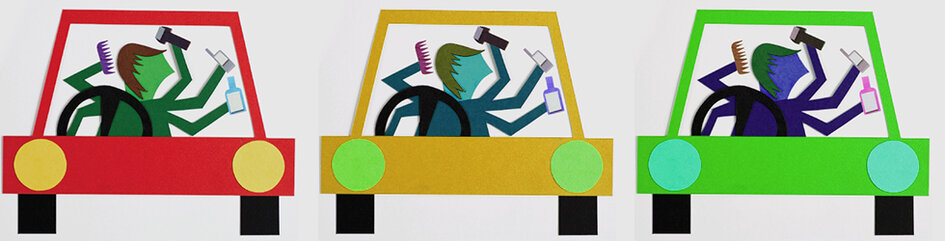
Texting, talking and the use of tech while driving are serious incidents of distracted driving.

Research into driving behavior has produced a three-way disconnect between scientists who study it, legislators who regulate it and drivers who talk on the phone. Majorities of all groups acknowledge that texting while driving is risky (see sidebar). Fewer accept that chatting on a hand-held cell phone while behind the wheel is dangerous. And most drivers and state legislators don’t worry at all about hands-free calls.

As a result, the science of distracted driving has run well ahead of policy. Not a single U.S. state bans hands-free cell phone talking for most adult drivers. Some states limit hand-held cell phone use, but many others apply bans to only bus drivers or novices. Three states have no restrictions whatsoever on calling or even texting while driving.

Public views are also out of sync with the scientific findings, in part because it’s easy and usually harmless to drive while distracted. And many people assume that they can successfully perform multiple tasks simultaneously. But researchers are challenging that assumption. David Strayer, a cognitive neuroscientist at the University of Utah in Salt Lake City, has found that such supertaskers do exist, but comprise only 2.5 percent of people tested. As for the other 97.5 percent, he says, “I suspect they are kind of kidding themselves.”

TUNNEL VISION : Eye-tracking equipment reveals the broad coverage of drivers’ gazes without distraction (top). Doing an auditory task requiring a live conversation with an experimenter in the car (middle) or over a cell phone (bottom) limits the extent of drivers’ attentiveness.

Data began showing up in the 1990s suggesting that cell phones and driving are a poor mix. In 1997, researchers at Sunnybrook Health Sciences Centre in Toronto combed through nearly 27,000 cell phone calls during a 14-month period made by hundreds of drivers who had been in crashes. The average risk of getting into a collision was four times as great when people were on the phone than when they weren’t. Phones with a hands-free option offered no advantage, the researchers reported in the New England Journal of Medicine.

The problem isn’t confined to North America. Scientists in Perth, Australia, checked on people who owned cell phones and who wound up in emergency rooms after car crashes. The researchers compared the likelihood of being on the cell phone before the crash with cell phone use during an uneventful drive at the same time of day one week earlier. The patients were four times as likely to have been on the phone during the smashup, the researchers reported in 2005 in BMJ.

Read about distracted driving in the Youth and Road Safety Action Kit

Such observational studies don’t establish cause and effect. So scientists at Complutense University of Madrid actually got into cars with volunteer drivers and distracted them. The researchers had drivers make phone calls using hands-free phones that needed only the push of a button to work. Special vision-tracking devices showed that conversations requiring extra thought or concentration diminished drivers’ extent of visual scanning, speed control, detection of warning flashers and decision-making ability. That study, which appeared in Transportation Research Part F in 2002, still stands as one of the clearest examples of what it means not to give full attention to the road.
Read the full article here.

YOURS Kenya facilitators continue workshops in the community

YOURS Kenya facilitators continue workshops in the community

Nearly one year has passed since we delivered the Kenya Training of Facilitators in Nairobi, Kenya at the back end on 2012. Since then, we have seen workshops delivered across the country and directed at the heart of the community. Hundreds of young Kenyans have already been reached through unique peer-to-peer workshops run by highly skilled trained facilitators with an approximate peer out reach of thousands through word of mouth and the filtering out of road safety messages in communities.

In late November – early December 2012, YOURS partnered with a number of key road safety organizations and NGOs to run the first Kenya Training of Facilitators. Key partners included the Kenya Red Cross Society, The United Nations Environment Programme, ASIRT Kenya and the Road Safety Fund.

In training a group of young Kenyan leaders, we knew that once YOURS left Kenya, the young leaders, feeling empowered and equipped with new skills and knowledge, would step into their local communities and share a peer-led message with young people all across the country.

Trained facilitators begin their training by scoping the road safety issues facing youth in Kenya and the wider world.

So far, hundreds of young people have undergone a road safety workshop with our group Kenyan facilitators who, through the breadth of the country, reached out to their peers in their own road safety workshops which nearly all facilitators have already completed.

More recently, two facilitators selected from the Association for Safe International Road Travel (ASIRT Kenya) by international road safety champion and advocate Ms Bright Oywaya. Our trained facilitators from ASIRT, Mr Harrison Muiruri and Mr Kevin Ochieng identified a key problem in Nairobi affected Boda Boda drivers (motorcycle taxi drivers in the city).

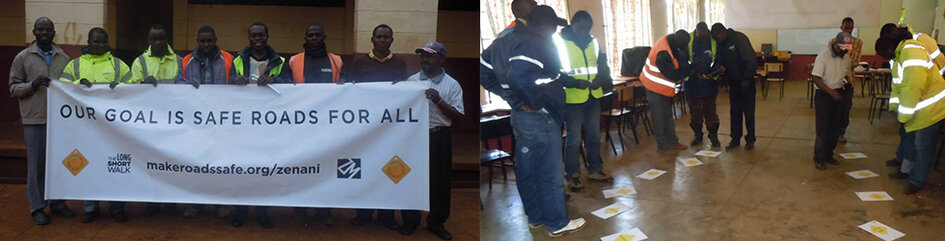
Young facilitators talk to boda boda drivers in Nairobi Kenya


Mr Harrison Muiruri told us,

“After engaging with corporal Mugo, a traffic police from Runda police station,he told us that three quarters of the road traffic crashes recorded in the area involved boda boda riders. They record at least 2 incidences in a week especially on the busy northern bypass road. This was a fact that was confirmed by the members of the Githogoro community and the boda boda riders.

ASIRT Kenya felt the need of conducting sensitization training to the boda boda riders operating in the Unep and the idea was welcomed by the targeted group and the Githogoro community”. 

Objectives of the training

ASIRT Kenya anticipated meeting the following objectives when it conducted the training on in late August 2013:

  1. To sensitize the boda boda riders on basic road safety with the aim of creating more awareness on road safety
  2. To sensitize the boda boda riders on importance of wearing helmet and reflective clothing with the aim of changing their attitude in a positive way.

The training inspired a shift in attitudes towards road safety topics covered which included understanding the scope of the road safey problem in Kenya and the world and a key focus for the motorcycle drivers; promoting the active use of helmets. The role of the education and raising awareness on young people is fundamental in mitigating road crashes in Kenya. This is partly because of their vulnerability based on the fact that they are the majority road users and also because they are inexperienced road user.

After the training the Boda Boda drivers supported the call for safer roads and supported the Long Short Walk campaign:

If you’re interested in our workshops, find out more here!

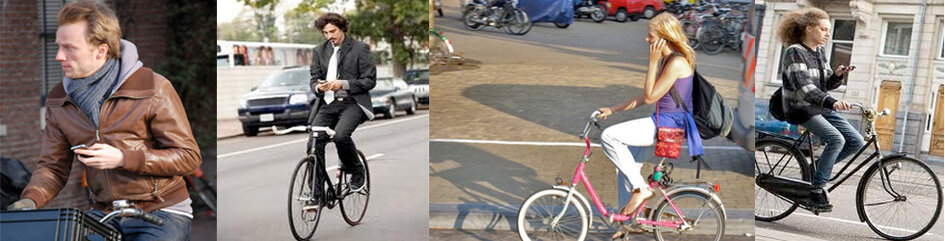
Youth and cycling – new report states youth are distracted

Youth and cycling – new report states youth are distracted

SWOV – The Institute of Road Safety Research based in The Netherlands have published a new report focusing on the use of technology and cycling. The report suggests that young people are more likely to be distracted while cycling by music players, mobile technology and other distractions and offers recommendations of intervention to the use of technology.

When they are cycling, youths often use devices like music players or mobile phones. Compared with older cyclists, youths are also more likely to indicate that they have been involved in crashes in which the use of mobile devices played a role. The present report presents the search for the most suitable measures and interventions to influence the use of mobile devices by cycling youths in the ages 10 to 17 to accomplish road safety improvement. The search was carried out in the form of a literature study. Note: this method allowed us to assess in advance which interventions are most likely to be successful and which interventions will probably be ineffective.

Encouraging young people to use positive methods of safe technology is expressed to be a better method in safety promotion than discouraging methods.

Knowledge was gathered about this particular type of problem behaviour (the use of mobile devices while cycling and the risks it entails) and it was established which behaviour is desirable (target behaviour). Furthermore, as many as possible relevant characteristics of the target group (young adolescents, 10-17 years-old) that an effective intervention is to account for were mapped. Based on this knowledge a series of behavioural modification strategies were assessed for their likelihood of influencing the target behaviour and the target group. Recommendations are made concerning the measures most likely to be successful.

The majority of young adolescents have a mobile phone, smartphone or music player. Compared with older age groups, youths also use these devices very much while they are cycling. In addition, they make different use of their mobile devices.

Compared with older age groups:

  • youths more frequently listen to music while they cycle, whereas auditory
  • information is especially important for cyclists;
  • youths carry out more demanding tasks with their devices, like operating
  • the device and reading and sending text messages;
  • youths make less selective use of their devices and take little account of
  • busy traffic or weather conditions;
  • youths experience stronger distraction by operating the devices and their
  • reactions to traffic hazards are less effective; youths have a stronger increase in crash rate due to the use of deviceswhile cycling.

It has been found that the risk of a crash is 1.4 times higher for cyclists in the age groups 12-17 years-old and 18-34 years-old when they use a device every trip they make, than when they never use any devices. For cyclists older than 35, the relation between the use of devices and bicycle crashes was found not to be significant. These are findings from questionnaire studies, and are therefore based on self- reporting.

You can read the recommendations of the report (from page 8 in English) in the attachments.

Are we being driven to distraction by new car technologies?

Are we being driven to distraction by new car technologies?

A vast proportion of high-income countries are benefiting from in car technology creating smarter cars, which are said to be all round safer and reliable than older cars. Advances in car technology have recent been featured at the 2013 Automotive Forum, organised by the Irish Motoring Writers’ Association but warned new car technologies must take safety into consideration for the future of road safety. They warn of the dangers of distraction that new car technology can bring

Imagine your car communicating with the road infrastructure and other drivers to warn you about traffic jams or an accident; then imagine being able to stream music and video material from the internet through your car’s audiovisual system and being able to consult apps from the dashboard that provide information about restaurants, hotels or shopping options on your journey.

However, what of the distraction potential for drivers who are facing information overload in this brave new world of motoring?

An audience from motoring, road safety and other sectors came together on Friday at the RDS, Dublin, to hear two international speakers talk about how car technology is changing the role of the driver and how increasing levels of technology can have a detrimental effect on drivers’ attention levels.

Many High-Income countries already benefit from advanced car technologies but the poorer residents and low and middle-income countries are yet to benefit.

Associate professor at the University of Leeds-based Institute for Transport Studies, Dr Natasha Merat, highlighted the results of recent studies that have shown that once a driver’s primary attention is diverted by another information input – whether that be a mobile phone or a piece of technology within the car – the risk of an accident increases significantly.

“Without a doubt, technology has contributed hugely to strides in improving road safety over the past number of decades, but we need to be careful that we don’t undo some of that progress by providing a dangerous level of information overload through the addition of a broad range of ‘attention-grabbing’ technologies inside the car,” said Dr Merat. 

“We know that younger, inexperienced drivers are particularly prone to distractions while driving, whether they be in-car distractions or external ones. And for both experienced and inexperienced drivers, the distraction level can increase significantly once other impairments come into play, for example, when a driver is showing signs of fatigue.
 

“It is important that we realise that the term ‘distraction’ encompasses more than just the ‘usual suspects’ of, for example, mobile phone, changing music on the sound system or mp3 player, and satnavs. Chimes and dashboard displays that warn about low fuel, lane departure warning/brake assist systems and best eco-driving behaviour can all take their toll on the driver’s attention.”

In low and middle-income countries, used cars are widely imported from Western Europe to be used on the roads and therefore miss many of the new safety features in newer cars.

A comparison to low and middle income countries

In low and middle income countries, alongside a lack in road safety laws and enforcement, safe roads and safe road users is the massive disproportion of unsafe cars. This is not to suggest that all cars in low and middle income are unsafe but rather, we illustrate the point that many cars in low and middle income countries, such as those in Africa are often ‘old imports’ from other parts of the world. Cars in these places are often years behind in terms of safety features and safer cars.

In addition, in some parts of the world, the same model of car exists for example in Europe and Latin America but those in Europe have a safety rating of 4-5 wheras the exact same model which has less safety features has a safety rating of 2-3. The video in the right column as part of the five pillars of global road safety; safer vehicles is explained via Global NCAP.

Read more about the affect of poor road safety in low and middle income countries and how it affects young people here.

Tell WHO your road safety story – we need you support – take part!

Tell WHO your road safety story – we need you support – take part!

The World Health Organization is currently compiling information for a new adolescent health report for 2014. We think that road safety, as the biggest killer of young people globally, should feature prominently in this report and give it the attention it deserves as a serious health issue for young people globally. As part of that report, WHO is inviting young people aged 10-19 to submit their stories related to the topic, we ask for your support to get these stories together!

What is your story in relation to road safety? What is your experience with road traffic injuries and health services (perhaps after a crash)? Have you personally been affected by the lack of road safety? Do you think things need to change? Are you or is someone you know advocating for better health for adolescents? The World Health Organization wants you to tell them your story!

As ambassadors for road safety, you are aware of the importance of the cause all around the world. Road traffic crashes remain the number one killer of young people aged 15-29 worldwide. This is a global crisis and a massive public health problem. The good thing is that we can do something about it: together we can save millions of lives and today we need your support. 

How you can help – Share your story

WHO are collecting stories from 10-19 year olds on adolescent health. We therefore invite you to submit real life stories from youth related to road safety. This could include experiences on the road walking to school, family loss due to road crashes, involvement in a road collision and any thing else related to a road safety experience. Maybe your helmet protected you in a crash? 

We appreciate you may not be aged 10-19 but we’re confident that you will know people who do or work with this particular age group.

How to submit your story

Please send an email to adohealth2014@gmail.com with subject line “story” and include in the body of the email:

  • Your age, sex and country
  • Your story or interview
  • Please note that each entry must be no longer than 300 words, but you may submit more than one story/interview.

Submissions will be reviewed and you will be contacted individually if we are able to include your story within the report. They may edit the story due to space constraints.

Please send us them your submissions before 1 October 2013.

Alongside this opportunity, there is a chance take part in the WHO’s Adolescet Health Photo Competition

New Report: Favourite music makes youth drive badly

New Report: Favourite music makes youth drive badly

According to new research, young people who drive and listen to their favourite music are more likely to drive badly on the road. This includes drivers committing a greater number of errors and miscalculations, according to a new study from Ben-Gurion University of the Negev researchers that will be published in the October issue of Accident Analysis and Prevention. Read more here.

Reported on by Science Daily and shared by Network Member: NOYS in the USA


Male novice drivers in particular make more frequent and serious mistakes listening to their preferred music than their less aggressive, female counterparts, the researchers noted.

The BGU study evaluated 85 young novice drivers accompanied by a researcher/driving instructor. Each driver took six challenging 40-minute trips; two with music from their own playlists; two with background music designed to increase driver safety (easy listening, soft rock, light jazz), and two additional trips without any music.

Do you find your driving change according to the track playing in the car?

The study was conducted by BGU Director of Music Science Research Warren Brodsky and researcher Zack Slor to assess distraction by measuring driver deficiencies (miscalculation, inaccuracy, aggressiveness, and violations) as well as decreased vehicle performance.

When the teen drivers listened to their preferred music, virtually all (98 percent) demonstrated an average of three deficient driving behaviors in at least one of the trips. Nearly a third of those (32 percent) required a a sudden verbal warning or command for action, and 20 percent needed an assisted steering or braking maneuver to prevent an imminent accident. These errors included speeding, tailgating, careless lane switching, passing vehicles and one-handed driving.

Without listening to any music, 92 percent made errors. However, when driving with an alternative music background designed by Brodsky and Israeli music composer Micha Kisner, deficient driving behaviors decreased by 20 percent.

The Youth and Road Safety Action Kit summarizes the types of distractions that occur in the car.

“Most drivers worldwide prefer to listen to music in a car and those between ages 16 to 30 choose driving to pop, rock, dance, hip-hop and rap,” Brodsky explains. “Young drivers also tend to play this highly energetic, fast-paced music very loudly — approximately 120 to 130 decibels.”

“Drivers in general are not aware that as they get drawn-in by a song, they move from an extra-personal space involving driving tasks, to a more personal space of active music listening.”

In other research into a similar subject. Certain types of music have been shown to be either ‘safe’ or ‘unsafe’. Research has revealed that the songs drivers listen to can influence how safe they are on the roads.

Among the top ten safest songs to drive to is The Scientist by Coldplay. Come Away With Me by Norah Jones, I Don’t Want to Miss a Thing by Aerosmith and Tiny Dancer by Elton John also feature.

Each of the songs have an optimum tempo of a song for safe driving, mimicing the human heartbeat at around 60 to 80 beats per minute.The study, also revealed the type of songs that cause motorists to drive dangerously.Music that is noisy, upbeat and increases a driver’s heart rate can be a deadly mix. Some of these tracks are explored here.

Fast beats cause drivers to get all excited and take their mind off the road or even to speed up to match the beat. Hip-hop made a female drivers drive far more aggressive drivers, while heavy metal caused the fastest driving among men. The experiment involved eight people driving 500 miles each using the confused.com MotorMate app, which monitored driving behaviour through GPS technology.

But what do you think? What is your safest playlist for driving?