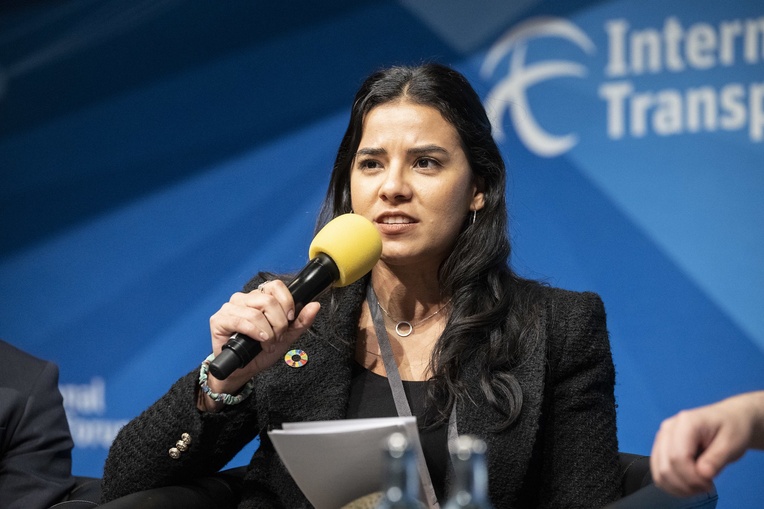
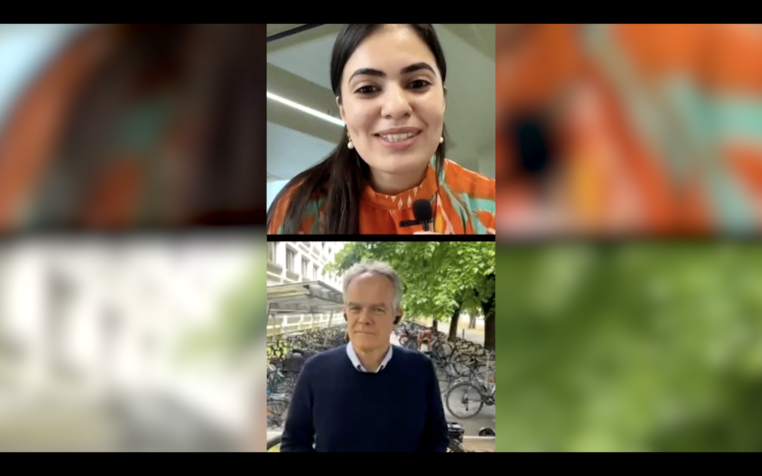
Sana’a: Thank you to everyone who is joining. My name is Sana’a Khasawneh, I am a global road safety advocate. I work as an Advocacy and Campaigns Manager at YOURS – Youth for Road Safety and I’m very excited to have a conversation with a superstar of road safety today from the World Health Organization.
Today, we are very excited to kick start the UN Road Safety Week with the theme of #RethinkMobility. We’re going to have an insightful conversation with Dr. Etienne Krug about the active modes of travel and how it contributes to having better health, better well-being for young people.
As you know, when we choose to walk, to cycle, or even to skateboard to do our daily events instead of taking the cars, we are not only doing something good for the planet, we are also benefiting our own mental health and our own well-being because using active modes of travel benefits our muscles, our heart health, and also gives as a boost in our mood and energy.
Today, we are going to learn more about this with Dr. Etienne Krug and many of our viewers today, maybe they don’t know that road crashes are a global health issue – it is the number one killer of young people worldwide, it’s a major concern for everyday mobility in of low-and-middle-income countries, and by shifting into more active and more sustainable modes of transport, we are also preventing injury and saving lives. So please join me in welcoming Dr. Etienne Krug is leading the WHO effort in preventing injury, violence, and disability, and he’s the superstar in road safety and one of the major supporters of young people.
Thank you so much for joining us, Etienne!
Etienne: I’m very happy to be here, Sana’a.
Sana’a: Thank you so much. When we rethink mobility, Dr. Etienne, we are talking about shifting our mindset, how we perceive transportation. We are talking about changing the way that transportation systems are designed. And today, we are marking the 7th UN Global Road Safety Week and we would like to promote more active modes of travel. Maybe you can tell us about how that affects our mental health and our well-being as young people and how does that also contribute to impacting other challenges like producing the carbon footprint and also enhancing the participation, for example, of young people and women in the daily job market because they will have multiple alternatives to mobility.
Etienne: That’s right, Sana’a. If you think about it, we have invented a transportation system that we use every day and which has killed more than 50 million people since we invented it. We use cars for most of what we do; to go to work, to go to school, to go shopping, to go on holidays – more than 50 million people have died since we invented that car.
I’m sure that, retrospectively if we would have said “We want to use this new transportation mode but it’s just gonna kill 50 million people”, we would never have decided to use it. It’s high time to do something about it. Our transportation is the leading killer of young people, not only in rich but also in poor countries. And so what we here want to achieve with this new Global UN Road Safety Week is to put a focus on the need to move away from a system that has been developed for cars to a system that is developed for people – More walking, more cycling, more public transportation.
Sana’a: Exactly, because we cannot trade mobility for safety. Safety always has to come first. Maybe, Etienne, you can tell us about how you usually commute to your office at the WHO. I can see that you are in the bicycle station –
Etienne: I’m actually right next to my bike here. I don’t know if you can see it, but yes – I love to come by bike. I have an electric bike because it’s a 45-minute bike ride but for me, it’s not only a way to commute – which, by the way, takes me 45 minutes by bike and 40 minutes by car, so you know – because of all the traffic jams and all the delays. So, it’s not only physical activity, it’s also clearing my head when I come out of work and I bike for 40 minutes through the vineyards, through the fields, and through the forest – I come home and I feel all good.
Sana’a: This is amazing. In Jordan, we do not have infrastructure that caters well to active modes of travel but today right now, I’m at the bus station of the BRT in North Amman in Sweileh and I can see that many students, many women, many people from different age groups, different backgrounds, using public transportation, using busses instead of driving. And this is promising, the government is doing major investments to enhance the public transportation and to provide alternatives for people. And I hope that in the future, we can see more projects and more investments in collaboration with the private sector and other agents in the society in order to have alternatives for people.
But maybe a lot of young people watching us today are excited about doing initiatives on active travel, maybe they are advocates for rethinking mobility. But I’m sure that they have major safety concerns so, in your opinion, how can we respond to these concerns because as you know, most of the fatalities and serious injuries cause by road crashes are affecting pedestrians and cyclists and vulnerable road users. So, how do we respond to that?
Etienne: You’re right, Sana’a. I have such high hopes for young people, the new generation wants to move away from a car-based system. My own daughter, she’s 28 now, she does not want to get a driver’s license, she wants to do things with public transport. When I was her age, my only dream was to get a driver’s license so, things are changing and it’s necessary.
But as you say, before we push people on bicycles and walking and in public transport, we have to make sure that it is safe. And that’s where the policymakers come in. It is high time for policymakers to make sure what we call the “vulnerable road users”, those who are outside the cars, are protected. What does that mean? That means; better infrastructure, bicycle lanes, pedestrian walking places, places where children can play at the side of the road that are safe, as well as public transport that is of good quality but where the drivers are not pushed, for example, to drive 12 to14 hours a day just because traffic can be made. So there’s a whole shift that is needed to make these alternatives and much healthier modes of transport safe. And I think young people have a big role in demanding that. Youth want to have transportation that is more sustainable but we need to allow youth to do that.
Sana’a: Yes, absolutely. I can say as a young advocate from the MENA Region and as a global advocate for road safety with a special focus on women’s empowerment, I would also say that, when we talk about rethinking mobility and sustainable mobility, we need to make sure that it is also accessible for different genders and for different age groups. Women especially and young girls have special needs that traditional transportation systems are not accommodating and are not responding to. So it’s very important that when we create safe spaces and sustainable spaces for mobility, they are also inclusive and create a safe space for people regardless of their gender, regardless of their backgrounds.
For example in my region, we have a weak participation of women in the economic sector because they have many challenges in using transportation and if we look also at regions like Africa, we will see that many schools have low attendance rates by young people because they cannot afford transportation or the traditional transportation is not safe so merely going to school or commuting to school is a threat to their safety and we need to make sure that sustainable modes of travel respond to that and accommodate the needs of all young people and the different age groups of people in our community.
Maybe, Etienne, you can tell us something, an inspiring message the young advocates and the viewers that are watching us today. I know that we have many people joining from the Global Youth Coalition for Road Safety and they would love to hear and inspiring message from you. How we as young people can claim our space and lead change in rethinking mobility.