Look back: Dignitaries to the World Youth Assembly for Road Safety

Look back: Dignitaries to the World Youth Assembly for Road Safety

We continue to feature a look back at the World Youth Assembly for Road Safety that took place nearly five years ago which initiatied the global youth movement for road safety. YOURS was the direct follow up of the WYA harnessing its momentum and energy into a global NGO for road safety. In this article, we look back at the dignitaries that supported the movement from the get-go!

The United Nations World Youth Assembly for Road Safety was an event that was given international importance amidst the World Health Organization’s announcement that road crashes are the biggest killer of young people globally.

The WYA was given support by world leaders who offered statements to the 400 delegates attending from around the world. Some of the dignitaries and parts of their statements to the World Youth Assembly for Road Safety have been featured below:

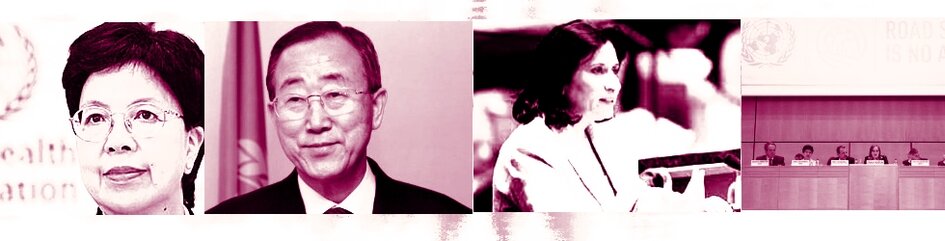
Secretary General of The United Nations Mr Ban Ki Moon in a written statement said;
“A number of countries have shown that by taking action on drink-driving, speeding, use of helmets and seat-belts, and increasing the visibility of pedestrians, cyclists and motorcyclists, a significant number of lives can be saved and resources spared, even as motorization continues to rise”
The Secretary General’s full statement can be read here.

Director General of the World Health Organization Dr Margaret Chan attended the event and in a later video statement said;
“Every day on every continent, road crashes kill and injure. Today, road crashes are the leading cause of death amongst young people between the age of 10-24 years but many of these young lives could be saved with a few simple steps”.
Dr Chan’s full video statement can be viewed here.

President of the 61st Session of The United Nations General Assembly in her video satement said;
“During the last couple of days you have all heard the scientific data; we know that road traffic crashes are THE leading cause of death among young people aged 10 to 24. And, that globally more than 1.2 million people die each year from traffic accidents. These are shocking statistics, and cannot be ignored. We have a duty to remember all the innocent victims who have suffered. They must not be forgotten. It is therefore appropriate that hundreds of young people are in Geneva today to campaign on this important – health and development issue – during the very first United Nations Global Road Safety Week”.
A full copy of The President’s statement can be read here.

35th President of Brazil Mr Lula da Silva in a written statement said;
“In addition to this terrible suffering, countries lose one to two per cent of their Gross Domestic Product to road traffic crashes, which has significant social and economic impacts. These costs occur mostly because of lost productivity linked to death or interruption of work or education. There are also costs related to health care and repair of vehicles and roads”.

Former Prime Minister of The United Kingdom Mr Tony Blair in a video statement said;
“It is right that we recognize the particular vulnerability of the young on our roads, because we all have a duty of care to keep our children and young people safe”,

In addition to the statements of support from world leaders, a distinguished panel of world health professionals attended the assembly. The panel of honoured guests for the Assembly’s opening ceremony, from left to right: Dr Etienne Krug, WHO Director of the Department of Injuries and Violence Prevention; Dr Margaret Chan, WHO Director-General; Mr Sergei Ordzhonikidze, Director General of the United Nations Office at Geneva; Ms Nelly Ghusayni, Chair of the Assembly; Mr Marek Belka, Executive Secretary of the United Nations Economic Commission for Europe; Mr Jacques Barrot, Vice-President of the European Commission in charge of Transport; and Mr José Capel Ferrer, Director of the Transport Division of the United Nations Economic Commission for Europe.

As well as these dignitaries, others who offered statements included:

  • Austrian Formula 1 driver Alex Wurz.
  • Moby, the world-renowned musician. 

It is apparent that the importance given to the World Youth Assembly for Road Safety and the ensuing global youth movement for road safety is testament of the global significance of the cause.
Where are they now? World Youth Assembly for Road Safety anniversary

Where are they now? World Youth Assembly for Road Safety anniversary

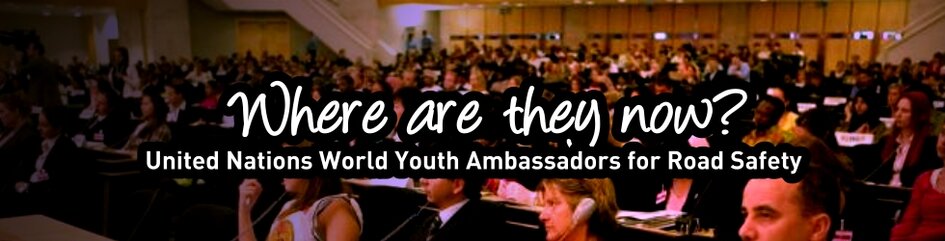
Over 400 young people came together on the foot of the Swiss Alps in April 2007 to discuss global road safety in a changing world. With over 100 countries represented at the United Nations HQ in Geneva, Switzerland, the youth empowering United Nations World Youth Assembly for Road Safety changed many young lives. Youth delegates left the assembly as United Nations World Youth Ambassadors for Road Safety, we look at where they are now…

As a special feature celebrating 5 years since the first United Nations World Youth Assembly for Road Safety that took place in April 2007 at the United Nations HQ in Geneva, Switzerland, YOURS is putting special spotlights on the the United Nations World Youth Ambassadors for Road Safety! You can read all about the feature and the World Youth Assembly here.

More than 400 young people left the assembly as youth ambassadors having undergone pledges to make young people in their nations safer on the roads through campaigning and road safety work. YOURS will be featuring two ambassadors at a time and today we speak with our Australian and Gambian delegates in the profiles below!

Stay tuned to see what other ambassadors have been up to!

New Report: Earphones distractions on the road leading to more injuries

New Report: Earphones distractions on the road leading to more injuries

The number of accidents involving pedestrians wearing headphones is on the rise, a report suggests, prompting fresh warnings from road safety groups around the world. YOURS’ Director Mr Floor Lieshout has been quoted in a Huffington Post article focusing on the new report that gives attention to being aware on the road and avoiding using earphones on the move.

A US-based study, which appeared in the BMJ journal Injury Prevention, found a total of 116 reports of death or injury to pedestrians wearing headphones between 2004 and 2011, jumping from 16 in 2004/5 to 47 in 20110/11.

Most victims were men (68%) and under the age of 30 (67%), with around one in 10 of all cases (9%) under the age of 18. Some 89% of the cases occurred in urban areas and more than half (55%) of the victims were struck by trains.

Eighty-one of the 116 collisions (70%) resulted in the person dying – even though a warning such as a siren was sounded in around a third of the cases.

The study concluded: “The use of headphones with handheld devices may pose a safety risk to pedestrians, especially in environments with moving vehicles. Further research is needed to determine if and how headphone use compromises pedestrian safety.” British road safety groups warned pedestrians to take caution.

Floor Lieshout, director of Youth For Road Safety, told the Huffington Post UK: “This study shows once more the importance of using all of our senses while we participate in traffic. It is a very disturbing trend and it is vital we find an appealing way to make youth, especially young males, aware of the risks wearing headphones in traffic.”

Others warned that more research needed to be done before conclusive findings could be drawn. Andrew Howard, who is the head of road safety at the AA, added that some pedestrians can be “so wrapped up in their own little bubble they forget the world going on around them”. That can include headphone wearers, Howard said, but also people talking on phones and even people walking with hoods up. “It’s almost a bubble-effect,” he said.

However, Howard said that more research needed to be done. “All we can do is say that is very hard to prove what the stats are in Britain,” he said. “The difficulty is getting any kinds of figure. For instance it’s relatively easy to track a driver when he is using a phone but not when he’s using an iPod, never mind cyclists and pedestrians.”

Previous studies have shown that people wearing headphones or talking on phones can suffer “inattentional blindness” which makes them effectively isolated from the world around them.

Ian Harvey, at the charity Civic Voice, said that “to overcome isolation and to help build a civic society, people need to interact with each other”.He said: “A basis for any civilised society is communication… Surfing the web, listening to MP3s, reading blogs or sending email is not interacting with a person; it’s interacting with a machine.

“If people feel socially isolated, they need to have more face-to-face interactions with other human beings and in time, will begin to feel happier and more connected to the world and place they live in.”

Cycling safety groups added that a line needed to be drawn between sound isolation and environmental isolation, especially since, for instance, deaf people are not disqualified from cycling and policies needed to reflect that.

Chris Peck,policy coordinator at cycling safety group CTC, said: “Although a lot of cyclist do use their hearing to alert them to hazards on the roads, there is no rule against the deaf cycling. It’s probably not the kind of thing a sensible cyclist would do, but we don’t think there should be a law against it. “If pedestrians are unaware of their surroundings then communication is going to be harder, but the same thing would apply to people in cars playing very loud music.”

A spokesperson for the Mayor of London Boris Johnson said that while the number of pedestrians killed in London had “halved” in the last 10 years, TFL would address the issue in its future road safety plans. “As part of the continued push to cut accidents on London’s road network, the mayor is finalising his road safety plan for the next decade,” the spokesperson said.

“This is an issue the mayor has himself raised with TFL and he has asked that it be investigated actively as part of that work.”

Original story can be found at the Huffington Post UK.

YOURS’ Communications Officer, Mr Manpreet Darroch has been campaigning about this issue through his campaign, Tune into Traffic. The banner of the news story is part of the campaign’s graphics and has been used in posters and leaflets to sensitize young people on the headphones issues. These are available to download free of charge here. As well as these materials, Tune into Traffic has created several campaign adverts to bring attention to this issue and is available to view on the right column.

European Commission: How is your country doing for road safety?

European Commission: How is your country doing for road safety?

The European Commission have published a leaflet entitled, ‘How is your country doing?’. This leaflet shows the situation at the end of 2010 and the progress made since 2001. Its purpose is to allow Member States and European citizens to compare their situation and to encourage them to continue their efforts regarding road safety. It can be downloaded at YOURS. 

The leaflet acts as a reminder that although road crashes have reduced in Europe since 2001, there is still a lot to do and lots of lives to save. The leaflet offers an illustrative understanding of how countries are doing with regards to road crash and road fatality reduction across Europe.

Road crashes still the biggest killer of young people.

Young people are still the most affected group with regards to road crashes as road fatalities remain the biggest killer of young people around the world. With regards to Europe, young people are affected disproportionately and a further breakdown of <25 is given recognition where 18-24 year old age bracket remains the most affected. There is still a lot of work needed to reduce these numbers and YOURS acts to do just that.

While the amount of road crashes have reduced consecutively since 2001, Europe is still to reach its targets with regards to reduction of road crashes and fatalities. However, concerted effort for road safety over the past decade has seen positive results and this illustrates that road safety action can have dramatic effects on road crashes.

More interestingly, the amount of cars on the road has increased although road crashes are decreasing. Across the world, this trend is not the same for low and middle income countries (LMCs) which is why YOURS is undertaking extra efforts in these areas.

The leaflet is available to download in the attachments section and will be particularly useful to delegates of the European Youth Forum for Road Safety.

Brian’s Column: Why language is important for road safety

Brian’s Column: Why language is important for road safety

Last year, Brian’s first column received a warm welcome and he continues to shower YOURS with articles focusing on youth and road safety issues in Africa. In this article, Brian talks about the road fatalities taking place over the Christmas and holiday period and asks the question, ‘Why are some road safety advocates inconsistent with their safety language?’. Brian gives us the low-down.

Much #respects to every one in the new year of 2012. Much more #respects to those road safety gurus whose mission was to make road safety a priority during the festive season:-and needless to mention, the new year celebrations! Great and innovative road safety promotion by youths in Angola where they staged a serious road safety education campaign in the northern Capital culminating into only 1 case of morbidity between 25th December 2011 and 1st January 2012. Bear in mind, this is arguably the busiest part of this country. The Gambian Youth Parliament did not sleep either, possibly because of the trade mark phrase ‘Accidents Never Announce Their Party’. Nor was the YOURS Team in Africa asleep:-Congrats/Felicitations/Asante Sana To YOURS Regional Director, Miss Sheila for running the show of the Embrace Life Campaign! Please #Marry Me (sic).

In Ghana, pressure from the youths reached a threshold thanks to their suggested peaceful demonstrations against road accidents during the festive season! Yes, it fueled the Motor Traffic and Transport Unit of the Ghana Police Service, Inspector Simon Tenku to appeal to political leaders to include road safety messages in their political campaign in the upcoming 2012 general elections. Now, that’s a confirmatory test of what solidarity and healthy public policy as regards road safety is concerned. In Uganda, a Gaagaa Bus Company that has consistently and successfully failed to keep their buses in good condition, obeying resting points, over speeding and speeding has had its license suspended as six died in a messy crash on 9th January 2012.

Like we say in Africa, ‘Satan Was Also God’s Servant’ and so were crashes during the festive season. Notably, that 25 people were confirmed dead in a single ghastly motor accident that took place at a bend near Obangede junction, (Nigeria) It didn’t go un noticed in Ghana as a total of 270 people lost their lives through motor accidents in the Eastern Region in 2011 as against 245 in 2010, showing an increase of 25 deaths. And look at this:-According to the Road Traffic Management Corporation (RMTC) in South Africa, approximately 800 people died since the beginning of December on South Africa’s roads over the festive season in December. For soccer fans like my self, we were gutted to loose 10 of our colleagues on December 28th 2011 as a Road accident claimed lives of Somali football fans!

But, why oh why are these crashes happening?

Only a person from Planet mars may not be aware of why these ‘Road Traffic Accidents’ happen. Among the many, something is a miss as regards, the language that we use in Africa. For those that didn’t know, Africa, among the documented, has over 20,000 different languages :-that is no surprise considering that there are 62 different languages in my country Uganda. Relating this to the health education and health promotion model, there is a cool chance of misinterpretation of a number of road safety messages. Special reference is made to these 2 words:‘SPEEDING’ & ‘OVER SPEEDING’.

You must have been puzzled by community members, reporters, sometimes Road Traffic Officers, Policy makers and road safety advisers yelling on top of their lungs (read advocating for road safety) while using these 2 important words simultaneously. I personally have prepared and served the same soup of ‘Speeding and Over speeding’, but all that changed to having met one English Doctor and Vice Chancellor of International health Sciences University, Dr. Nick Wooding, who for 2 hours successfully failed to convince us on the difference during our many public health debates! On the 4th meeting, we were hit by a fact that, there is no ‘African’ language that puts a significant difference between these two important words as regards road safety. From the west coast of Malabo in Equatorial Guinea to the far East of Mombasa Port in Kenya, from the Cape of Good Hope in South Africa through the pearl of Africa (that’s my country, Uganda by the way) to extreme north, Cairo, Egypt, it remains a mystery over why the languages spoken over this stretch have endured a successful failure to define these words differently.

In the English version, Over speed is a condition in which an engine is allowed or forced to turn beyond its design limit. The consequences of running an engine too fast vary by engine type and model and depend upon several factors, chief amongst them the duration of the over speed and by the speed attained. With some engines even a momentary over speed can result in greatly reduced engine life or even catastrophic failure. The speed of an engine is ordinarily measured in revolutions per minute (RPM). Speeding on the other hand, according to the American Heritage® Dictionary of the English Language, Fourth Edition is the act or an instance of driving especially a motor vehicle faster than is allowed by law. Well, I suppose, that is pretty beautiful as regards the difference. It looks evident that speeding comes before the so called over speeding! Literally meaning, if our programmes technically looked at obeying speed limits, we definitely would be more effective…wouldn’t we? huh? I bet, we would.

Bottom line; road safety messages need to be consistent and send the same message across a region that boasts of diversified culture, beliefs and a number of gods watching over their territories.

This could be best achieved through effective pre-testing, consistent process and impact evaluation of campaigns and needless to mention, effective behavioral health promotion on road safety that should focus on the language bearing in mind that both the young and the old have a different language already. Hello Road Safety Organisations.

Five years since the United Nations World Youth Assembly for Road Safety

Five years since the United Nations World Youth Assembly for Road Safety

Its been almost half a decade since the United Nations World Youth Assembly for Road Safety took place at the United Nations building, Palais des Nations in Geneva, Switzerland! As many of you know, the World Youth Assembly (WYA) was the foundation stone in the building of YOURS – Youth for Road Safety; a tangible road safety NGO that harnessed the energy of the assembly into a real movement for young people and road safety. YOURS celebrates the assembly’s five year anniversary in the months to come!

Half a decade may sound like a long time and for many of the young people involved in the United Nations World Youth Assembly back in 2007, they gasp in disbelief that so much time has elapsed since this momentous event.

Young people froma round the world came together to discuss road safety.

On 23-24 April 2007, the United Nations opened their doors and welcomed nearly 400 young people from over 100 nations to sit on the benches graced by world leaders to discuss global road safety in our changing world. The United Nations World Youth Assembly for Road Safety, a one of its kind event, was organized by The World Health Organization (WHO) and United Nations Economic Commission for Europe (UNECE) along with an international working group (referred to as Chairs of the Assembly). It brought together socially active young people via the support of national Ministries of Transport and International Organizations.

Many young people attended the assembly with little to no knowledge about the global road safety problem and were shocked and moved to bear witness to the facts and figures about the number of young people being killed on the worlds’ roads. After two days of intense debates, training and understanding the global road safety problem facing young people around the world, the young people left the assembly feeling energized and geared for action in their nations.

1,049 balloons release signifies that the 1,049 young lives lost on the world’s roads are not in vain.

The energy generated at the forum created a strong momentum for the youth and road safety movement around the world. The young people not only learned that they and their peers face a higher risk on the road because of their behaviour but also that these crashes and deaths were preventable. The delegates at the assembly heard presentations from world leaders, health professionals and also victims of road crashes. A poignant moment at the assembly was the releasing of 1,049 balloons to mark the amount of young people aged 11-25 killed on the world’s roads every day.

One of the most significant milestones for youth and road safety came in the form of the World Youth Declaration for Road Safety, a delcaration adopted by the youth of the world to call for the involvement of young people in road safety nationally, regionally and internationally; to put youth and road safety issues on the agenda and to reduce the amount of young people being killed on the road. They left the assembly as official United Nations World Youth Ambassadors for Road Safety to make change in their nations and save millions of young lives around the world.

The establishment of YOURS was a culmination of the efforts and energy demonstrated at and after the World Youth Assmebly leading to the international non-governmental organization that we know today.

As a special feature, YOURS will be using the following months up until the 23 April 2012 to showcase what the United Nations World Youth Ambassadors are doing now;

YOURS will run special features on the United Nations World Youth Ambassadors for Road Safety until April’s anniversary day.

Many of the youth ambassadors from the Assembly are now directors of their own road safety organizations, run road safety projects or still work with young people because of their involvement with the WYA. Many of the member of our active International Youth Network for Road Safety were delegates to the WYA. In the coming months, YOURS will be contacting the ambassadors for dedicated interviews on what they are doing now for road safety!

Stay tuned for special the special features!