Tell WHO your road safety story – we need you support – take part!

Tell WHO your road safety story – we need you support – take part!

The World Health Organization is currently compiling information for a new adolescent health report for 2014. We think that road safety, as the biggest killer of young people globally, should feature prominently in this report and give it the attention it deserves as a serious health issue for young people globally. As part of that report, WHO is inviting young people aged 10-19 to submit their stories related to the topic, we ask for your support to get these stories together!

What is your story in relation to road safety? What is your experience with road traffic injuries and health services (perhaps after a crash)? Have you personally been affected by the lack of road safety? Do you think things need to change? Are you or is someone you know advocating for better health for adolescents? The World Health Organization wants you to tell them your story!

As ambassadors for road safety, you are aware of the importance of the cause all around the world. Road traffic crashes remain the number one killer of young people aged 15-29 worldwide. This is a global crisis and a massive public health problem. The good thing is that we can do something about it: together we can save millions of lives and today we need your support. 

How you can help – Share your story

WHO are collecting stories from 10-19 year olds on adolescent health. We therefore invite you to submit real life stories from youth related to road safety. This could include experiences on the road walking to school, family loss due to road crashes, involvement in a road collision and any thing else related to a road safety experience. Maybe your helmet protected you in a crash? 

We appreciate you may not be aged 10-19 but we’re confident that you will know people who do or work with this particular age group.

How to submit your story

Please send an email to adohealth2014@gmail.com with subject line “story” and include in the body of the email:

  • Your age, sex and country
  • Your story or interview
  • Please note that each entry must be no longer than 300 words, but you may submit more than one story/interview.

Submissions will be reviewed and you will be contacted individually if we are able to include your story within the report. They may edit the story due to space constraints.

Please send us them your submissions before 1 October 2013.

Alongside this opportunity, there is a chance take part in the WHO’s Adolescet Health Photo Competition

New Report: Favourite music makes youth drive badly

New Report: Favourite music makes youth drive badly

According to new research, young people who drive and listen to their favourite music are more likely to drive badly on the road. This includes drivers committing a greater number of errors and miscalculations, according to a new study from Ben-Gurion University of the Negev researchers that will be published in the October issue of Accident Analysis and Prevention. Read more here.

Reported on by Science Daily and shared by Network Member: NOYS in the USA


Male novice drivers in particular make more frequent and serious mistakes listening to their preferred music than their less aggressive, female counterparts, the researchers noted.

The BGU study evaluated 85 young novice drivers accompanied by a researcher/driving instructor. Each driver took six challenging 40-minute trips; two with music from their own playlists; two with background music designed to increase driver safety (easy listening, soft rock, light jazz), and two additional trips without any music.

Do you find your driving change according to the track playing in the car?

The study was conducted by BGU Director of Music Science Research Warren Brodsky and researcher Zack Slor to assess distraction by measuring driver deficiencies (miscalculation, inaccuracy, aggressiveness, and violations) as well as decreased vehicle performance.

When the teen drivers listened to their preferred music, virtually all (98 percent) demonstrated an average of three deficient driving behaviors in at least one of the trips. Nearly a third of those (32 percent) required a a sudden verbal warning or command for action, and 20 percent needed an assisted steering or braking maneuver to prevent an imminent accident. These errors included speeding, tailgating, careless lane switching, passing vehicles and one-handed driving.

Without listening to any music, 92 percent made errors. However, when driving with an alternative music background designed by Brodsky and Israeli music composer Micha Kisner, deficient driving behaviors decreased by 20 percent.

The Youth and Road Safety Action Kit summarizes the types of distractions that occur in the car.

“Most drivers worldwide prefer to listen to music in a car and those between ages 16 to 30 choose driving to pop, rock, dance, hip-hop and rap,” Brodsky explains. “Young drivers also tend to play this highly energetic, fast-paced music very loudly — approximately 120 to 130 decibels.”

“Drivers in general are not aware that as they get drawn-in by a song, they move from an extra-personal space involving driving tasks, to a more personal space of active music listening.”

In other research into a similar subject. Certain types of music have been shown to be either ‘safe’ or ‘unsafe’. Research has revealed that the songs drivers listen to can influence how safe they are on the roads.

Among the top ten safest songs to drive to is The Scientist by Coldplay. Come Away With Me by Norah Jones, I Don’t Want to Miss a Thing by Aerosmith and Tiny Dancer by Elton John also feature.

Each of the songs have an optimum tempo of a song for safe driving, mimicing the human heartbeat at around 60 to 80 beats per minute.The study, also revealed the type of songs that cause motorists to drive dangerously.Music that is noisy, upbeat and increases a driver’s heart rate can be a deadly mix. Some of these tracks are explored here.

Fast beats cause drivers to get all excited and take their mind off the road or even to speed up to match the beat. Hip-hop made a female drivers drive far more aggressive drivers, while heavy metal caused the fastest driving among men. The experiment involved eight people driving 500 miles each using the confused.com MotorMate app, which monitored driving behaviour through GPS technology.

But what do you think? What is your safest playlist for driving?

We want your feedback! Take a survey about our website

We want your feedback! Take a survey about our website

We know that youth are diverse, energetic and vibrant and that’s why we are constantly updating our website to make it appealing to a wide range of young people. We are always looking at ways to improve our website and make it more appealing and we want to know your opinions on our website! Take our survey today and give us your feedback, afterall, together we are YOURS.

We want your feedback!
We invite you to take our website survey to find out if our website is meeting your needs. At YOURS, we want to be as ‘in touch’ with our thriving global youth network for road safety and so opening a feedback mechanism is a great way for you to participate in making decisions about the future of our work. In this case, we need your valuable opinions on the functions, design and overall userbility of our website.

It is easy to take part in the survey and should take no longer than 5 minutes to complete!

All we ask is that you be open and honest and give us your feelings on the website. You don’t have to be a graphic designer, communications specialist or even a web-developer to give feedback on our website, all we want is your opinion as a website user and this will help us improve our communications and give us a chance to hear your ideas too! Click on the image below to take the survey immediately or click on the link in the right column.

We thank you in advance for taking part in our survey and look forward to hearing you opinions. Together we are YOURS!

Youth road safety education workshop at Australasian conference

Youth road safety education workshop at Australasian conference

A special conference is taking place next week, the Australasian Road Safety Research, Policing and Education Conference is to be hosted in Brisbane from August 28 to 30, 2013. Our Western Pacific CORE Group Member – Mr Joel Tucker will attending the conferencing and representing YOURS in a dedicated workshop on engaging young people in road safety education.

This conference is the premier annual road safety conference in Australasia, as it brings together leading researchers, practitioners and policy-makers from Australasia and overseas to share knowledge about best practice in road safety.

Theme
The theme of the 2013 conference is “vision, action, results”. The National Road Safety Strategy outlines an ambitious vision for road safety, and the conference will focus on the actions required to achieve these results, including presentations on the results of the latest evaluations and strategies that have contributed to reduced road trauma. There will be a focus on the evidence we currently have available, and how everyone with an interest in road safety can work together to achieve the targeted reduction in serious casualties.

Program

The conference program will cover all areas of road safety, with the program to reflect the Safe Systems approach adopted in the National Road Safety Strategy. The conference will include sessions on safe roads and roadsides, safe speeds, safe vehicles and safe road users, and a variety of other sessions that showcase the broad scope of work being conducted in the road safety field.
The conference theme will be explored in the keynote and concurrent presentation sessions, and more interactive sessions designed to generate outcome focussed debate about the way forward for road safety. 

YOURS CORE Group Representative for the Western Pacific Region – Mr Joel Tucker will attend the conference and run a workshop on educating young people in road safety.

Details of Youth and Road Safety Education Workshop 
The workshop takes place as part of ‘Wednesday Workshops’ on Wednesday 28th August. Young people are consistently over-represent ed in road crashes and road trauma. This over-representation has been attributed to inexperience, under-developed higher order cognitive and decision-making skills and an increased propensity to engage in risk taking behaviour. 
Purpose of workshop

The purpose of this workshop is to explore youth road safety education, focussing both on recent advances in engaging youth as students of road safety education, but also on capacity building and harnessing youth as road safety ambassadors to their peers.

This workshop will involve a number of brief presentations and group discussions on the following topics:

 
Case studies in youth road safety education:
  • Fit2Drive Program
  • Road safety education in New Zealand schools
  • RRISK Program
  • PARTY Program
Engaging youth in road safety:
  • Youth for Road Safety (YOURS)
Group discussions:
  • what are the areas/topics/demographics in road safety education where young people aren’t currently involved and/or targeted?
  • howcan we assist young people to become more involved in road safety, taking more ownership and becoming involved in road safety education themselvesparticularly for those topics/areas/issues/demographics identified in the earlier discussion?

If you would like to contact Joel Tucker about the conference you can do so by clicking here and contacting him.

Brian’s Column: The wet roads of Africa call for water safety tips!

Brian’s Column: The wet roads of Africa call for water safety tips!

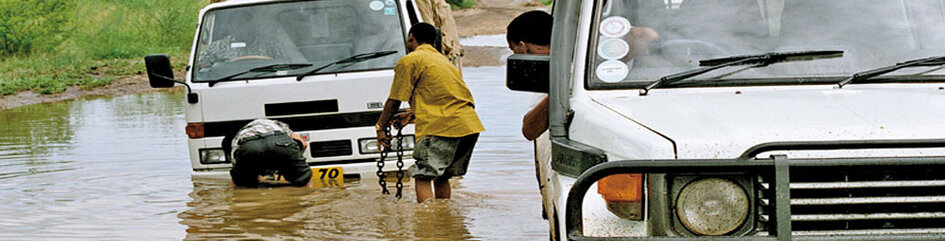
YOURS is back after a short summer break with an exclusive Brian’s Column, our correspondent on youth and road safety issues in Africa. In this column, Brian talks about the African season where many roads are flooded and where road safety is partnered with water safety for young travellers all throughout the region. Read more about this phenomena here!

I want to salute every one to my magical month and year! Friends, August is well and truly here and I am officially 27! I am not happy with many of you who didn’t deliver anything for my birth day: it seems you forgot my unavoidable insatiable appetite for les gateaux (French for The Cakes) 😛 I know, you sent me great birthday wishes through social media, so I can forgive you-a little bit! On the bright side of life, everybody’s is just feeling great, I can sense that. Without taking much of your most treasured time , I’d like to thank you for staying and continuing to encourage your colleagues to stay alive on the road. Now, I need you to calm down, will you? This isn’t gonna be a full lecture on water safety so don’t worry but it is a focus on an area of safety that has high importance…so, here we go…

The African Wet Season can be a very dangerous period for commuters.

For those who didn’t know, 98% of Africa has 2 seasons, to say the least: The dry-dry season and the Wet-Wet Season. Apparently, there isn’t a clear cut and pronounced difference in weather seasons like Winter, Summer, Spring and Autumn, but rather an uncoordinated, unpredictable dry and wet conditions possibly being influenced by a lot of reasons ranging from climate change to the mood of our Gods? haha. The point here then becomes that, especially in wet conditions, there is a good chance that there is going to be floods, which over the years have improved their action potential by covering roads, stalling transport of especially young people of school going age, young people doing commercial business in towns and the local communities.

With a lot of frowns on the design of many African roads where drainage wasn’t an important scoring indicator, there is a very good opportunity that water will take a nap or may be play table tennis on these roads. Inevitably, you will want to drive through these same roads to catch a soccer game, rush for one of those lectures which you never want miss (like mine 😀 ) or catch up with friends. 

For people travelling to school and beyond, the travel can be treacherous.

If you are like myself, a certified aquaphobic freak (apart from showering of course) who fears water and successfully never learnt to swim, the following tips may be of interest to you:

WATCH OUT:

  • If you are able to correctly judge (and you can only do this if you are not drunk) that water that has fallen only 0.4metres and garnered a speed of 3.2 km/h, the car you are in or driving is a strong risk of being swept off the road!
  • Did you also know that 0.6 meters height of water can float a car except if it is open and can let the water through?

Assuming you find yourself in this situation (and I am holding my rosary beads and praying it doesn’t happen), what you going to do? Switch off the car, sip a beer and play that Green Days Wake Me Up When September Ends? )…Nope…

  • The golden rule is to avoid water if you can’t swim.
  • Do not try to stand in fast flowing water. Should a foot become trapped in the rocks the river will force you over usually in a face down position, try to always face up stream if you are forced to stand in fast flowing water.
  • Make yourself as light as possible, remove your heavy boots, the dark muddy water will make you float higher. Stay away from white foaming aerated water, it is soft and you will sink deeper into the water. Keep your lungs inflated.
  • Try to get into a back-float on your back with your feet in front of you and your head up facing down river. Make use of the water rushing past you to push you up. Keep your back at 45 degrees with the water. With your elbows out, and hands down 45 degree you take up a ‘Lazy boy’ position. This will give you the maximum lift and keep your head above water.

Flooded roads pose serious water risk dangers for travellers in Africa.

  • The river usually flows fastest in the middle and by maintaining a slight angle to the flow the river will steer you to the side. By opening and closing your hands you can steer yourself to the inside bend of the river where you will be washed out on the sand. The closed hand will feel more water force. With this you have used the least amount of energy and are able to use the force of the water that is around you. This will calm you and you will stay in control.
  • Stay away from rocks and vegetation. Rocks normally injure you easily and the river may raise more and the vegetation may keep entrap you as the water flow through it. The flow will be slower on the inside of a bend in the river. Go for the white sand. There is also wood for fire. In the wild be careful for crocodiles, as these banks are also their resting area.  If you find that the water is slowing down and your head is getting lower into the water try to move your closed hands in and out, all on your back, lifting and pushing you to the shore. Credits to Arrive Alive Africa for the tips on water safety 

As if road safety alone wasn’t enough to commit to, we must embrace all forms of safety to ensure we as young people can be safe on the roads. Sadly, many roads do become flooded at this time of the year and therefore water safety while traveling on the roads becomes a necessity! At this time of the year, water safety and road safety are engaged! #StaySafeInAugust

Just wed by Vicar Brian – Road Safety with Water Safety in the African Wet Season

RTIRN Small Grants Programme – Call for Research Proposals

RTIRN Small Grants Programme – Call for Research Proposals

The Road Traffic Injuries Research Network (RTIRN), along with support with the World Bank, launches the “RTIRN Small Grants Program”. This program is set to support the work of RTI researchers in Low and Middle income countries. Offering grants of $20,000 – $27,000 for high quality research in the prevention of road traffic injuries. Read more below.

The Road traffic Injuries Research Network (RTIRN) is a partnership of over 785 individuals and institutions – Government, Academic and Non-Governmental from over 88 countries that collaborate to further research on the impact and causes of Road Traffic Injuries (RTIs) in low- and middle-income countries and to identify appropriate interventions to the problem.  The vision of the RTIRN is to reduce the burden of road traffic injuries, particularly in low- and middle-income countries through the promotion, conduct and utilization of research.

To achieve this vision, the network has set a goal of establishing networking mechanisms and assisting in the creation of partnerships between RTI researchers and institutions globally, as well as supporting research and research capacity in low- and middle-income countries. To this end, the RTIRN, with support from the World Bank Global Road Safety Facility, announces a Call for Research Proposals under a Small Grants Program.

Thematic Areas and Focus:
The overall goal of this grant program is to support high quality research to reduce the burden of road traffic injuries in low and middle income countries. Under this goal applications are encouraged (though not exclusively) to address the following themes:

  • The 5 pillars of road safety as described in the Decade of Action plan (see http://www.who.int/roadsafety/decade_of_action/plan/plan_english.pdf);
  • Epidemiology, risk factors and determinants of road traffic injuries
  • Interventions for preventing road traffic injuries (primary prevention, acute and continuing care, rehabilitation)
  • Economic and policy analysis of road traffic injury policies and programs

All valid scientific approaches – quantitative or qualitative – will be considered and must be appropriate to the goals and objectives of the study. The location of the study must be in a low or middle income country and projects are expected to last 1 year.

Number of Grants:8-12
Award Amount: USD $20,000-27,000 each award

Eligibility Criteria:
Eligible applicant should be a partner of the RTIRN (or can become a new partner) and be a national of a low or middle income country (see http://data.worldbank.org/about/country-classifications/country-and-lending-groups for a World Bank classification of low and middle income countries). Applicants must be currently employed by or registered with a recognized institution in their country of residence.

Program Requirements:
These funds may be used by recipients to cover the costs of research related activities including the following:

  • Field work (including fees for data collectors, interviewers and other field staff if employed as part of the study);
  • Equipment, software, books, and materials for research; and
  • Research related travel expenses for those recipients conducting field research in another site (grant funds may NOT used to support attendance at conferences). Travel for investigators from HIC, or for investigators to travel to HIC is not permitted.

Consult the full terms and conditions before you consider applying!

Full details of the small grants fund for research can be found here.