Walk this way: pedestrian road safety must be stepped up worldwide

Walk this way: pedestrian road safety must be stepped up worldwide

In its continued feature on global road safety in partnership with the Road Safety Fund, the Guardian publishes is latest article on Global Road Safety in Focus as part of their development features. This article focuses on the latest international push for pedestrian safety. More than 270,000 pedestrians are killed on the roads each year. Transport policy should pay more attention to their needs

Walking is the most common means of transport in Africa. In Uganda, there are pedestrians everywhere: schoolchildren walk to school, adults stroll to work, elderly people go for jaunts about town. However, increasing motorisation and urbanisation have led to rising numbers of deaths and injuries among this most vulnerable category of road users.

According to the annual crime report by the Uganda police, pedestrians accounted for 39.1% of traffic-related deaths in 2011 – the most of any category of road users – and 26.4% of those injured in traffic accidents. Similar figures can be found in many other parts of the world.

More than 270,000 pedestrians are killed on the roads each year, which represents 22% of the 1.24million annual road-traffic deaths worldwide, the World Health Organisation says. In low- and middle-income countries, nearly two-thirds of which have no policies to protect pedestrians, this figure is closer to a third of road deaths.

While walking remains the common form of transport, motorization has also increased in Africa.

Kampala is no different. The motorisation of Uganda’s capital city has increased the risks for pedestrians, who compete with vehicles and motorcyclists for space on the narrow and congested streets.

There are an estimated 800,000 vehicles in Uganda, about half of which are in Kampala. This has resulted in heavy traffic jams and heightened the risk of injury and death to pedestrians. The situation is exacerbated by the city’s roads, which have not been expanded to meet growing demand. Even new streets are too narrow, with pedestrian lanes largely nonexistent. Where they do exist, the lanes are abused – many are used to park taxis and motorcycles, or for trade by street and market vendors.

Children often face the greatest risk of injury and death. A 2011 report analysing data from Uganda’s National Paediatric Emergency Unit showed that 73.5% of traffic injuries among under-13s in Kampala occurred while the children were on foot. Motorbikes were the most common vehicle involved in those collisions, followed by buses and cars.

Despite the dangers pedestrians face, they have been neglected by transport and planning policy. People travelling on foot require barriers and bollards to separate them from other road users. When constructing roads, the government should include pedestrian lanes and crossings, and the police should enforce speed limits in areas with high pedestrian volume. Policies should also encourage city dwellers to cycle and walk instead of using cars.

Pedestrian needs must be taken into consideration when road policy, transport planning and land-use decisions are being made. In particular, governments should consider how non-motorised forms of transport could be integrated into safer and more sustainable systems. Read the original article at the Guardian here.

Key partners are supporting the second Kenya Training of Facilitators

Key partners are supporting the second Kenya Training of Facilitators

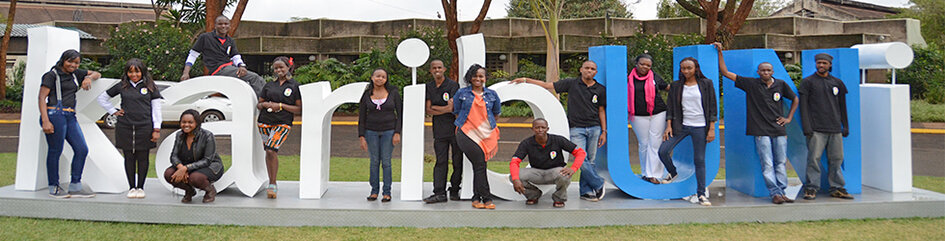
Last year, we run the first Kenya Training of Facilitators in Nairobi, Kenya with a group of talented youth leaders from around the country who went on to reach hundreds of young people in person and thousands of young people via the ripple effect. This year our key partners, Michelin, Tom Tom, UNEP, Share the Road, Kenya Red Cross, ASIRT Kenya and more local NGOs are supporting the second training of facilitators taking place next month (November 2013) at the United Nations Campus, Nairobi, Kenya.

Next month, YOURS will run the second Training of Facilitators in Nairobi, Kenya, building on the success of the First Kenya Training of Facilitators that took place last year. We thank our key partners that have made the second training possible, which will give a new group youth leaders to opportunity to be trained on road safety topics and facilitation skills. We highlight our key partners below

We will also be working with a host of local NGOs on the ground in Kenya who will work with us to deliver a new cohort of facilitators who will, after the training, run their own workshops across Kenya. The training will run from 25th November 2013 – 6th December 2013  is being hosted at the United Nations Campus in Nairobi, Kenya (supported by the United Nations Evnironment Programme; Share the Road).

Floor Lieshout, Director of YOURS said, “Along side Safe Roads, Safe Vehicles and Post Crash Care, we need Safe Road Users. Youth play a fundamental role in creating these safe road users. Their participation must be built in to road safety intiatives. When youth are well informed, inspired, skilled and given a real chance to participate, they are very powerful allies to energize the `road safety revolution´ in a country as peer educators, advocates and innovators”.

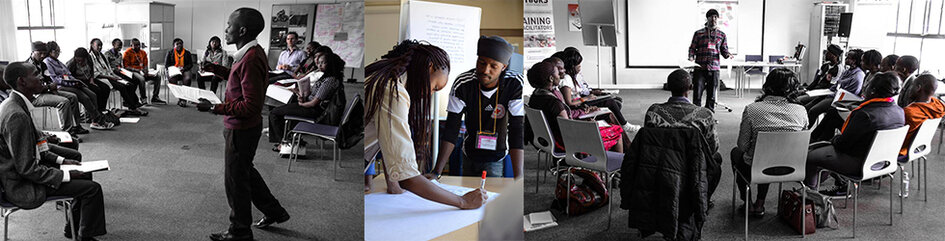
The YOURS Training of Facilitators takes place over a two week period and is an intensive training that prepares young people in understanding road safety theory and risk factors alongside practical facilitation skills. Week one focuses on road safety knowledge and skills to be an effective peer educator, week two offers in the field practical experience.

Key outcomes of the training are as follows:

  1. Increase young people´s understanding of the road safety crisis in Kenya and the risks they face on the roads (e.g.: speeding, helmets, distracted driving).
  2. Promote and increase the involvement of young people in road safety efforts in Kenya.
  3. Build the knowledge and develop the skills of 10-15 youth leaders in order for them to implement their own road safety activities

As always, YOURS will be ‘live’ reporting from the event which will also bring back last year’s facilitators to share their experience of independently running workshops after the training and their overall advice for new facilitators creating an on going support mechanism.

Fixers Feature: Abi Phillips – Are young people dying to drive?

Fixers Feature: Abi Phillips – Are young people dying to drive?

We recently featured an article about Fixers, a unique UK based campaigning platform that gives young people the opportunity to tackle issues they feel passionate about. The forum, entitled ‘Road Savvy’ was a unique dialogue between passionate youth road safety advocates and decision makers. The young people involved in the event showed relentless energy and determination for road safety for a multitude of personal reasons and we were so impressed by their passion that we have teamed up with Fixers to spotlight each road safety campaigner. We continue our feature with the story of Abi Phillips.

Road accidents are the number one killer of young people in the UK.  It’s a fact that Fixer Abi Phillips knows all too well, as her sister was killed weeks before her 18th birthday after accepting a ride from an unlicensed teenaged driver.

Now Abi has joined Fixers to encourage greater road safety among young people. Watch her story, which was featured on ITV News Meridian (W) on Thursday 4th July in the right column.

Abi, from Liphook, Hampshire, was nine years old when her sister, Kelly, died in the road accident.  Kelly had accepted a ride with an unlicensed driver who lost control of the car and hit a tree at 80mph, killing them both instantly.

Abi talks about losing her sister in her story (centre picture) and discusses road safety with her friends.

Now 18 herself, Abi has found it hard to accept the reality that she is older than her sister was at the time of her death. 

‘Turning 18 should be the most exciting birthday because you turn into an adult,’ she says.‘For me it was very difficult because of my sister’s death.  My older sister was my role model, and then she was just gone because of a silly mistake.’

Rather than dwell on what could have been, Abi has joined Fixers to encourage greater driving skills among young people through a short film, and hopes the driving test can be overhauled to teach better road safety. ‘I feel that doing this road safety campaign is the only way I can really get anything positive out of her death, because I just don’t want this to happen to anyone else,’ she says.

In the film, Abi speaks with other young drivers about road safety, and Emma Gardner from Drive IQ who believes there may be an evolutionary reason for a lack of skills among young drivers.

Read more about the ‘Road Savvy’ Forum here.
YOURS will be featuring more stories from road safety ‘Fixers’ and sharing their inspiring stories in the coming weeks so be sure to come and check them out. To find out more about Fixers in the UK, click here.
Shell China publishes road safety micro movie – In China, For China‏

Shell China publishes road safety micro movie – In China, For China‏

Our friends at Shell Oil recently shared their latest road safety project with us; a road safety film that has been produced with Shell workers to highlight the issue of road safety. It tells the touching tale of a young girl named Wei-Wei, who waited for her father to come home on her birthday and ends with some top tips of road safety. It is a poignant and unique approach in engaging the workforce of an company to promote road safety for the ‘human’ reasons; preventing heartache and loss caused by road traffic crashes.

Do you know how many people are killed or injured in road traffic crashes in a single week? Have you ever thought about what YOU can do to improve Road Safety? Well, at Shell some of our China colleagues have found a smart way to promote road safety…by being a Shell movie star!

In June, the Shell China Country Leadership Team endorsed a special project to support China’s Road Safety education in a refreshing way. Now, after several months’ of hard work, the final product is ready to be shared.

Project Manager Bernd Marx says, “What has made this film special was that all the actors were Shell China employees and their families.”

More than 100 colleagues and kids from more than 15 different Shell China businesses contributed to this Shell China Road Safety video with the aim to raise the awareness on road safety internally and externally.

What’s the micro movie all about?  We’re telling the sad story of little girl named Wei-Wei who lost her father in a tragic road traffic accident. The film gives a clear message about the importance of road safety in a natural, storytelling manner, while passing key road safety messages around Shell’s Life Saving Rules.

The great performances of the Shell China Staff and the whole atmosphere of the traditional Chinese culture make the message in the film so powerful. It gives food for thoughts on how we individually can raise the awareness of road safety to ourselves, our families and the public in general and for future generations.

Shell China Road Safety micro movie – In China, for China is definitely a movie worth seeing, especially because its shows that road safety matters to all of us and that everybody has a role to play.

Click on the following link to enjoy the movie and share it with as many colleagues, family members and friends as possible. This is the first thing YOU can do!

European Night Without Accident takes place on 19th October

European Night Without Accident takes place on 19th October

The European Night Without Accident was created in Belgium to aim towards a night of ‘zero’ fatalities related to drink and drug driving. Spearheaded by the Responsibile Young Drivers organization, the night has been extended to all European Union countries over the past ten years with the support of the European Commission and will take place this Saturday 19th October all across the continent.

The European Night Without Accident is an awareness campaign organised each year in nightclubs all over Europe on the 3rd Saturday of October.

The action takes place in two phases. First, at the entrance of the nightclubs the volunteers, aged between 17 to 29 years old, encourage each group to choose a “designated driver”, who agrees to make a promise: he commits himself to be sober when he sits behind the wheel of his vehicle. The volunteers ask the clubbers who want to participate to wear a bracelet to be recognizable. 

The idea behind ENWA is a simple one, young people talking to other young people about getting home safely and avoiding drink driving.

When the “designated drivers” leave the nightclub, we give them the opportunity to undergo a breath analysis to check if they have honoured their commitment. In some nightclubs, drivers will also be asked, on a voluntary basis, to do a drug test. If they are under the legal limit, the “designated drivers” are rewarded with small presents offered by our sponsors. If this is not the case, we encourage the person to leave his/her car on the side or to hand the keys to a friend who did not drink any alcohol or use drugs, 

Our goal is not to be repressive or to spread a negative message; on the contrary we always try to dialogue with the group in order to find the most reasonable solution to get back home safely.

Young people speak to other young people
The particularity of the European Night Without Accident is to organize a unique event run by young people who want to convince other young people about the importance of a responsible behaviour behind the wheel”, which is credible with young people. The dialogue between youngsters is the major asset of the event. The use of a simple language and the friendliness of the exchanges enable the message to be conveyed further and is surely more persuasive. Volunteers do not use a repressive or superior approach, nor a ‘fatherly-motherly’ tone, which are attitudes that young people refuse and don’t want to understand.

The European Nigh Without Accident came about in Beligium after observing that most crashes and fatalities happened on the weekend, when young peope are out having fun.

Changing young people’s mentality
The most important aim of the project partners is to draw young people’s attention to the importance of the responsible driving and to reduce the number of the accidents in which young people are involved. The method: to insist on the necessity of modifying the driver’s behaviour, which is the only way to obtain permanent results. In a long term, a positive approach of the problem gets better results.

Read about the results of the European Night Without Accident for the past ten years below:

For more information about ENWA you can contact our:
CORE Group Representative for Europe, Mr Axel Druart.

Targeting taxi drivers in LMICs can save young lives – a Kenya example

Targeting taxi drivers in LMICs can save young lives – a Kenya example

We highlight a recent article by The Guardian with our own experience on the topic of road safety measures targeting taxi drivers in low and middle-income countries. As part of their focus on global road safety development the Guardian place a focus on a new UN Habitat report calling upon stakeholders to regulate the ‘informal taxi industry’ and we share our experience of our how our young Kenyan facilitators are engaging with this industry through their own workshops.

This article has been adapted from the Guardian’s article which can be found here.

Improving the safety of minibus taxis is critical to reducing deaths and injuries from road accidents in the developing world, according to UN-Habitat, the United Nations’ human settlements programme.

“In Kenya we call them matatus; in Dar es Salaam they are dala dalas. In South Africa they are simply called taxis,” says Andre Dzikus, co-ordinator of urban basic services at UN-Habitat. “And they’re a very important player at the moment, but they’re … not really addressed by the stakeholders who are doing transport planning in cities. The highest-impact strategy [for improving road safety] would be to make the informal transport sector part of the solution.”

Dzikus was speaking before the publication of the group’s human settlements report, published every year on World Habitat Day. The latest edition focuses on urban mobility. Policy challenges on that front include mitigating greenhouse gas emissions, ensuring equal access to transport services, reducing congestion, and dealing with crime on transport networks. But road safety is also a major focus.

The average ‘dala dala’ a bus service in Tanzania.

Road traffic crashes are the leading cause of deaths among 15-29-year-olds, according to data from the World Health Organisation. About 1.24 million people are killed in such incidents every year, nearly double the toll for malaria. And more than 90% of road deaths are in low- and middle-income countries.

As well as the personal costs of road accidents – such as fatalities and life-altering injuries – are costs to a country’s economy. One study found that road accidents cost developing countries about 1% of their gross national product each year; more than some of those countries receive in annual foreign aid. Dzikus says minibus taxis, ubiquitous in many cities of sub-Saharan Africa, are an important piece of the road safety puzzle.

“In many developing countries, 50% of trips are done through informal transport providers,” he says. “A lot of the [shared taxis] used in developing countries are secondhand vehicles, either imported from Europe or from Japan, and are relatively old. Some of them might not even be road-worthy … Some of the drivers work 14 hours, so that becomes a hazardous issue.”

But, says the report, a few policy steps can go a long way toward making shared taxis safer. Governments should start by introducing driver-training programmes, requiring seatbelts in minibus taxis, and obliging motorists to get their vehicles inspected regularly.

Over in Kenya, our trained facilitators identified informal transport providers as posing a threat to road safety and used their facilitation skills to run a session with Boda Boda Drivers in Kenya. Read more here.

YOURS commends the report calling for increased road safety measured to be targeted at the ‘informal’ transport industry, a service that has, in many parts, gone unregulated with disastrous road crashes. Last year, YOURS’ Training of Facilitators in Kenya brought together a group of young Kenyan leaders passionate about road safety to tackle some of Kenya’s most pressing road safety issues.

The premise of the Training of Facilitators is train a group of young people in key elements of road safety theory in both an international a local perspective coupled with on the ground practise of road safety facilitation. A key discussion that came out of last year’s training was the increasingly dangerous habits of the transport sector. This included the speeding and lack of seatbelt use of ‘matatu’ (mini bus taxis) and lack of helmet use of the ‘boda boda’ taxis (motorcycle taxis). A lively discussion ensued tackling some of the myths surround the perceived hygiene concerns in sharing helmets and some of the easy solutions.

The Kenyan facilitators identified the informal transport industry as a key target group to reach with the own youth and road safety workshops.

After the Kenya Training of Facilitators, the youth facilitators have already run a number of sessions targeting public transport providers including the boda boda and matatu community:

A session run by our facilitator from the Kenya Red Cross targeting the matatu and boda boda community. Read more here.

We take the opporunity on the publishing of the report by UN Habitat to encourage further focus on the informal taxi industry in low and middle-income countries. Our young Kenyan facilitators have more workshops planned with the industry (who are oftern their own peer group) to convince them of the importance of implementing road safety, not only for their own good practise but to save their passengers’ and their own lives.

We also call upon decision makers in low and middle-income countries to implement effiencetlaw and enforcement of road safety laws, safe infrastructure and roads, safe vehicles and road users as well as invest in quality post crash care. 

Find out more about our workshops and their impact here.