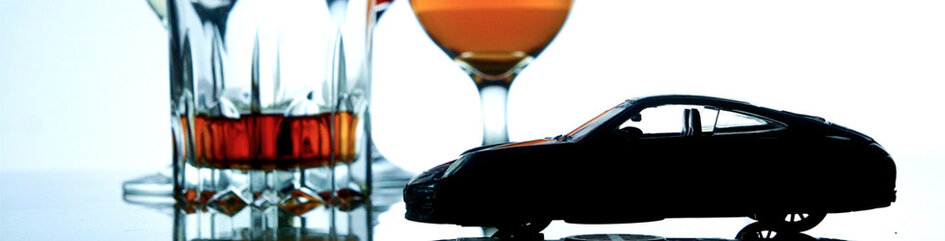
Delft Road Safety Course opens for participation for 2015

Delft Road Safety Course opens for participation for 2015

After the very successful courses in 2012, 2013 and 2014, Delft Road Safety Courses decided to continue the course in 2015. The 2015 course programme will be largely inline with the previous courses and will be supplemented with key assets of the FIA Foundation Road Safety Leadership Initiative. Participants from all over the world, who took part in these courses, awarded the course with very high ratings.

Those who are interested in participating are invited to register online (www.delftroadsafetycourse.org) and submit a motivation letter in English. On the basis of this motivation and further qualifications, the course leader will decide on admittance to the course.

Background

Delft Road Safety Course lecturers are from universities and research institutes with the highest international reputation. Moreover we have policy makers and experienced road safety advocates to make a valuable contribution to the course. Our initiative strongly supports the United Nations Decade of Action for Road Safety 2011 – 2020.

Capacity building is seen as a key-component for improving road safety in LMIC’s and this course offers a unique opportunity for the professional development of road safety professionals.

The Delft Road Safety Course in action.

Who’s it for?
The course is targeted at road safety professionals from LMIC’s who are or will be active in road safety for a substantial part of their professional career. Potential participants may have a background in engineering, behavioral sciences, public health, law enforcement, transportation/land use planning, statistics, economics, education and public policy.

Registration Fee and Scholarship

The course fee amounts to €5100, including lodging for the 2 week period. Costs for travelling to and from Delft are not included.Registration willclose at July 1st 2015. The number of places is limited and they are available on a first come, first served basis! A limited number of scholarships is available.

FIA Foundation continue their support of the Delft Road Safety Course.

A scholarship will cover the course fee and the travel costs to/from Delft (economy class). The first deadline for submitting a scholarship application is April 1st 2015. The procedure for registering, scholarship application and awarding is explained on www.delftroadsafetycourse.org check out the information leaflet attached above.

New report: ‘Young Adults’ Licence Behaviour’ in the UK – RAC Foundation

New report: ‘Young Adults’ Licence Behaviour’ in the UK – RAC Foundation

A new report entitled, ‘Young Adults’ License Behaviour – Holding and Driving Behaviour in the UK’ written by the RAC foundation makes some interesting examinations on the changing trends in youth’s lives. Today’s young adults are experiencing a delayed transition to adulthood. Many young people are staying in education longer, entering employment later and making the transition to residential independence, partnership and parenthood at older ages.

A massive change of social dimensions relate to are questioned in this report. Since the mid-1990s there has been a decline in car use amongst young adults, especially young men. This report presents the individual, household and local level characteristics that are affecting the driving behaviour of 17-34 year olds in the UK.

The findings are fascinating, not only because they help explain the current situation, but because they point towards how car use may change in the future as young people move into employment, form families and change their residential status. If, as this report suggests, increased levels of education and female employment lead to greater licence-holding among women, car use on the roads tells us something about what is happening in society, which is of interest and relevance beyond transport. Equally, increases in educational enrolment and unemployment, or a rise in the proportion of young adults living in the parental home, may be associated with a decline in the proportion holding a full driving licence.

What are the changes in young adults’ behaviour towards holding a licence and driving behaviour? This report studies those trends.

This report reminds us that transport generally, and car use in particular, provides a means to an end. There is much talk about reducing car use, encouraging modal shift and meeting environmental, social, safety and economic policy ends. But it is too easy to forget that how people travel offers a window into how society is operating, both now and in the future. 

Key findings:

  • In total, 65% of males aged 17–34 and 58% of females aged 17–34 held a full UK driving licence in 2009–10.
  • Net of the effect of other factors (in other words when these have beentaken account of), the most important predictors of licence-holding among men and women aged 17–34 are age, area type, level of education, individual income and living arrangement. Other variables found to have a significant association, net of other factors, are economic activity status and housing tenure.
  • Young men and women living in London are significantly less likely to hold a full UK licence than are those living in other urban areas. Those who live in rural areas are the most likely to hold a full UK licence.
  • Individual income has a positive association with the likelihood of licenceholding, especially for women.

New studies show that the level of education, individual income and living arrangements impact on the the quantity of licence holders in the UK.

  • Even after controlling for other variables (including income and economic activity status), those with intermediate (i.e. GCSE) or advanced (i.e. A levels or a degree) education are more likely to hold a licence than those with no qualifications. This educational gradient is far steeper for young women than for men.
  • Once other factors are held constant, employed young adults are more likely to hold a full UK licence than those who are unemployed / economically inactive. Additionally, being a full-time student is associated with a lower likelihood of holding a full UK licence among men, but not among women.
  • Once other socioeconomic characteristics are controlled for in a multiple regression, living in the parental home is associated with a slightly lower likelihood of licence-holding for both men and women. 


Since the mid-1990s there has been a decline in car use among young adults, especially among young men. This decrease is associated with both a reduction in the proportion of young adults who hold a full driving licence, and a decline in the average annual number of car miles driven. It is important to understand the factors associated with young adults’ driving behaviour, since this age group may be leading a trend away from car use.
Register your event for the Third UN Global Road Safety Week

Register your event for the Third UN Global Road Safety Week

The World Health Organization website have opened a calendar of events to map activities taking place during the Third UN Global Road Safety Week taking place on 4-10 May 2015. For all organizations planning to run events during the week, you are encouraged to register at the WHO website. It is hoped that sharing information about your event will inform and inspire others.

Governments, international agencies, civil society organizations, private companies – all of us who travel the world’s roads – are encouraged to plan and host events on 4-10 May 2015 to mark the Third UN Global Road Safety Week. The theme of this Week is “children and road safety”. The Week will be celebrated worldwide under the banner #SaveKidsLives.

By completing the form, information about the event you are planning will be listed on the “activities around the world” section of the official global web site dedicated to the Week. It is hoped that sharing information about your event will inform and inspire others and will facilitate coordination of events in the same city or country.

Information received about an event will not be edited, and will be presented in the language in which it was received.

Kindly note that the Decade secretariat, hosted by WHO, may use its discretion about listing organizations on the Week’s web site; should there be any doubt as to the legitimacy or reliability of an organization, the organization’s event will not be included in the global calendar.

Drying up the Indian highways – A ‘risky’ war to counter drunk driving

Drying up the Indian highways – A ‘risky’ war to counter drunk driving

Long standing friend of YOURS and international road safety advocate Mr Harman Singh SIdhu single handily took on the might of Liquor Mafia, well supported by the State and Politicians, to seek removal of liquor shops dotting the Indian Highways. Right out of a Bollywood movie, facing threats to life, being chased by the goons while out to get photographs as evidence, he carried on supported by a core team of his NGO, ArriveSAFE.

Wheelchair bound Harman fought for more than two and a half years and finally got Orders from the High Courts for removal of Liquor Shops from Highways of three States, Punjab, Haryana and Rajasthan. Now, ArriveSAFE is working on getting enforcement stepped up. Sample this; half of Punjab’s districts have not issued a single ticket for drunken driving in the past two years. Harman wrote this article for YOURS to share the struggles of working to follow through on a campaign but shows that hard work and resilience pays off in the end.

Harman became an international advocate for road safety after being in a crash himself.

Drink driving – a know cause of road crashes
India has the highest number of deaths due to road crashes in the World. As per WHO reports; drink driving is one of the main contributing factors. Studies confirm that Alcohol results in impairment, which increases the likelihood of a crash since it produces poor judgment, increased reaction time, lower vigilance and decreased visual acuity. Apart from its direct impact on crash outcomes, alcohol is believed to affect other aspects of driver safety such as seat-belt wearing, helmet use, and speed choice etc. Source: World Health Organization – Global Action Plan for prevention & control of noncommunicable diseases 2013-2020).

Indian Roads: Free availability of alcohol along high ways
The mission started in April 2012 when we started collecting information through the RTI (Right to Information) and got startling data, “185 liquor shops on a 291 kilometres stretch of National Highway 1 in the North Indian States of Punjab & Haryana.” One liquor shop every 1.5 kilometres. If one drives at the National Speed Limit of 90 Km/Hr, one would come across a well-decorated liquor shop every one minute tempting the driver to stop for a drink.

Highways littered with alcohol vendors, readily accessible for drivers.

Similarly, all National and State Highways were dotted with Liquor Shops open virtually 24 hours a day. Most of them so close to the road that one just stretches out an arm out of the window and get a bottle. There were “Government approved Taverns” situated next to the liquor vends prompting the road users to drink. With such easy availability we cannot expect the negligible Police Force for Enforcement on drunken-driving to give good results.

Glaring facts came to our notice like, if a Liquor Shop remains operational at a given location for one year, the shop can operate from the same location for coming years with immunity. All these Liquors Shops were “unauthorized” as they had not even taken the mandatory permissions.

Step One: Requested States to Close These Liquor Shops
Armed with the information supported by data, we met the Ministers and Senior Officers of the State Governments requesting them to amend the Excise Policies so Liquor Shops are not setup along the Highways.

To my utter surprise, instead of a positive response I started getting threats to my life. Besides this the Government officials expressed their “inability” to act against the powerful businessmen and justified the location by saying that the States got millions of dollars per year through Excise Tax that was utilized for welfare activities. They were completely insensitive towards the lives being lost and families getting shattered due to the avoidable road crashes.

We shared the data collected and the studies conducted with the leading media houses and then carried lead stories on how the Government is conniving with the businessmen and risking lives of commuters.

Buying liquor at the road side while driving has become a frequent occurance on Indian roads.

Step Two: Seeking Relief From The Court
The only option left was to knock the doors of the Hon’ble High Court of Punjab and Haryana, we strengthened our petition by citing International and National Studies and Reports by WHO, GRSP and NIMHANS (National Institute of Mental Health and Neuro Sciences) etc. along with photos of the liquor shops situated along the Highways to show the reality in the Court.

We filed a Public Interest Litigation in the Court in December 2012 and on 18th March 2014 the Bench headed by the Hon’ble Chief Justice passed the final and a landmark judgement Ordering that the Liquor Shops should neither be Accessible nor Visible from the Highways (Both National and State) implying that they would cease to exist along the Highways.

More than 80% of the liquor shops along the Highways have been closed, a success, which is hard to believe.

ArriveSAFE filed a similar Petition in the High Court of Rajasthan and got a boost when the Court in its Order dated 15 January 2015 stated that Liquor Shops should be removed from Highways forthwith.

Step Three: Supreme Court Endorses the Order
The States moved the Supreme Court seeking permission to be allowed to run liquor shops, at least on State Highways. “A blessing in disguise” as per Sidhu as the Supreme Court Orders would be applicable all over the Country. We expect a Positive Order in the next hearing, which hopefully should be the final.

The Bench in the previous hearing observed, “…if it is valid for national highways, it is valid for state highways also. What is good for the Centre is good for the states as well. It is a good idea not to allure highway users into drinking and driving. If there is a reasonable method, which the governments want to adopt, we have no difficulty in approving it. At the end of the day, it is for the good of society at large.”

The Way Ahead: Generating Awareness on the Consequences of drunken driving and getting enforcement stepped up.

Daily, 25 lives are snuffed out on the roads of States of Punjab and Haryana, drunken driving being one of the major contributing factors. The Police have 111 Alco meters but only 65 are in working condition and merely 55 (3.5% of the total force of district) deployed in traffic wing while 1,575 are deployed for handling law and order and VIP duties. 

Sign reads ‘Alcohol bar up ahead, buy English and Indian liquor and cold beer’ enticing drivers to stop for a drink.

A study with 2113 respondents revealed that 97% believed that that driving under the influence of alcohol was “unsafe”, still 46.6% respondents admitted to have driven after consumption. 43.5% agree that they have travelled in a public vehicle where the driver had consumed alcohol confirming the role of alcohol in road crashes. 88% of the respondents from Punjab and 73% from Haryana felt there is little chance of being caught for drunken driving confirming negligible enforcement.

You cannot make an entire mass of road user fall in line with negligible enforcement and lack of knowledge. ArriveSAFE has started an awareness campaign in the States of Punjab and Haryana named “Project Hosh-Yaar” (Be in senses while driving, my friend). Awareness campaigns are being conducted in coordination with the Punjab and Haryana State Road Safety Councils and setting up local Road Safety Clubs that would initially focus on Drink Driving, to start with. Efforts are also being made to get enforcement strengthened.

The Awareness and Advocacy for Enhancement of Enforcement is being done under the Grants program of RS10 Project.
The Project for Removal of Liquor Shops from Highways is totally self-funded.

YOURS congratulates Harman for his tireless efforts in changing the infrastructure on India’s roads to prevent this leading risk factor stepping into the vision on drivers. Of course, these efforts will resonate across the board, especially with youth who are seeing a continued demise through alcohol abuse. We anticipate further positive results alongside Arive Safe’s policy to educate the masses on the effects of drink driving.

American Super Bowl runs campaign: Fans Don’t Let Fans Drive Drunk

American Super Bowl runs campaign: Fans Don’t Let Fans Drive Drunk

The Super Bowl is America’s most watched national sporting event. On Super Bowl Sunday, February 1, there will be lots of game day socializing that may include drinking. This sporting event is, by any stretch of the imagination, a mix of celebration, national pride and often a few drinks. That’s why a new campaign has been launched to curb drink driving during this period.

That’s why the National Highway Traffic Safety Administration (NHTSA) and YOURS are urging football fans to choose sides now: drinking OR driving. If you plan on drinking on Super Bowl Sunday, designate a sober driver to get you home safely.

NHTSA’s Fans Don’t Let Fans Drive Drunk campaign encourages people to make plans ahead of time that will prevent them from getting behind the wheel of a vehicle after drinking. Driving impaired could result in injury or death for you or others on the road. 

According to data from NHTSA, in 2012 there were 10,322 people killed in alcohol-impaired-driving crashes in the United States—31 percent of all crash fatalities in the nation. A driver is considered alcohol-impaired with a blood alcohol concentration (BAC) of .08 or higher, the legal limit in all states. This February 1, don’t become a tragic Super Bowl stat.

“Drunk driving is completely preventable,” state YOURS. “All it takes is a little planning. We want fans to remember that it’s a choice. Drink or drive—but never do both.”

For those who plan to drink, leave your keys at home. Designate a sober driver, whether it’s a friend, relative, taxi, or public transportation.  For those who plan to drive, refrain from any alcohol. Instead, enjoy the game with food and non-alcoholic drinks. Being a sober, designated driver is a key role on Super Bowl Sunday. You might just save a life.

Are You Drinking?

If so, don’t drive. Follow these tips to have fun, stay alive, and avoid getting pulled over or crashing your vehicle on game day.

  • Before Super Bowl Sunday, make a game plan that includes a sober driver – someone who is not drinking at all.
  •  Leave your keys at home and designate a sober driver.
  • Consider getting a sober ride or taxi to your destination, so you won’t even have the option later to drive impaired.
  • Avoid drinking too much alcohol too fast. Pace yourself. Eat plenty of food, take breaks, and alternate with non-alcoholic drinks.
  • Keep track of the number of drinks you consume.
  •  Stop drinking after the third quarter, just like they do at the actual stadium.
  •  Make sure your designated driver is sober, not just less intoxicated than you.
  • Don’t let others drive drunk. Arrange a safe way for them to get home, too.
  •  If you don’t have a designated driver, ask a sober friend for a ride home; call a cab, friend, or family member to come get you; or if possible stay where you are for the night and don’t drive until you are sober.
  • Use your community’s sober ride program [Insert your local sober ride program specifics here].
  • When you ride home with your sober driver, wear your seat belt. It’s your best defense in a crash.
  • Walking impaired can be just as dangerous as drunk driving. Designate a sober friend to walk you home.


Find out more information here.

The Driving Dead – a high end spin-off of Walking Dead for road safety

The Driving Dead – a high end spin-off of Walking Dead for road safety

Many fans of The Walking Dead know Michael Rooker for his work as Merle Dixon on The Walking Dead, but now they should know him as a safety advocate as well. The Driving Dead is a Public Service Announcement that is set up into a miniseries of YouTube videos.  They are designed to promote seatbelt use as well as discourage drinking and driving. 

While turning the popular ‘Walking Dead’ fanchise into a series about safety messages might not sound like the most riveting of storylines, the messages are actually subtly introduced against the backdrop of Walking Dead style footage in incredible locations.

Fan’s of the Walking Dead congregate on the website UndeadWalking.com and they had this to say about the series:

Many fans of The Walking Dead know Michael Rooker for his work as Merle Dixon on The Walking Dead, but now they should know him as a safety advocate as well. The Driving Dead is a Public Service Announcement that is set up into a miniseries of YouTube videos.  They are designed to promote seatbelt use as well as discourage drinking and driving.

Popular Walking Dead star Merle become road safety advocate in this new set of road safety PSAs

The web series was created by the State of Illinois’ Department of Transportation.  Although the videos are meant to entertain, the larger theme of The Driving Dead is the promotion of safety.  It’s great to see that they found a fun way to get their point across in an entertaining way that doesn’t really feel like the ideas and concepts are being shoved down the throats of viewers.  In fact, if you hadn’t told me that these were public safety videos, I’d probably still watch them anyway.

Watch the Driving Dead Series here. – Viewer discretion is advised for 18+ audiences.

Make sure to bookmark the official site for The Driving Dead at their official website at http://thedrivingdeadseries.com/ to watch the new videos as they become available and be sure to support the State of Illinois for their fantastic work on this series.