Celebrate International Walk to School Day with #SaveKidsLives

Celebrate International Walk to School Day with #SaveKidsLives

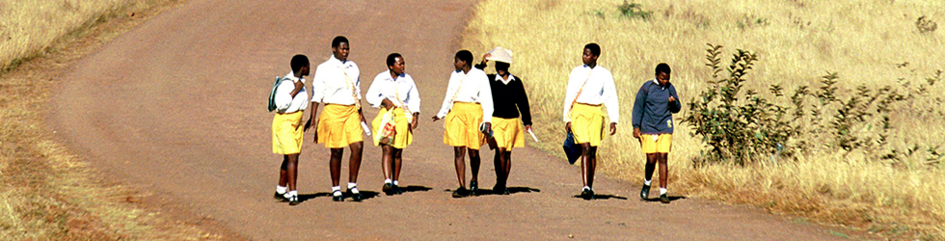
The 7th October signifies International Walk to School day. The day promotes the fact that walking and bicycling to school is fun, healthy, promotes a cleaner environment, promotes safety and has clear community benefits. As we know, all around the world, many children do not make it school. In fact over 500 children are killed everyday on the world’s roads. We encourage you to celebrate International Walk to School Day by signing the Child Declaration for Road Safety to #SaveKidsLives

International Walk to School Day is a global event that involves communities from more than 40 countries walking and biking to school on the same day. It began in 1997 as a one-day event. Over time, this event has become part of a movement for year-round safe routes to school and a celebration – with record breaking participation – each October. Today, thousands of schools across America – from all 50 states, the District of Columbia, and Puerto Rico – participate every October.

Promoting International Walk to School day has many benefits including:

It’s Fun!
Remember the thrill of riding a bike for the first time or walking to school that first day?

There’s a feeling of joy and independence —a sense of adventure—that doesn’t fade. When walking or biking, parents and children get to appreciate things they don’t notice while driving—listening to the sounds of the neighborhood, seeing friends and neighbors and feeling connected with their community. Parents, children and friends can enjoy one another’s company without the usual distractions.

Walking and bicycling events celebrate these experiences and help make them possible for others. They bring schools and communities together for a common purpose. Most of all, they are fun!

We don’t usually walk to school, but after today we found out that it’s not that far. Now we plan to walk more often because it’s fun and safe! – Parent, California

Healthier Habits
Walking and bicycling to school enables children to incorporate the regular physical activity they need each day while also forming healthy habits that can last a lifetime. Regular physical activity helps children build strong bones, muscles and joints, and it decreases the risk of obesity. In contrast, insufficient physical activity can contribute to chronic diseases, such as diabetes, heart disease, cancer and stroke.

Cleaner Environment
I love Walk to School Day. It makes less pollution in the air. It is healthy for you. – Student, California

When families decide to lace up their sneakers or strap on their bike helmets to get to school  instead of riding in a car, they help reduce the amount of air pollutants emitted by automobiles.

Promoting Safety
The best part of the walk was walking for safety to help make the children’s walk to school a safe pathway and to teach them the importance of this event. – PTA Safety Committee Member, Utah

  • Children and adults need to learn safe walking and bicycling skills.
  • Drivers need to watch for others using the road.
  • Safety problems along routes to school need to be fixed.

Many of the ways in which children can be safer on the way to school is highlighted in the Child Declaration for Road Safety.

Community Benefits
My favorite part of Walk to School Day was seeing so many families and people from our community come together to enjoy a safe and healthy morning walk to school. – Parent, Ohio

The whole community benefits from efforts to enable and encourage more children to walk or bicycle to school safely. Benefits include:

  • Less traffic congestion. According to the 2011 National Center for Safe Routes to School report, personal vehicles taking students to school accounted for 10 to 14 percent of all personal vehicle trips made during the morning peak commute times (based on National Household Travel Survey Data, 2009). Reducing the number of private vehicles commuting to school can reduce morning traffic around the school. Less traffic congestion also improves conditions for pedestrians and bicyclists, creating a positive cycle—as the community sees more people walking and biking, more people feel comfortable walking and bicycling. 
  • Stronger sense of community.The common goal of improving conditions for walking and bicycling brings families, neighbors, school officials and community leaders together. The sense of community also builds as children and parents develop walking and bicycling buddies and chat with neighbors on the sidewalk or path. 
  • Safer streets. Communities with higher rates of walking and bicycling tend to have lower crash rates for all travel modes. One reason may be that motorists drive more cautiously when they expect to encounter walkers and bicyclists. More walkers and bicyclists can also improve personal security by providing more “eyes on the street.” 
  • Lower costs. Encouraging and enabling bicycle and pedestrian trips reduces costs for the family, community and school district. Families save on gas, communities spend less on building and maintaining roads and school districts spend less on busing. In fact, one school district calculated $237,000 in annual savings. 
  • Improved accessibility. Enabling students of all abilities to walk and bicycle to school makes it easier for everyone in the community to get around, including parents with strollers, senior citizens, residents without cars and residents with temporary or permanent mobility impairments. 
  • Economic gains. Sidewalks, paths and other investments in pedestrian and bicycle infrastructure can increase home values and direct additional traffic to local businesses.


Read more about the International Walk to School Day here.

Get resources to encourage your children to walk to school safely here.

Time to deliver on promise of UN Global Goals – FIA Foundation

Time to deliver on promise of UN Global Goals – FIA Foundation

Our friends at the FIA Foundation have published a review on the Global Goals focusing on the Sustainable Development Goals.

The Sustainable Development Goals that are adopted at the UN will set the global mobility agenda for a generation.

Decisions taken over the next few years, decisions guided or influenced by the targets included in the Global Goals, will define our world far beyond the SDGs’ 2030 deadline. This is particularly true in the area of transportation, with long-term investment in everything from highways and mass transit to vehicle propulsion technologies to telematics to urban planning shaping the way our children and grandchildren will travel, their quality of life and their health. Much is at stake.

As world leaders conclude their speeches and the SDGs are formally adopted, attention will turn to practical implementation. The Global Goals encompass a wide agenda. Even within the goals and targets related to mobility there are many issues that need to be addressed. For the FIA Foundation, it makes sense to focus our efforts on a small set of key priorities on which we can make a real difference.

In Goal 3, ‘Health’, the Foundation is supporting efforts to meet target 3.6, to reduce road traffic fatalities by 50% by 2020, and target 3.9, to substantially reduce the contribution of road transport to air pollution by 2030.

Our road safety objectives include: supporting programmes and advocacy for safer vehicles, with the aim that all new cars meet minimum UN safety standards by 2020; urging governments and development agencies to star rate all roads, with the aim that we move towards minimum ‘3 star’ (out of 5) safety performance for all road users on the 10% of highest risk roads by 2020; supporting legislative change, awareness raising and enforcement to encourage national efforts to secure 100% seat-belt and motorcycle crash helmet use by 2020. This is the agenda we will be taking to the 2nd Global High Level Conference on Road Safety – and the first SDG road safety implementation conference – in Brasilia in November.

Air pollution is an even greater killer than road traffic injuries and emissions from road traffic are a significant contributor. Working through the Partnership for Clean Fuels & Vehicles, a highly successful coalition arising from the first round of (Millennium) Development Goals, and as a member of the Climate & Clean Air Coalition, the Foundation has contributed to the phase-out of leaded fuel, and is enabling reductions in sulphur content in fuel in some countries, and efforts to tackle particulate emissions. Much more must be done.

But fuel efficiency is only part of the equation. Car use must be rationalised and reduced, and the underlying causes of car dependency tackled, by ensuring there are efficient and affordable alternatives – particularly accessible mass transit. So in Goal 11, ‘Cities’, we are focusing on target 11.2, to ensure safe and sustainable urban mobility by 2030. Other organisations are leading the effort to persuade policymakers to balance car use with mass transit. At the Foundation we are focusing on supporting non-motorised, low-carbon, transport: walking and cycling. Through our ‘Share the Road’ partnership with the UN Environment Programme, and in exciting new alliances soon to be announced, the Foundation aims to work at the forefront of efforts to enable safe and equitable access to sidewalks, cycle lanes and to promote a ‘feet first’ re-imagining of urban mobility design.

At the core of this agenda our vision, encompassing the Health and City Goals, but also goals on education (4), sustainable infrastructure (9) and inequality (10), is for every child to have a safe route to school – ideally a journey they can make independently by foot, bike or bus – by 2030, with low speed limits a crucial element. Our new partnerships with UNICEF and Save the Children; the proven results of our road safety NGO partners – AIP Foundation, Amend, EASST and Fundacion Gonzalo Rodriguez; and the diversity and reach of our member FIA club network forms the basis of a strong alliance to make this vision a reality and, in the words of the SDG communique ‘transform our world’.

This week there is a palpable excitement and enthusiasm amongst the international development community assembling in New York. And for the first time those of us involved in road safety and sustainable mobility are inside the ‘club’ and have a direct stake and role in delivering the global agenda. There will inevitably be a sense of celebration as the Global Goals are adopted. They are the result of years of consultation and negotiation, and – whether they ultimately succeed or fail – at this moment represent the best of international cooperation and hope for the future. ‘Project Everyone’, a massive communications campaign, will try to connect the excitement inside the UN bubble with millions of people across the world.

This connection to real people is vitally important. The high idealism of much of the diplomatic discussion that led to the Global Goals has often seemed divorced from national political realities that obstruct progress through indifference or design. If, for example, we are to achieve a 2020 road safety target many governments and institutions will have to show much more commitment and energy than they have hitherto. Civil society activism can help to identify and support political champions, ensure accountability and provide the impetus to build home-grown strategies. When harnessed, this energy must be channelled through focused, practical, measurable solutions that address local issues and are owned locally and delivered through local expertise.

Download the 2030 construction graphic.

‘On behalf of the peoples we serve…’, this is how world leaders begin their commitment to deliver the Global Goals. And this is an agenda for people. It is for the child who misses out on an education because her leg has been crushed by a truck on the way home from school; it is for the parent who can’t let her child play outside because the air is brown and burns his throat; it is for the community torn in two by a new highway they are too poor to use; it is for the islanders sinking further into the sea every time we fill our fuel tanks. These stories, this human experience, and the opportunity for progress: this is what motivates all of us at the FIA Foundation, and this is why we will strive to do what we can to deliver on the promise of the Global Goals.

Support the campaign to promote the Global Goals at http://www.globalgoals.org/

Reporting on road safety: a guide for journalists – WHO & Pulitzer

Reporting on road safety: a guide for journalists – WHO & Pulitzer

The World Health Organization has teamed up with the Pulitzer Center to strengthen the advice given to journalists on road safety. As a component of the Bloomberg Philanthropies Global Road Safety Programme 2010-2014, WHO engaged with more than 1300 journalists in nine countries through tailored workshops on road safety. The aim was to increase media interest in and understanding of road safety as a critical health and development issue.

Produced jointly by WHO and the Pulitzer Center, with financial support from Bloomberg Philanthropies, Reporting on road safety: a guide for journalists reflects the experiences and lessons learned from these workshops with journalists and editors, in particular those from low- and middle-income countries. In the guide and its accompanying pamphlet entitled 16 story ideas, readers will find links to stories, suggestions for new angles, descriptions of projects, and tips from editors, journalists and public health experts to enhance reporting on road safety.

An introduction the WHO’s 16 story ideas focuses on the following:

IN THIS BOOKLET WE USE A BASIC FORMAT — WHAT IS MY STORY’S FOCUS? WHO SHOULD I TALK TO? WHAT DO I ASK? — TO GUIDE YOU THROUGH VARIOUS KINDS OF ROAD SAFETY STORIES. THEY RANGE FROM SIMPLE COVERAGE OF A ROAD CRASH TO MORE AMBITIOUS  STORIES ON ROAD SAFETY AS A CRITICAL PUBLIC HEALTH ISSUE.  THE LIST IS BY NO MEANS EXHAUSTIVE. ITS PURPOSE IS TO POINT YOU IN THE RIGHT DIRECTION AND HELP YOU THINK ABOUT VARIOUS WAYS TO APPROACH ROAD SAFETY STORIES IN A WIDER CONTEXT.

The booklet kicks off with 5 key points of oritentation:
  1. A road crash is not just a random incident: dig deep and ask why it happened.
  2. Keep a record of your road crash stories, reuse the material, make links, and look beyond the single event.
  3. Do not consider that a fatal crash is “covered” just because you wrote about it when it happened. Follow up on it, and write about it until the reasons for the crash have been fully investigated.
  4. Don’t wait for a crash to hap- pen; write on trends and get the experts’ views.
  5. While writing a story, keep in mind that you and your readers are all road users: what you write about applies to you all.
The voice of youth in road safety: FIA Foundation Blog – take part!

The voice of youth in road safety: FIA Foundation Blog – take part!

Our friends over at the FIA Foundation recently set up a new blog to give international attention to the plight of youth on their website. Its a welcome addition to the Foundation’s website which focuses on a range of issues including road safety as well as clean, green sustainable transport. The blog aims to empower youth by giving them a platform to write about the feelings on road safety. You can take part too!

Read about the FIA Foundation’s Youth Blog here.

In the first of a series of blog contributions by young road safety activists and leaders, published as part of the FIA Foundation Road Safety Leadership Initiative, Jacob Smith, a member of the National Board of Directors of the Family, Career and Community Leaders of America, discusses youth advocacy and his personal experience of road injury and the need for the voices of young people to be heard: 

More than a statistic: empowering the voice of youth

“Road traffic injuries are the leading cause of death among young people, ages 15–29 years. As a youth leader I knew the statistics, however failed to recognize the role I had in changing the statistic. Being a member of Family, Career and Community Leaders of America, I participated in many traffic safety advocacy efforts. It wasn’t until I was faced with a life changing obstacle, that I realized the importance of road traffic safety.

Jacob Smith suffered major injuries in a road traffic crash.

Most teens believe a road traffic injury would never happen. I never imagined having a personal experience with traffic safety, but I did. On April 12, 2014 as I was coming back from my State FCCLA Conference, our school vehicle was hit head on by a distracted driver. I was airlifted to a hospital because of the critical injuries. These injuries included a traumatic brain injury, facial fractures, foot fractures, and burst fractures in my lower back. The back injuries were so severe that I was told I may never be able to walk again. Nonetheless, I was determined to never give up in my fight to regain my health. As my condition continued to improve, I thought about the millions of innocent people who weren’t as lucky – the people who would suffer what I went through or worse. I knew I had to share my story to make a change.

Youth themselves can also take action to make themselves safer as road users.

This is a prominent issue worldwide, but thankfully we have global leaders who have put this on the agenda. To reduce traffic injuries, and ultimately make healthier cities, we must face reality by reinforcing the importance of making safe decisions, especially by sharing our stories. Sharing our stories doesn’t take a specific level of education or income level, it just takes courage and determination. The road is in our hands! Every decision made on the road will either have a positive or negative effect on you and others. Each person has the power to make a change by being an advocate. Tell your friends and loved ones to buckle up, tell them their safety is your priority.

Youth have an even bigger responsibility to advocate, as roads are the leading killer of our population. We must remember that statistics aren’t there to just inform us. Rather, they are there to empower us to make a change. Youth have a powerful voice. Why? Because we aren’t just a statistic, we’re also the future. We can be advocates for the SDG 2020 health goal- by 2020 to reduce road fatalities by 50%. We can make sure that the next generation isn’t a statistic. Every year the lives of almost 1.24 million people are cut short as a result of a road traffic crash. It shouldn’t take another traffic crash to encourage someone to become an advocate.”

If you would like to contribute to this blog contact: n.draisin@fiafoundation.org

Introducing the YOURS National Road Safety Champions: Caribbean

Introducing the YOURS National Road Safety Champions: Caribbean

We are very excited to announce the recruitment of 11 new Youth Road Safety Champions from across the Carribean region who represent a new wave of road safety conscious youth. These National Champions join our ever growing network of youth who are passionate about the cause and want to take concrete action on the issue. This new group of National Champions come after the pilot in Anglophone Africa.

The Caribbean Champions have been recruited after a rigorous process finding the most passionate and well position youth to represent their country on road safety issues in the broader YOURS Youth Network for Road Safety. The champions come from all across the region representing its vast geographic and cultural differences. Along with the Caribbean Islands, the National Champions in the region are renewing road safety efforts in the region as YOURS continues to expand its work with Caribbean Youth.

This iniative was taken up by Caribbean CORE Group Representative Mr Erland George.

Erland said the following about the recruitment of these Champions in the Region:
The countries of the Caribbean like numerous others universally confront a continuous problem of  deaths on our roads.  Every year road fatalities claim the lives of our friends and loved ones. Sadly progress to address this problem is slow across the region and the figures show an inconsistent picture from one year to another. One of the ways to address the issues of road safety in the Caribbean is through the average citizen on the street being able to understand the issue and becoming responsible for his/her actions on the roads.

With the introduction of the National Road Safety Champions, we are hoping to equip a large cross section of the  region with the necessary road safety knowledge and skills.  Additionally, it allows us to have our eyes and ears on the ground in each nation through the champions. This will allow us to to better be able to cater our programming to each individual as well as garner a regional perspective based on information gathered from each nation. The introduction of the champions will significantly enhance the work of YOURS in the Caribbean Region.

Director of YOURS Mr Floor Lieshout said:
Youth all around the world are seeing these crashes affect their communities and they are standing up to show the world that youth themselves will take some of the responsibility to reduce road traffic crashes. The recruitment of the Caribbean National Champions is a welcome addition to our growing network of youth ambassadors for road safety. We exist to not only work to bring road safety higher up the decision making agenda but also to support youth to engage in meaningful participation in promoting road safety. Our work in the Caribbean will be much richer now that we have these youth in our network.

Meet the Caribbean National Champions for Road Safety:


Dominique Newton
Dominique Newton – Dominica
“I’m ecstatic to be a part of such an amazing organization, and advocate for such an important cause, that too often is overlooked. I look forward to working with my peers in changing both perspectives and habits, and promoting effective road safety guidelines for a more secure Caribbean”.
 
“Road safety begins with me. It is a delight to be hands with a topic that I am so passionate about, and to be able to save a life through my own example and education.”
 
Shenelle Hills
Shenelle Hills – Trinidad and Tobago

“Acceptance is just the start but implementation is key”
 
“Don’t let the world change you but change the world”. I do not know where I got it but I woke up with this feeling this morning”. 


Radhameris  Gómez Gabriel
“I feel honored to be appointed as the National Champion for the Dominican Republic. This is a unique opportunity to enhance the visibility of the road safety issue in my own country and the Caribbean Region as a whole”. 


“The safety actions we take today will determine our tomorrow, let it start with me”.

“I am very pleased to be a part of the YOURS team and I believe that together we can pave the way for the reduction of road accidents in our region”.


Chelcia Ferdinand
Chelcia Ferdinand – Saint Vincent and the Grenadines

“I am truly elated to be joining the Youth for Road Safety (YOURS) Team across the Caribbean. The road ahead may be difficult, given that it is the first time that such an appointment has been made in my country – but it is a journey I eagerly anticipate, as I look forward to other young persons jumping on board this great initiative”. 

Amanda St. Romain

Amanda St. Romain – Antigua and Barbuda
“Good, better, best. Never let it rest. Until your good is better and your better is best.” – Tim Duncan 

“This appointment will afford me the opportunity to make a difference in the lives of not just youths across my country but people of all ages in the region and the World. Most importantly lives will be saved and transformed for the good as of a result of this new venture. I pledge to fulfill my utmost best.  It’s time for our roads to be safe and users to be smart. “ To survive is man’s utmost need but to learn is the greatest joy”.


“Before I am a leader, success is all about growing myself. When I become a leader, success is all about growing others”.
 
Read all of the Caribbean National Champions’ Profiles in more detail here
The Caribbean National Champions join YOURS’ ever growing youth network for road safety and more recently, the National Youth and Road Safety Champions from Anglophone Africa. This iniative was the brainchild of our Regional Coordinator for Anglophone Africa Mr Brian Bilal Mwebaze.
Brian’s Column: Young people need sustainable funding for #RoadSafety

Brian’s Column: Young people need sustainable funding for #RoadSafety

Our monthly columnist Brian Mwebaze is back with another column focusing on the impact of road safety initiatives and a systematic underfunding of the cause. His column brings attention to the fact that youth are still the biggest effected group in terms of road traffic deaths and must be part of the solution in combating these statistics.

Every six seconds someone is killed or seriously injured on the world’s roads. Nine in ten casualties occur in developing countries, many are children. In fact, if you’re aged 15-29, living in developing countries, you have the highest chance of dying by a road traffic crash than any other situation your brain RAM (Random Access Memory) can process.

But wait a minute; shouldn’t this be an opportunity in addressing this public health concern? What about getting these young people to become leaders and take control of the situation within their hoods? Yes, there is something being done already! Earlier this year, YOURS in an innovative cup, appointed first ever Road Safety Youth Champions initiative with an aim to challenge young road safety leaders to be a key force in raising awareness of road safety from community level, district level, regional level, country and global level. Since then they’ve particularly played a Ronaldhinho-role in promoting #SaveKidsLives campaign as well as influencing National Road Safety Policies at Country level. More here.

Perhaps, these unsung heroes deserve gold medals similar to those USAIN BOLT and Kenya is picking in Beijing 2015? In Uganda Macklean, Imelda & Carol are 3 University Girls Challenging their peers on most Road Safety myths, In Kenya, a 16 yr old Tabitha Muthina Kavisu is designing and distributing road safety messages amongst her peers. In Tanzania, Ahmed Salim volunteers to help kids cross to and from school every day. In Liberia, Doe Jacob  is pushing the government for  passage of the road safety commission.

But there is a challenge faced by these young and passionate superstars as they implement these innovations:-something that reminds me of Lucy Gower “Innovation isn’t about green bean bags and whacky idea sessions – it’s a long term business development strategy”. 

We must ensure that young people don’t lose their enthusiasm because of a lack of support.

Perhaps, Rt. Hon. Lord Robertson, Patron, Road Safety Fund correctly identifies this challenge when he notes “Road crashes are the biggest killer of boys and young men worldwide. Yet global road safety is seriously under-funded”

As unsurprising as a chameleon, road safety interventions are normally regarded as a key responsibility of our governments and are financed through the budgets of concerned public sector agencies. But as we know, EVERYONE has a role play, from CSOs to the Local council chairman at village level.

Following the launch of the World report on road traffic injury prevention and subsequent United Nations and World Health Assembly resolutions related to the “global road safety crisis”, a number of funding opportunities have been established to support governments, road safety organizations and nongovernmental organizations implement the recommendations of the world report and, since 2011, implement plans for the Decade of Action for Road Safety (2011–2020).

Initiatives like the World Bank’s Global Road Safety Facility, FIA’s Road Safety Fund & Bloomberg Philanthropies have helped to raise donations from the corporate, philanthropic sectors, and the public, to support injury prevention programs and road safety advocacy around the world. But none of them is specific on mainstreaming it’s funding to local, young leaders in road safety:-something that the forthcoming 2nd Global High Level Conference on Road Safety, Brasilia, 18-19 November 2015 should not miss to highlight.

Without establishing, secure and consistent funding for young people focused initiatives we just might (my word) not make significant road safety achievements amongst young people.

However, now that we will see a specific stand alone goal on road safety in the Sustainable Development Agenda, follow up is needed to ensure that this is backed up by the funding and the support of evidence based projects for young people and road safety.