Halve traffic accident deaths and injuries by 2020: can it be done?

Halve traffic accident deaths and injuries by 2020: can it be done?

The UN has an ambitious goal to cut road deaths and injuries by 50% in five years. Are governments and donors finally prioritising the issue? The Guardian’s Global Development Professionals explore the world’s road safety targets as established in the Sustainable Development Ageda known as the ‘Global Goals’.

“If you read any newspaper in India, across Africa or south-east Asia, you regularly see big stories about crashes involving multiple casualties,” says Saul Billingsley. “There’s awareness that these things are happening [in developing countries] but not an awareness of how to deal with it.”

Some 90% of the 1.2m deaths caused by road crashes each year occur in developing countries. Road injuries are the leading cause of death among people aged between 15 and 29, and the ninth leading cause of death overall, according to the World Health Organisation.

I’ve always described it as a hidden epidemic … there is an incredibly low level of awareness – Kevin Watkins, ODI

These are big numbers, and the issue goes beyond the immediate impact. Every year, 1 million children are either killed or seriously injured in road crashes, and miss out on an education. If a parent is injured or killed, children often have to drop out of school to look after them or find a way to earn money. And there is a strain on health systems that are already under pressure, says Billingsley, director of the FIA Foundation, a global road safety charity.

Globally, the development sector has been slow to recognise road safety as an issue. “I’ve always described it as a hidden epidemic,” says Kevin Watkins, executive director of the Overseas Development Institute (ODI). “If you ask people working in international development or infrastructure planning whether they’re aware of the level of road traffic injuries and the associated social and economic costs, there is an incredibly low level of awareness.”

Billingsley blames on the millennium development goals (MDGs) – road safety was not one of them. Research into road safety as a development issue fell away from the end of the 1990s, he says, as governments, NGOs and UN agencies concentrated on the eight key areas of the MDGs.

Traffic accident in Delhi. Photograph: Mani Babbar / www.ridingfreebird.com/Getty Images

But the dawn of the new sustainable development goals (SDGs) means that awareness of the issue now needs to grow fast. One of the many ambitious targets is to halve the number of global deaths and injuries from road traffic accidents by 2020. How can such a huge problem be halved in such a short amount of time?

A group of organisations have been quietly campaigning on road safety for the past 10 years. The campaign, coordinated by the FIA Foundation, worked to establish the UN Decade of Action for Road Safety 2011-2020 and was instrumental in getting the issue included in the SDGs. Two high-level ministerial conferences – in Russia in 2009 and Brazil in 2015 – also proved to be “momentum changers” in getting road safety on to the international agenda.

Over the past few years, this group of organisations have a built a rich body of evidence which shows exactly what can be done by different stakeholders to tackle deadly road traffic incidents. For governments – both national and municipal – the need is to pass stringent laws, such as those to reduce speed and enforce helmet-wearing.
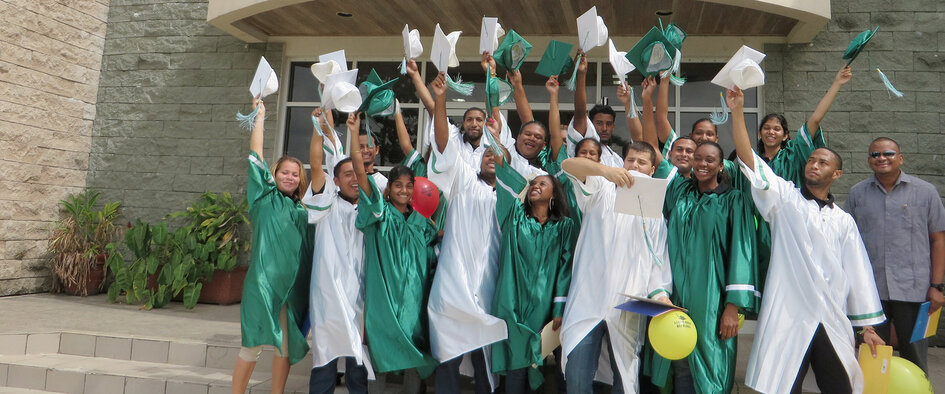
Belizean Youth for Road Safety continue action with youth in Belize!

Belizean Youth for Road Safety continue action with youth in Belize!

Over the last two years, we have been working youth leaders in Belize to stimulate sustainable action for youth and road safety issues in the country. Part of the Caribbean Development Bank’s all encompassing road safety project in Belize, we began our work with youth in Belize in 2014 and since then, they have gone above, beyond and further to take change forward for road safety!

One of our massive successes in capacity development and empowering youth is the two year programme established in partnership with the Caribbean Development Bank (CDB) and the Government of Belize (GOBZ).

Check out the Belizean Youth for Road Safety (BYRS) promoting their work:

Having seen our ground breaking workshops in action at the VYBZING Forum in Saint Lucia, CDB approached YOURS to help them reach their goals to educate and inspire young people to take road safety action in Belize. These efforts were part of the Bank’s wider all-encompassing road safety project, which focuses on improving Belize’s infrastructure, emergency response, enforcement and education.

Floor Lieshout, Executive Director at YOURS said,

“We are so inspired to see our Belizeans champions taking the initiative beyond all expectations. They are a symbol of the power of youth to make change for road safety! A torch of change that energize the road safety revolution in the country”

We realized this mission by establishing a strong partnership with the government, universities, youth groups and media and to train 34 young facilitators over two years. We trained two cohorts, one in 2014 – one in 2015, and took young leaders from Belize through the full YOURS interactive workshop experience. These facilitators successfully trained a futher 2000+ youth in road safety by the end of 2015. This year, we will be returning to Belize to wrap up our final review visit and work with BYRS on sustainable growth.

 
Meet Graham, the body built to survive a crash – Project Graham

Meet Graham, the body built to survive a crash – Project Graham

The #SaveKidsLives campaign is well into its second phase, which encourages campaigners and supporters to gather action and commitments from decision makers to enact five proven measures for road safety. The ultimate aim is to #SaveKidsLives. We fully support this campaign and invite the youth network for road safety to take part and follow the campaign’s steps. The 2020 Action Agenda is the centerpiece of the campaign. Explore it with us.


#SaveKidsLives is an official campaign coordinated by the United Nations Road Safety Collaboration. It was launched 6 months before the Third United Nations Global Road Safety Week in May 2015. The campaign is co-led by children and calls for urgent action to halve road deaths and injuries by by 2020; the target established in the Global Goals, the Sustainable Development Agenda for the next 15 years (2030).

It does so by:

  • highlighting the plight of children and the vulnerable on the roads;
  • generating worldwide action to better ensure our safety on the roads, starting with children;
  • calling for strong commitments to save lives on the roads to reach the Global Goals targets.

The campaign operates on the principles of the Decade of Action for Road Safety 2011-2020 and is managed by a broad coalition of members from the United Nations Road Safety Collaboration.

Graham has been making an appearance all around social media – his body has been designed to survive a road crash.

Created by TAC as part of the ‘Towards Zero’ campaign they explained,

‘Our aim with Graham is to remind Victorians (Australia) of how vulnerable our bodies really are by showing them what we might look like if we were built to survive a crash on our roads’.

Although our bodies will never look like Graham’s, there’s a safe system in place that can help protect us in much the same way. And at the centre of this system is the belief that human health is more important than anything else. Our bodies are strong, but there’s only so much force we can withstand before we break. That’s why we need to ensure we have a safe system in place – one that protects us from our own mistakes and those of others.

A catalyst for conversation and ultimately an educational tool, Graham shows us what we might look like if we were built to survive on our roads. He’s a reminder of just how vulnerable our bodies really are when speed and impact forces as low as 30km/h are at play.

Closing statement video from YOURS is live – Brasilia conference

Closing statement video from YOURS is live – Brasilia conference

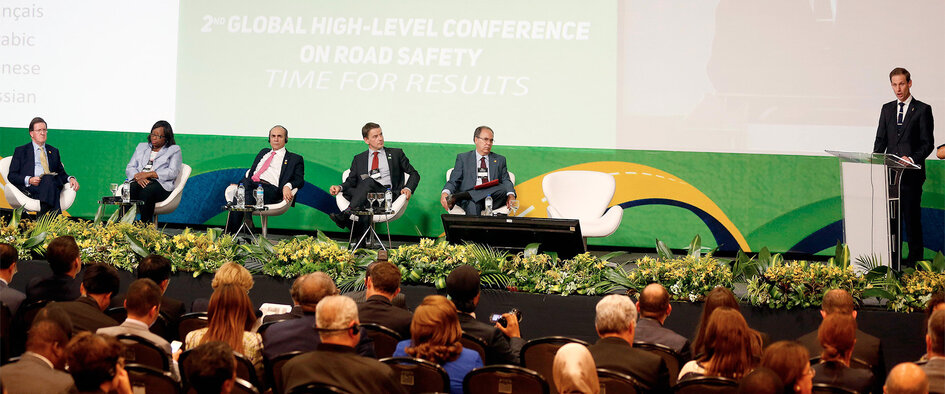
Towards the end of 2015, stakeholders in global road safety, at both the international and local level convened at the 2nd High Level Conference on Road Safety in Brasilia, Brazil to discuss the Sustainable Development Agenda and review the Decade of Action for Road Safety. In the closing ceremony of the conference, our Executive Director, Floor Lieshout derlivered a powerful closing statement to the world’s dignitaries.

On 18-19 November 2015, for only the second time in history, ministers of transport, health and interior and their representatives convened in Brasilia, Brazil to address the global road safety crisis.

The 2nd Global High-Level Conference on Road Safety defined the urgent measures needed to achieve the 2030 Agenda for Sustainable Development’s ambitious target to halve road traffic deaths by the end of this decade.

The Conference adopted the “Brasilia Declaration on Road Safety”, which will guide action through the end of the UN’s Decade of Action for Road Safety 2011-2020 and beyond. Video courtesy of Richard Stanley Production.

Every Journey, Every Child – Global Initiative for Child Health and Mobility

Every Journey, Every Child – Global Initiative for Child Health and Mobility

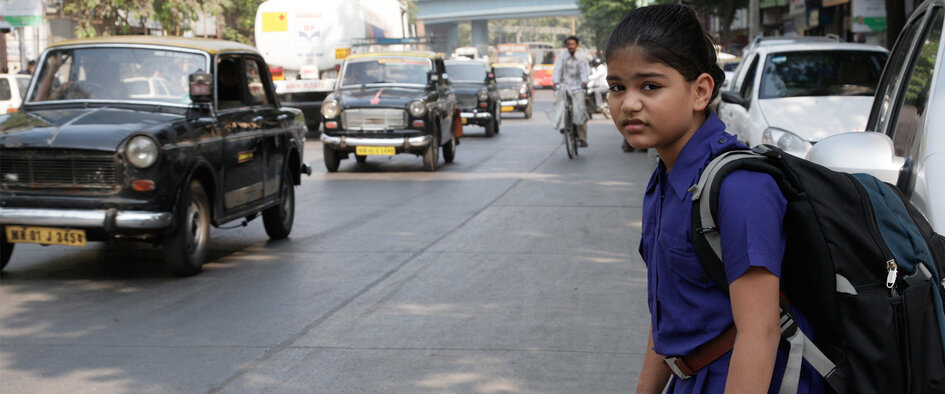
Every child has the right to healthy development and an education. But every day more than 3000 children and adolescents suffer a road traffic death or serious injury.

Road danger and air pollution blight the school journeys and lives of millions more. The health burden to children caused by motorised traffic constitutes a major obstacle to child development and an unacceptable and preventable human tragedy.

Every child deserves a safe and healthy journey to and from school. The Global Initiative for Child Health & Mobility is a coalition of organisations and agencies coming together to advocate and work for this vision to become reality by 2030. Practical and cost-effective solutions are available, and can be delivered with sufficient political will.

With a focus on policies for sustainable transportation; road safety; clean fuels and vehicles; and equitable urban development,the campaign advocates for, and support practical activities to deliver, these Rights of the Child:

The mission: a safe and healthy journey to and from school for every child by 2030.

The Child Health Initiative comprises a founding partnership of UNICEF, Save the Children, UNEP, the World Resources Institute, the Overseas Development Institute (ODI) and the FIA Foundation. Intended as an implementation partnership for the Global Goals, the headline mission is to work towards a vision that, by 2030, every child should enjoy a safe and healthy journey to school.

Visit the campaign website here.

#SaveKidsLives continues its momentum with superstars and dignitaries

#SaveKidsLives continues its momentum with superstars and dignitaries

The #SaveKidsLives campaign continues to generate global attention with global superstars taking a moment to sign up the 2020 Action Agenda and take a #Safie. The latest high profile #Safies have been taken by music sensation, Pharrell Williams, USA’s gold medal sprinter Johan Blake and United Nations General Secretary Ban Ki Moon.

Mr Jean Todt takes a #Safie with Ban Ki Moon.

Pharrel Williams, the musician behind the smash hit “Happy” and other big hits alongside Johan Blake, Jamaica’s gold medal sprinter met with Mr Jean Todt, the UN Secretary’s Special Envoy on Road Safety and took a moment to pose for a #Safie!

It’s incredible to see people with such reach and global ifluence through their respective field of creative expression. Pharrell’s ‘Happy’ was a chart topper in more than 25 countries all around the world and broke many records. Johan Blake, an olympic gold medalist sprinter representing Jamaica as well as a favourite for gold in the upcoming Rio 2016 Olympics, also has a massive global reach and is a huge role models for thousands of young people around the world.

Pharrell Williams, Johan Blake, Mr Jean Todt and representatives take a moment for a #Safie.

Have you signed the 2020 Action Agenda?