Global Meeting focuses on halving road deaths by 2020

Global Meeting focuses on halving road deaths by 2020

The biannual Fifth Global Meeting of Nongovernmental Organizations Advocating for Road Safety and Road Victims took place in Kuala Lumpur, Malaysia. The Honorable Dato’ Sri Liow Tiong Lai, Minister, Ministry of Transport Malaysia, officiated the Meeting’s opening on 5 April, followed by a press conference at the Sama-Sama Hotel.

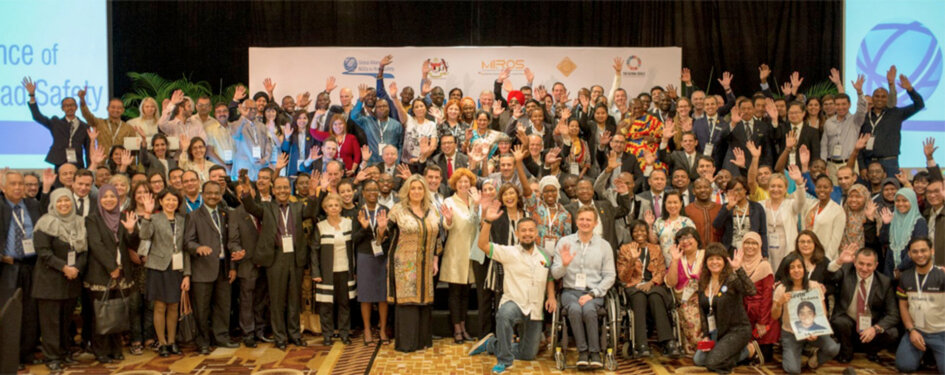
The Global Meeting was organized by the Global Alliance of NGOs for Road Safety (the Alliance), and the Ministry of Transport, Malaysia, and hosted by the World Health Organization (WHO). More than 200 road safety NGOs and stakeholders from 70-plus countries renewed their commitment to enabling governments and communities to achieve the United Nations (UN) Sustainable Development Goal to halve the number of global deaths and injuries from road traffic accidents by 2020.

Every year, 1.25 million people die as a result of traffic crashes — greater than the entire population of Cyprus. More people die from road traffic accidents than from malaria and tuberculosis and traffic crashes are the main cause of death globally among those aged 15–29.

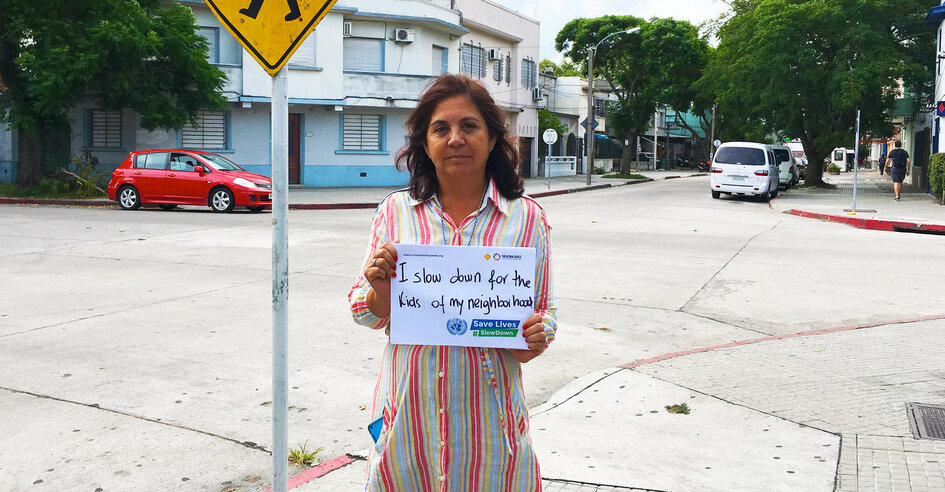
The Global Meeting featured the kickoff event for the upcoming Fourth UN Global Road Safety Week in May. A speed bump was repainted by school children in the community of Selangor on 4 April as a symbol of the Week’s 2017 theme of speed prevention: #SlowDown.

During the four days of the Global Meeting, attendees participated in capacity building sessions, networking and sharing activities, and planning for advocacy events.

Opening of the 5th Global Meeting

The Honorable Dato’ Sri Liow Tiong Lai; Professor Wong, Director General, Malaysian Institute of Road Safety Research (MIROS); Dr. Etienne Krug, Director, Department for Management of Noncommunicable Diseases, Disability, Violence and Injury Prevention, WHO; Mr. Jean Todt, the UN Secretary-General’s Special Envoy for Road Safety; Mr. Marc Shotten, Program Manager, Global Road Safety Facility (GRSF), World Bank; and Saul Billingsley, FIA Foundation, offered valuable presentations, focusing on the importance of coordination and partnerships to foster concrete results.

There is significant evidence that road safety measures, including speeding interventions and use of helmets, seat belts, and child restraints have a big impact on the survival rate of road traffic victims. However, these interventions are not universally implemented everywhere.

NGOs are key partners in achieving the UN Sustainable Development Goal to reduce the number of deaths and injuries from road traffic accidents by 50% by the year 2020.

Alliance member NGOs are critical to tackling road carnage in multiple ways. They can activate communities to engage with the cause, identify local problems and speak up for the solutions. They can raise awareness by speaking out in the media and countering any local opposition to the implementation of road safety laws, policies and their enforcement, and provide valuable insights and information during government-led consultation processes, for example relating to road building or alternate sustainable mobility solutions. They also often provide support for road crash victims and knowledge-building programmes within institutions such as schools and companies.

Some of the delegates to the Fifth Global Meeting by Ali Zayerzadeh (Iranian Road Safety Pioneers).

The Global Meeting featured a prize-giving ceremony, including an award from FedEx to honor NGOs that exhibit commitment, engagement with the Alliance, and willingness to learn.  

The Declaration of Malaysia was signed on the final day of the Global Meeting by all participants. The Declaration states the commitment of the road safety community to implementing practical, evidence-based measures to improve road safety and post-crash response and calls upon all other stakeholders to partner meaningfully in these efforts.

lotteLotte Brondum, Executive Director, Global Alliance of NGOs for Road Safety, said:

“People are dying on the roads. In some countries, for children to walk to school safely each day is a triumph of survival. We cannot stand aside and watch. We know the interventions that save lives. Last year the UN and its member states adopted a resolution to improve road safety. This resolution has strengthened our mandate. It gives Alliance members license to partner with their governments to implement the measures that work and to hold them to account. Ultimately, that means that more men, women, and children will return safely home every day”.

“The Alliance is the bridge between road safety NGOs and bilateral, and multilateral partners, such as WHO and the UN, both of whom we are fortunate to welcome as part of our Global Meeting program in Kuala Lumpur. We thank them and our sponsors: FedEx, the FIA Foundation, the Global Road Safety Facility, the Prudential Foundation, Dorel, Allianz and TM for enabling the Global Meeting to happen.”

prof wong

Professor Wong, Director General, MIROS, said:

“The Malaysian Institute of Road Safety Research is committed to evidence-based approaches to road safety. We share the Alliance’s view that road safety interventions should focus on the activities that have been proven to save the most lives. We welcome this opportunity to be a part of the Global Meeting of NGOs Advocating for Road Safety and Road Victims and to share our findings with the global road safety community.”

“The signing of the Malaysia Declaration demonstrates the importance of partnership between NGOs, governments, academia, corporations, and bi- and multilateral stakeholders to tackle the issue of road safety. For Malaysia, it is a strong sign that we take road safety seriously and that we are moving forward together.”

etienne 1

Dr. Etienne Krug, Director, Department for Management of Noncommunicable Diseases, Disability, Violence and Injury Prevention, WHO, said:

“Every day 3400 people die on the world’s roads. Urgent action is needed to implement well-known solutions like better laws and enforcement on speed, drinking and driving, helmets, seat-belts and child restraints, as well as improvements in roads, vehicles and post-crash response”, notes Dr. Krug. “NGOs have a crucial contribution to make, including by demanding more action by their governments. Through its convening power, the Global Alliance of NGOs for Road Safety helps to amplify the voices of NGOs, increasing the likelihood that they result in real change in countries.”

jean todt

Mr. Jean Todt, the UN Secretary-General’s Special Envoy for Road Safety:

“Too many people lose their life unnecessarily in road crashes daily. We urge governments to strengthen their strategies to protect road users, including implementing the United Nations Road Safety Conventions.”

“As the UN Secretary-General’s Special Envoy for Road Safety, I’m committed to work with all key players to significantly reduce the number of road traffic fatalities in the coming years. The Global Meeting has been a great opportunity to discuss with NGOs on how we can accelerate and enhance our efforts in this task. I congratulate the Malaysian Government for their collaboration and commitment to making roads safer.”

marc shotten

Mr. Marc Shotten, Program Manager, Global Road Safety Facility, World Bank said:

“Civil society can play a critical role in helping create major public policy changes. Evidence based solutions in which communities have been a part of the design have proven to be very effective. Fundamentally, partnerships between governments, NGOs and the corporate sector can help achieve sustainable solutions. We are pleased that the Global Alliance is building bridges and creating synergy among partners to help meet the challenge laid out under the United Nations Sustainable Development Goal targets for road safety.”

saul

Mr. Saul Billingsley, FIA Foundation’s Executive Director said:

“You can sense there is real momentum and commitment here to halve road deaths by 2020. Can we achieve it? Only if the governments that signed up to the SDG targets put their money where their mouth is. So NGOs have a vital role to play in holding leaders to account, and ensuring there is focus and real delivery on safe infrastructure, minimum vehicle standards, reducing speed and ensuring safe school journeys, and enforcing the laws we know can save lives: drink driving, motorbike helmets, seat belts.”

shane

Mr. Shane O’Connor, FedEx Communications Advisor, said:

“At FedEx, our road safety initiatives connect people to the opportunity to be safe on the road and have walkable neighborhoods. We are proud to collaborate with the Alliance as part of our FedEx Cares commitment to invest $200 million in over 200 global communities by 2020.  We congratulate all three award recipients for their efforts in road safety.”

Visit the Global Alliance of Road Safety NGOs website
See social media updates about #GlobalMeeting17 on Twitter

Asian Development Bank & YOURS talk youth participation!

Asian Development Bank & YOURS talk youth participation!

As part of the 5th Global Meeting of the Global Alliance of NGOs for Road Safety in Kuala Lumpur, Malaysia; the second day of pre-meeting workshops took place on the 4th April. For our second involvement in the workshops, we joined with the leaders of the workshop, the Asian Development Bank, to build capacity on youth participation in road safety.  The workshop heard multitude ideas of how youth can drive change for road safety across Asia and the world and encouraged ‘meaningful participation’ in road safety.

Alongside the Asian Development Bank’s Youth for Asia program, we joined with their Youth Project Designer for Asian Development Bank – Youth for Asia, Mr. Lee Lambert to deliver a pre-meeting workshop on ‘Youth & Road Safety’.

About Youth for Asia
ADB has embraced the vital role that civil society participation plays in the fight against poverty in the region. From planning and design consultations to project implementation and monitoring, civil society’s participation results in more effective and sustainable development efforts.

Because youth and youth-led organizations are important members of civil society, ADB started the Youth Initiative – now called ADB Youth for Asia – in 2013, to support young people in contributing effectively to development. It is a program managed by ADB’s NGO and Civil Society Center to mainstream youth participation in ADB operations as it believes that empowered youth are innovative and effective development.

Key aims of the workshop session included a need:

  • To raise awareness of the importance of meaningful youth participation in design, implementation, and evaluation in road safety campaigns and achievement of the road safety-related SDG targets;

  • To highlight the work and experiences of YOURS (global perspective) and ADB Youth for Asia (focus on Asia Pacific – examples of ADB projects in Mongolia and Tajikistan) in working with Youth in Road Safety;

Participants explore the benefits of engaging youth in road safety.

  • To have international NGOs present from other continents share their perspectives, experiences and ideas for engaging youth in road safety campaigns for advocacy, seatbelt use, helmet use, speeding, drink driving, safer vehicle, post-crash response, etc. These outputs will be collated by Youth for Asia to be integrated in the design of ADB operations in road safety;
  • To allow the platform to connect with active road safety NGOs from Asia and the Pacific and other regions.
  • To provide access to YOURS and Youth for Asia materials and toolkits to further engage youth in road safety activities in member NGO countries.

Participants heard real examples of how youth can actively engage in road safety to build change amongst their peers; both by providing youth with skills to help them be safer road users and by taking an active role in road safety decision making as equal players. Lee Lambert of concrete examples of ADB projects working with youth in Tajikistan and Mongolia.

The above presentation (Prezi), delivered by Manpreet Darroch from YOURS focused on the importance of youth participation in road safety that is meaningful and acted upon. He said,

“Many organizations work for youth as beneficiaries but working WITH youth creates projects and interventions that are creative, responsive, innovative and senstive to the language and realities of youth, they are often best equipped to tell you what will work in terms of engaging youth in road safety”

Facilitators for the session were:

  • Lee Michael Lambert
    Youth Project Designer for Asian Development Bank – Youth for Asia
  • Manpreet Darroch
    Communications Officer, Coordinator of the Global Youth Network for Road Safety – YOURS – Youth for Road Safety
  • Floor Lieshout
    Exective Director, YOURS – Youth for Road Safety

Read more about Youth for Asia and their work in road safety.
Read more about our work in involving youth in road safety.

In what ways can road safety NGOs work with multi-lateral banks?

In what ways can road safety NGOs work with multi-lateral banks?

The Fifth Global Meeting of the Global Alliance of NGOS for road safety kicked off in Kuala Lumpur, Malaysia on the 3rd April 2017. As part of the Alliance’s continued empowerment efforts, a number of pre-meeting workshops were organized to give members unique insights into a range of road safety topics. One session that we participated in focused on how NGOs can engage with multi-lateral banks, to obtain support and buy in and partner with these financial institutions for development and social change in road safety.

The Global Alliance of NGOs for Road safety has more than 180 member NGOs, representing 90 countries, 25 of which are low-income countries or lower-middle-income countries. Many of these countries receive loans from Multilateral Banks to improve infrastructure. The session explored what multilateral banks fund how NGOs can contribute to the multilateral banks work and vice versa.

Panelists at the Multi-Lateral Bank Pre-Meeting Workshop

Focus themes included:

  • What is the role of multilateral banks in road safety?
  • What  do Multilateral banks fund and how are the channelled?
  • How can NGOs best support the work funded by multilateral banks?
  • What advice do multilateral banks have to give NGOs?

Speakers included:

  • Marc Shotten, Global Road Safety Facility, World Bank
  • Holly Kranbec, World Bank, Asia division
  • Lee Lambert, Asia Development Bank
  • Betty Omoro, Safe Drivers, Kenya
  • Bright Oywaya, Asirt-Kenya
  • Manpreet Darroch, YOURS

A full house of participants in the session.

Concrete examples of projects funded by the Asian Development Bank and World Bank Asia Division were projects with evidence based approaches, scalability and sustainability.

Marc Shotten of the Global Road Safety Facility at the World Bank noted that, “NGOs that speak in terms of the global sustainable development agenda are more likely to be successful in working with multi-lateral banks”.

He also noted that, “Often multi-lateral banks seem impenetrable but they do offer millions in development assistance with NGOs helping to design and deliver key programmes…the key is to be persistent and keep knocking the door”.

Lee Lambert from the Asian Development gave key examples of how they are specifically working with young people in several countries. To mainstream youth involvement in ADB operations, ADB Youth for Asia connects with various ADB departments to include youth participation in the different stages of project development. ADB Youth for Asia facilitates youth engagement in projects’ planning, design, consultation, and implementation.

Manpreet Darroch, Communications Officer at YOURS talks about the Belize Partnership with the Caribbean Devleopment Bank

As part of the example showcase of successful NGO partnership with multi-lateral banks, our Communications Officer, Manpreet Darroch presented on our successful partnership with the Caribbean Development Bank. The presentation focused on how YOURS, as a NGO specialized in workshop education with youth formed part of the ‘educational element’ of a wider infrastructure program in Belize.

Read Manpreet’s presentation here
The event has been followed through social media with the hashtag #GlobalMeeting17.

MENTOR-VIP open for applications with World Health Organization

MENTOR-VIP open for applications with World Health Organization

Applications for the 11th cycle of MENTOR-VIP are now open. This means individuals wishing to apply to be mentored during 2017-2018 may make their applications via our website (link given below) between now and May 5.

MENTOR-VIP is designed to assist junior injury practitioners develop specific skills through structured collaboration with a more experienced person who has volunteered to act as a mentor. The programme provides a mechanism to match demand for technical guidance from some people with offers received from others to provide technical support.

Mentoring arrangements may take place in whatever language or languages the mentor and mentee are comfortable to communicate in. The majority of interaction between mentor and mentee takes place through low-cost electronic communication such as email, internet-based telephony, or telephonic exchange.

The general objective of MENTOR-VIP is:

To improve human resource capacity to effectively prevent and control injury and violence through the enhanced development of relevant skills.

MENTOR-VIP is designed to match mentees wishing to develop certain skills with mentors who have agreed to devote their time and effort to assist mentees develop those skills. Matching of individuals is made on the basis of the profiles of mentee and mentor and the overall principles and objectives of MENTOR-VIP. Once a mentorship is awarded the mentee and mentor jointly plan the activities that will be undertaken during the mentorship.

A principle of the programme is that it provide a low-cost model for mentoring. Accordingly, mentoring is expected to take place primarily through electronic and telephonic forms of communication and interaction. Mentorships are for a 12 month period and begin in September of each year.

Awarding of mentorships and application process
Overall guidance to MENTOR-VIP is provided by the Core Group, which assesses candidatures and awards mentorships, discusses and recommends indicated revisions to the programme to WHO and facilitates important activities such as evaluation of MENTOR-VIP. The Core Group consists of 9 individuals from diverse backgrounds relevant to injury prevention and includes one WHO member. WHO coordinates the programme, financially supports the annual meeting of the Core Group, and assures all secretariat functions for the programme.

Prospective mentees must submit an application in order to be considered for a mentorship. The application submission is carried out online and is accessible through the link below. Applications are accepted from mid-February to mid-May each year. Candidates will be made aware of the decisions in June and mentorships formally begin in September. Individuals who apply to be awarded mentorships are encouraged to read all MENTOR-VIP documentation carefully, and to bear in mind that the limited number of mentorships awarded will be based on an assessment of the most appropriate match between mentee candidates and the available mentors as well as the overall principles and objectives of MENTOR-VIP.

APPLY FOR A MENTORSHIP

Teen app promotes road safety with rewards – with frisky adverts

Teen app promotes road safety with rewards – with frisky adverts

Shotgun uses GPS to track each car journey you make for 1,000 miles. The app then scores the different elements of your driving and dishes out points based on your overall performance. Collecting these points unlocks different reward levels, earning you things like vouchers and free cinema tickets. You’ll also be given pointers along the way, giving you the tools to improve and win even more.

You can even compare your score with friends on the leaderboard for extra bragging rights.


The first-of-its-kind app in the UK, encourage safe driving for 17 – 25 year olds. Young drivers are most at risk when they first take to the road and we want that to change. So keep safe out there and help us make a difference.

“As you are now well aware, road traffic crashes remain the single biggest killer of young people”

1.5% of all drivers are 17-19 years old, yet they’re involved in 9% of all fatal or serious crashes

The app uses GPS technology to monitor new drivers first 1000 miles on the road and scores them on various elements. They are then rewarded with giveaways and experiences from well known high street brands such as Virgin Experience Days, Pizza Express and BoostJuice.

Encouraging young people to drive safely through rewards is a clever way to promote safe driving. This trend has been popular in other countries too, with youth being rewarded for safer driving with lower insurance rates through blackbox technology.

Alongside safe driving for physical rewards, it remains important for young peope to understand the benefits of safe driving for safey’s sake; being a safer driver means making the road safer for everyone.

What’s your view on this type of road safety promotion?

SHARE YOUR THOUGHTS WITH US ON TWITTER

New UN Road Safety Week website goes live! Save Lives – #SlowDown

New UN Road Safety Week website goes live! Save Lives – #SlowDown

We have been working with the World Health Organization and the FIA Foundation to build a new platform for the United Nations Global Road Safety Week (UNGRSW). The fourth week takes place on 8-14 May 2017 with the tag line Save Lives #SlowDown. The week focuses on speed management and encourages people to take the pledge to #SlowDown.

Why #SlowDown?

003 speed meterSlowing down is very safe
We all want to arrive safely at our destination. By slowing down we make our roads safer for our children, families and friends.

002 crossingSmall changes, big results
Research shows that a 5% cut in average speed can result in a 30% reduction in the number of fatal road traffic crashes.


001 stopSpeed up the solutions
When the world commits to #SlowDown and implements evidence based solutions, road traffic crashes will fall and we will save lives.

The website covers a great wealth of information and resources as to why drivers should #SlowDown. It also features an archive of the previous three Global Road Safety Weeks.

You can use this banner on your social media – download social media graphics here.

We invite all youth and road safety champions to log on to the new website for the Fourth United Nations Global Road Safety Week.

PLEDGE TO #SLOWDOWN