“Bag a phone not a body” – Distracted driving campaign hits hard in Oz

“Bag a phone not a body” – Distracted driving campaign hits hard in Oz

It’s one of the fastest growing problems on Queensland (Australia) roads – distracted driving and its a big problem all around the world, especially facing youth. If you’ve texted, called, snapped a photo, entered an address, or updated a Facebook status while behind the wheel, you’re guilty.

It’s one of the fastest growing problems on Queensland roads – distracted driving. If you’ve texted, called, snapped a photo, entered an address, or updated a Facebook status while behind the wheel, you’re guilty.

 
Although you may think “but I do it safely” the reality is you’re four times more likely to sustain a serious injury while using your mobile phone while driving.

RACQ, in partnership with the Sunday Mail, has launched its “bag a phone, not a body” initiative for the month of June, a confronting awareness campaign aimed at getting drivers to put their phones away. It’s encouraging drivers to place their phones out of reach and in a bag – whether that be a handbag, sports bag or even shopping bag.

RACQ’s Paul Turner said it was a matter of changing the mentality around texting, calling or using social media when behind the wheel.

“Changing habits takes time but it’s not impossible. If we look at drink driving – it may have been socially acceptable for people to jump into their cars after a night at the pub in the 70s, but thanks to campaigns that raised awareness of the dangers of driving under the influence, there’s been a shift away from thinking that behaviour is okay,” Mr Turner said.

“We need to see that same shift in regards to distracted driving. The sooner people put their phones away when driving, the sooner lives will be saved.”

Fast facts:

  • The average person checks their phone 150 times a day, and if that’s average some people are checking their phones a LOT more
  • Australian men unlock their phones more than anyone in the world – on average 45 to 46 times a day, while for women it’s around 42
  • Australian men and women spend about two hours each day on their phones, that’s not including use for music streaming, video streaming, or making calls.


joel
This update was provide by Mr. Joel Tucker, YOURS Regional Champion of the Western Pacific Region.

Read more about Joel and the Regional Champions at YOURS.
 

Might be a mate – cyclist campaign from Australia

Might be a mate – cyclist campaign from Australia

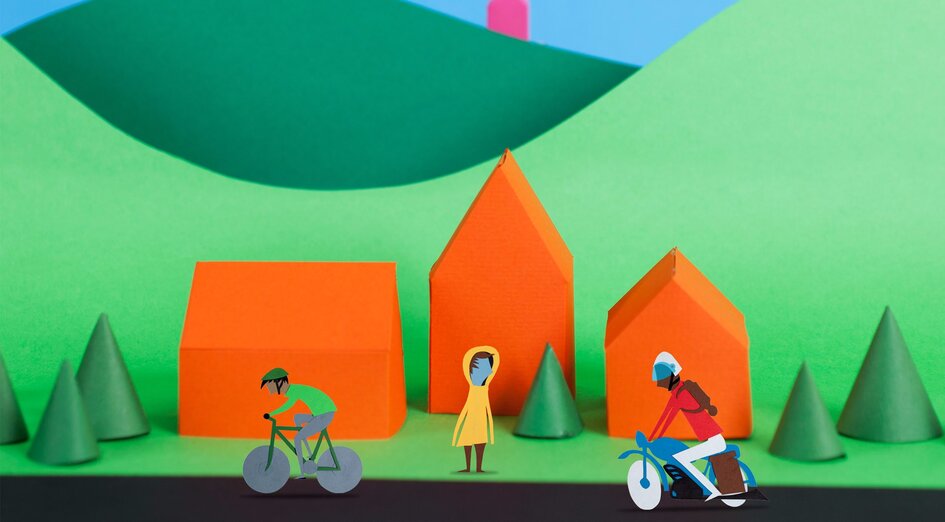
Road Safety Commission of Western Australia says its recent ‘Might Be a Mate’ cross-platform marketing campaign has achieved powerful results in spreading the safety message about cyclists.

The initiative, launched in collaboration with Adshel and media and entertainment business HT&E, was heralded an Australian market-first, and used cross-platform synching to target motorists throughout Perth with messages via both radio and outdoor advertising digital panels. The ambition was to spread the message to save lives by humanising both cyclists and motorists to build mutual respect.

Campaign creative ran across the Adshel Live digital network over a three-week period, with seven creative executions on rotation in 14 locations throughout the Perth CBD. These messages were synched with ARN’s 96FM, so that when the campaign’s 30 second ads were on-air, the outdoor creative appeared simultaneously on Adshel’s digital network, amplifying the campaign across channels with sight and sound working together.

According to HT&E, the results proved the ad campaign had significant reach and impact in its message offering, with almost half of the population in Perth saying they recalled being exposed to ad on radio and/ or outdoor. Of these people, almost one in five saw and heard both ads when synchronised.

Significantly, 33 per cent said the campaign positively changed their attitude and behaviour towards motorists and cyclists sharing the road. Nearly eight in 10 of those who saw/heard the campaign agreed drivers must allow more room on the road for cyclists, while 86 per cent agreed they need to be aware of cyclists on the roads as it ‘might be a mate.

Road Safety Commission of Western Australia’s  campaign project officer, Alisia Mumby, said the campaign presented a unique cross-platform media device, combining ‘away from home” media assets todeliver an important safety message to its target audience in the most relevant context – while they’re out on the road.

“The synchronised campaign was a novel ‘stop in your tracks’ execution, that delivered elevated awareness amongst motorists,” she added. “We were thrilled with the results.”

HT&E’s chief revenue officer, Tony Kendall, called the campaign a perfect example of being able to offer clients the exciting opportunity to leverage a combination of media assets across the HT&E Group, amplifying messages across radio and outdoor, along with experiential activations and digital executions.

“It was an outstanding success for the client, and we’re pleased to have been able to support the Road Safety Commission in promoting an important message for the Perth community,” he said.

UN Global Road Safety Week the most successful Week yet!

UN Global Road Safety Week the most successful Week yet!

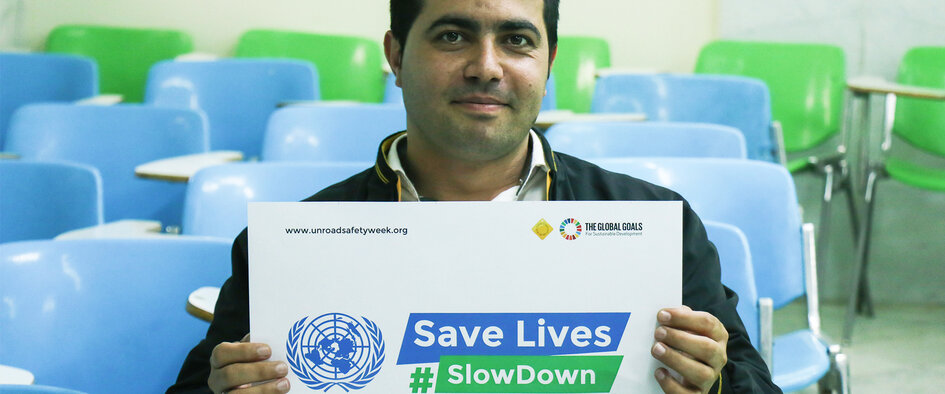
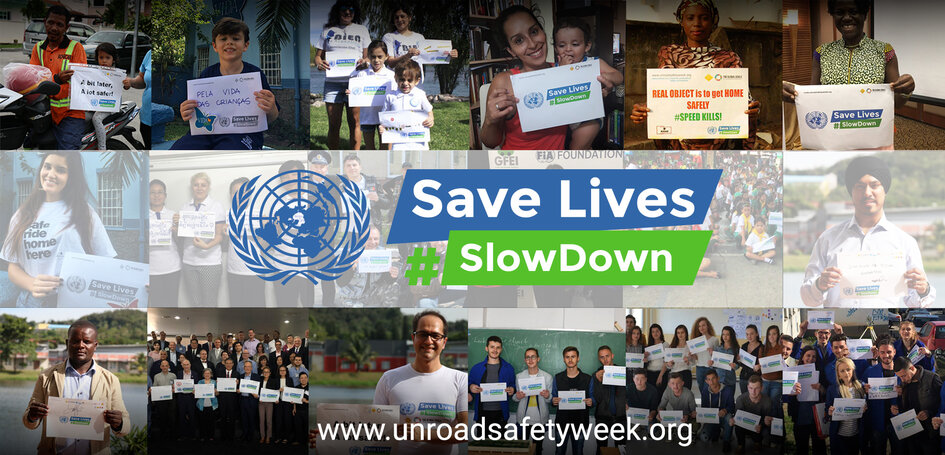
The Fourth United Nations Global Road Safety Week has been a massive success! In fact, it has been described as the most successful UN Week yet! From 8-14 May 2017, campaigners, organizations, governments, companies and many others encouraged the world to #SlowDown. Over 1000 events were registered in more than 125 countries; taking place at national and community levels. The world pledged to #SlowDown.


Whether you simply pledged to #SlowDown or organized an #SlowDown Day, continued action is needed!

Promoting speed management does not stop now that the week is behind us. In fact, now is when the real work begins. While thousands briefly experienced the benefits of slowing down, we must ensure that we continue to push for slower speeds in our communities. Let’s enact long term change.

Call on your decision makers to permanently #SlowDown your roads to appropriate speeds, by changing speed limits, enforcing speed limit laws, modifying road infrastructure and educating the public. The campaign to #SlowDown continues, and you can stay involved in a range of ways.

Experience a safe and quiet street. Even though the UN Week is behind, the mission continues! Make use of the campaign’s messages, visuals and materials, and together we can continue to #SlowDown streets in cities and towns all around the world.  By working with your local authorities, you can reclaim and #SlowDown your streets so they are safer for all road users. We have teamed up with the 20’s Plenty Campaign to create a toolkit about how you can reduce speed in your community.

Together we can save lives. Let’s continue the action now!

More than 1.2 million adolescents die every year, nearly all preventable

More than 1.2 million adolescents die every year, nearly all preventable

More than 3000 adolescents die every day, totalling 1.2 million deaths a year, from largely preventable causes, according to a new report from WHO and partners. In 2015, more than two-thirds of these deaths occurred in low- and middle-income countries in Africa and South-East Asia. Road traffic injuries, lower respiratory infections, and suicide are the biggest causes of death among adolescents.

Most of these deaths can be prevented with good health services, education and social support. But in many cases, adolescents who suffer from mental health disorders, substance use, or poor nutrition cannot obtain critical prevention and care services – either because the services do not exist, or because they do not know about them.

In addition, many behaviours that impact health later in life, such as physical inactivity, poor diet, and risky sexual health behaviours, begin in adolescence.

“Adolescents have been entirely absent from national health plans for decades,” says Dr Flavia Bustreo, Assistant Director-General, WHO. “Relatively small investments focused on adolescents now will not only result in healthy and empowered adults who thrive and contribute positively to their communities, but it will also result in healthier future generations, yielding enourmous returns.”

Data in the report, Global accelerated action for the health of adolescents (AA-HA!): Guidance to support country implementation, reveal stark differences in causes of death when separating the adolescent group by age (younger adolescents aged 10–14 years and older ones aged 15–19 years) and by sex.

The report also includes the range of interventions – from seat-belt laws to comprehensive sexuality education – that countries can take to improve their health and well-being and dramatically cut unnecessary deaths.

Road injuries top cause of death of adolescents, disproportionately affecting boys

In 2015, road injuries were the leading cause of adolescent death among 10–19-year-olds, resulting in approximately 115 000 adolescent deaths. Older adolescent boys aged 15–19 years experienced the greatest burden. Most young people killed in road crashes are vulnerable road users such as pedestrians, cyclists and motorcyclists.

However, differences between regions are stark. Looking only at low- and middle-income countries in Africa, communicable diseases such as HIV/AIDS, lower respiratory infections, meningitis, and diarrhoeal diseases are bigger causes of death among adolescents than road injuries.

The case for action
Adolescents bear a substantial proportion of the global disease and injury burden

  • Adolescents are one sixth of the world’s population.
  • They account for 6% of the world’s global burden of disease and injury.
  • The recent very rapid declines in mortality among infants and young children have not been mirrored among adolescents.
  • Adolescence is the period when many risky behaviours start having a major impact on their health as adults.
  • Adolescent health needs particular attention in humanitarian and fragile settings.

The report helps countries implement the Global strategy for women’s, children’s and adolescents’ health (2016–2030) by providing comprehensive information needed to decide what to do for adolescent health, and how to do it. The Global strategy, which was launched in 2015 to support the Sustainable Development Goals (SDGs), provides an opportunity to improve adolescent health and to respond more effectively to adolescents’ needs.

DOWNLOAD THE ADOLESCENT HEALTH REPORT

We welcome the Fourth United Nations Global Road Safety Week

We welcome the Fourth United Nations Global Road Safety Week

Dignitaries from around the world including the Director-General of the World Health Organization, Dr Margaret Chan have released video statements to mark the opening of the 4th United Nations Global Road Safety Week. The week takes place from 8-14 May 2017 under the theme of speed management. The key message orientates around the slogan; Save Lives: #SlowDown.

“We are here to talk about speed; speed is at the core of the road traffic injury problem. 1 in 3 road traffic deaths occur because someone has been driving too fast”. – Dr Maraget Chan, Director-General of the World Health Organization.


Spotlighting the relationship between speeding and traffic fatalities – speeding contributes to one in three traffic deaths – the UN health agency, ahead of Global Road Safety Week, is urging countries to take measures to curb dangerous driving behaviour.

According to the World Health Organization (WHO), 1.25 million people die every year on the world’s roads. Close to half of those tragic deaths are caused by drivers going faster than posted speed limits.

“If countries were to address just this key risk, they would soon reap the rewards of safer roads, both in terms of lives saved and increases in walking and cycling, with profound and lasting effects on health.”

To raise awareness and avoid tragedy hundreds of events are being organized throughout Global Road Safety Week. WHO points out that these events will contribute to achievement of the road safety-related Sustainable Development Goals (SDGs).

The UN health agency points to research that shows that a five per cent cut in average speed can result in a 30 per cent reduction in the number of fatal road traffic crashes.

“Speed reduction is a key contribution [to the SDGs],” said Etienne Krug, Director of the WHO Department of Injuries and Violence Prevention in an interview with UN News. “We have planned our cities for cars. Cars are everywhere, they are speeding and [as a result] people don’t feel comfortable in many cities to cycle or even to walk.”

Mr. Krug further pointed out that public transportation is underdeveloped and if “we continue [like this], we are going straight into the wall if we develop our cities just for cars.”

The campaign Save Lives: #SlowDown is also part of a larger initiative – Save LIVES: a road safety technical package – promoting 22 key measures to address road traffic deaths and injuries, including on managing speed.

Aside from speed management the plan focuses on leadership, infrastructure design and improvement, vehicle safety standards, enforcement of traffic laws and post-crash survival.

“Speed is not the only factor,” stressed Mr. Krug. “Drunk driving is also a key factor and distracted driving such as texting and being on the phone.”

He saw a clear need to campaign for improving infrastructure and modes of transportation. “We need to make cycling, walking and public transportation more safe and more accessible because that is the future and it is also much healthier. People will have less non communicable diseases if they walk and cycle more. I’m talking about cardiovascular diseases, cancer and diabetes.”

Krug confirms that the work is paying off. “We are seeing progress there are many cities, I could highlight Freiburg, Sao Paolo and New York,” adding that “we want more of that, and we want it faster because the clock is ticking.”

See below a poignant film focusing on the #SlowDown campaign and a ‘speed vaccine’ to reduce speed on the road; #SlowDown.

#SlowDown Speed Vaccine film – UN Road Safety Week 2017


YOURS Director – Floor Lieshout invites all youth to take part in the week.


Have you pledged to #SlowDown yet?

DO IT HERE!

Fourth United Nations Global Road Safety Week kicks off in less than 2 weeks!

Fourth United Nations Global Road Safety Week kicks off in less than 2 weeks!

The Fourth United Nations Global Road Safety Week kicks in less than two weeks time from today! From 8-14 May 2017, campaigners, organizations, companies, governments and many more will encourage the world to #SlowDown. The Week is dedicated to speed management and we can all take steps to make our roads safer.

We encourage our global youth network for road safety to take the pledge to #SlowDown and encourage your friends, famil, colleagues, loved and just about anybody else who uses the roads to also #SlowDown!

There are lots of ways to take action during the Week. See how you can get involved.

If you’ve already taken the pledge, you can tag your friend to #SlowDown. You can do that here.

Don’t forget, if you are running an event, please register it in the global calendar of events. Register your event here.

YOURS Communications Officer, Manpreet Darroch takes a picture with the #SlowDown Signboard and pledges to #SlowDown.

The Team at 20’s Plenty for Us (UK) have put together this guidance of creating a photo opportunity for the UN Week:

Images and photos matter to slower speeds activism. Thinking about, and setting up, a photo opportunity is a key part of doing a successful #SlowDown day and press release to ask for, or celebrate, slower speeds in the Fourth UN Global Road Safety Week. 8-14 May 2017. The theme is Save Lives: #SlowDown

  1. Register – please first log your intention to do something on the UN site –  It’s OK if details are sketchy. We need as many campaigns to join in as possible, so just put a marker down that you are doing something. Claim your free £20 worth of 20’s Plenty stickers to the first 20 registrations via rod.k@20splenty.org

  2. Who? The ideal picture has a prominent person/people supporting 20mph limits and road safety. You could invite all the Councillors, candidates, Police and Crime Commissioner, MP, Director of Public Health. Plus local community figure heads or celebrities (as they are always newsworthy). If you can, then get children there with the photo permission of their parents. Eg young kids on bikes make great photos. Crucially, you must invite the local press photographers along (and ideally reporters, radio TV etc) or at least someone who is going to reliably take lots of high quality pictures or even videos.
  3. Where? On a street you want 20mph limits / where there has been a casualty (see www.crashmaps.co.uk )/ outside the council buildings.  Have a back up indoor location for rain.
  4. When? Ideally early in the week so Monday 8 or Tuesday 9 May so that it gets in the news in 8-14 May. It depends when you and the key people are available.  We suggest you email or ring the key one or two people and arrange it with them and then tell everyone else on your lists that date, time and place.
  5. What?  A Slow Down toolkit by 20’s Plenty for Us is here. It’s full of ideas for what to do/have in pictures like people holding 20mph posters, UN Road Safety signs with why they support slower speeds written on, chalking out casualties on roads/pavements, roadside memorial flowers, speed watch, banners, a community walkabout with elected people and much more.
  6. Email out your press release at least a few days before (ideally up to a working week in advance) – see the template downloadable from here.  Tell us too.
  7. Confirm – Ring the press to check they got it and book the photographer to be there.
  8. Have fun on the day. Take pictures with politicians of many parties together, or apart if they insist.
  9. Distribute photos – Once you’ve done your event photo/s please send them out widely eg on email, twitter, facebook, to the press etc with a write up of what happened, who is in the pictures, their quotes etc. We’d like to know and also WHO would be delighted too – send to mediainquiries@who.int
  10. Use the photos on your ongoing campaigning materials.
  11. Reward yourself somehow for being an active campaigner.  Well done and thank you very much. Without grassroots activists calling for change, not a lot can change, so we rely on you.

DOWNLOAD THE #SLOWDOWN DAY TOOLKIT

Every day we have good reasons to go somewhere important, whether we leave our homes for work, school or play. However, getting safely to where we are going is as important as getting there at all.

By slowing down, observing speed limits appropriate for the roads and not speeding, we make the roads safer for all. For children walking to school, for the elderly crossing the road, for workers driving to places of work and all road users. Speeding is a major risk factor. The more your speed, the higher the risk of a crash as well as the severity of crash consequences. Speeding also affects other road users such as pedestrians and cyclists. Slowing down is safe.