When Youth Advocacy in Action for Safer Roads launched in Jamaica earlier this year, the vision was clear: equip 150 secondary school students with road safety knowledge and leadership skills, enabling
them to design and lead their own advocacy campaigns.
Over the past few weeks, the project has taken an important step towards that goal by preparing the facilitators who will bring the programme into five schools across Jamaica.
Between 7 July and August 11, YOURS delivered five hybrid Training of Trainers sessions, with facilitators joining in person from the JN Group Corporate Office and YOURS trainers connecting remotely. The sessions combined YOURS’ learning methodology with the content facilitators will later deliver to students, exploring how humans learn, facilitation skills, road safety, advocacy, getting your message across and planning.
But the process was not only about learning how to deliver a session. It was about preparing facilitators to help young people recognise the role they can play in the issues affecting their everyday lives, and design an advocacy campaign that will improve road safety in their school surroundings
Reflecting on the pilot workshop, Natalie Burton, Project Officer at the Jamaica Youth Advocacy Network and one of the facilitators, captured the shift they wanted to encourage among participants: “We helped them to shift from just saying, ‘this needs to be fixed,’ to ‘how can I ensure this is fixed?’
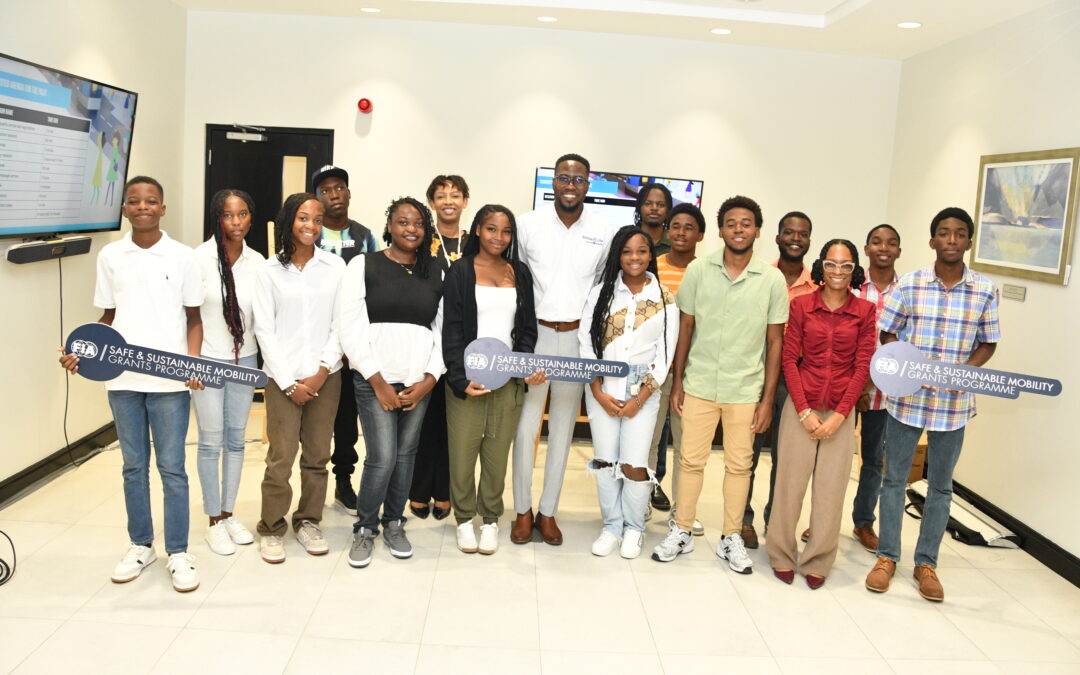
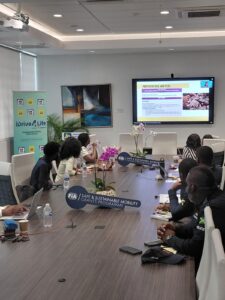
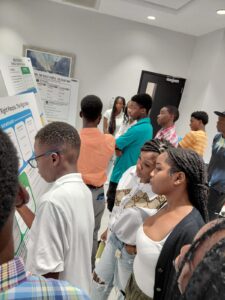
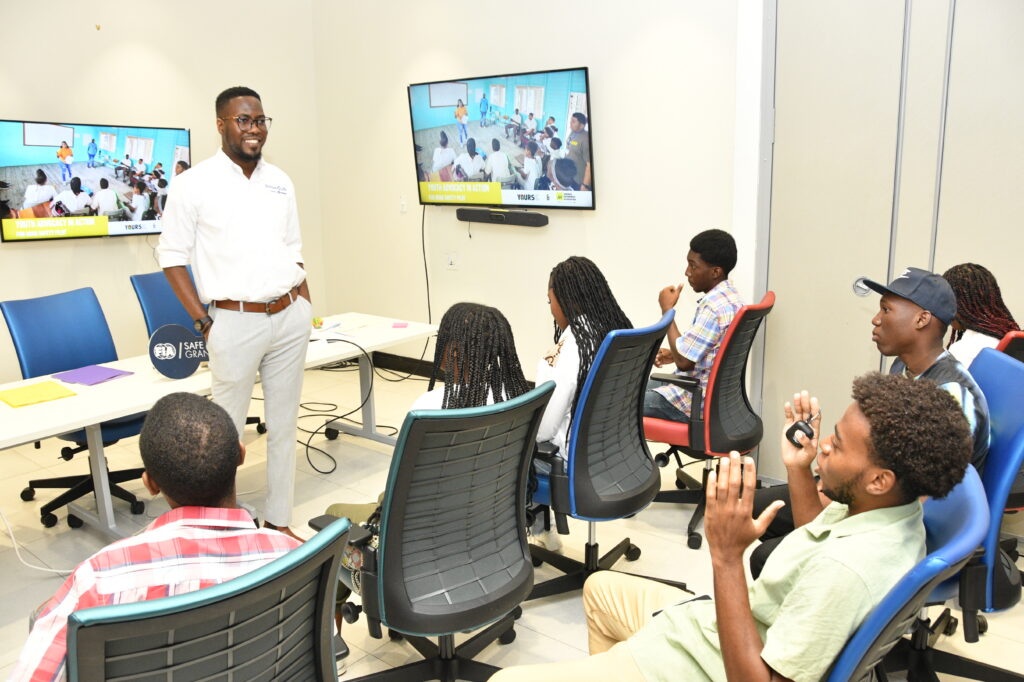
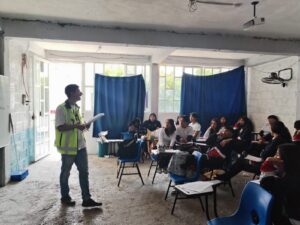
On August 19 , that learning moved into practice. Five facilitators came together with 13 young people aged 15–23 for an in-person pilot workshop at the JN Group Corporate Office. It was an opportunity to
test the sessions before taking them into schools, while giving young participants the chance to explore road safety issues in Jamaica, advocacy tactics, how to communicate with different audiences and how their own voices and experiences can contribute to change.
For Alexander, 17, from St. George’s College, the pilot also opened up the possibility of taking a more active role in road safety. “I see myself as somebody who may take up that road or encourage others to take up that road.”
His reflection speaks directly to an idea at the heart of Youth Advocacy in Action for Safer Roads: young people are not only beneficiaries of road safety initiatives. They can be partners in creating solutions, bringing their experiences into conversations about the mobility systems they navigate every day.
Now, the project is preparing for its next phase. The programme will move into five schools, reaching 150 secondary school students through access to YOURS Academy online courses, an in-person advocacy and communications training and hands-on campaign development. Students will explore road safety issues affecting their daily lives and use what they learn to design and lead their own advocacy campaigns.
The experience and lessons from the pilot workshop and the upcoming school training will also contribute to the development of a Youth Pilot Toolkit, capturing learning from the project and contributing to a model that can support youth-led road safety initiatives across FIA Region III.
Implemented under the iDrive4Life programme by the Jamaica Automobile Association (JAA) and JN Foundation, in collaboration with YOURS – Youth for Road Safety, the project is moving one step closer to its goal: creating opportunities for young people to move from learning about road safety to actively shaping conversations around it, with the tools, knowledge and opportunities to lead change in their communities.
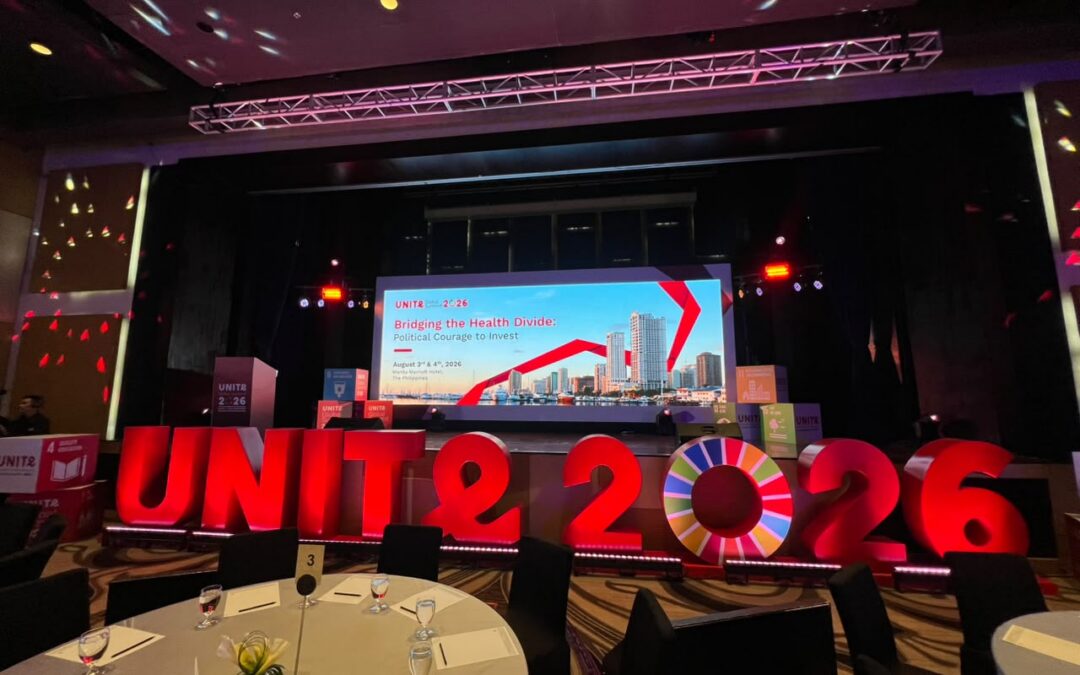
At the UNITE Global Summit 2026 Parliamentary Inquiry, YOURS highlighted why safe and sustainable mobility should be at the centre of policies that create healthier, safer and more resilient communities.
What if a single public investment could reduce emissions, improve health, prevent road traffic crashes and expand access to opportunities?
This was one of the key messages YOURS brought to the UNITE Global Summit 2026 Parliamentary Inquiry in Manila, Philippines, which convened 160 participants from 48 countries. The majority of participants were parliamentarians working on health, creating an important space to connect youth perspectives with legislative leadership and public health decision-making.
Representing YOURS, Sana’a Khasawneh, Senior Advocacy and Public Affairs Manager, joined the session Intergenerational Action for Climate and Health: A Parliamentary Inquiry, where she shared the organisation’s perspective on why investing in safe and sustainable mobility delivers benefits that extend far beyond transport.
The Parliamentary Inquiry brought together youth representatives and technical experts with parliamentarians from different regions, including Hon. Ibtissame Azzaoui, former Member of Parliament from Morocco; Hon. Ephraim Kayembe, Member of Parliament from Malawi; Hon. Sonia Sidhu, Member of Parliament from Canada; and Hon. Sascha Van Beek, Member of Parliament from Germany.
Together, they explored how legislative action, public financing and parliamentary oversight can better address the interconnected challenges of climate change, public health and intergenerational equity.
“When we invest in safe, accessible and sustainable mobility, we’re not only investing in transport—we’re also investing in health, climate resilience and equity. The strongest investment case is built around interventions that address several challenges with the same public resources.” — Sana’a Khasawneh, Senior Advocacy and Public Affairs Manager, YOURS – Youth for Road Safety
At YOURS, we believe that safe and sustainable mobility is one of the smartest public investments governments can make. Well-designed walking and cycling infrastructure, reliable public transport and safer streets do much more than improve mobility. They reduce emissions, improve air quality, encourage physical activity, prevent road traffic crashes, lower household transport costs and expand access to education, employment and healthcare.
These benefits are particularly important for young people and communities that rely heavily on walking, cycling and public transport, yet are often exposed to the greatest levels of risk.
This is why climate, health, mobility and road safety should not be treated as separate policy agendas. A single investment can contribute to multiple national priorities, helping governments create healthier, safer and more resilient communities while making better use of public resources.
Parliamentarians have a central role in making this integration possible. Through legislation, budgeting and oversight, they can ensure that climate and health investments include measurable objectives for road safety, accessibility, air quality, physical activity and equity.
This integrated approach also requires a stronger focus on accountability. Progress should not be measured only by the number of plans, strategies, or consultations produced, but by whether investments improve people’s lives, make communities safer, strengthen resilience, and ensure that public resources reach those who need them most.
Accountability should also examine who benefits from public investment, who remains exposed to risk and whether commitments are translating into safer and healthier everyday journeys.
Equally important is ensuring that young people are recognised as partners in shaping these decisions. Beyond sharing their experiences, young people should have meaningful opportunities to contribute to policy design, implementation, budget discussions, monitoring and accountability.
Around the world, youth-led initiatives continue to demonstrate that local knowledge can identify overlooked risks, generate practical solutions and inform national policy. However, these initiatives require sustained political support, financing and formal pathways through which young people can influence decision-making.
By participating in the UNITE Global Summit 2026 Parliamentary Inquiry, YOURS reaffirmed its commitment to advancing safe and sustainable mobility as a powerful intersection between climate action, public health and road safety. Bringing these agendas together, and ensuring young people have a meaningful role in shaping them, will be essential to building healthier, safer and more resilient communities for everyone.
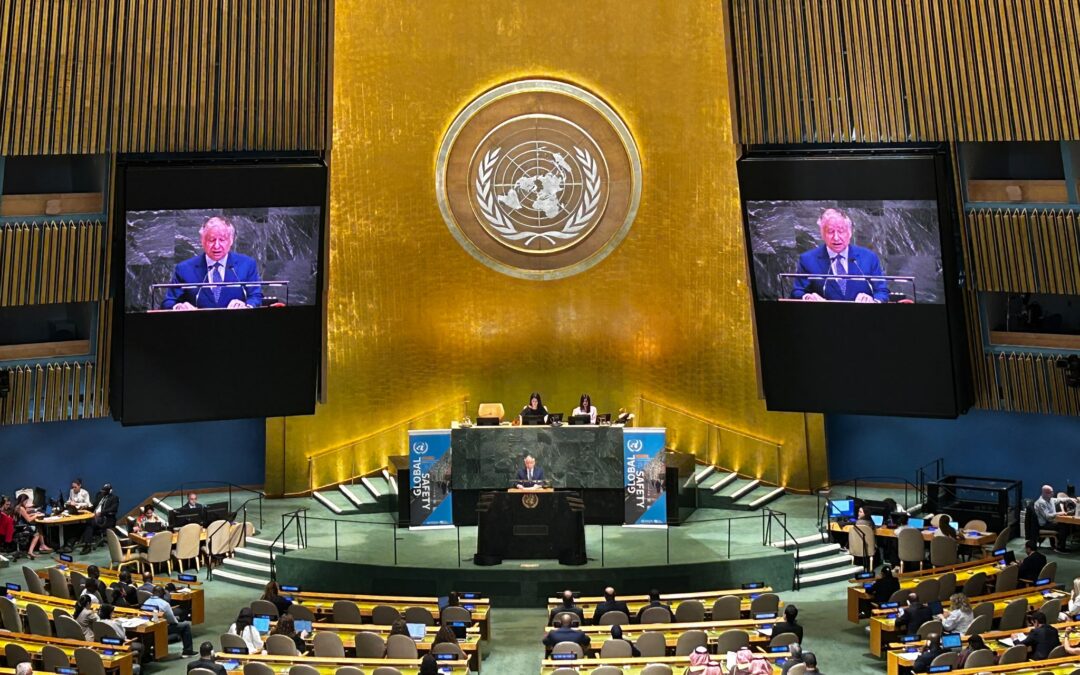
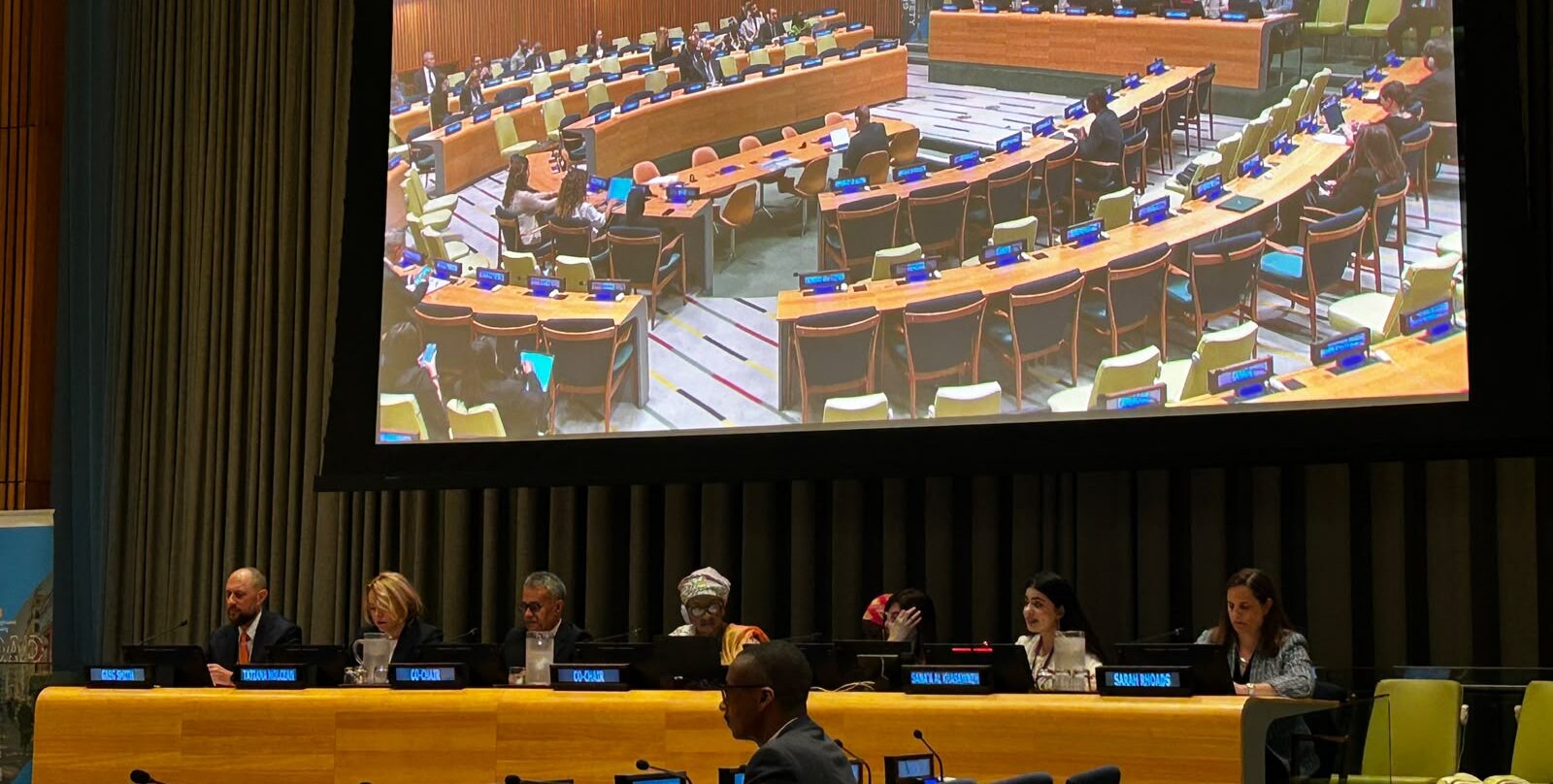
As governments, UN agencies, civil society and global leaders gathered in New York for the Fourth United Nations High-Level Meeting on Improving Global Road Safety, YOURS – Youth for Road Safety brought one clear message to the table: commitments alone do not save lives, accountability does.
Throughout the meeting, YOURS delegation championed a vision of youth engagement that goes far beyond representation. Young people are not simply beneficiaries of safer roads or participants in global conversations. They are essential partners in helping governments understand whether commitments are reaching real streets, real communities and the people they are meant to protect.
Alongside the adoption of the Progress Declaration on Road Safety, the World Health Organization released new global data showing that the global road traffic death rate has fallen by 21% since 2011, despite more than one billion additional vehicles being added to the world’s roads. The figures demonstrate that evidence-based policies, stronger legislation and sustained investment save lives.
An estimated 1.16 million people still lost their lives on the world’s roads in 2025, and road traffic injuries continue to be the leading cause of death among children and young people aged 5–29. While deaths have fallen by 36% in Europe, progress has stagnated in the Americas and increased by 17% in Africa. Meanwhile, the number of motorcyclists has more than tripled since 2011, and they now account for nearly one in every three road deaths worldwide.
The message emerging from New York was clear: the world already knows what works. The challenge now is ensuring that commitments become measurable action. For YOURS, accountability begins with meaningful youth engagement. Youth participation is not symbolic, it is a structural accountability mechanism. Young people bring lived experience, innovation and community-level insight that help governments stay aligned with the Global Plan for the Decade of Action for Road Safety. By monitoring progress, identifying implementation gaps and advocating for change, young people help ensure that road safety commitments move beyond conference rooms and into everyday life.
This perspective shaped the participation of Raquel Barrios, Executive Director of YOURS, during the Commitments in Action Roundtable, where discussions focused on what it takes to translate global commitments into real progress.
“YOURS’ experience shows that youth participation becomes powerful when it moves from visibility to accountability. Young people are not just there to ‘represent youth’; they help test whether road safety commitments are reaching real streets and real communities. They see where policy meets pavement: unsafe school zones, unprotected cycling routes, inaccessible transport, and the everyday gaps that still put people at risk.” — Raquel Barrios, Executive Director, YOURS – Youth for Road Safety
Accountability also depends on transparency. National commitments need to be supported by public implementation plans with clear timelines, defined responsibilities and measurable progress indicators. When governments make these plans accessible, communities and young people are better equipped to monitor delivery, support implementation and help keep progress on track.
Just as importantly, accountability requires investment. Scaling proven road safety solutions depends on governments, UN agencies, donors and civil society pooling resources around evidence-based interventions and ensuring that youth-centred programmes have the long-term support they need to create lasting change.
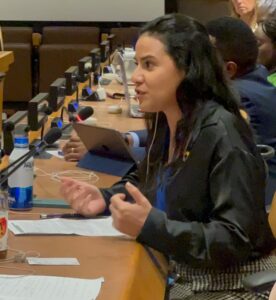
Those ideas were echoed by Sana’ Khasawneh, Senior Advocacy and Public Affairs Manager at YOURS, who represented the youth perspective during the United Nations General Assembly’s official Multi-stakeholder Panel on Road Safety, alongside the United Nations Economic Commission for Europe (UNECE), iRAP and Amazon.
Her intervention highlighted that accountability is a shared responsibility. Governments bring authority, experts bring knowledge, civil society brings scrutiny and funders bring resources, but young people bring something equally essential: proximity to the challenges and a stake in tomorrow’s consequences.
“Accountability is shared. Governments bring authority and experts bring knowledge. Civil society brings scrutiny, and funders bring resources. Young people bring proximity to the problem and a stake in tomorrow’s consequences. Please do not invite youth only to stand beside your commitments. Give them the power to test them, track them, challenge them and help deliver them. Accountability is not measured by how carefully we count the lives we lose. It is measured by how courageously we prevent their loss.” — Sana’ Khasawneh, Senior Advocacy and Public Affairs Manager, YOURS – Youth for Road Safety
Together, these conversations reflected a growing recognition across the High-Level Meeting: meaningful youth engagement is not an optional addition to road safety governance. It is a practical tool for improving implementation, strengthening accountability and accelerating progress towards the 2030 target.
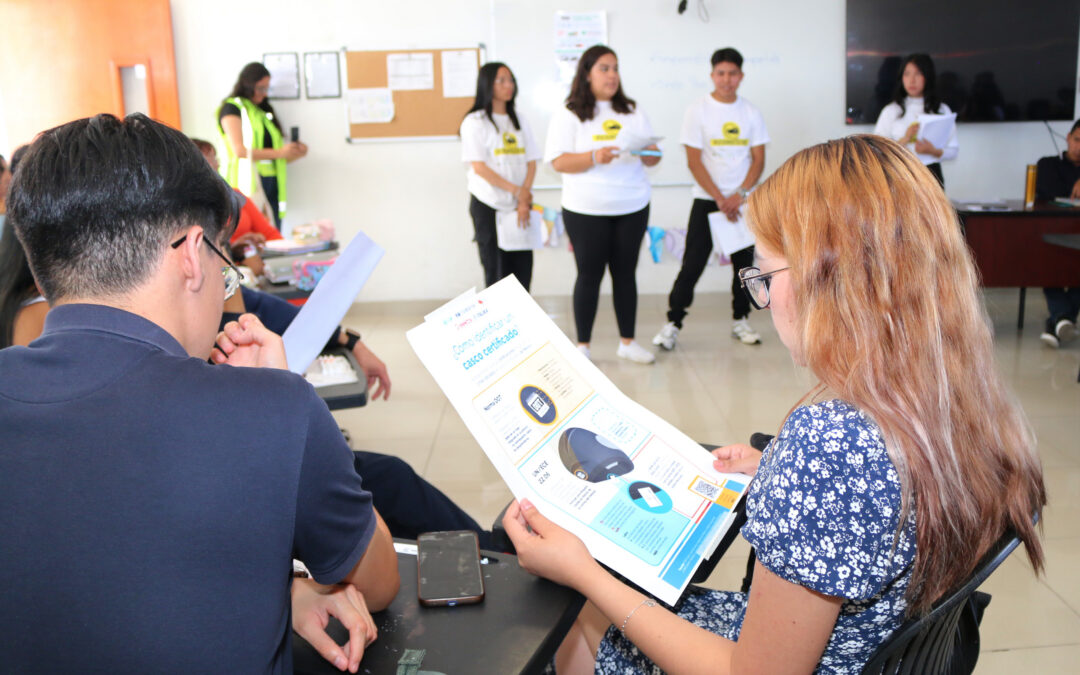
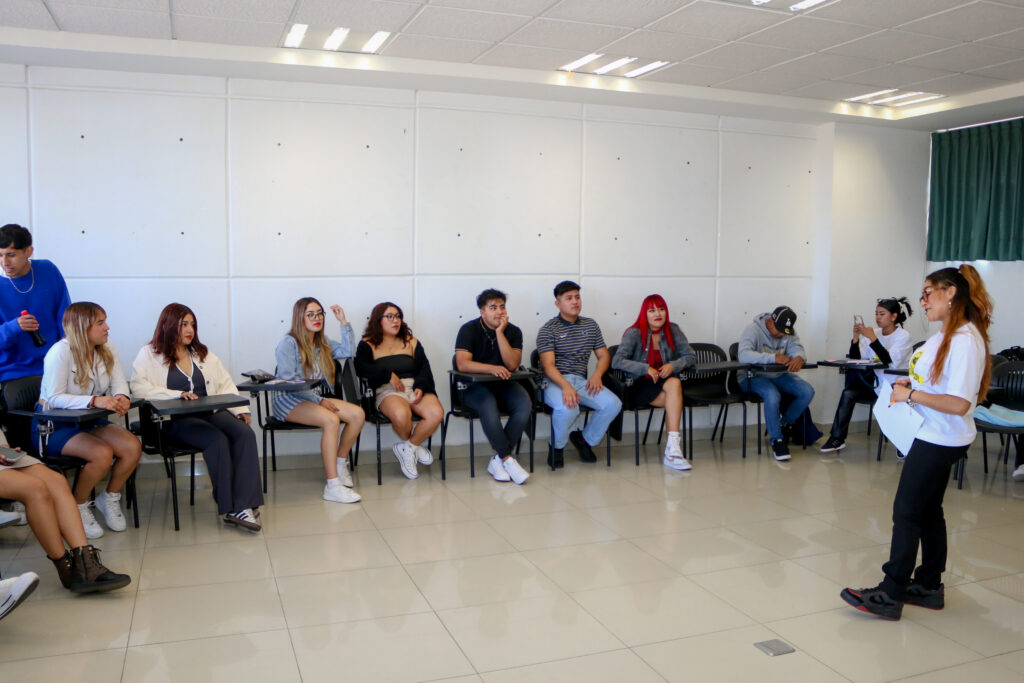
One training program can spark an idea. Sixteen young people can start a movement. Just a few weeks after coming together in Chimalhuacán to learn about road safety, leadership and community engagement, the participants of Seguro Es Cool are no longer sitting in the audience. They are standing at the front of classrooms, facilitating discussions, sharing their experiences and encouraging other young people to think differently about the way they move through their communities.
This shift from participants to facilitators has always been at the heart of Seguro Es Cool. Supported by Fundación Aleatica, in collaboration with Liga Peatonal, Circuito Exterior Mexiquense and YOURS (Youth for Road Safety), the programme was designed with a simple idea in mind: lasting change happens when young people are trusted not only to learn, but also to lead.
Following the training of facilitators held in April, each participant took on a new challenge: bringing those conversations back to local high schools and universities. Since then, they have delivered 50 peer-led cascade workshops, reaching more than 1,800 students across the State of Mexico.
Rather than repeating information, each workshop became an opportunity to connect safe motorcycle use with everyday life. Young facilitators encouraged their peers to reflect on the choices they make every time they ride a motorcycle and wear a helmet, creating spaces where road safety felt relevant because it was rooted in their own experiences.
As every workshop reached a new classroom, another conversation began. And with every new conversation, the programme continued to grow beyond the original group of participants.
This ripple effect is what gives Seguro Es Cool its strength. Instead of stopping with a single training, knowledge continues to move from one young person to another, creating a network of new road safety advocates who understand the realities of their own communities and are ready to become part of the solution.
Fifty workshops and more than 1,800 young people reached are important milestones, but they tell only part of the story. The real impact lies in every conversation that continues after the sessions end, in every young person who leaves the classroom thinking differently about safe motorcycle use, and in every new leader who discovers they have the power to influence others.
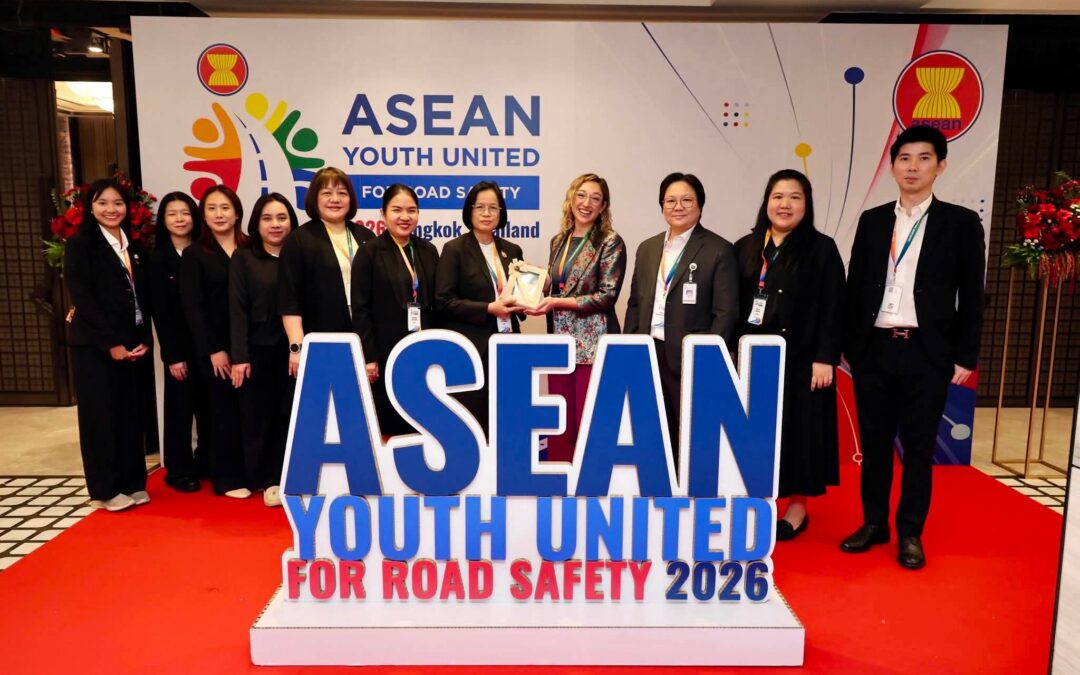
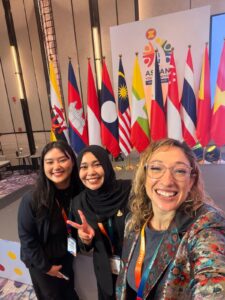
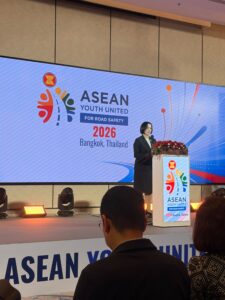
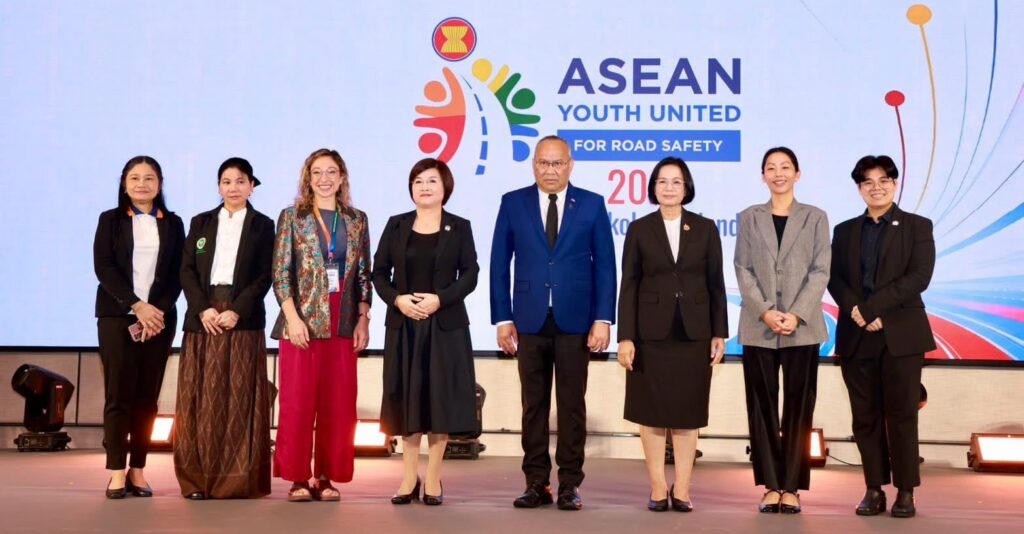
This week, YOURS is in Bangkok, Thailand, taking part in the ASEAN Youth United for Road Safety Conference, convened by the Thailand Ministry of Social Development and Human Security, with support from WHO Thailand. Bringing together youth leaders, government representatives and regional partners from across ASEAN and the Asia-Pacific, the conference is creating an important platform for young people to contribute to the future of road safety in the region.
At the heart of the conference is the development of the ASEAN Youth Recommendations for Road Safety, a youth-led document that will be presented to the ASEAN Senior Officials Meeting on Youth, within the ASEAN Ministerial Meeting on Youth, and later at the UN High Level Forum on Road Safety. More than a set of recommendations, this is an opportunity for young people to help shape regional road safety priorities and influence decision-making beyond the conference itself.
Representing YOURS, Molly Stoneman, Partnerships & Business Development Director, joined the panel discussion “Road Traffic Accident Situation Among Youth”, where she shared practical experiences on meaningful youth participation and highlighted how young people can move from lived experience to evidence-based advocacy. Drawing on YOURS’ work across the region, the session reinforced the importance of equipping young people with the knowledge, networks and opportunities to influence safer and more sustainable mobility systems.
Molly offered lessons from the 2025 Global Youth Statement for Road Safety [LINK] as a practical example of youth consultations informing evidenced recommendations, which can be used as a lobbying tool to explain youth needs and outline solutions. This model applies to the forthcoming ASEAN Youth Recommendations, which can launch new conversations between youth and their representatives.
Alongside the panel discussion, YOURS also held bilateral meetings with representatives from Thailand’s Department of Children and Youth to strengthen relationships and explore opportunities for continued collaboration in advancing youth leadership for road safety across the region.
Bilateral conversations with the Thailand Department of Disease Control of the Ministry of Health, and with WHO Thailand, demonstrated Thailand’s commitment to youth participatory programming. We heard clever examples of inclusive mobility programmes from Thailand, such as car seat donation centres and student data mapping initiatives, and shared ideas from across ASEAN.
The conference also provides an opportunity for experienced youth advocates to exchange ideas, explore evidence-based solutions that respond to the Asia-Pacific context, and collaborate on approaches to securing stronger commitments from governments, civil society and the private sector. Through these conversations, YOURS is contributing not only to developing the recommendations but also to ensuring young people are supported in turning those recommendations into meaningful action.
As the ASEAN Youth Recommendations continue their journey towards regional and global decision-making spaces, YOURS remains committed to supporting the ASEAN Youth Network through training, networking opportunities and expert guidance, helping transform youth-led ideas into lasting impact for safer roads across the region.
YOURS – Youth for Road Safety and Mapfre Foundation are proud to announce a new global research initiative in partnership with The George Institute for Public Health. The project, Reimagining Driver Education: How Artificial Intelligence Can Shape the Next Generation, will explore how AI and emerging technologies could strengthen driver education, testing and licensing systems while contributing to safer roads for future generations.
Over the next nine months, the initiative will bring together young people, researchers, policymakers, driver licensing authorities and technology innovators to examine how emerging technologies are already being used across driver education and licensing systems, what opportunities and risks they present, and how they could shape safer mobility systems by 2035.
Road traffic injuries remain the leading cause of death among young people worldwide. At the same time, artificial intelligence, virtual reality and digital learning tools are transforming how people learn, make decisions and interact with technology. As these innovations continue to evolve, there is growing interest in understanding how they can be applied responsibly, ethically and effectively to improve road safety outcomes.
The project will explore existing and emerging applications of AI and digital technologies across the driver education and licensing journey. Through global research, expert engagement and youth-centred consultations, the initiative will identify promising use cases, analyse potential challenges and develop practical recommendations for policymakers, licensing authorities, driver education providers and technology developers.
A defining feature of the project is its commitment to meaningful youth participation. Through a Youth Steering Committee and regional consultations, young people will help shape the research process, identify priority areas and contribute perspectives on how technology can support safer roads and stronger licensing systems.
As Raquel Barrios, Executive Director of YOURS, explains: “Young people are not only the most affected by road traffic injuries, but they are also the earliest adopters and initiators of new technologies. As AI and emerging innovations transform how we learn, drive, and move, their leadership is essential. This research allows us to understand the evolving landscape of driver education, testing, and licensing, while demonstrating how youth‑driven insight and technological fluency can strengthen road safety systems. It is a natural extension of our mission at YOURS to ensure that young people shape the future of mobility, and that innovation is harnessed responsibly to save lives.”
“IA is changing all aspects of our lives, and driver education, in particular risk awareness, are not exceptions. By partnering with YOURS, we bring both technical expertise and fresh perspectives to this topic. Our aim with this research, and the invaluable participation of The George Institute, is to explore opportunities and identify limitation of IA-powered driver education and transfer this learning to driver education systems and schools around the worl”, says Jesús Monclús, Expert Director of Safe Mobility at Mapfre Foundation.
Mapfre Foundation joins the initiative as project donor, participating also in the research and strategic guidance, dissemination and building on its longstanding commitment to road safety, prevention and innovation.
The George Institute for Global Health bring its global research expertise to this initiative, working alongside YOURS, MAPFRE Foundation, and young people to ensure that AI and emerging innovations are applied equitably and responsibly across diverse licensing systems and communities -and grounded in robust evidence. – Jagnoor Jagnoor, Program Lead, Injury, The George Institute for Global Health
As research partner, The George Institute for Global Health will contribute expertise to help ensure the study is grounded in robust evidence and informed by global perspectives.
This initiative also reflects YOURS’ growing role in connecting youth engagement, advocacy and evidence generation to influence policy and practice. Building on previous publications, policy briefs and toolkits, the project seeks to generate practical recommendations that can support decision-makers, strengthen driver education systems and ultimately contribute to reducing road traffic injuries.
As the research progresses, the project team will engage with stakeholders across sectors and regions, creating opportunities for dialogue, collaboration and shared learning.
For more information or to explore collaboration opportunities, please contact Sana’a Ramez Khasawneh at sanaa@youthforroadsafety.org