Brian’s Column: Making road safety sexy is crucial for learning

Brian’s Column: Making road safety sexy is crucial for learning

In his regular column giving us a unique insight into road safety in Africa, Brian Mwebaze writes today’s article on the importance of making road safety a subject that is appealing and attractive to young people. Based on his own experience of a recent workshop, Brian offers a solution to avoiding the traditional means of learning and making education ‘sexy’.

Yep, That’s correct! (English) Oui, C’est ca Exactement!(French) هذا هو الصحيح (Arabic) Eso es correcto!(Spanish) Det er korrekt! (Danish) Isso é correto ! (Portuguise) …Sorry for those whose languages don’t appear here! Iam not trying to create a language traffic accident lol but we are talking about Road Safety being Sexy?!Woohoo….Kinda exciting huh?

On the weekend of 27th May 2012, I had a chance to participate as an observer in our regional road safety campus safety awareness workshop. In attendance of course were our East African Red Cross Youth Campus Programme Superstars (pictured below). These 23 superstars work as focal point contacts for the universities and selected schools in the East African region. Our organization had hired a consultant to run the session. So, now you understand why I requested to be in and learn a tip from the consultant!

The 23 Uganda Superstars taking part in the workshop for road safety.

In a flash, he came in with a well prepared agenda. He had a cool Prezi presentation with technicalities cutting across road design, visibility, pre and post crash care, the mechanics of injury and crashes…woo! It was quite exciting, After that the presentation, he took the 23 man squad on the road and demonstrated what he meant during the theory session<<<something you must credit the guy.

He later after a series of theory and practice gave a written evaluation test.. However, our superstars struggled to answer correctly because they didn’t have time to read, prepare and assimilate the learned information…you get the idea right? You could see their faces and feel a little sorry for them. But you see, the organization hadn’t paid cheaply this guy…plus, he was doing his job! 

In many cases, when young people take part in workshops on a voluntary basis, most young people do not want to be back in a schoolike setting with a classroom set up. Avoiding a lecturing type scenario is therefore crucial.

Meanwhile in the far corner where I was sitting, I was thinking, this aint cool bro, is it? Our superstars are University and School students. I am sure when they got the invitation, they thought it was going to be different from the class environment type. After the session, I did an evaluation and one consistent outcome from the respondents was “…not sexy session …” ‘SEXY?” (jaw drop)…”Really?” But…I didn’t get the point. I was dipping my head into sand to find out the best way of approaching this. How could we send real messages home? How could we make sure that the road safety messages stick into these young minds brains …it was a moment of thinking and thinking. …little did I know the answer was around the corner.

On a fresh Sunday morning while at Jomo Kenyatta International Airport waiting for my connection flight to Brussels then Geneva for the UNAIDS presentation on the global youth reproductive health services and rights outcomes from the CrowdOutAIDS campaign…I remembered something! Over 5000 global young voices participated in this campaign in a short time. But what made them get so interested? What made them consistently turn up and respond to the questions that were being asked? What made them turn up the next day?

The Crowd Out Aids Campaign spoke the language of young people making the ownership of the program in the hands of the young participants.

It must have been about the need to know more information about their reproductive health rights? It should have been their inner passion to make a good contribution to ensuring zero HIV new infections. But, also, it could have been because some of them are young people living with HIV. No..Not that alone…as I found out in the final report that I wrote that very night, it was because the approaches used under CrowdOutAIDS were sexy!

The approaches spoke the language of the youth! The CrowdOutAIDS used tailor-made approaches holding online sessions for the urban youth and offline sessions for the rural youths. Materials were pretested in the language of all targeted groups. In the same way, I would say “If its sports that youth engage in, formulate programs that provide information about road safety through sports; if its Broadway shows, incorporate information on road safety in the shows; if the youth hang around malls, put up promotional posters with road safety information; get celebrities in your district/village that are idolized by the youth to support causes on road safety even by being Goodwill ambassadors and reach out to their fans or subjects; if it’s the language of iPods, make applications that can be downloaded on iPods; if it’s through X-box or Wii, make games that provide information on road safety; if their language is texting, sell this idea to communication companies in your country to send some road safety tips as texts and encourage young people to share stories freely (just not while driving). You get my point, make the education relevant, appealing and engaging to the language young people are speaking today.

Just like my local town bus company, put a slogan that reads like ‘Your Safety Is Our Safety” The public transport system fairly penetrates the rural areas and could be a cool platform to get to rural youth!

In conclusion, I took a step back and thought, ‘How can we make road safety sexy?’, then it hit me; this is what YOURS does everyday. From their cool website design, the amazingly attractive Youth and Road Safety Action Kit and the clear depiction of ‘fun learning’ in their recent road safety workshops. 

YOURS’ workshop in Oman was reflective of a interactive and youth friendly learning environment – see more in videos attached.

By engaging with young people on their level, we have to be prepared to test what works and use facilitators that can connect with young people based on their own social, cultural and community contexts. This way, we can open a dialogue of active learning rather than creating a classroom situation where young people feel they are being lectured once again, bearing in mind that most of these workshops take place out of the formal education arena.

#FoodforThought #StaySafe

Masters degree in Road Safety Management – Lebanon

Masters degree in Road Safety Management – Lebanon

The Renault Foundation and Saint-Joseph University in Lebanon have launched the Chair and the Masters Degree in Management of Road Safety opening the door for Gulf and Middle Eastern countries to study road safety from an academic viewpoint. The programme was launched during a ceremony held at the Francois S. Bassil Auditorium at the University under the patronage of his Excellency Mr Najib Mikati, President of the Council of Ministers of Lebanon.

The degree programme was launched in Lebanon at the University Saint-Joseph.

The Masters course is accredited by the Lebanese authorities, opening the way for its recognition in other countries. It is due to start in September 2012.

Recruitment of students has started and the University have already received applications from Lebanon, Morocco, Algeria, Palestine, and Yemen. However, the University Directors would like to widen their recruitment to other countries.

The vision is to bring road safety under control throughout the region and to develop an intra- and inter-regional information and exchange system for road safety knowledge and best practice. The educational and research programmes will present state of the art knowledge to accompany countries in their approach to a safe and sustainable mobility. It can be adapted and repeated in other areas of the world

The programme is for a multidisciplinary academic and research Chair:

  • proposed by the Renault Foundation and Saint-Joseph University, Beirut
  • for the Middle East and Gulf State countries
  • to meet local and regional capacity development and reinforcement needs
  • involving stakeholders from the publicprivate and civil society sectors
  • working to contribute towards the resolution of an identified and increasing road safety problem.

The programme is to be launched at the beginning of academic year 2012-2013 for an initial duration of 5 years.

One of the main motivations behind this launch is to combat the amount of road deaths facing the Middle East where road crashes are particularly high:

The Surreal Poster Series: Key Risk Factors – Part Four: Speed

The Surreal Poster Series: Key Risk Factors – Part Four: Speed

The Surreal Poster Series has been a program that was highly subscribed to. Delegates are able to download the poster series for free, featuring five posters focusing on the five key risk factors in road safety. Now, YOURS is featuring a focus on each poster explaining the risk factor behind each theme. This week, we focus on speed…

Speed is a major risk factor in road traffic injuries. Here are three scientifically proven facts on the dangers of speeding. Next time you hear that it’s ok to speed you know what to say!

Fact one:
Speed affects the risk of being involved in a crash; the more you speed the more likely you are to be involved in a crash.

Why?
Speeding makes it more difficult to react in time to prevent a crash. And the probability of avoiding collisions becomes smaller and smaller as the speed increases. Every person needs time to understand the information coming from the road, decide whether to take action or not, and then carry out the action. The faster the speed you are travelling at, the more distance is covered while you make decisions and take actions. Therefore your reaction will come very late. And it also takes longer for the vehicle to stop when you brake.

Fact two:
Speed also affects the severity of injuries resulting from crashes this means that crashes at higher speeds will cause more severe injuries than those at lower speeds.

Why?
The higher the speed, the more kinetic or movement energy the vehicle and you (the driver or passengers) are carrying, therefore more energy is released when colliding into another vehicle or stationary object such as a tree or wall. Part of the energy released will be absorbed by the objects involved in the crash and part will be absorbed by the human body. Our human body is vulnerable and cannot tolerate this energy so the more energy released the more severe our injuries will be.

Fact three:
Pedestrians, cyclists, and persons in lighter vehicles will have more severe injuries from speeding.

Why?
In the case of a collision, the energy released will be absorbed more by the “lighter” side, be it a pedestrian, cyclist, or a smaller vehicles, because the difference in mass is large. Imagine a big truck hitting a cyclist, it’s quite obvious that the cyclist is the one who will get hurt, right? The same pplies for any collision between “objects” of very different sizes. In addition, pedestrians and cyclists are totally unprotected without the iron body of the vehicle, seatbelt, or airbag.

Did you know that…
At 50 kph, a moving vehicle has almost the same energy in it as 20 fired bullets. And any passenger in the car has about the same energy as two fired bullets. So if a car driving at 50kph with only a driver in it hits a pedestrian, it’s the same as firing 22 bullets at that person. Imagine anyone surviving 22 bullets?

Fourth European Road Safety Day to take place in Cyprus in July

Fourth European Road Safety Day to take place in Cyprus in July

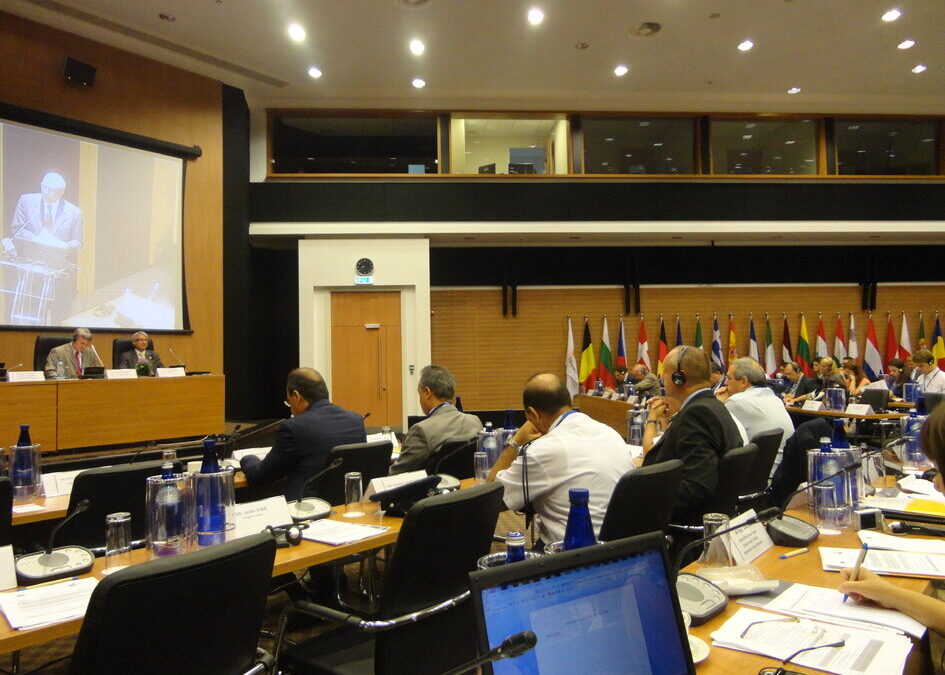
On 25th July 2012, YOURS will attend and is proud to co-chair the Fourth European Road Safety Day in Nicosia, Cyprus. This event will focus on the ‘Active Involvement of Youth in Road Safety’ as its primary theme and will offer a range of informational and interactive presentations, workshops and debates to youth delegates from across Europe.

The City of Nicosia in Cyrpus will be the backdrop for this year’s European Road Safety Day.

On 25th July, youth delegates from across Europe will come together for one day in the sunshine city of Nicosia, Cyprus for the Fourth European Road Safety Day. This conference will have a strong focus on young people’s involvement in road safety.

The event is being organized by the European Commission and Cypriot Transport Authorities alongside international road safety organizations. There will be numerous presentations from road safety experts on the latest developments in road safety in a European context as well as interactive discussions and debates on topics important to young people in Europe orientated on road safety issues. Of course a lot of young people from around the region have been invited, and many are part of the European Youth Network for Road Safety under the leadership of our Coordinator of the European Region Mr. Axel Druart (http://www.youthforroadsafety.org/about_us/core_group), who will also be a pannelist during one of the sessions.

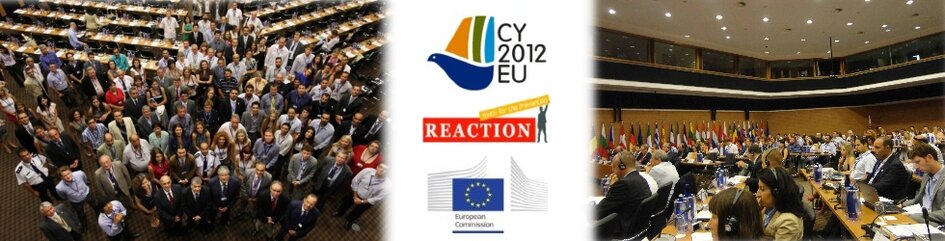
Some of the delegates from the annual European Youth form for Road Safety have been invited to this event.

At the event, alongside the European Commisson and Cypriot Transport Chairs, Director of YOURS, Mr Floor Lieshout will co-chair the conference alongside representatives from the Cyprus organization, Reaction – Prevention of the Youth. YOURS’ involvement in this event will bring a global road safety perspective to the table as well as the opportunity to present on YOURS’ recent Youth and Road Safety Action Kit and young people’s actively involvement in road safety globally and regionally.

Expert presentations at the event will include a focus on some of the following themes:

  • The creation of a common culture amongst European youth with road safety.
  • University of Cyprus findings on road safety research related to young people.
  • An interactive workshop on life-long learning and road safety education.
  • Key risk factors facing young people in Europe.
  • Enforcement and relationships between young people and youth with relation to road laws.

This Fourth European Day for Road Safety will be an interactive day of active learning. YOURS will of course be reporting in our usual style of video-reel highlights, pictures and written reports after the event!

For more information about the event, you can contact YOURS at info@youthforroadsafety.org


The Surreal Poster Series: Key Risk Factors – Part Three: Seatbelts

The Surreal Poster Series: Key Risk Factors – Part Three: Seatbelts

The Surreal Posters Series has been a program that was highly subscribed to. Delegates are able to download the poster series for free, featuring five posters focusing on the five key risk factors in road safety. Now, YOURS is featuring a focus on each poster explaining the risk factor behind each theme. This week, we focus on seatbelts…

Non-Use of Seat Belts
Ever wondered why most countries have seatbelt laws? And why some countries are very strict in enforcing these laws? The answer is in three words: seatbelts save lives! It is now known that seatbelts have saved more lives than any other road safety intervention in history.

Have excuses not to wear your seatbelt? Here are some common excuses and why they don’t work.

Seatbelts are not needed if the car is equipped with air bags
Check out what is says on your air bag: SRS – meaning supplementary restraint system. Air bags are not designed to work alone but to supplement the work of the seatbelt. Air bags will not prevent you from being thrown out of the car and might actually cause sever injuries in high impact crashes.

A seatbelt will trap you in the car in a fire or underwater
Aside from the action movies and thrillers, how often have you seen a crash cause a fire or throw the car in water? Crashes involving fire or water account for less than one perent of all crashes. In case of a crash of such magnitude, without a seatbelt, a person will be killed or at least very seriously injured. Wearing a seatbelt can keep from sustaining such unjuries and you can unbuckle yourself when needed. Not only that, but in case of submersion underwater, keep you belt on and it can help you escape by stabilizing your body as you try to open the door or window.

Belts can hurt you in a crash
Not more that you will be hurt without them! Seatbelts are meant to restrain you in your seat and prevent you from being smashes in the steering wheel or dashboard if you’re in the front seats , or thrown out of the car. Seatbelts rarely cause any injuries themselves, and if they do, they are usually surface bruses. If you are not restrained, you might be thrown out of the care and injured badly.

You can be driving to the grocery store just around the corner for a crash to happen. Most crashes happen within 40km (25 miles) of home and at speeds less than 60km (40mph).

Michelin offers young people a unique road safety experience on Facebook

Michelin offers young people a unique road safety experience on Facebook

Taking an original approach to road safety, the Michelin Group, who are Founding Members of YOURS have organized a contest for young drivers on Facebook. This unique ‘game style’ application, called ‘Tom the European Tour’ is a innovative tool for road safety combating the road safety problem facing young people in Europe.

Every year on average, nearly 5,000 young people age 18 to 24 are killed in road crashes in the European Union. At the same time, since nearly 80% of young Europeans age 16 to 24 are regular uses of social media, Facebook represents a logical means for raising their awareness of road safety issues.

Called Tom European Tour, the game invites young people who drive – or are learning to drive – to travel with a virtual character named Tom through seven countries. Through the United Kingdom, France, Germany, Poland, Hungary, Romania and Spain, web users can follow and share Tom’s adventures from April 17 through June 8, 2012.

Tom visiting Berlin on his European Tour

For each stage of the journey, participants will answer questions or take part in a game dealing with the main aspects of road safety, such as complying with road signs and driving laws, anticipating hazards, maintaining vigilance, respecting speed limits, drinking when driving and adjusting to weather conditions. Participants with the best score will be awarded a symbolic driver’s license for each country visited. A random drawing will then be held to choose the winner, who receives a new Citroën C1.

Tom visiting Romania on his European Tour

The adventure is designed to educate young people the right reflexes and behavior at the wheel and to allow the exchange and sharing of views across Europe. Traveling across Europe with Tom will provide young people with the opportunity to learn more about key rules of the road, as well as each country’s special features, and encourage them to take road safety more seriously.

The initiative is part of the European ROSYPE project (ROad Safety for Young People in Europe), which was launched and led by the Michelin Group with the support of the European Commission. The goal is to raise road safety awareness among 730,000 young Europeans, ages 6 to 25, over a three-year period.

Discover the game now on Facebook!