4th European Road Safety Day Cyprus – a big success for youth involvement

4th European Road Safety Day Cyprus – a big success for youth involvement

On the 25th July 2012, young people from across Europe came together for the 4th European Road Safety Day in Nicosia, Cyprus. The day focused on a range of pressing road safety issues facing young people across Europe and was hosted by the Cyprus Presidency of the European Union 2012. Read the Cypriot Governmental press release and details of the Youth Conference on following day.

At the conference, we at YOURS ran live updates from the action in Nicosia as it happened. You can read a live update stream from YOURS that took place on the day here.

Youth and public authorities working hand in hand to improve young peoples’ driving mentality

Official Cyprus Presidency of the European Union Press Release:
The willingness of youth organisations and public authorities to cooperate in order to create a road safety culture among young people in the EU and neighbouring regions was reiterated at a road safety conference. The conference, which was organised in Lefkosia (Nicosia) by the Cyprus Presidency and the European Commission to commemorate the fourth EU Road Safety Day, was geared at raising awareness among young people. Through the findings of the conference, youth organisations, EU institutions and relevant road safety stakeholders reiterated the importance of creating a road safety culture in order to decrease the number of road deaths and injuries among young people.

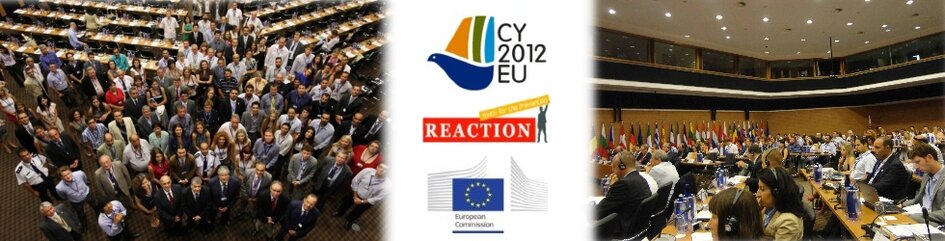
Some of the youth delegates in Nicosia.

The ‘Active Involvement of Youth in Road Safety’ Conference was organised by the Cyprus Presidency to commemorate the fourth EU Road Safety Day and sought to explore ways of incorporating young people in road safety. The need to raise awareness among young people was seen as crucial, as road deaths constitute the biggest reason of young deaths in Europe.

In a recorded message shown at the conference, the Vice President of the European Commission responsible for Transport, Mr Siim Kallas highlighted that road crashes are still the biggest cause of death and permanent disability for young people across the world. “The ‘big killers’ on our roads have not changed: drink-driving, speeding, running red lights and failing to use seatbelts”, stressed Commissioner Kallas with regard to the main problems of road accidents among young people.

The conference comprised of different workshops geared at raising road safety awareness and creating a road safety culture among young people. Panellists included road safety experts from European institutions and neighbouring countries.

The need for life-long learning through education and training and the significance of establishing mutual respect and cooperation between the police and the young people was emphasised. The conference also addressed risky behaviours such as alcohol, drugs, speeding as well as the vulnerability of road users such as motorcyclists and cyclists.

The findings of the conference from the workshops and discussions were presented in a press conference. Findings include a zero tolerance approach for drink drivers, better targeted information campaigns, a continuous and comprehensive road safety education from a young age and special programmes of re-training of repeated traffic offenders. 

Young delegates partaking in road safety workshops in the afternoon session of the conference.

In his welcoming note, the Minister of Communications and Works, Mr Efthemios Flourentzou highlighted the importance of the active involvement of youth in road safety.  The presence of the Minister of Education and Culture, Mr George Demosthenous and the Minister of Justice and Public Order, Mr Loucas Louca highlighted the link between youth, road safety and the need for creating a road safety culture.

“We vow to do our outmost for the speedy and efficient implementation of the Policy Orientations on Road Safety for 2011-2020,” President Christofias stressed in his keynote address which was delivered by the Undersecretary to the President Mr Titos Christofides.

Policy Orientations on Road Safety for 2011-2020 target a 50% decrease in the number of road deaths and casualties from the EU average of 31,000 road deaths of 2010. During the conference, findings and recommendations of a study by the University of Cyprus on relevant actions taken in Cyprus were presented.Representatives from Youth Organizations expressed their willingness to cooperate with the relevant public authorities, in order to improve young peoples’ driving mentality.

Some of the key presentations that took place in the morning session included recommendations of the PIN Report and global youth involvement in road safety with YOURS.

The 4th European Road Safety Day provided an invaluable platform to discuss and exchange best practices and most importantly, to raise awareness – of the dangers of irresponsible driving and of the importance of wearing seatbelts. The conference conclusions and recommendations are expected to provide a useful tool for national governments and the EU for improving youth road safety on a national, regional and European level.

On the subsquent day; a youth meeting was organized in conjunction with reaction to focus on concrete youth outputs from the day. This ‘conclusion’ meeting sought to refelect on what happened since the European Youth Forum for Road Safety in November 2011 and to define outcomes for a common European Campaign, the 5th Edition of the EYFRS and the future of its online collaboration. The meeting included an introduction to YOURS’ global youth network, creating a sustainable solution for the future of the EYFRS and future works.A full report will be published by our European CORE Group Representative Mr Axl Druart shortly.
Keep up to date with LIVE updates of the #ERSD – Nicosia, Cyprus

Keep up to date with LIVE updates of the #ERSD – Nicosia, Cyprus

The Fourth European Road Safety Day (#ERSD) is underway in Nicosia, Cyprus. YOURS is will be keeping the international network updated on the latest goings on at the European Road Safety Day which has a unique focus on youth involvement in road safety across Europe. You can check out periodic updates on the site to hear what is happening at the event.

Conference Update: 09:00
The conference is underway and there has been introductions from Mr Efthymios Flourentzour, Minister of Communicationsand Works. Address from the President of Cyprus via Mr Titos Christofides. There has also been a live video link presentation by Mr Siim Kallas, Vice Preseident of the European Commission responsible for Mobility and Transport at the European Commission.

Mr Siim Kallas presenting to the #ERSD

Mr Kallas reported on the latest report in road safety, the PIN Report which he highlighted, ‘Has shown a slow down of reducing road crashes in Europe’. The PIN report aslo illustrates that we can save lives by following the key risk factor management of seatbelts, drink driving, speed, distracted driving and so forth. Currently, Mr Szabolcs Shmidt, Head of Road Safety European Commission is presenting to the delegates on the importance of engaging young people against the backdrop of the recent reports highlighting the fact that young people are still the most affected demographic in road crashes in Europe. He mentions the ‘shared responsibility’ of young people and national support around Europe including the government, NGOs, private industry and civil society.

Conference Update 10:30
The latest European Report; PIN has just been presented to the ERSD focusing on the key findings of the biggest killer of young people in Europe; road crashes. Mr Antonio Avenoso of the European Transport Safety Council (ETSC) mentioned that there is a link between the level of testosterone and young male crashes. He mentioned that road crashes are a male issue. Young people are overrespresented in the three main killers of young people; speeding, distracted driving and drink driving. He ended by mentioning, ‘Youth only comes once and is important that we protect these years.

Mr Floor Lieshout presents to the ERSD

YOURS has also just presented to the conference asking critical questions of the young people in the audience and key policy makers in Europe. Mr Floor Lieshout asked policy makers how they use the passion, creativity and determination of young people in road safety work. Floor also introduced the conference to the youth and road safety action kit and the involvement of young people in YOURS’ global network. You can view the presentation by Mr Floor Lieshout on PREZI.

A debate is now taking place on the content of the presentations.

Conference Update 12:00

During the debate after the first presentations, several commendations were given on the work of the youth organizations across Europe. While much has been achieved with regards to reducing road fatalities amongst young people, more action is rquired certainly during the Decade of Action for Road Safety. There were several comments in the debate that calls for the involvement of young people in policy making in Europe.

After the coffee break, the presentations continued in the formal section of the conference. Mr Joel Vamain from the Interministerial Delegation for Road Safety – France spoke on creating a culture of road safety amongst young people including the tackling of new issues such as new technology. Cyprus University’s findings on road safety research was also included in presentations after the event.

Mr Marios Stavrou talks of road safety actions with young people in Cyprus.

Currently, Mr Marios Stavrou, Chairman of the Cyprus Youth Organization REACTION, speaks of the stufy and the actions taken in Cyprus. Mr Stavrou speaks of the use of peer-to-peer education to get a road safety message to resonate with young people on their own level. On the issue of fines and enforcement of road safety rules, he spoke of a ‘cat and mouse’ analogy whereby police often position themselves as the cats to catch mice but this does not solve the problem. We need to change this approach and work with young people rather than chasing them.

Conference Update 13:00

Delegates have discussed the presentations for the morning touching on key points of involving young people in the solution of road safety to prevent road crashes amongst youth in Europe. Mr Szabolcs Schmidt of the Road Safety Unit at the European Commission closed the session by stating ‘There are many challenges facing young people across Europe, involving young people in policy formulation and solutions, we can increase their safety across Europe’.

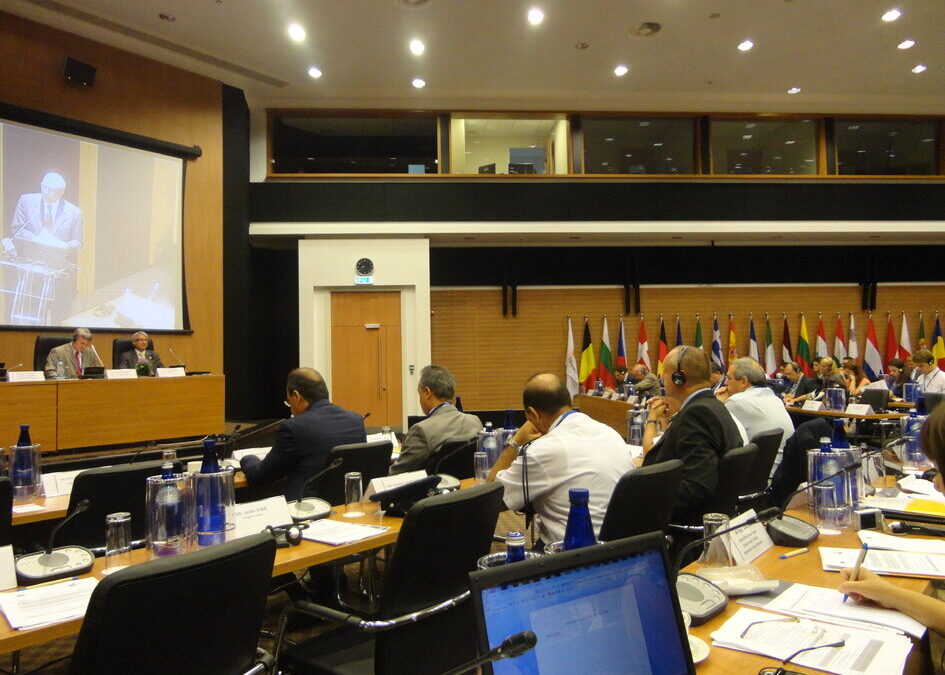
The European Road Safety Day has involved over 200 delegates from across Europe

Mr Lieshout said, ‘The morning sessions of presentations have been a wake up call for policy makers in Europe, the PIN Report is particularly important in its addressal of youth and road safety issues in Europe. While progress has been made for young people, young people should be invited and ecouraged to help with youth policy issues relating to youth and road safety plans for Europe’.

Delegates break for lunch and the conference will resume with interactive workshop discussions on Education and Training, Enforcement and Risky Behaviours.

Conference Update 14:30
The ERSD continues with delegates breaking into workshops to tackle three workshop sessions running simultaneously. Education and training touches on the interactive education methods of peer-to-peer messaging. The enforcement workshop has touched on the relationship between the police and young people and creating a culture of mutual understanding. The risky behaviour workshop has focused on key risk areas relating to young people such as speed, drugs, alcohol and distracted driving and solutions to overcome these behaviours via a range of alternatives to get young people home when risks occur.

Conference Update 16:00
On return from the individual works, facilitators from each session reported back to the conference with their recommendations from their discussions. These recommendations include:

Risky behaviours workshop.

Education and life long learning workshop:

  • To implement road safety education as early as possible for young people.
  • Peer-to-peer messaging and education is important and should possible become a mandatory part of driver educations
  • Educators should use the ‘safety is cool’ approach.
  • Educators can also use positive role models and famous endorsements to help with their work.


Enforcement workshop:

  • Breaking rules and laws relates to unsafe driving and the police must play a fundamental role in enforcement and sanctions to  law breaking and breaking of safety rules.
  • The police are recognized as key players in the road safey system and help public to accept rules.
  • Police should also support preventative methods and all youth should undertake a zero tolerance alcohol limit.
  • The police should also work with NGOs and youth organizations by becoming a ‘golden partner’ in its work.

Risky Behaviours workshop:

  • While there is a heavy focus on alcohol across Europe there should be an equal focus on drugs.
  • The workshop agreed that people should not drink and drive at all i.e. no alcohol limits – zero tolerance.
  • With regards to young people accepting traffic rules – altnerative routes home should be given to young people who are at risk on the road after drinking and therefore alternative routes and public transport should be offered.
  • A focus was placed on the power of women in saying no risky behaviours committed by male driver counterparts.
  • With regards to motorcycle safety, cyclists should go ‘beyond the rules’ and do more than the law requires to be safer on the road such as using appropriate clothing and driving skills.
4th European Road Safety Day: Youth involvement takes place tomorrow

4th European Road Safety Day: Youth involvement takes place tomorrow

The Fourth European Road Safety Day is being hosted by the Cyprus Presidency of the Council of the European Union tomorrow in Nicosia, Cyprus. The day has a unique focus on young people’s active involvement in road safety across Europe as the day will recognize the overwhelming burden of road crashes facing young people in Europe; road crashes are still the single biggest killer of young people across Europe.

Cyprus recognizes that a big proportion of road crashes involve young road users and therefore it will host the “4th European Road Safety Day” dedicated to Youth with representatives from national authorities and Youth Organizations of EU and its neighboring regions.

The aim is to increase awareness on the sensitive issue of Road Safety among young people and to give the opportunity to the participants to exchange views and propose possible concrete actions on ways to improve youth road safety in a national and regional level.

The idea is to promote EU road safety policy and actions to EU’s neighboring regions and to “inject” the EU Road Safety Action Programme with specific references and possible future actions addressed to young road users, turning young people from policy followers to policy formulators.

A message from YOURS will be one of the key presentations opening the event.

The day will open with an introduction to the contemporary issues facing young people with regards to road safety across Europe. YOURS’ attendance is paramount in the day, YOURS Director Mr Floor Lieshout will speak in the opening ceremony of the event speaking of the active involvement of young people globally, the importance of engaging young people in road safety to initiate change from the ground up and will be orientated towards the policy makers attending the event to encourage them to engage with young people, use their skills, passion and unique ideas to stimulate road safety awareness, road safety action and ultimately, the potential saving of thousands of young lives across Europe. Mr Lieshout will document YOUR’s active involvement in youth engagement for road safety. From our three pillars strategic approach to the launch of our new Youth and Road Safety Action Kit.

The event will bring young delegates from across Europe up to date with information on key road safety studies in youth and road safety issues. In addition to policy presentations and a focus on measurable road safety actions in Cyprus, there will also be workshops focusing on fundamental areas of road safety development. These are:

  • Road safety education – life long learning and engagement.
  • Enforcement issues – the relationship between the police and young people and fostering mutual cooperation.
  • Key risk factors – a quick-course in drugs, alcohol, speeding, vulnerable road users with regards to road safety.

Of course, YOURS will report from the event with more details of the events that took place, debates and reactions and we have also been asked to create the official video reporting the event. This will be managed by our Communications Officer Manpreet Darroch.

See the full agenda in the attachments and you can expect news tomorrow from the event. You can track a live Twitter feed of the event by searching #ERSD or clicking here.

Zindzi Mandela: Road safety is a young person’s human rights

Zindzi Mandela: Road safety is a young person’s human rights

The Guardian continues its focus on global road safety with guest articles from prominent global figures. YOURS recently featured an article written by Dr Etienne Krug of the World Health Organization for the Guardian. Today, Zindzi Mandela, the daughter of the world renowned former South African President Nelson Mandela has published her article placing a human rights perspective on road safety. After the tragic death of her ganddaughter Zenani in 2010, the Mandela family have stepped into the road safety field to raise awareness and save young lives.

Two years ago last month, my beautiful granddaughter Zenani was killed in a road crash. She had been a teenager for just two days when she was killed. My family will never recover.

When she left that morning for the World Cup kick-off concert in Soweto, I had no idea that it would be the last time I’d see her. I don’t remember what I said, I don’t even remember how long I hugged her for. You desperately try to reach for these memories but sometimes they start to fade away.

Yet there are reminders of Zenani every day. One less child to send out in the morning. One less uniform to buy. One less set of pencils. Sitting alone at the table is Zenani’s younger brother – I used to prepare breakfast for both of them there. And now he is alone. No one deserves his loss, no family should suffer our pain. But on the same day that Zenani was killed, 1,000 families around the world lost a child in a road crash. And every single day this is repeated again and again – 1,000 more families who will never see their children grow up.

In 2012, the precious young life of Zenani Mandela was tragically lost in a road crash.

This terrible daily slaughter on our roads is largely preventable. Yet we stand back and let it happen. The children who are being killed – and the many thousands more every day who are injured – could and should have been protected. It’s when you consider this that you become aware of the far greater tragedy – the tragedy of our failure. Until it struck at the heart of my family, I was one of those members of the public to whom road accidents were just that: accidents, a terrible fact of life, simply accepted. I didn’t think to ask – what are we doing about this?

Yet when you start looking for solutions to this particular human catastrophe, they are not hard to find. Road crashes don’t require a new vaccine, or years of research to design a remedy. The frameworks and practical policies to protect our children and prevent these tragedies are already in existence, yet in many places they are simply not being put into practice. Across the world, the rights of children are disregarded on a daily basis. Children have no direct political voice, and are therefore dependent on adults and wider society to keep them safe. They have a right to this protection, and we have a duty to provide it.

This principle underpins the UN convention on the rights of the child. This framework for upholding children’s rights is clear, well established and universally recognised. The legally binding convention, ratified by nearly every country in the world, is based on the understanding, as outlined in the text, that children need “special safeguards and care”. This includes the right to a “safe environment”. Yet it is precisely at the point when children are most at risk, when they are closest to what is most likely to kill or disable them, that their rights are most often neglected.

Survival and development are central to the principles of the United Nations Covnetion on the Rights of the Child

The greatest risk our children face as they grow out of infancy is road traffic injury. Worldwide, road injuries are the leading cause of death for children over the age of 10. More than 300,000 children and young people between the ages of 10 and 24 are killed on the world’s roads each year and a million more are permanently disabled. By allowing them to die and be injured in their hundreds of thousands we are neglecting our children’s right to protection and their very right to life, on a global scale.

So it is in Zenani’s name that my family is now campaigning and joining the Decade of Action for Road Safety to call for more to be done to protect children on the roads around the world. The solutions are right in front of us. It may be a safe crossing to school, a footpath to keep them safe from speeding traffic, child helmet standards, enforced legislation for child seats and seatbelts, or tougher action to prevent drink-driving and speeding.

And we are making a start. Under the banner of the Zenani Mandela Campaign more than a dozen organisations, including the Road Safety Fund, the UN Environment Programme and the World Resources Institute came together at the Rio+20 conference in Brazil to pledge action and resources to protect children on the roads and improve urban road environments. But much more is needed, and I call on companies, donors and the public to support our campaign.

On 18 July, the Zenani campaign will be an important part of Mandela Day, the day set aside to encourage people around the world to honour my father’s birthday through actions that will help others in society. It is an opportunity to commit ourselves to this new struggle for basic human rights, on every road in the world, so that other families do not have to suffer the tragedy that has befallen mine. For the sake of thousands of young lives, we can and we must do far more.

PIN Report Focus: Road safety improved for some youngsters in Europe

PIN Report Focus: Road safety improved for some youngsters in Europe

On the 25th of July 2012, young people from all across Europe will gather in Nicosia, Cypus for the Fourth Road Safety Day which has a unique theme of young people’s active involvement in road safety. One of the key presentations taking place at the event will focus on Road Safety Performance Index (PIN) report which was published last month. As a preamble to the event, YOURS is getting young people ready and equipped with some of its key pointers relating to its extensive focus on young people and road safety. In this edition, we take a look at the study which illustrates that road safety for young people has improved in Europe in some countries for this demographic group.

On average in the EU27, road safety of young people has improved faster than road safety of the rest of the population since 2001. In Luxembourg, Switzerland and Slovenia, the annual average reduction in road deaths among young people is more t than the for the rest of the population. In Hungary, Greece, Poland, Ireland, Finland and Romania the opposite is true and road safety of other age groups has improved more than than road safety of young people. While in some countries, road safety is not better for young people than other groups (i.e road safety is better for older groups in some countries) a promising trend illustrating that for many countries, road crashes has been significantly reduced shows that concerted road safety efforts are coming to fruition across Europe.

Some key explanations from country perspectives have stated: 

portugal flag
“Road safety of young people has improved faster in Portugal than road safety of the rest of the population since 2001. This is quite logical as young drivers benefited most from overall road safety improvements implemented over this period, in particular infrastructure safety improvement schemes. Young drivers also seem to have been more receptive to recent road safety awareness campaigns than older drivers”. – João Cardoso, LNEC, Portugal.

belgium flag
“We are concerned by the high number of young people killed per million young inhabitants in Belgium. This is why we recently conducted a new research on young drivers. As in other countries, collisions involving young people often combine aggravating factors such as driving at night or at weekends, carrying passengers, loss of control and drink driving. Findings from the EU project DRUID revealed that Belgian car drivers are among those who drive more under the influence of alcohol in Europe. Drink driving is particularly dangerous for youngsters. This is why volunteers are touring nightclubs and music festivals all year round to raise awareness among young drivers of the risk they pose to themselves and others if they speed, drink or take drugs before taking the wheel”. – Yvan Casteels, Belgian Road Safety Institute. 

However, as country situations differ vastly across Europe, with different approaches and programs, there is lots more work required to improve road safety for young people across many countries. While road safety for young people has improved vastly across Europe many countries appreciate the much more work is required. Some country profiles explain:

hungray flag
“In Hungary, young drivers are not yet subjected to probational period, nor graduateddriving licensing. We need to explore those solutions to avoid young people being left outof our recent progress in improving overall road safety”. – Peter Holló, Institute for Transport Science, Hungary.

finland flag
“Our adverse performance is really disappointing. Many collisions involving young people take place at night on isolated rural roads which makes enforcement difficult. The Police have to set targets for enforcement action targeting young people’s high risks, speeding, drink driving, and non use of seat belts. In-depth analysis showed that more than half of the drivers aged 15 to 30 who caused a fatal road accident had been caught by the police at least once during the last five years before the accident. Those young people ‘at risk’ should be identified and offered additional training in order to prevent them from engaging in risky behavior in the future”. – Esa Räty, Finnish Motor Insurance Center.

ireland flag
“The Road Safety Authority has an ongoing research programme looking at the psychology of risky driving behaviour of young people which continues to inform our interventions. We might consider the introduction of a Hazard Perception Test, the introduction of R Plates for novice drivers, faster accumulation of penalty points for specified driving offences, and the enhancement of the role of the accompanying driver in the learning to drive phase”. – Michael Rowland, Road Safety Authority, Ireland. 

What is quite promising is the fact that since 2001, road crashes amongst young people has decreased. PIN estimate that this reduction has benefitted Europe exponentially. In a cost benefit analysis, PIN have estimated there have been 45,500 fewer road deaths among young people aged 15-30 since the adoption of the EU target in 2001 than if the 2001 numbers had continued. The total benefit to society from the reductions in road deaths among young people in the EU over the year 2002-2010 compared with
2001 is valued at approximately 78 billion Euro.

The EU has adopted a new target of a further 50% reduction in road deaths. If a 50% reduction in young people deaths from their number in 2010 were achieved in 2020 by equal annual percentage reduction, 29,500 young people’s deaths would be avoided over the years 2011-2020 compared with 2010. The benefit to society from these further reductions is valued at about 57 billion Euro at 2009 prices.

While much of the benefit here is measured in money saved, we know as young people that lives saved in human terms results in the saving of lives of our families, our peers, our friends, our loved ones and will reduce the emotional, psychologic and economic carnage inflicted by road crashes.

While we strive towards these goals in our road safety efforts, we must keep in mind that road crashes amongst young people is still disproptionately represented, in other words, young people are still the most effected group when it comes to road crashes. PIN states: Young people aged 15 to 30 represent 20% of the total EU population but 30% of all road deathsand this share has been reduced since 2001 by only about 4 percentage points. Overrepresentation differs between countries and between the age group 15-17, 18-24 and 25-30 and is concentrated in the 18-24 age group.

How was this data collected?
The annual average percentage reduction in the number of road deaths among young people aged 15 to 30 inclusive between 2001 and 2010 is used as main indicator in this PIN ranking. The data were retrieved from CARE when available and completed or updated by the PIN Panellists. The full dataset is available in the Annexes. Information on driving licensing as provided by the PIN Panellist are available on www.etsc.eu/PIN-publications.php. No data was received from Bulgaria. For Lithuania the data do not match the age groups used in this report. The number of young people killed in traffic is available only since 2007 in Malta and Slovakia, making the series too short for estimating the annual average percentage reduction. Population figures were retrieved from the Eurostat database.

You can read the report in more detail in the attachments.

Attachments

Download the 6th PIN Report

An article from Etienne Krug (WHO) on the Decade of Action

An article from Etienne Krug (WHO) on the Decade of Action

In the partnership between the Road Safety Fund and the Guardian newspaper entitled, ‘global road safety in focus’, Dr Etienne Krug Director of the Violence, Injury Prevention and Disability (VIP) department  of the World Health Organization (WHO) has written an article focusing on the importance of engaging with the Decade of Action for Road Safety.

Decade of Action for Road Safety offers an opportunity the world must take

Every hour, 150 people die on the world’s roads; a campaign to change that needs proper legal, media and political backing. Just over one year ago, governments around the world embarked on an important initiative that seeks to stop millions of lives being lost annually on the world’s roads.

Launched in more than 100 countries last May, the Decade of Action for Road Safety 2011-20 aims to make roads safer in all countries, but particularly those that have so far failed to address their road safety challenges. For the first time, we have a real chance of stopping, and even reversing, the rising number of global road deaths. It is predicted that, if no action is taken, road traffic accidents will have taken the lives of an estimated 1.9 million people annually by 2020, up from an estimated 1.2 million today.

In 2011 the world gathered to launch the Decade of Action for Road Safety.

Road traffic crashes kill nearly 150 people around the world every hour of every day. For people aged 15-29, road accidents pose a greater risk than HIV, Aids, tuberculosis and malaria. About three-quarters of those who lose their lives are men, and are often a family’s main or sole breadwinner. So, in addition to the emotional devastation road accidents cause, they can plunge families into poverty.

One of the most striking characteristics of global road death statistics is the huge variation in fatality rates between different countries. Statistics show your chances of being killed in a road crash vary depending on where you live. The worst-affected countries have approximately 10 times the number of deaths than the least affected. In the Netherlands, for example, the estimated road traffic death rate per 100,000 people is 4.8. But in Argentina it is 13.7, in the Philippines it is 20, in South Africa it is 33.2, Egypt 41.6 and Eritrea 48.4.

Comparing road traffic deaths with rates of vehicle ownership is even more startling. In 2007, in the 46 African countries comprising the World Health Organisation’s (WHO) African region, more than 234,700 people were estimated to have died on roads. This constituted one-fifth of the world’s road deaths that year, yet the region has only 2% of the world’s vehicles.

Serious action is required in the African region for road safety.

Drivers are not the ones most at risk. Nearly half of those who die are “vulnerable road users” – pedestrians, cyclists, motorcyclists and passengers using unsafe public transport. This inequity is most apparent in developing countries. In Thailand, for example, 81% of all road fatalities are vulnerable road users, while in the US it drops to 24%.

The biggest tragedy of global road fatalities is that we already know how to prevent them. In Australia, France, Sweden and the UK, for example, the number of road traffic deaths has declined by more than 50% in the past four decades. We must use the Decade of Action for Road Safety to make similar progress across the rest of the world. The campaign’s global plan outlines steps towards improving the safety of roads and vehicles, enhancing emergency services, and building up road safety management. Crucially, it also calls for increased legislation and enforcement on the use of helmets, seatbelts and child restraints, and urges stronger action on drink-driving and speeding.

Getting legislation in place to underpin a commitment to improving road safety is particularly important when you consider the 2009 global status report on road safety, which notes that, in 2007, only 15% of countries had comprehensive laws addressing the key risks. One of the new initiative’s targets is to increase this figure to 50% by 2020. However, although this would be an enormous achievement, legislation is only a first step.

New laws look good on paper but, alone, will not save lives. Legislation must be accompanied by strict enforcement backed by mass-media public awareness campaigns. If all countries implement and then effectively enforce the global plan, 5 million lives could be saved and 50m injuries avoided across the 10-year period. In those countries where considerable progress has been made, it was often spurred by a decision taken at the highest level of government. Political will is central to achieving the ambitious target outlined in the global plan.

Work with road traffic victims has shown that the pain and suffering of families whose lives have been shattered by road accidents lasts a lifetime. Like the war-affected, many survivors mark their lives before and after the crash. The next decade offers an opportunity to honour those who have lost their lives on the world’s roads by acting to spare the lives of others; we must take it.