‘Designated texter’ enters the automobile

‘Designated texter’ enters the automobile

After growing up during a campaign against drunken driving, many teenagers say they’ve embraced the notion of a designated driver. Coming of age amid condemnation of distracted driving, some say they use a ‘designated texter’; when driving with friends.

Despite that, a new study shows that about a third of them admit to sending and reading text messages while behind the wheel. The report was consistent with federal research this year, which showed that teens and drivers under the age of 25 are much more likely to text than older drivers.

Source: By Ashley Halsey III, Published: August 28 2012, The Washington Post

Crashes are the leading cause of teenage deaths, and teens are more likely to die in them than any age group other than those over 80.

The good news in a report released Tuesday by State Farm Insurance was a greater awareness among teenagers of the risk posed by using mobile devices to text or talk while driving.

“It was very promising to see so many teens voice their concerns about this issue and see that the drivers listened to them and took action,” said research director Chris Mullen. “Research tells us that texting while driving can be just as dangerous as drinking and driving. More education and conversations need to occur so teens understand that no one can handle driving distracted.”

A federal survey done in December found that 11 percent of drivers age 18 to 20 said they were sending or receiving text messages when they crashed. But the federal report also discovered that drivers in that age group were more likely to recognize the risk than those age 21 to 24.

The new State Farm report said that four out of five teen passengers said they scolded a driver for texting. One Pennsylvania teen, Navea Frazier, told the insurance carrier: “When I’m in a car with my friends or family, I say, ‘Hey, don’t do that. I’ll text for you.’ I’m the designated texter.”

Use of cellphones by novice drivers has been banned in the District and 31 states, including Maryland and Virginia. But distracted driving was cited as a possible factor this year when preliminary data showed that teen highway deaths appeared to be creeping up after years of decline.

U.S. Transportation Secretary Ray LaHood and the National Transportation Safety Board are pushing for laws against texting and cellphone use while driving. But state lawmakers have moved cautiously for fear of voter backlash.

The National Safety Council has estimated that a quarter of all crashes are the result of distracted driving. 

Our position on distracted driving
YOURS believes that not only ‘texting and driving’ is a risk behind the wheel, using your phone ‘hands-free’ is also risky. A human brain can only do one ‘cognitive demanding’ action at a time. Simplified: if your brain is at the phone call or a text message, you are not able to focus on the road. A good example is if you are watching your favorite television show or movie and you are really engaged with it, can you talk to someone on the phone at the same time?

David Teater, senior director of Transportation Initiatives at the National Safety Council, explains more on multitasking and distracted driving in the videos at the upper right of this page.

Direct link to the Washington Post article: 
http://www.washingtonpost.com/local/trafficandcommuting/designated-texter-enters-the-automobile/2012/08/28/de237ff8-f115-11e1-adc6-87dfa8eff430_story.html?hpid=z5 

New trainers run their first road safety sessions in Kenya

New trainers run their first road safety sessions in Kenya

Late last year, YOURS initiated the Embrace Life Campaign. This unique photography competition illustrated how young people from over 50 countries are ’embracing life’ and consequently commit to road safety to preserve it. The winners of the competition won a small grant to implement a road safety project in their neighborhood. Nine months later a Training of Trainers has been implemented on the ground and the first wave of trainers ran their first road safety sessions. We are pleased to report back on this first success.

A freshly trained trainer in action in Kenya

Objectives of this call for proposals
Road crashes are still the biggest cause of death and disability for young people, in both the world and Europe. 19% of road fatalities in the EU in 2010 affected young people aged between 18-25 years old (although this age group comprises only 10% of the total population). This means that those aged between 18-25 face almost twice as high a risk of dying in traffic accidents.

In April 2007 within the framework of the European Road Safety day, a first Youth Forum was organized to support the continuous effort by the European Commission to reduce fatalities of youngsters on the roads. Up to now, this event was organised 4 times in Brussels by the European Commission.

The objective of the present call for proposals is:

  1. To promote the establishment of an EU-wide network of youth organisations by pooling resources with a view to maximise the impact of the road safety Youth Forum at local, regional and European level.
  2. To perpetuate the youth forum by opting for an approach which involves directly youngsters and organisations active in the area of the fight against the causes of accidents among this category of road users from the planning to the implementation of the event.
  3. To involve young people as ambassadors in the fight against road fatalities using the European youth networks and to give them the opportunity to be active players in improving road safety.
  4. To trigger and promote dialogue between young people from different cultures, youth organisations, enforcement bodies, policy makers and practitioners, in relation to road safety and young road users.


Budget

The estimated total amount is € 150 000. The European Union co-funding will be up to 50% of the total eligible costs. The closing date for submissions of applications is 31.10.2012.

For more information please visit the website of the EC: http://ec.europa.eu/transport/grants/2012_10_31_en.htm.

Good luck to all of you who will apply!

Peter Amos running a See and Be Seen session at a community centre in Tanzania

Sheila how did you find the training?
I thought it was very informative, engaging and encompassing. Did you enjoy it too? Very much. We had new ideas of engaging the children on road safety and by the fact that we had practical sessions to emphasize further made it a full package.

And Peter how was it working with young children in Kenya and seeing the newly trained facilitators in action?
The young children in Kenya were very attentive and enthusiastic to learn about how they should keep themselves safe on the road. They asked many questions and participated widely.

It was great to see the newly-trained road safety instructors teaching pupils independently. Towards the end of the training they needed little to no supervision and had brought their own talent, ideas and enthusiasm to the project, making the lessons fit the cultural and national context in Kenya.

Sheila, what is next now that you are a trainer of the See and Be Seen program? The ‘next’ is a rather a late question because we have already started spreading the ‘See be seen’ program. Members of the YOURS-Kenya team visited a children center which is also an education center to pupils of around 200 in population. We engaged 50 pupils in the ‘See be seen ‘program. I would like to share a  remark of the Executive Director for Hamomi, Sussie Marks  “I do not know how best to thank you but the smile on my children’s face will tell you how wonderful and useful your program is to our children. Please come back again to engage us more in road safety”.

Back to Peter, what are some of the things young people can/should do to improve road safety in Africa?
Young people should take precautions when it comes to road safety by practicing safe and responsible behavior when using the road or when they are near the road. For example older youth can take leadership by helping children to cross and use the road safely. An older youth might hold the hand of a child while walking across the road, or might instruct a child to use the road more safely. Lastly, older youth could engage in peer to peer education to spread their knowledge and skill set with one another.

To you both, what are your views of the ‘Embrace Life’ campaign that initiated this project? Should we do more of them?.
Peter: 
The Embrace Life Campaign gives young people the opportunity to share the problems they face concerning road safety in their locality and raise their awareness as far as road safety is concerned. Amend is very supportive in campaigning and advocating for, and promoting increased awareness and action on road safety. We believe that initiatives such as the Embrace Life Campaign should be spread throughout Africa.

Sheila: It was a unifying campaign, engaging, fun and most importantly passed the message of road safety. For my 26 years of life, I have never participated in such an interesting campaign. The only challenge was that it could have limited those who could not access internet, low internet to upload their photos, no cameras and language barriers. My suggestion for this would be that YOURS provides an alternative, like send through the post office or some central place by liaise with road safety organizations within respective countries safety to be the central collection point of items like photos to send or even upload for them. 

On the question if YOURS should run more international awareness campaigns: definitely, yes! The international campaigns give people a platform to participate in road safety even if they are already engaged in other sectors. It spreads the news of road safety to the wider audience and identifies issues of road safety in different parts of the world.

Do you want to organise the next EU Youth Forum for Road Safety?

Do you want to organise the next EU Youth Forum for Road Safety?

The European Commission (EC) published a call for proposals for the organisation of the next EU Youth Forum for Road Safety. The EC intends to award a grant to reduce road casualties among young people. This action is part of a campaign to sensitise to the causes of road crashes and to their prevention by mobilising young road users, as a group particularly at risk, to take action.

Objectives of this call for proposals
Road crashes are still the biggest cause of death and disability for young people, in both the world and Europe. 19% of road fatalities in the EU in 2010 affected young people aged between 18-25 years old (although this age group comprises only 10% of the total population). This means that those aged between 18-25 face almost twice as high a risk of dying in traffic accidents.

In April 2007 within the framework of the European Road Safety day, a first Youth Forum was organized to support the continuous effort by the European Commission to reduce fatalities of youngsters on the roads. Up to now, this event was organised 4 times in Brussels by the European Commission.

The objective of the present call for proposals is:

  1. To promote the establishment of an EU-wide network of youth organisations by pooling resources with a view to maximise the impact of the road safety Youth Forum at local, regional and European level.
  2. To perpetuate the youth forum by opting for an approach which involves directly youngsters and organisations active in the area of the fight against the causes of accidents among this category of road users from the planning to the implementation of the event.
  3. To involve young people as ambassadors in the fight against road fatalities using the European youth networks and to give them the opportunity to be active players in improving road safety.
  4. To trigger and promote dialogue between young people from different cultures, youth organisations, enforcement bodies, policy makers and practitioners, in relation to road safety and young road users. 


Budget

The estimated total amount is € 150 000. The European Union co-funding will be up to 50% of the total eligible costs. The closing date for submissions of applications is 31.10.2012.

For more information please visit the website of the EC: http://ec.europa.eu/transport/grants/2012_10_31_en.htm.

Good luck to all of you who will apply!

Brian’s Column: Are we our own enemies of road safety initiatives?

Brian’s Column: Are we our own enemies of road safety initiatives?

In this feature of Brian’s Column, we take a look at young people’s actions on the road. Sometimes youth who are advocating for road safety and better prospects in life are clouded by young people who act up and give them a bad name. Brian explains that if we want to move forward in life, young people should not be their own enemy but rather work together to educate each other.

Hello (English), bonjour (French), sasa (Kiswahili), ah salaam laikum (Arabic)…*black-out*..sorry, I can only stop right there…but yes…hope you superstars are doing just fine and have been safe! It is again that very hour your mummy warned you about during your kindergarten days, ‘Look right, then left, look right again, and if it is safe, cross the road, be good at school’ hahaha…ladies and gentlemen, our road safety update from Africa returns!

In the previous article which you can find here (in case you missed it)…I shared with you superstars how we young people are in a hurry to acquire driving permits and the hassle we go through. We analysed the fact that the public policy on driving permits is not healthy and neither is it being implemented in very rare cases where it exists! And now….

In Africa, road infrastructure developments remains a big challenge to road safety.

Last Tuesday, I don’t know what you guys were doing, but I jumped onto a bus and was heading to the capital of Uganda to meet some of our Danish-Uganda Red Cross International Youth Group members. On the bus, there were 3 seats left. How lucky I was, I clung onto the first seat I had. Fortunately I got there early, because the next bus would be only loading after 30 minutes. So after paying the bus conductor he issued me my receipt. I hardly sat down in my seat when a bunch of around 8 cool dudes forced their way passed the conductor into the bus. They started yelling on top of their lungs using a language which many of us wouldn’t approve. Apparently, the dudes were arguing with the conductor who was repeatedly making himself very clear that he would only allow 2 of them on the bus! The dudes pleaded and pleaded.

Young people in Uganda stepping up to make a change – International Federation of the Red Cross

As worried passengers, we sought to investigate what on earth was going on, why were we waiting and why was the bus taking so long to drive off. Only to be informed, there was some ‘sort-of-scuffle’ taking place. I dragged myself to the entrance of the bus, only to find the heated debate of which young people were using force, all forms of violence (verbal and non verbal) to force themselves into the bus. #sad

Now, dear superstars, we know that road traffic crashes are the leading cause of death among young people. So people who are standing in vehicles such as buses or occupying vehicles without seatbelts have an 80% chance of being injured than those who aren’t (WHO, 2010).

If we want young people to be discipinced it is crucial that they are given the skills and knowledge to make informed choices.

When it comes to young people, our voices are being heard everywhere right?! No? If you think am kidding, look out for the news, we ‘young people’ are in the news every where. We are apparently all ‘rioters’, ‘hoodlums’ and ‘generally bad people’. You and I know that this is not the case, it is mainly a minority that spoil it for those who just want to live a happy and prosperous life. However, while we are doing all this advocacy and demanding for better things, demanding for a better way of life and asking for safer roads we must remember not to be enemies of ourselves. Young people, even those who give other young people a bad name have to be accountable to ourselves.

Those of us that know about road safety, that have the skills and knowledge should never forget or neglect to implement it everyday. This also transfers to other aspects of life, to be a safe courteous road user, we need to also respect one another, respect life and work together where we can. In the case that I witnessed, we are forcing public service providers who are road users, such as bus drivers  to break the rules and the law in order to give in to us. That driver is probably driving an unsafe bus anyway and it was clear that is was over capacity. Laws are not just there to make our lives miserable, they are often (or often should be) a reflection of society’s stances on issues, to keep us safe and in the case of road safety, to forgive human error and prohibit bad road behaviour.

Just like my father (not really) said this in his address to the youth ‘”If you are not disciplined, you can never win our confidence” #NelsonMandela

As a global youth movement for road safety, we believe in making informed decisions but this informed stance comes when young people are given the right information, empowered with the tools to make a difference and also live in a world were decisions are made for the benefit of keeping young people safe on the road. Lets abide by the law, and be safe!

European Commission’s newsletter focuses exclusively on ERSD

European Commission’s newsletter focuses exclusively on ERSD

The European Commission have released their 9th newsletter with a special focus on the 4th European Road Safety Day that took place last month in Nicosia, Cyprus. This report gives an in depth insight on the ground at the event with interviews from presenters, policy makers and young people captured by the European Commission’s own journalist. It is available to download here.

Download the newsletter in the attachments.

Published by: Directorate-General for Mobility and Transport | European Commission – BE-1049 Brussels
http://ec.europa.eu/transport/index_en.htm

Youth take action to cut road deaths and boost safety
From young people working on the ground with high risk drivers, to policy makers battling to bring down the number of
people dying on the EU’s roads, everyone at the 2012 European Youth Forum for Road Safety Conference held in Cyprus,
had one thing in common – a passionate commitment to save lives.

Statistics show the commitment is needed: in the EU alone 30-500 people died in road traffic crashes last year. Over the past decade, 2001-11, 471 200 people were killed on our roads, the equivalent of 3 162 Boeing 737s crashing and killing everyone on board.

“It seems as if people think of road fatalities as part of the cost of mobility”, said Floor Lieshout, one of the founders of Youth for Road Safety (YOURS), “Internationally we lose 400 000 young people every year and we’re like ‘yeah, yeah it’s the price we have to pay’.It has to stop.”

Presentations covering policy directions and academic findings set out facts for consideration throughout the morning, feeding into animated discussions. Afternoon workshops on education and training, enforcement and risky behaviour gave the delegates the chance to hear how others working in road safety are trying to turn the situation around.

What’s the bottom line?
As youth safety workers, scientists in the field of toxicology, members of the police and policy makers shared their ideas and experiences, certain bottom line messages became apparent: young men are disproportionately likely to provoke an accident and be killed; far too many 18-25 year olds believe that road fatalities are inevitable and that crashes happen to other people, and the best way to educate risk-takers is through peer-to-peer awareness-raising.

You can view YOURS’ videos from this event here and download the European Commission newsletter in the attachments on the right column.

Olympic Gold Medalist David Rushida steps up for road safety in Kenya

Olympic Gold Medalist David Rushida steps up for road safety in Kenya

Around two weeks ago, the world experienced the global spectacular sporting event that is the Olympic Games. While for just under two weeks the world watched the very best in sports taking their place in the hall of fame, some athletes have used their Olympic medalling to step up from their accomplishments to talk about the pressing global concerns facing young people; road traffic crashes.

For athletes, the chance to compete in the name of their home country is an honour in itself but to walk away with the top spot and enter your country with gold emblazoned around your neck is not only a personal triumph but a moment of immense national pride.

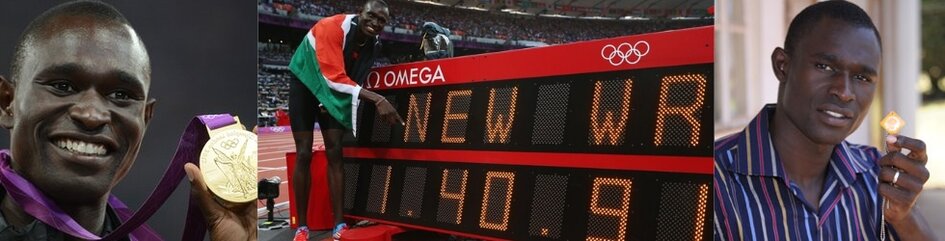
So when David Rudisha (pictured above) broke the world record for 800 meter race in the London 2012 Olympics last month, it goes without saying that he became a national hero. What is more, Rudisha did this for the second time! For nearly 13 years, the 800-meter world record belonged to Wilson Kipketer (1:41.11) of Denmark. It seemed practically unbreakable, until David Rudisha has bettered it twice in the span of just eight days. At 21 years of age, the Kenyan, who was still competing as a decathlete in 2004, has created track and field history. 

Now David Rudisha, as a role model for thousands of young Kenyans aspiring for athletic prosperity has expressed his concern at the number of road crashes killing youths in Kenya and beyond the borders in Africa.

The Telegraph capture a picture of Rudisha winning his 800m race at the London 2012 Olympics.

Olympic champion and new world record holder David Rudisha has called for action to save lives on the roads in Kenya and around the world. Rudisha won the gold medal for the 800m at the London Olympics on 9 August 2012 breaking the world record. He joins double Olympic champion Shelly-Ann Fraser Pryce and a host of other top athletes in giving their support to the Zenani Mandela campaign and the UN Decade of Action for Road Safety.

Thanks to the amazing work the Make Roads Safe campaign does to bring high profile personalities into the supporting consortium of road safety enthusiasts, a youtube video was released during the Olympics. 

Rudisha said: “I grew up in Kenya and I see that there is a need to save lives. So many people are dying on our roads. During the Olympic Games, the whole world is focused on us. So we want to use this event to save lives on the roads.”

Jamaican Shelley-Ann Fraser, the 2012 Olympic 100m champion and 200m silver medalist, had earlier given her support to the Zenani Mandela campaign, calling for more protection for children on the world’s roads. Other athletes at London 2012 supporting the campaign include: Olympic finalist Kaliese Spencer and Nesta Carter (Jamaica), Gillian Sanders and Rene Kalmer (South Africa) and Edna Kiplagat (Kenya).

The athletes have been deterimed to raise awareness for road safety globally particularly as they come from countries which are confronting severe road injury crises.

You can read more about athletes’ role in promoting road safety at the Make Road Safe wesbite here.

As YOURS plans its Capacity Development Program in Kenya to train young people of road safety issues in late November, we are hoping that Kenyan celebrities and those of high regard to Kenyan youth will help us champion the cause to reduce road crashes in Kenya.