Made a film for youth road safety? 2013 Global Film Festival is here!

Made a film for youth road safety? 2013 Global Film Festival is here!

The 2013 LASER Global Film Festival is taking place in April 2013. This year, LASER International have partnered with YOURS to launch the first ever ‘Youth Category’ to the festival inviting entries from around the world. Films produced by young people for young people in road safety or road safety messages targeted at young people are eligble to take part in the festiaval for FREE!

The LASER International Global Road Safety Film Festival is the most celebrated film festival for the field around the world. It recognizes innovations in the field of film-making in transmitting robust road safety messages. This year, LASER International have teamed up with YOURS to present a brand new category to the festival; the Youth Category!

This category focuses on ‘Youth Films for Road Safety by Youth’ focusing on films targeted at young people or produced by young people with road safety messages.

The Festival highlights the priority themes of the United Nations; pedestrian safety, helmet, speeding, driving under the influence of alcohol, wearing seatbelts, the use of safety devices for children and improvement of road safety infrastructure.

The youth category hosts a special feature for young people; it is totally free for film makers to submit their films for the youth category! It is also free for the participants wanting to attend the festival in Paris who have participated in the youth category of the festival.

This is an exciting opportunity for young film makers who have created films for road safety to take part in this festival and if their film wins, gain international acclaim for their work, the prestigious LASER Global Road Safety Film Festival Trophy and promotion to the Global Youth Network by YOURS.

Find out more information about youth category by clicking on the banner below. Find out how to take part and how you could win the youth category of the festival!

YOURS launches the global youth involvement in Long Short Walk

YOURS launches the global youth involvement in Long Short Walk

It is a new year and a chance to kick start road safety action for the year ahead! Today, YOURS launches the global youth involvement in the Long Short Walk Campaign initaited by the Road Safety Fund and the Zenani Mandela Campaign. As YOURS, we are the youth of the world, active and passionate about road safety and this campaign offers an opportunity to show our commitment to road safety around the world! Take part!

The Long Short Walk is a unique campaign calling for pedestrian safety across the world. It has been initatied by the Zenani Mandela Campaign and the Road Safety Fund, which aims to capture ‘short walks’ in your community and collect these captures from around the world and combine it into one ‘long walk’.

Everybody travels to get to their destinations, whether to school, to work, to the shops or even travel just for the sake of walking. Unfortunately, some people’s walks are incredibly unsafe; unsafe footpaths, bad lighting and poor road discipline, The Long Short Walk wants to capture these images to illustrate the importance of a ‘Safe Walking’ and to prioritize this part of a new global Sustainable Development Goal. Implementing pedestrian safety measures is cost effective, and many of the solutions are simple. It can be introducing pavements (84% of roads surveyed by iRAP have no pedestrian provision); providing safe crossing points; ‘calming’ streets with traffic humps, rumble strips and chicanes; and lowering vehicle speed limits in areas where traffic and pedestrians share the road space.

YOURS is mobilizing the Global Youth Network for Road Safety to take part in this campaign!

After the great success of the Embrace Life Campaign, which engaged young people from over 50 countries, we know that young people around the world can unite for the common goal of road safety, this is why we are using the platform of the Long Short Walk to engage even more young people to unite for road safety and take part in our contribution to the campaign!

So what does it entail?
The Long Short Walk is a photo exhibition but YOURS has added a slight twist to get your creative juices flowing. Simply download our ‘I’m Walking For…’ board, add your own message, add some designs to it if you are arty and take a picture of you holding it. You can also take a picture of your walk (highlighting whether its safe or not) and send it to us. We will brand the photos, add it to a unique YOURS exhibition as well as sending it to the global campaign to where it will be showcased during the Second United Nations Road Safety Week.

As with all campaigns that we run, we have added a competitive element. The most creative photos will be awarded with a special prize (tbc). Simple as that. Want to take part? Click on the banner below and see more information.

Obese drivers are more likely to die in road crashes – EMJ Report

Obese drivers are more likely to die in road crashes – EMJ Report

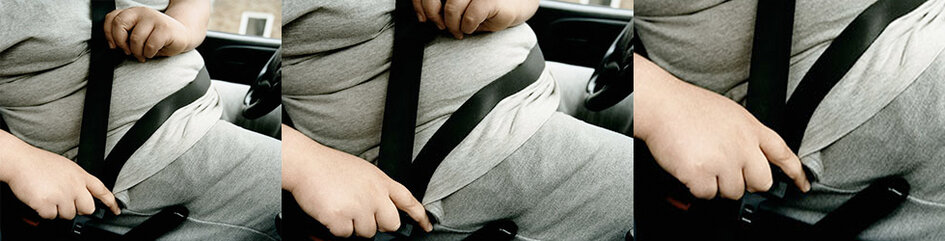
The Emergency Medical Journal, an online resource dedicated to researching breakthoughs in emergency medical care have recently reported on a study that shows drivers who are obese (those with high body mass indexes, BMI) are more likely to die in road crashes because of numerous factors; the design of the car to hold ‘average’ weight people, obese people’s proper use of seatblets and underlying medical issues which can exacerbate crash effects.

Obesity carries yet another surprising risk, according to a new study: obese drivers are more likely than normal weight drivers to die in a car crash. Researchers reviewed data on accidents recorded in the Fatality Analysis Reporting System, managed by the National Highway Traffic Safety Administration. Beginning with 41,283 collisions, the scientists selected accidents in which the cars, trucks or minivans were the same size.

Then the investigators gathered statistics on height and weight from driver’s licenses and categorized the drivers of wrecked cars into four groups based on body mass index. The study, published online Monday in the Emergency Medicine Journal, also recorded information on seat-belt use, time of day of the accident, driver sex, driver alcohol use, air bag deployment and collision type.

In the analysis, there were 6,806 drivers involved in 3,403 accidents, all of which involved at least one fatality. Among the 5,225 drivers for whom the researchers had complete information, 3 percent were underweight (a B.M.I of less than 18.5), 46 percent were of normal weight (18.5 to 24.9), 33 percent were overweight (25 to 29.9) and 18 percent were obese (a B.M.I. above 30).

Drivers with a B.M.I. under 18 and those between 25 and 29.9 had death rates about the same as people of normal weight, the researchers found. But among the obese, the higher the B.M.I., the more likely a driver was to die in an accident.

A B.M.I. of 30 to 34.9 was linked to a 21 percent increase in risk of death, and a number between 35 and 39.9 to a 51 percent increase. Drivers with a B.M.I. above 40 were 81 percent more likely to die than those of normal weight in similar accidents.

The reasons for the association are unclear, but they probably involve both vehicle design and the poorer health of obese people. The authors cite one study using obese and normal cadavers, in which obese people had significantly more forward movement away from the vehicle seat before the seat belt engaged because the additional soft tissue prevented the belt from fitting tightly.

“This adds one more item to the long list of negative consequences of obesity,”

– said the lead author, Thomas M. Rice, an epidemiologist with the Transportation Research and Education Center of the University of California, Berkeley.

“It’s one more reason to lose weight.”

Other factors that might have affected fatality rates — the age and sex of the driver, the vehicle type, seat-belt use, alcohol use, air bag deployment and whether the collision was head-on or not — did not explain the differences between obese and normal weight drivers.

“Vehicle designers are teaching to the test — designing so that crash-test dummies do well,” Dr. Rice said. “But crash-test dummies are typically normal size adults and children. They’re not designed to account for our nation’s changing body types.”

YOURS Launch of the Long Short Walk – Youth Category

Our recent launch of the Long Short Walk not only promotes walking and hence a healthier lifestyle but also calls for safer walking for all. You can take part in the campaign here.

Road safety laws enacted for 1.6bn people thanks to RS10 Project

Road safety laws enacted for 1.6bn people thanks to RS10 Project

The Road Safety in 10 Countries Project (RS10) is a project funded by Bloomberg Philanthropies spearheaded by Mayor of New York Mr Mike Bloomberg. The four year project has, since 2010 enacted concrete road safety action which means 1.6bn people have benefitted from new road safety laws enacted by the programme. These impressive results look to increase as the programme continues!

A groundbreaking Global Road Safety Program in ten countries funded by Bloomberg Philanthropies produced results showing that 1.6 billion people are now covered by strengthened road safety laws, Mayor and philanthropist Michael R. Bloomberg announced today. The initiatives include increased seat-belt and helmet usage, reduced speed limits, drinking and driving enforcement, and improvements in road infrastructure and sustainable transport.

Bloomberg Philanthropies released its first progress report on its Global Road Safety Program, a five-year, $125 million investment to reduce preventable road traffic deaths and injuries. It is projected that at least 12,670 lives will be saved in five years based on the program’s early accomplishments in target countries: Brazil, Cambodia, China, Egypt, India, Kenya, Mexico, Russia, Turkey and Vietnam.

The Association for Safe International Road Safety (ASIRT), EMBARQ, Global Road Safety Partnership (GRSP), Johns Hopkins Bloomberg School of Public Health (JHBSPH), World Bank Global Road Safety Facility (GRSF), and World Health Organization (WHO) are all partners in the Global Road Safety Program.

Read the report in the right column link.

Each year, road traffic crashes kill 1.3 million people and between 20-50 million suffer severe injuries. By 2030, the World Health Organization estimates that road traffic fatalities will be the fifth leading cause of death globally.

“The success we have had through our road safety program is saving lives around the world, but there is still more work to be done,” said Michael R. Bloomberg. “We look forward to spreading our efforts and contributing to the Decade of Action to reduce preventable road traffic deaths and injuries.”

In 2010, the UN General Assembly proclaimed the UN Decade of Action for Road Safety 2011-2020 in a landmark Resolution co-sponsored by 100 countries to “stabilize and then reduce” global road traffic fatalities. The Bloomberg Global Road Safety Program strives to accelerate progress on the Decade of Action. Results suggest the program initiatives are a major step forward toward global progress on road safety.

2010-2012 Bloomberg Program Highlights from 10 focus countries:

1. 1.6 billion people now covered by new or strengthened road safety laws

2. 13,300 police and public health officials trained on road safety interventions

  • Police officers are trained on enforcement of road safety laws and how to set up safe checkpoints
  • Health professionals are trained on trauma response
  • Police forces and hospital staff are trained on proper data collection

3. $440 million committed by governments to make road improvements

4. 5,500 miles of high-risk roads have been assessed with improvements recommended to governments

5. 12 media campaigns were initiated reaching 65 million people

Examples of early successes include:

Seat-Belts: Wearing a seat-belt reduces the risk of fatality among passengers in the front seat by 40-50% and 25-75% for those in the back seat. One target country where Bloomberg has been working to increase seat-belt usage is Turkey, where federal law does not require commercial or government vehicle drivers to wear seat-belts.

However, the Governor of Afyon, Turkey issued a local decree in 2012 mandating all drivers to wear seat-belts. Seat-belt usage in Afyon jumped from 4% in 2011 to 49% in 2012.

Speed: Higher speeds lead to an increased risk of a crash and greater probability that someone will be killed or seriously injured.

Following a strong social marketing campaign and increased police enforcement, speeding rates decreased from 32% in 2011 to 9% in 2012 in Dalian, China, and from 47% in 2011 to 33% in 2012 in Lipetsk, Russia.

Drinking and Driving Enforcement: Drinking and driving increases both the risk of a crash and the likelihood that a death or serious injury will occur. The risk of involvement in a crash increases significantly with a blood alcohol concentration above .04%.

In Phnom Penh, Cambodia, following a strong social media campaign and increased police enforcement, drinking and driving rates dropped from 10% in 2010 to nearly 0% in 2012.

Helmets: Wearing a helmet is the single most effective way of reducing head injuries and fatalities resulting from motorcycle crashes, as it decreases the risk of injuries by 70% and deaths by 40%.

The Kenya Bureau of Standards has recently adopted internationally recognized motorcycle helmet quality standards, another critical component of helmet wearing laws.

Bloomberg Philanthropies is committed to creating healthier, safer lives across the globe, and the road safety program focuses on 10 low-and middle-income countries that account for close to half of the 1.3 million road traffic deaths each year. Ninety percent of road traffic deaths occur in low- and middle-income countries and globally half of all deaths are among pedestrians, bicyclists and motorcyclists.

Bloomberg’s program is rooted in the belief that road traffic deaths are preventable with effective, evidence-based interventions, such as increased seat-belt and helmet use, speed reduction, and decreased drinking and driving. The program also focuses on safe sustainable urban transport – achieved by reducing car travel and moving people through safely designed mass transportation and improving high-risk roads through infrastructure improvements including widening shoulder lanes, installing medians, crosswalks and lane markings. Strategies also include support for public efforts to implement effective road safety laws, enhance professional training to enforce laws, create resources for advocacy and hard-hitting mass media campaigns.

Brian’s Column: Road safety back to basics – donkeys in Somalia

Brian’s Column: Road safety back to basics – donkeys in Somalia

In the high income countries, road crashes have been decreasing over the years although it remains a big cause of death across the world. In Africa, road crashes are still disproportionately high with neglected infrastructure, road safety law and enforcement and safe vehicles. In Somalia, our regular columnist Brian talks about the efforts to make the rudimentary form of transport safer; donkey carts.

Welcome to the New Year road safety ambassadors. January 2013 is here, it has been here, in fact, we are midway through it. I hope everyone had a very tasty Christmas (for the Christians). For the Muslims, hold up, Eid-el-Fitri is coming sooner. Greetings from Africa! Its still not too late for you to make your Road Safety New Year’s Resolutions, that is If you haven’t made them! Just do it! Ladies and gentlemen, it’s that same hour where we get an update on road safety situation in Africa.

First, before I forget, the hotly anticipated African Cup of Nations (2013) will be happening exactly 3 days from today in South Africa and the good news is that our African Soccer Road Safety Superstars Samuel Eto’O and Didier Drogba have not hidden the idea of creating some road safety awareness in Africa. They and Nelson Mandela Initiative on Road Safety are planning bigger (Stay tuned for an update on that one). A little outside, Africa, those fans of Manchester City Football Club may have a chance to see Carlos Tevez walking on foot because, he’s been banned from driving for six months after failing to respond to police letters about speeding. You can read more about that here. It is also my pleasure to re-echo the report of Tom Bishop who is the Africa director for Amend on Road Safety Situation in Tanzania. Please read his post here.

On 16th January 2012, we held a Skype call for a number of youth leaders in road safety from the African English Speaking Countries with the Regional Coordinator, Miss Sheila Athieno (don’t tell her I said this, but she will be changing her Facebook ‘single’ status soon ha-ha). The objective was to motivate, share and ensure strategic direction of the region in the next 1 year. Much respects to those who participated; Sheila will share feedback soon.

Now, back to the point….

Animals have been an integral part of the ideal African family for thousands of years! In fact, history states that the dog was the first animal to be tamed by man, with cattle and goats etc coming into the mix thereafter. But there is this animal called a Donkey! You have not heard about it, no? Very prominent in Somalia, donkeys have been part of Somalia’s history for thousands of years having existed as wild Asses before being domesticated.

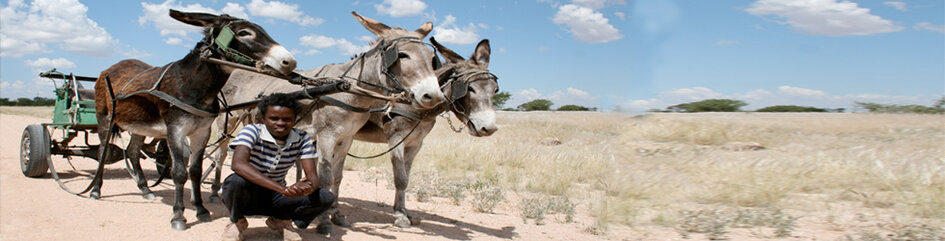
The typical donkey cart transportation in Somalia.
Relating the donkey to road safety, there are no researched data on official figures for the number of donkeys and other animals killed or injured in road traffic crashes (sounds like a good research topic, yes?). Donkey carts are a common sight on Somali roads (there is no railway in Somalia) – unfortunately, all too often they are not seen by car and lorry drivers until it’s too late. Many of the people using donkey carts travel at night, without lights or reflectors. While the owners of horse-drawn carts have to pay a yearly fee to be licensed by the Municipality, and display a number plate, donkey carts don’t need licenses. This makes it hard to keep track of the carts and owners, and enforce the rule that no drivers should be under 16 years of age. Namibia has some interesting statistics; donkeys are involved in 25% of all road crashes in Namibia. Many of these crashes occur at night when the donkeys lie down on the warmer tarmac and are not seen by approaching vehicles.
Donkey reflector tags in the ears of the animal help them to be seen at night.
Donkeys among the Somalis do not belong to any clan, can be ridden by both males and females, easy to maintain, readily available throughout the season -a reason why they have apparently been embraced to address the pillar of road safety in the UN Decade of Action about Post Crash Response. Apparently, these animals are used as ambulances to quickly evacuate road traffic crash victims to hospitals. You should not be surprised to know that Somalia has been hit with civil conflicts that have hit the country’s educational, health and economic stand.
 
Somalia’s road safety agenda has been tailored to its cultural context of embracing the horse in road safety sensitization as well as quick referral of victims. Donkey Health of Somalia has developed special reflective ear tags (almost similar to those of Donkey Welfare in Namibia) which enable the donkeys to be seen from a far greater distance. The tags are picked up by the vehicles headlights and allow time for the driver to take avoiding action. To make the carts more visible at night, the Somali Road Safety Department designed, produced and distributed reflective plates to 192 donkey carts had been fitted with a set of these reflectors. The 2012 report however doesn’t capture how many of the owners had been trained in basic first aid response, how to load carts properly, how to balance the load better, and how to prevent harness wounds.
 
While the Somali road transport authority is still struggling to tackle the problem of irresponsible under-age donkey-carts drivers (16 to be precise) as well as scaling down this programme, this approach may turn around the road traffic fortunes of a country that is hungry for Ambulances and Human resources for health. We just have to hope that the Country’s Road Safety Department keeps an eagle-eye on road safety statistics and indicators.
A real use of donkeys as ambulance carts has improved post crash care in Somalia.
Interestingly, when we approach road safety in a high-income country, as is the sharing of good practice in forums around the world, in Somalia, we go back to basics with road infrastructure whereby donkey safety is road safety. It shows that even in ‘underdeveloped’ places where cars are not necessarily widespread, efforts to increase basic forms of transportation is important to save lives, secure economic goals and provide care such as post-crash care in the case of ‘donkey-ambulances’ in Somalia.
Make people a priority in growing cities – Guardian Development

Make people a priority in growing cities – Guardian Development

Many parts of Africa are under constant development; more houses, more apartment buildings, more business towers and inevitably, more roads. However, as cities grow in many low and middle-income countries, road safety is being neglected when transport is developed leading to disastrous results. Tom Bishop, Africa director for Amend writes for Guardian Development about this area of focus in Dar es Salaam, the capital of Tanzania.

Source: Guardian Development – Global Road Safety in Focus

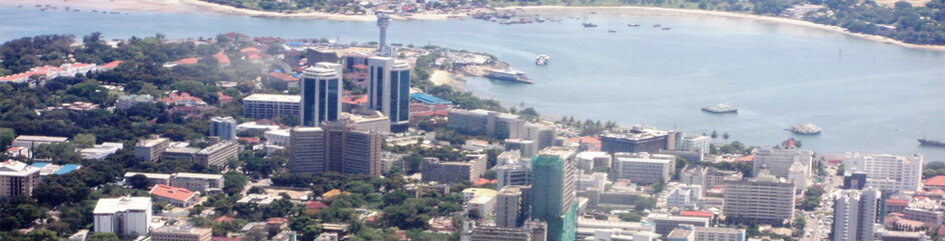
A group of academics at Tanzania‘s Ardhi University this year produced a masterplan for the transformation of Dar es Salaam into one of Africa‘s next megacities. Their inspiration was Singapore, with its ambitious building projects, skyscrapers, bridges and ringroads.

Dar is already one of Africa’s boomtowns – it is the second-fastest-growing city in Africa after Lagos, forecast to double in size to more than 7 million people by 2025. And it contributes around 40% of Tanzania’s GDP, which is growing by more than 7% each year.

Yet while Dar es Salaam might aspire to be the next Singapore, the differences between the two cities are starkly apparent when it comes to the number of people who die on their roads. At least 480 people were killed on the streets of Tanzania’s commercial capital last year. In Singapore, 195 lost their lives, even though Singapore has a population of about 5 million, compared with Dar’s 3.5 million. 

Construction in Dar es Salaam, Tanzania is increasing rapidly as it becomes a ‘mega city’.

Unless something changes, the number of deaths and injuries on Dar es Salaam’s roads will increase as the city grows. Dar’s city centre is a riot of cranes and construction sites. Road-building projects are under way all around the city – to the north, south and west – and a bridge will soon link the existing urban area to the massively underdeveloped Kigamboni to the east.

But for those planning, designing and constructing the roads, it seems that vehicles are their top priority, rather than people. Perhaps it is because these people are part of the small but growing middle class who can afford cars – they are thinking about ease of access for a minority, but not of the vast majority of people who will never have a means of transport other than to walk, cycle or use the overcrowded, dirty and dangerous public transport system.

Narrow dirt roads, which wind through sprawling unplanned residential areas, are being paved – the tarmac squeezing out pedestrians and leaving no room for footpaths. People have little choice other than to walk on the roads, with cars flying past on one side, and deep, dangerous storm drains on the other. These new roads are deathtraps, especially after dark when the congestion has eased, the traffic police have gone home and the drink-drivers treat the streets as their own.

“Narrow dirt roads, which wind through sprawling uplanned residential areas are being paved”

Elsewhere in the city, roads are being widened with no traffic management systems, parked cars block footpaths, traffic lights function intermittently due to frequent power cuts, and an increasing number of motorcycle taxis are being driven by unlicensed, untrained young men.

People in Dar want safe roads. The dirt road outside my house was upgraded last week, transforming it from potholes and craters, where cars could barely go faster than 5mph, to a smooth, compacted surface used as a rat-run by speeding taxis, 4x4s and cheap Chinese motorbikes. Within a day, the local community had dug up parts of the road to create informal speed bumps, and had scattered rocks and disused tyres to slow the movement of traffic in an attempt to keep themselves and their children safe.

I have seen riots at schools after a pupil has been killed or injured. It is becoming increasingly common for children to lie down in the roads, forcing traffic to stop until the police and local MP arrive, promising speed bumps. But doing this after the event is too late.

The government and donor partners have many admirable plans to improve road safety. A national road safety strategy (pdf) and a road safety and traffic bill have been drafted. A national road safety agency is being established. But while these initiatives are being discussed in the conference rooms of five-star hotels, out on the roads people continue to die every day.

Amend’s See and Be Seen Program in Tanzania – see this video in the right column.

Change is needed, and fast; it need not be grand or expensive. Children need to get to school safely, and through our work on road safety in the city we have found that even small steps, such as projects to develop low-cost road safety infrastructure around schools and distribute reflector-enhanced school bags, make a difference.

The growth of Dar es Salaam is inevitable, but why lives should be put at risk in the name of development? The planning and development of the city needs to consider everyone – not only the small proportion of people who own cars. Road infrastructure needs to provide for all types of user, including the majority: pedestrians and cyclists, children and elderly people. Let’s not throw away lives and threaten the safety, health and quality of life of millions of ordinary people in our race towards skyscrapers and ringroads. Let’s build cities for people.

Last year, Amend and YOURS teamed up to deliver the See and Be Seen Program with the winners of the Embrace Life Campaign. Read that story and an interview with Amend here.