Welcome, Kenneth Mulinde – our new Senior Comms Manager!

Welcome, Kenneth Mulinde – our new Senior Comms Manager!

YOURS is growing! With the Decade of Action for Road Safety 2021-2030 and our strategic plans in place for the next five years, we are bringing on capable new team members to help support our mission of working with and for young people to demand and deliver road safety and sustainable mobility. This week, Kenneth Mulinde joins the team as our new Senior Communications Manager. Welcome, Kenny!

Kenneth is a creative activist committed to working with young people and ensuring road safety. He previously served in the communications and advocacy departments of different local and international organizations. His work revolved around other developmental spheres which included; delivering human rights-based programming, supporting youth-led struggles for social inclusion and justice, and general advocacy efforts for the delivery of public services.

In 2020, he got involved in road safety activism and began introducing hundreds of young people in Uganda to the world of youth-led road safety and sustainable mobility efforts. As a result, he has helped recruit a  number of youth leaders to the Global Youth Coalition for Road Safety and he has supported a number of road safety awareness and advocacy campaigns led by YOURS.

As a member of the Youth Coalition, Kenneth has led two successful Local Actions projects that have empowered youth in his area to creatively express their demands for safer roads and more sustainable transport systems to local leaders. 

As senior communications manager, Kenneth is responsible for overseeing the creation, development, and timely implementation of the organizational and all project communications. In collaboration with the Project Managers and the Directors,  Kenneth will ensure communications are in line with the YOURS strategic plan and advocacy messages. He will be responsible for effectively communicating our impact and helping drive our project goals.

Welcome aboard, Kenny! 

MEET THE REST OF OUR TEAM 

Road Safety Alliance to hold Eighth Global Meeting

Road Safety Alliance to hold Eighth Global Meeting

The Global Alliance of NGOs for Road Safety is holding the Eighth Global Meeting of non-governmental organizations advocating for road safety and road victims in El Salvador from the 6th to the 10th of March 2023. The event will be co-hosted by the World Health Organization (WHO) and the Vice-Minister of Transportation of El Salvador, His Excellency Saul Antonio Castelar Contreras.

The Eight Global Meeting
The Meeting will be a hybrid event so that multiple stakeholders and the wider NGO community can participate. It will feature capacity-building opportunities, inspiration from safe mobility experts, and a high-level symposium from key influencers from governments, multilateral organizations, the private sector, and academia.

Through the Meeting, road safety leaders and organizations will be able to explore the linkages between road safety, safe mobility, and other key global challenges addressed by the Sustainable Development Goals (SDGs) and focus on accountability for the Decade of Action for Road Safety 2021-2030.

The Global Meeting is an avenue for road safety NGOs to come together and trigger stronger action to halve the number of road-related deaths by 2030 and call for action to guarantee that every person has access to safe, affordable, accessible, and sustainable mobility. 

Rethinking road safety: mobility for people and planet
The Meeting will feature different topics in its agenda. It will cover topics around advocacy and accountability for evidence-based actions, organizational strengthening, and safe mobility as an enabler for the SDGs. It will include a symposium that features areas focused on the theme of “rethinking mobility”.

Through the Meeting, road safety NGOs will also partake in the UN Road Safety Collaboration (UNRSC) Meeting organized by the WHO followed by an Accountability Toolkit Session that will improve the delivery of services of the different organizations.

The Global Meeting partners include WALK 21, the Global Road Safety Partnership (GRSP), iRAP – International Road Assessment Programme, and the International Road Federation (IRF).

REGISTER TO THE EIGHT GLOBAL MEETING HERE

WHO releases statement following Youth Council Meeting

WHO releases statement following Youth Council Meeting

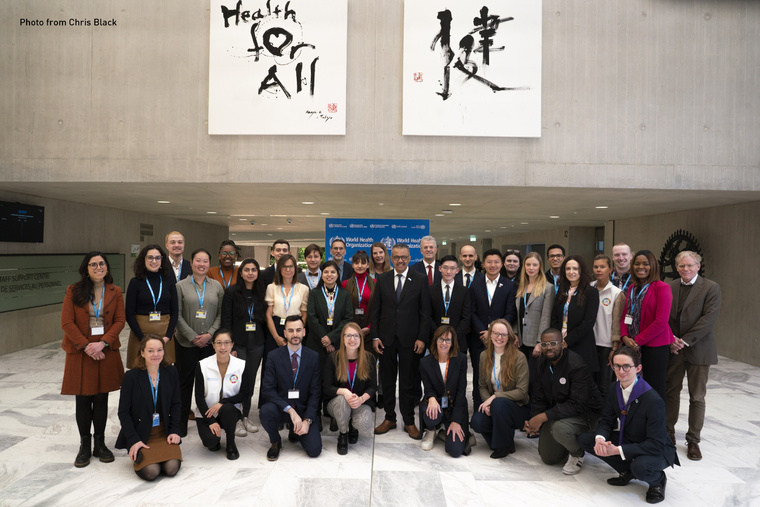
Last week, we participated in the World Health Organization (WHO) Youth Council Inaugural meeting. Our Advocacy Director, Stefania Minniti, represented us and joined other representatives from diverse youth organizations from both health and non-health backgrounds. As a unit, the Youth Council will provide advice to and actively engage with the WHO Director-General and WHO Senior Leadership.

Below is a Statement from the WHO:

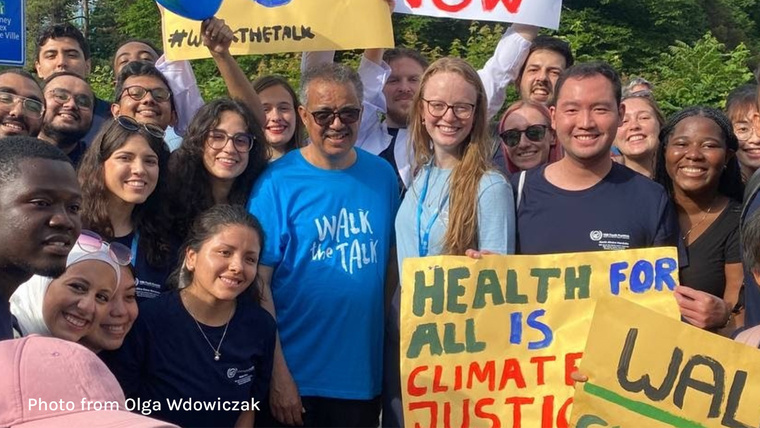
“The Youth Council is the central element of WHO’s commitment to engage with young people, by supporting their leadership, promoting partnerships, and advocating for their recognition and visibility,” said Dr. Tedros Adhanom Ghebreyesus, WHO Director-General. “Youth voices and your insights can make a real difference to realizing WHO’s vision of health for all” 

The Youth Council will provide advice on health and development issues affecting young people, actively engaging the WHO Director-General and senior WHO leadership. It will serve as a platform for designing and incubating new initiatives as well as expanding WHO’s existing youth engagement activities. Through the Youth Council, WHO will develop an inclusive Youth Engagement Strategy across all levels of the organization.

During the four-day meeting, the Youth Council members discussed key priorities and work plans to accelerate progress on universal health coverage, noncommunicable diseases, mental health, and youth leading for health. They interacted with the WHO Director-General, Chair of the WHO Executive Board, Dr. Kerstin Vesna Petrič, and other senior WHO leaders to brainstorm on concrete initiatives.

Several key outcomes of the meeting include:

  1. agreeing on mechanisms for making partnership opportunities accessible to young people across the globe through the networks represented by the Youth Council members and beyond;
  2. identifying avenues to establish channels for the Youth Council to showcase their work during key WHO meetings and collaborative events;
  3. exploring gaps in the availability of data on health inequity issues of young people and identifying WHO technical support to report these gaps; and
  4. developing a proposal to engage with WHO Member States. As a first step, the Youth Council identified opportunities for the inclusion of youth delegates as part of delegations from Member States and develop mechanisms to integrate youth delegate programmes with support from WHO leadership.

ACCESS ORIGINAL STATEMENT HERE

Road Safety in Africa: A conversation with one of our youth leaders

Road Safety in Africa: A conversation with one of our youth leaders

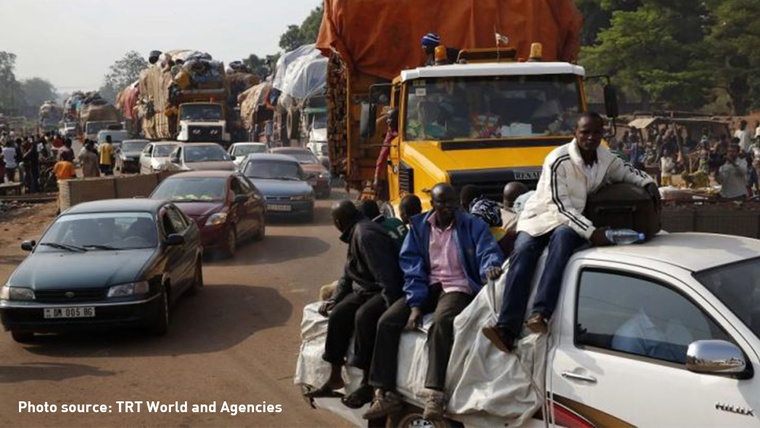
According to the World Health Organization (WHO), Africa has the worst rate of road traffic accidents anywhere in the world. Earlier this month, a severe road crash was reported in Senegal which wounded 24 and killed another 20. BBC World covered the crash in a piece called Focus on Africa. To put things in perspective, we had a chat with one of our youth leaders based in Nigeria, Simon Patrick Obi, to talk about the situation in the region.

Road Safety in Africa
It has been recorded that Africa has a fatality rate of 26.6 deaths per 100,000 – three times the recorded rate in Europe. In our conversation, Simon shares that there are several interconnected reasons behind the region’s high road crash fatality rate. For one, Simon notes that poor education and road traffic regulation contribute greatly to the lack of road safety. 

He also notes that there are factors that need to work together so that people are kept safe on African roads. He says; 

“There are three factors that are responsible for road safety; the mechanical factor which has to do with the conditions of the vehicle, the environmental factor which has to do with the condition of the road, and the human factor which has to do with the behavior and attitude of the road users.”

Simon does acknowledge that there are obstacles faced by the African region in implementing road safety policies – obstacles which include funding for road infrastructure. “The funding available is not sufficient to respond to the ever-growing challenges of road safety due to the increased motorization in the continent.” 

What can be done? 
Despite the current road safety situation in the region, Simon sees that there are steps that can be taken to address the current traffic issues. 

“In terms of solutions that government should adopt, I would say that government should imbibe community actions in developing and implementing interventions. For instance, road crashes are the single biggest killer of young people – this means that interventions in policy which do not involve young people will likely lead to little or no results.”

He emphasizes the need to have inclusive strategies and policies in road safety to address the needs of all road users in the region.

Sharing some best practices, Simon talks about Ethiopia and how it adopted a non-motorized transport strategy that will improve sustainable mobility and reduce road crashes affecting vulnerable road users such as young people.

He shared how Nigeria is also doing its part to end road traffic deaths through the creation of lead agencies in charge of road safety through the Management of Road Safety Affairs.”

Simon ends by emphasizing that there is still more work to be done in efforts for more inclusive road safety strategies. Young people need to be involved.

LISTEN TO BBC’S FOCUS ON AFRICA 

YOURS to join WHO Youth Council Inaugural Meeting

YOURS to join WHO Youth Council Inaugural Meeting

Our Advocacy Director, Stefania Minniti, is attending the Inaugural Meeting of the World Health Organization (WHO) Youth Council in Geneva, Switzerland from the 27th to the 30th of January to represent YOURS – Youth for Road Safety. The purpose of the meeting is to bring together the WHO Youth Council in person to finalize work plans and strategize on a roadmap through its working groups.

What is the WHO Youth Council? 
According to WHO, the WHO Youth Council is a newly set up mechanism for meaningful youth engagement that will provide direct advice to the Director-General. The Council will consist of international youth organizations supporting and providing recommendations on critical health and development issues affecting young people through a comprehensive and inclusive WHO Youth Engagement Strategy. 

The Youth Council will raise the profile of youth contribution to public health at a global, regional, national, and local entry-level. The Council will also support WHO in its efforts to strengthen youth contributions to public health systems through advocacy actions. 

The WHO Youth Council will drive a global advocacy initiative with related mandates and indicators. 

YOURS at the WHO Youth Council
YOURS joins the WHO Youth Council as one of the youth organizations promoting meaningful youth participation in road safety. YOURS has over a decade of experience in youth empowerment and meaningful youth participation. With the Global Youth Coalition for Road Safety, YOURS represents over 1600 young people from 115 countries worldwide. 

Because road traffic crashes are the leading cause of death for youth aged 5-29 years, it is crucial that young leaders with experience in road safety and sustainable mobility are represented among the members of the WHO Youth Council.

Road safety is a facilitator of multiple Sustainable Development Goals, particularly good health and well-being, quality education, reduction of inequalities, sustainable cities, and climate action. Tackling road safety through meaningful youth participation as part of an overall approach to saving lives on the road will bring massive development co-benefits to overall development.

We will follow up with more details after attending the inauguration.

MORE ABOUT THE WHO YOUTH COUNCIL MEETING

Youth Consultation Report 2022: Available NOW

Youth Consultation Report 2022: Available NOW

From November 2020 to February 2022, the Global Youth Coalition for Road Safety invited young leaders worldwide to participate in a second round of our Youth Consultations to gather data on young people’s overall ideas and actions on road safety challenges in their communities. The second call resulted in 117 consultations that were participated by over 700 young leaders.

Our youth leaders were guided by our Youth Consultations toolkit which allowed them to design project ideas they could possibly implement in their communities. They mapped out relevant stakeholders that could act as partners to implement the suggested ideas.

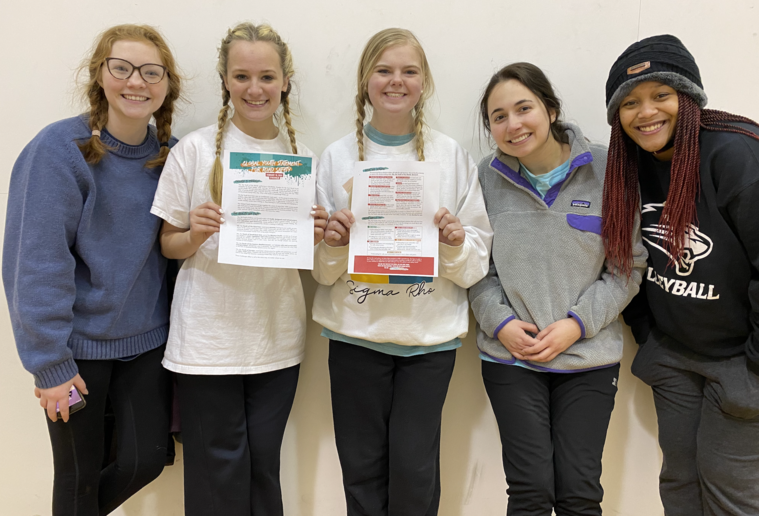
During the consultations, our youth leaders discussed how their voices were heard and represented through the Youth Statement. They identified the main road safety challenges they faced in their communities and used them as guidance to design their project’s objectives and potential activities through an action plan template also in the toolkit.

After following the Youth Consultation toolkit, youth leaders were able to co-design a project safety plan and develop steps to potentially turn the ideas into concrete evidence-based projects. 

From the consultations’ results, the Youth Coalition classified the most common project types; community mobilization, peer-to-peer engagement, infrastructure change, and advocacy. The predominant project-type recommendations fell under community mobilization because youth see a need to get more people involved in efforts to fight road traffic crashes as the biggest threat to the lives of young people. 

These four project types are now reflected in the four main priorities for Local Actions 2023. 

Other results of the consultations include a list of stakeholders and other key actors that would support youth leaders in realizing their projects and ensuring their impact locally. The stakeholders identified include; the government and public sector, academia, civil society, and youth.

While all the stakeholders were important, our young leaders saw some groups as less accessible than others. To address this issue, YOURS – Youth for Road Safety and FIA Foundation developed a Policymakers’ Toolkit that they can bring to decision-makers and policymakers so that they can systematically integrate meaningful youth participation in policy design and project implementation. 

The Youth Consultations showcased how connecting youth with their peers and with other stakeholders is extremely relevant to realizing their road safety ideas. The results revealed that young people believe in uniting efforts with other organizations will largely influence concrete, tangible, and impactful outcomes around road safety and sustainable mobility. 

Learn about the full list of results by downloading our report; 

DOWNLOAD THE YOUTH CONSULTATIONS REPORT 2022 

The Youth Consultations and its results are made possible with the support of our technical partner, the World Health Organization (WHO), our Programme Partners TotalEnergies Foundation and Michelin Corporate Foundation, and our Partner FIA Foundation.

From the consultations’ results, the Youth Coalition classified the most common project types; community mobilization, peer-to-peer engagement, infrastructure change, and advocacy. The predominant project-type recommendations fell under community mobilization because youth see a need to get more people involved in efforts to fight road traffic crashes as the biggest threat to the lives of young people.

These four project types are now reflected in the four main priorities for Local Actions 2023.

Other results of the consultations include a list of stakeholders and other key actors that would support youth leaders in realizing their projects and ensuring their impact locally. The stakeholders identified include; the government and public sector, academia, civil society, and youth.