CORE Group Rep delivers workshop at 63rd IFMSA General Assembly

CORE Group Rep delivers workshop at 63rd IFMSA General Assembly

YOURS CORE Group Representative for South East Asia Dr Naren Nallapeta is a trained surgeon and a member of the International Federation of Medical Students’ Association (IMFSA), the biggest association of medication professionals around the world. He is also passionate about road safety and on the basis of this, attended the 63rd IMFSA General Assembly in Taiwan, Province of China, with the mission of sharing road safety.

Written by Dr. Naren Nallapeta, Coordinator of the South East Asia Region of the CORE Group.

It is of great pleasure to have attended the 63rd General Assembly of IFMSA this past week in Taipei, Taiwan, Province of China, where inspired delegates from more than 98 countries were there. The meeting was just wonderful with inspired youth from the medical fraternity were there to discuss the problems of the world. The theme for this General Assembly was ‘Sustainable Development for the New Era’ and externals from various organizations came in to discuss the issue with the delegates.

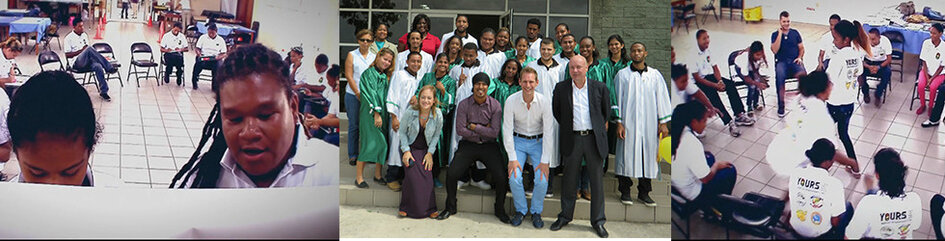
Naren delivering a session on road safety to the IMFSA during SCOPH sessions.

As a part of the same, I got a chance to represent YOURS and also brainstorm with various other medical students and youth regarding road safety and its impact in the world scenario. I got a session to facilitate in the SCOPH (Standing Committee of Public Health) Sessions on 7th morning.

The session began at 8:30 AM with more than 80 SCOPH participants who are active in public health issues in their respective countries. It was a very interactive and productive session with active participation from all the national representatives. The topic of discussion was ‘Scope of the Problem’!! Here the issue of road safety is a problem of the world was discussed and a fruitful discussion went on regarding the risk factors determining road traffic accidents, why is road traffic accidents the highest cause of mortality in the youth and so on.

All participants were given a chance to think and come up with the 5 main factors leading to road traffic accidents. The Decade of Road Safety and the pillars of the same were discussed too in depth. Special attention and discussion took place in the Post-trauma care and emergency medical services.

There was a great disparity in the arrival of emergency medical services in different countries where countries in the African region and the Asian Subcontinent had a diverse answer and did not have a concrete time within which the emergency services would reach the crash site.

Naren with a range of participants discussing all things health and road safety.

Most of the countries do not have a comprehensive emergency training in their undergraduate level in the area of post-trauma care, advanced life support and everyone felt that it must be made compulsory and a part of the medical curriculum worldwide.

Overall many solutions were discussed for this worldwide problem and the importance of care was spread to all. Take home message was for each of us to take a little more care in their lives as each and every one of us are at risk on roads in our daily lives and being a preventable cause of death must be more emphasized and care to be taken by people all around the world.  

nnpic
This update was provided by Dr Naren Nallapeta – Coordinator of the South East Asia Region at YOURS.

Are you you this kind of driver? New PSA from Australia

Are you you this kind of driver? New PSA from Australia

Our Regional Coordinator representing the Western Pacific Region also works for RACQ – the Royal Automobile Club of Queensland. One of their missions is to educate Australians on the risk of the roads and this new PSA places the spotlight on frustrating drivers in a non-road setting.

Drivers need to stay alert for the entire time they are behind the wheel. This means scanning the road environment, processing information and making decisions about the primary task of driving. However, keeping drivers’ minds on the job is easier said than done. RACQ have released a new PSA entitled, ‘Are you this kind of driver?’.

However, the twist lies in the fact that rather than asking the question of vechile drivers, the video depicts trolley drivers in a supermarket. Instead, all the frustrating traits of intolerant, distract and road raging car drivers are placed on trolley drivers showing how ridiculous road behaviour really is.

RACQ research shows tailgating, mobile phone use while driving and aggressive behaviour like verbal abuse and gesturing are some of the most frustrating driver habits on the road. So why does it continue?

“You don’t behave like this at the supermarket. So why is it okay on the road?”

For more information about the PSA you can contact Regional Coordinator for the Western Pacific Region, Mr Joel Tucker. You can also read a factsheet on combating distracted driving from RACQ here. 

Check out our video report on the Belize Training of Facilitators 2014

Check out our video report on the Belize Training of Facilitators 2014

Last month, YOURS parntered with the Caribbean Development Bank and the Government of Belize to run the training of facilitators in the region. A two week programme introducing 19 young Belizean leaders to road safety and facilitation, we have captured the two weeks in a short video with participant and partner testimonials!

With the support of the Caribbean Development Bank (CDB) in partnership with the Government of Belize (GOBZ) last month, YOURS successfully completed a two week Training of Facilitators undertaken by 19 bright, passionate and inspiring youth leaders from across Belize.

The training, part of a wider 20 month educational project existing alongside major road infrastructure and law enforcement upgrades comes at a time where young people are the biggest affected group in relation to road traffic crashes. The national road safety project sees the development of several major highways and the illustrative ‘road safety corridor’ which will be created as a beacon for the rest of the country to follow suit in safe infrastructure. Belize alone has 22.2 inhabitants dying per 100,000 citizens; a high proportion of road deaths in the world and one of the highest in the Caribbean. We place this in comparison to other countries such as The Netherlands which has a ratio of 3.4 per 100,000 and the UK’s 3.7 per 100,000 citizens.

Our video report gives an insight into the two weeks from week one to week to: theory to practice.

The video gives an insight into the rationale of the project starting with the facts that face young Belizeans in terms of road traffic crashes and the startling numbers of deaths in comparison to other countries. There is also an from partners on expections and, on reaching the conclusion of the training, how the participants felt about the workshop in general.

The number of deaths in Belize make it one of the highest death rates per 100,000 citizens in the region.

Click here to watch the video in HD, alternatively, you can see it in the right column where you can also see our extended cut participant testimonials!

Brian’s Column: “He drives like a girl” – masculinity in road safety?

Brian’s Column: “He drives like a girl” – masculinity in road safety?

In this month’s column, Brian explores the masculinity around driving behaviour in africa. From driving too fast to the phrase, ‘You drive like a girl’. Does this mean women drive better or worse? Brian’s column explores some of ideals behind masculine driving and combating the idea of a ‘driving like a girl’.

Hello there, please grab some popcorn because this is gonna have you clad onto your seat! Wherever, you are reading this from, thank you for staying and encouraging your sphere of influence to be safe! So, let’s go straight into the mix, shall we?

Just a quick update:
In the world of trauma and prehospital care, the climax of July within the East Africa Region and Africa to be precise seems to have been the 7th Pan African PCAF Psycho trauma Conference. This conference was organised by the Peter C. Alderman Foundation team from July 21st -23rd 2014 in the beautiful location of Mbarara, Uganda:-my local home town! The conference which was attended to by 508 delegates from 21 African countries and 7 others outside of Africa aimed to draft a way forward regarding trauma in the region.

All delegates had specific interest in mental health and psychosocial support services for populations affected by armed conflict and adversity more broadly in Africa. It was a perfect occasion to learn from colleagues about new developments as well as stimulating presentations and discussions around first aid and road safety, refugee mental health; mental health in primary care; sexual and gender-based violence; psychological and social interventions in post-conflict areas; and children, adolescents and trauma. As it stood out in the conference road crashes are the #1 killer of young people worldwide and inevitably increases the physical economic, social and emotional burden of trauma on the already poor communities in developing countries.

Now, you know why and how the bug of “He drives like a girl” appeared in the discussions as one of the causes of road traffic crashes especially amongst young drivers. While at the conference, my ‘feminist’ views on road safety were put onto a beam balance in what some delegates called “Drive Like A Girl” – a naked advocacy statement targeting especially  young people aged between 17 and 30 to be safety conscious drivers by “driving like a girl”. I am not so sure what you are thinking right now: O Alright, ok, I’m being slightly cheeky there but the delegates meant the target population should be able to drive with all eyes open, always gluing to all the road signs as well taking a break on long journeys.

But I am not sorry to apologise as ‘Drive Like A Girl’ kinda makes me slightly uneasy. Does it under look females and encourage the aggressiveness of young male drivers? Does it demean females as poor drivers?

The bottom line: According to my feminine doctrines and backgrounds (as a male, an equality and equity convert!), yes, it does. The usage of a female-bug to portray safety especially in the current patriarchal society will have a negative feedback mechanism amongst young male drivers that will be characterized by mockery:-‘Look, He Drivers LIKE A GIRL’. Consequently, this will increase chances of speeding, breaking the road rules, showing the masculinity: all culminating into higher road traffic crashes and mortalities. But again, that’s my opinion, as I don’t have an evidence based research findings on this. What do you think? Are you ready to ‘Drive Like A Girl?’ Whatever your answer is, it should be encouraging my safety, your safety and our safety! Hello August! ☺

‘Mandela Day’ call for UN post-2015 action on road safety

‘Mandela Day’ call for UN post-2015 action on road safety

As the world reflects on Nelson Mandela’s legacy, we give thanks for his life, his leadership, his devotion to humanity and humanitarian causes. We salute and thank him for his sacrifices for our freedom and our future. Mandela day offers people an opportunity to take action and in his name, The Zenani Mandela Campaign continues to promote the cause on an international platform.

zenani mandela logo
More at Make Roads Safe.

Zoleka Mandela, the granddaughter of Nelson Mandela, has called for road safety to be part of the new global development goals in a film for MY World, the UN’s worldwide campaign encouraging people to vote for their priorities.

The film was released to mark ‘Mandela Day’, Nelson Mandela’s birthday, which is a global day of public service. The MY World initiative is being promoted worldwide as part of Mandela Day which is held on 18 July but with events running for much longer around the date. In her film, Zoleka Mandela rallies support for the post-2015 agenda and highlights the campaign she is backing for road safety to be part of the UN’s new development goals.The film is being pushed out on social media by MY World which currently has over 2 million votes worldwide. Zoleka Mandela said

“I have been campaigning to combat the biggest killer of young people, road traffic injury. It is a huge burden on developing countries. But we can defeat it. Just a simple target on road safety in the new goals would save millions of lives. We can and we must take action.”

The piece was recorded ahead of Mandela Day at the Sivile Primary School in South Africa’s Western Cape. Sivile Primary is running a ‘Safe Schools’ project launched by the Road Safety Fund and supported by the FIA Foundation to reduce road traffic injury with safe infrastructure and education.

Supported by Zoleka Mandela and her family, the campaign calling for road safety to be included in the new development goals has made important progress.

The latest draft proposals compiled by Governments at the UN, has included a global target to halve road traffic fatalities by 2030 within a suggested Health Goal. This development is the result of coordinated advocacy and sustained campaigning led by the FIA Foundation and the Make Roads Safe campaign.

A draft set of proposed Sustainable Development Goals (SDGs) will be submitted to the UN General Assembly in September and this will be a major milestone in a long process to design the new development agenda. There is still much campaigning to be carried out, with a final set of SDGs eventually due to be launched in September 2015.

Zoleka Mandela and her family have been campaigning for global road safety in memory of Nelson Mandela’s great-granddaughter Zenani, who was killed in a car crash when she was just 13 years old.

For more on the campaign, to vote for ‘better roads and transport’ and to call for your Government to support the road safety target at the UN  visit www.targetsavelives.org

ISO – NextGen is tackling road safety for young people – join now!

ISO – NextGen is tackling road safety for young people – join now!

YOURS has recently partnered with the International Organization for Standardization (ISO) for their NextGen programme which focuses on youth and road safety issues. Road accidents are the #1 killer of young people world- wide. ISO NextGen – Road safety is looking for the next generation of experts to discuss the major challenges in this field and how International Standards might help. It has a sister project, ISO NextGen – Climate change, with similar aims.

These are brand new projects for ISO and they are all about reaching out to a wider community of young professionals to discuss today’s hot topics.


What do I have to do as part of the project?

  • Be an active member of an online community using a platform to share ideas (via blogs, discussion forums, polls, etc.) and collaborate on a document outlining how International Standards can help to address the most pressing challenges in road safety. The platform will be open for 6 weeks starting from August 4.
  • Attend online events to open and close the 6 week period where guest speakers will discuss their ideas.
  • Explore how international solutions,such as International Standards, should be developed in the future.
  1. Can anyone get involved?

We’d like to hear from young professionals who repre- sent the future generation and are not already involved in standardization work.

The ideal profile for our participants is:

  • 25 – 35 years old
  • Qualifications – a formal qualification from a higher educational institution related to the subject area
  • Experience–5 years of professional experience in the subject area
  • Little to no involvement in national or international standardization activities
  • Demonstrated passion and vision for the subject area – takes initiative, thinks innovatively and influences others
  • However, if you are interested in getting involved and you don’t exactly fit these criteria, do let us know!

What will I get out of it?

Participation in ISO NextGen – Road Safety will help you:

  • Make contacts and interact with other passionate experts in your field of expertise
  • Make contacts with established international experts (from ISO committees and working groups)
  • Learn from guest speakers who will participate in the online events
  • Bring your ideas to a wider, international community
  • Influence the future of standardization in the sector and make a contribution to solving the most important global challenge in your field of expertise
  • Contribute to raising the visibility of the issue of road safety at the international level

If you are interested in participating in the ISO NextGen – Road safety online community, please send an email with a few words about your motivation and a copy of your CV to Katie Bird (bird@iso.org).