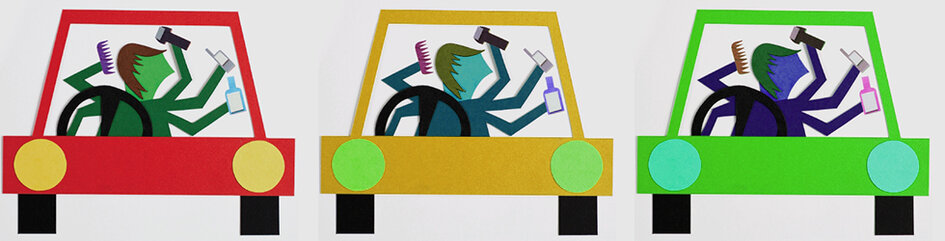
‘Talking’ to cars just as dangerous as phone conversations?

‘Talking’ to cars just as dangerous as phone conversations?

Just because you can talk to your car doesn’t mean you should. Two new studies have found that voice-activated smartphones and dashboard infotainment systems may be making the distracted-driving problem worse instead of better.

Indeed, it is a problem existing in newer cars in the developed world, the systems let drivers do things like tune the radio, send a text message or make a phone call while keeping their eyes on the road and their hands on the wheel, but many of these systems are so error-prone or complex that they require more concentration from drivers rather than less, according to studies released Tuesday by the AAA Foundation for Traffic Safety and the University of Utah.

One study examined infotainment systems in some of the most common auto brands on the road: Chevrolet, Chrysler, Ford, Hyundai and Mercedes. The second study tested the Apple iPhone’s Siri voice system to navigate, send texts, make Facebook and Twitter posts and use the calendar without handling or looking at the phone. Apple and Google are working with automakers to mesh smartphones with infotainment systems so drivers can bring their apps, navigation and music files into their cars.

The voice-activated systems were graded on a distraction scale of 1 to 5, with 1 representing no distraction and 5 comparable to doing complex math problems and word memorization.

The systems were tested by 162 university students and other volunteers in three settings: a laboratory, a driving simulator and in cars while driving through a Salt Lake City neighborhood. Apple’s Siri received the worst rating, 4.14. Twice, test drivers using Siri in a driving simulator rear-ended another car.

Chevrolet’s MyLink received the worst rating, 3.7, among the infotainment systems. Infotainment systems from three other automakers – Mercedes, Ford and Chrysler – also were rated more distracting for drivers than simply talking on a hand-held cellphone.

“What we continue to see from customers is that they demand this level of technology in their vehicles, that access to music and access to calls is now a critical part of the driving experience and so we’re looking at innovative ways to provide that,” Chevrolet spokeswoman Annalisa Bluhm said. Apple didn’t respond to a request for comment.

The systems with the worst ratings were those that made errors even though drivers’ voice commands were clear and distinct, said David Strayer, the University of Utah psychology professor who led the two studies. Drivers had to concentrate on exactly what words they wanted to use and in what order to get the systems to follow their commands, creating a great deal of frustration.

For example, an infotainment system might recognize a command to change a radio station to “103.5 FM,” but not “FM 103.5” or simply “103.5,” he said.

Siri sometimes garbled text messages or selected wrong phone numbers from personal phonebooks, Strayer said. During one test, Siri called 911 instead of the phone number requested by the volunteer driver and the driver had to scramble to end the call before it went through. Siri found the number in the driver’s phonebook because the driver had called it once before.

“When these systems become more complex, like sending text messages or posting to Facebook, it pushes the workloads to pretty high levels and may be dangerous while driving,” Strayer said.

The studies contradict claims by automakers, who have been pitching the voice systems to car buyers as a way they can safely enjoy social media and connectivity. Safety advocates say drivers assume that such systems are safe because they are incorporated into vehicles and are hands-free.

The National Highway Traffic Safety Administration, which regulates vehicle safety, has issued guidelines to automakers for dashboard systems and is working on similar guidelines for cellphones and voice-activated systems, but the guidelines are voluntary.

“Infotainment systems are unregulated,” said Deborah Hersman, president of the National Safety Council and former chairman of the National Transportation Safety Board. “It is like the Wild West, where the most critical safety feature in the vehicle – the driver – is being treated like a guinea pig in human trials with new technologies.”

Two of the infotainment systems were rated relatively low for distraction. Toyota’s Entune received a 1.7, the distraction equivalent of listening to an audiobook, and Hyundai’s Blue Link Telematic System received a 2.2. “The good news is that really well-designed systems offer us the possibility to interact in ways that aren’t so distracting,” Strayer said.


Seat Belts Save‏ – campaign focused on American teens from NOYS

Seat Belts Save‏ – campaign focused on American teens from NOYS

The 2014 National Organizations of Youth Safety (NOYS) Seat Belts Save Challenge is a four-week campaign designed to educate teen drivers about the dangers of riding in a car without wearing a seat belt, and increase the number of teens who regularly wear a seat belt while driving or riding in a car. Participating schools can win recognition from the U.S. Secretary of Transportation and coverage in national media in the United States.

USA 2012 Statistics Show 60.7 percent of teen passengers (16 to 19) who died in crashes weren’t wearing their seatbelts. 51.2 percent of teen drivers (16 to 19) who died in crashes weren’t belted.


Who Can Participate in the Seat Belts Save Challenge?

The 2014 NOYS Seat Belts Save Challenge is open to all high school students in the United States.

When is the Seat Belts Save Challenge?

The 2014 Fall Seat Belt Saves Challenge registration opens on September 30th and closes on October 17th. The Challenge runs from September 30th to November 18th. Your school can conduct the four-week challenge at any time during that period. The final report is due on December 5th.

Why Should My School Participate in the Seat Belts Save Challenge?

Motor vehicle crashes are the leading cause of death for teenagers in the U.S. Young drivers (15 to 20 years old) represent only six percent (12.6 million) of drivers in the United States, but account for nine percent of all drivers involved in fatal crashes and 13 percent of drivers in all crashes. Data also shows that teens are not wearing their seat belts on a consistent basis. In 2012, more than half (51.2 percent) of drivers 16 to 19 years old killed in fatal crashes were not wearing seat belts. In the last three years, this number has increased by six percent during a time when the seat belt use rate has grown for people of other ages.

NOYS, with funding from the National Highway Traffic Safety Administration, has developed Seat Belts Save, a national seat belt challenge to encourage greater seat belt use by teens across the country. The Seat Belts Save Challenge is a fun way to spread the word about a serious subject. Participants that approach the challenge in a fun and creative way will better reach their peers with these important messages. Prizes will be awarded to the schools that demonstrate the highest seat belt use rate, the greatest increase in seat belt use, and the best education campaigns. Remember, seat belts are the best defense in a crash but they only work if you wear them. Buckle up every time.

Read more details here.

YOURS featured in Carreteras Spanish magazine – by Daniel Cano

YOURS featured in Carreteras Spanish magazine – by Daniel Cano

Our Regional Coorindator for South America, Mr Daniel Cano has recently written a great article for the magazine Carreteras. Carreteras is a technical magazine about road related matters published by the Spanish Road Association. This is a special edition for the Iberoamerican Congress on Road Safety (CISEV).

Mr Daniel Cano, our Regional Coordinator for the South American Region recently wrote an aricle for the Carreteras Magainze. Daniel told YOURs, ‘More people die in Colombia for road crashes than from the internal conflict, and more teens are affected in Venezuela for road un-security than from the protests. This is the biggest social problem of the region.’

Article extended over 7 pages in the magazine.

The article is written in Spanish but Daneil provided his abstract in English:
Road safety is a growing problematic for youth around the glove, but the millennial generation may be a great ally for fighting this cause. This texts discuss the main causes of road crashes involving young drivers. Following it discusses the main characteristics of the millennial generation and presents a set of proposals for working with youth.

Currently road safety is an issue that primarily affects young. Approximately 30% of those killed in road accidents are children and young people, making it the leading cause of cough deaths and injuries over infectious diseases such as HIV or malaria. For this reason, to achieve the goal of the Decade of Action for Road Safety decreed by the UN in 2011, it is necessary that all the work in safety include a particular emphasis on youth… Read the article on page 141 (Spanish) in the right column or click below:

Mark the World Day of Remembrance for Road Traffic Victims

Mark the World Day of Remembrance for Road Traffic Victims

On the 16th November 2014, the globe marks the World Day of Remembrance for Road Traffic Victims. This annual day of reflection and action turns the tragedy of lives lost on the road into tangible action moving forward. Mark the day with us in November.

Why World Day of Remembrance?
The World Day of Remembrance for Road Traffic Victims (WDR) is observed on the third Sunday of November each year by an increasing number of countries on every continent around the world. This day is dedicated to remembering the many millions killed or injured in road crashes and their families and communities, as well as to pay tribute to the dedicated emergency crews, police and medical professionals who daily deal with the traumatic aftermath of road death and injury.

Why is there a need for this day?
Road deaths and injuries are sudden, violent, traumatic events, the impact of which is long-lasting, often permanent. Each year, millions of newly injured and bereaved people from every corner of the world are added to the countless millions already suffering as the result of a road crash.

The burden of grief and distress experienced by this huge number of people is all the greater because many of the victims are young.

Many of the crashes could and should have been prevented and because the response to road death and injury and to victims and families is often inadequate, unsympathetic, and inappropriate to the loss of life or quality of life.

This special Remembrance Day is intended to respond to the great need of road crash victims for public recognition of their loss and suffering (see Messages & Thoughts from victims).

This day has also become an important tool for governments and all those whose work involves crash prevention or response to the aftermath, since it offers the opportunity to demonstrate the enormous scale and impact of road deaths and injuries and the urgent need for concerted action to stop the carnage.

Message from the Message of UN Secretary General Mr Ban Ki-moon, 20th November 2011

Each day, nearly 3,500 people die on the roads. Tens of thousands more are injured. Families are broken apart. The futures of young people are dashed. Road accidents have become the leading cause of death for people aged 15 to 29. This is an unacceptable price to pay for mobility. …. On this World Day of Remembrance for Road Traffic Victims, let us mobilize all possible contributions to improving road safety – from city planners to vehicle designers, from policy makers to road users. Let us honour those who have lost their lives on the world’s roads by acting to save the lives of others.”

Mayor Bloomberg donates $125 million for road safety

Mayor Bloomberg donates $125 million for road safety

Billionaire Michael Bloomberg said Monday he will donate $125 million over the next five years to help reduce the rising number of road deaths worldwide — especially in large cities in poorer nations around the world. Bloomberg has been supporting road safety for many years now through his philanthropic work with Bloomberg Philanthropies.

More than 1.2 million people are killed and between 20 and 50 million people are injured in annual car crashes, the World Health Organization says, making road deaths one of the leading causes of preventable deaths worldwide.

In 2010, 1.24 million people were killed in road deaths, accounting for the leading cause of death worldwide for people age 15-29.

Road deaths are the eighth leading cause of death worldwide and the United Nations forecasts it will be the fifth leading cause by 2030 “unless urgent action is taken.”

Many lower-income countries have poor road safety laws, lax enforcement, vehicles with few safety features and poorly constructed roads and traffic signals. Many don’t require motorcycle helmets, child safety seats or mandatory air bags or seat belt use. Others don’t have functioning 911 or ambulance systems.

Michael Bloomberg has been supporting road safety before the start of the Decade of Action for Road Safety.

“Every life lost because of unsafe roads is a tragedy — and most of those tragedies could be avoided with better rules, better enforcement, and smarter infrastructure. City governments can be especially effective at putting those measures in place because they are often able to move faster and more efficiently than other levels of government,” said Michael R. Bloomberg, the former New York mayor.

“This new funding will be targeted to cities where we can make the biggest difference, that have shown the strongest commitment to taking action, and that have the best ideas for making roads safer. And we’ll help those cities work together to share effective strategies — so that even more lives can be saved.”

It comes as automakers expect a massive jump in auto sales in coming years. Ford Motor Co. thinks worldwide auto sales will hit 110 million by 2020 — up from 85 million today.

Bloomberg Philanthropies has been working on road safety since 2010 and launched a new five-year-effort by its Global Road Safety initiative, “which aims to reduce fatalities and injuries from road traffic crashes. The foundation will invite select low- and middle-income cities with populations of over two million residents to apply for grants. Low- and middle-income countries will also be invited to be part of the program.”

In 2010, Bloomberg Philanthropies committed $125 million in funding to 10 countries that represented half of road traffic-related deaths globally (Brazil, Cambodia, China, Egypt, India, Kenya, Mexico, Russia, Turkey and Vietnam).

The next round of locations funded will be announced by January and each that win will get senior-level, full-time staff to work within city governments on road safety plans for up to 5 years, comprehensive technical assistance from the world’s leading road safety organizations, training for police and other relevant staff and support to create mass media campaigns.

Michael Bloomberg with the Mandela Family and Grover on the launch of the Decade of Action for Road Safety.

“The program will work at both the national level to strengthen road safety legislation and the city level implementing proven road safety interventions. The proposals cities submit will detail how they plan to address road safety by applying solutions to a number of challenges including improving pedestrian and cyclist safety, enhancing laws to combat drinking and driving and speeding as well as encouraging the use of motorcycle helmets, seat-belts and child restraints.

While road deaths in the United States have fallen by about 25 percent since 2007, they are unchanged worldwide. But there are now 15 percent more vehicles worldwide to 1.6 billion — suggesting that some improvements in road safety have been made.

Brazil, Kenya, China, Mexico, Russia, Turkey and Vietnam have all passed road safety legislation and stricter penalties for drinking and driving, implemented compulsory seat-belt or helmet wearing regulations and have applied speed reduction laws, Bloomberg said. China criminalized drinking and driving in 2011, and in Vietnam penalties were established for motorcyclists wearing sub-standard helmets in 2013.

Between 2007 and 2010, road deaths fell in 88 countries and rose in 87 countries. In total, 80 percent of worldwide road deaths occur in middle-income countries — but they only have 72 percent of the world’s population and 52 percent of the world’s vehicles. They have a fatality rate of 20.1 deaths per 100,000 residents, while wealthy nations have 8.1 deaths per 100,000 resident fatality rate.

In the United States, the speed limit in most urban areas is 25 mph or 30 mph. Just 59 countries covering only 39 percent of the world’s population have adopted speed limits of 31 mph or lower in urban areas. Fully half of all countries set speed limits nationally and don’t let local communities lower them in high population areas, a 2013 United Nations report said. 

Worldwide, 77 percent of those killed in crashes are men and 60 percent are age 15-44. Half of the world’s road deaths are among pedestrians (22 percent), bicyclists (5 percent) and motorcyclists (23 percent.) In the U.S., those three categories account for about 30 percent of road deaths.

Africa has the highest death rate per 100,000 residents — 24.1, compared with 16.1 in North and South America, and 10.3 in Europe. Of African road deaths, 38 percent are pedestrians.

Most low-income countries don’t require the use of child seats. Many countries don’t require the use of seat belts by all passengers, including many African and Asian countries.

Another big issue is many buyers of cars in poorer countries don’t have the safety features — like advanced airbags, electronic stability control and strong vehicle structures — that vehicles wealthier countries have.

The report said the most popular vehicles sold in Latin America are 20 years behind the safety advances of European and North America and would fail the United Nations’ minimum crash standards. Most vehicles sold in Latin America don’t have airbags, the 2013 report said.

While 111 countries have standard emergency numbers like the U.S. 911 system, 42 nations have multiple national numbers to call in an emergency.Most nations don’t have functioning ambulance service. Only 59 countries have ambulance service to transport at least 75 percent of those injured in car crashes.

How does the chicken cross the road? – campaign advert

How does the chicken cross the road? – campaign advert

The age old joke starts ‘Why did the chicken cross the road?’, but this idea has been flipped on its head with Safe Kids Worldwide’s new campaign on distracted walking. Underscored with the tagline, “What every hip chick needs to know about distracted walking”. The short PSA gives a quick insight into the world of distracted walking in classic joke concept.

Whether your kids are walking to school, the park or a friend’s house, here are a few simple tips to make sure they get there safely.

The Hard Facts
Unintentional pedestrian injuries are the fifth leading cause of injury-related death in the United States for children ages 5 to 19. Teenagers are now at greatest risk. Teens have a death rate twice that of younger children and account for half of all child pedestrian deaths.

Top Tips

  • Talk to your kids about how to be safe while walking. It’s always best to walk on sidewalks or paths and cross at street corners, using traffic signals and crosswalks.
  • Teach kids at an early age to put down their devices and then look left, right and left again when crossing the street.
  • Children under 10 should cross the street with an adult. Every child is different, but developmentally, it can be hard for kids to judge speed and distance of  cars until age 10..
  • Remind kids to make eye contact with drivers before crossing the street and to watch out for cars that are turning or backing up.
  • When driving,be especially alert in residential neighborhoods and school zones and be on the lookout for bikers, walkers or runners who may be distracted or may step into the street unexpectedly.