16 November: World Day of Remembrance for Road Traffic Victims

16 November: World Day of Remembrance for Road Traffic Victims

This year the World Day of Remembrance for Road Traffic Victims (WDR) is commemorated on Sunday 16 November. This day we remember the many millions killed and injured on the world’s roads. Together with their families and many others also affected, as well as reflect on the tremendous burden and cost of this daily continuing disaster. Join us.

For the 21st time since 1993, the Day of Remembrance of Road Traffic Victims will be remembered at a global level, and have reached the 10th Anniversary since being recognized by the UN General Assembly in 2005, and supported by the World Health Organization.

For years this Remembrance Day was mainly observed in Europe but as it is now listed as an international activity during the Global Decade of Action for Road Safety, celebrations are held on every continent, in particular in those fast developing countries that today bear the bulk of road deaths and injuries.

Find out how you can join on the official web site: http://worlddayofremembrance.org/. You can see all global activities by clicking here, in case you would like to attend.

Theme 2014

This years’ theme is: “Speed Kils, Design out Speeding”. This is the poster that supports the campaign:

Why a World Day of Remembrance?


The World Day of Remembrance for Road Traffic Victims (WDR) is observed on the third Sunday of November each year by an increasing number of countries on every continent around the world. This day is dedicated to remembering the many millions killed or injured in road crashes and their families and communities, as well as to pay tribute to the dedicated emergency crews, police and medical professionals who daily deal with the traumatic aftermath of road death and injury.

Why is there a need for this day?


Road deaths and injuries are sudden, violent, traumatic events, the impact of which is long-lasting, often permanent. Each year, millions of newly injured and bereaved people from every corner of the world are added to the countless millions already suffering as the result of a road crash.
The burden of grief and distress experienced by this huge number of people is all the greater because many of the victims are young, because many of the crashes could and should have been prevented and because the response to road death and injury and to victims and families is often inadequate, unsympathetic, and inappropriate to the loss of life or quality of life.
This special Remembrance Day is intended to respond to the great need of road crash victims for public recognition of their loss and suffering (see Messages & Thoughts from victims). 
This day has also become an important tool for governments and all those whose work involves crash prevention or response to the aftermath, since it offers the opportunity to demonstrate the enormous scale and impact of road deaths and injuries and the urgent need for concerted action to stop the carnage.
The Honest Truth road safety campaign targets youth in UK

The Honest Truth road safety campaign targets youth in UK

A safety campaign that uses animals to symbolise poor driving habits is set to be rolled out across Essex in the United Kingdom to reduce crashes caused by young or inexperienced drivers. The award-winning Honest Truth campaign uses eye-catching images of young people with the heads of animals such as cheetahs and parrots.

The cheetah is used to identify a speeding driver, the parrot someone using their mobile phone and a bulldog identifies a drink driver. Drug users are seen as chameleons, a driver with no insurance is shown as an ass and show-offs are peacocks.Those who fail to wear seat belts are shown as a rhino – to show how a passenger without a seat belt can be thrown around in a crashing car with the same effect as a charging rhinoceros.

The campaign, which will be launched later this month, relies on linking crucial messages to animals to remind young people of the dangers they could face.Driving instructors will be encouraged to use prompt cards with the images of the animals to drive home crucial messages appropriate to each individual learner driver during their lessons.

The Honest Truth catchline of the campaign asks all drivers to study the images and to identify if their own driving behaviour falls into any of the dangerous categories.The campaign was developed in South Devon after a road crash in which three young people aged nine, 17 and 19 died.

The campaign has so far proved to be a huge success and won numerous national awards and is being adopted by partnerships across the UK.On average, a young person is killed on UK roads every 18 hours, while another suffers a serious injury every 90 minutes.In Essex a young person is killed, on average, every 28 days, while another suffers a serious injury every 36 hours.On average, each year in Essex, 98 collisions involve young car drivers. Of these young drivers, four are killed and a further 65 seriously injured.

However, in 40 of these collisions, while the young driver is not injured, their actions were a contributory factor in the deaths of four other road users and in serious injury to a further 47.

Essex Police will be leading the campaign for the Essex Casualty Reduction Board and will be working closely with driving instructors, the fire and rescue service and the road safety teams in Essex, Southend and Thurrock.

Nick Alston, Police and Crime Commissioner for Essex, said: “There are still too many people being killed or seriously injured on our roads, and we must do everything in our power to address this.

“I welcome the introduction of the Honest Truth campaign to Essex, and I hope the initiative raises driver awareness as successfully as it did in Devon.“We must continue to use innovative means to remind everyone of our responsibility to drive safely and responsibly on the roads of our county.”

Essex County Council’s Cabinet Member for Highways and Transportation, Cllr Rodney Bass said: “It is important to engage young people to ensure they drive safely.

“The partnership wants to drive these messages home before these young people take to the roads on their own, or with friends.

“This campaign presents a novel opportunity to promote safety to young drivers, in a memorable way.” 

Essex Casualty Reduction Board is holding seminars in Chelmsford on October 27 and 28 to launch the campaign and issue free resources to approved driving instructors across the county.

Rural roads in the UK most dangerous – a message for the world?

Rural roads in the UK most dangerous – a message for the world?

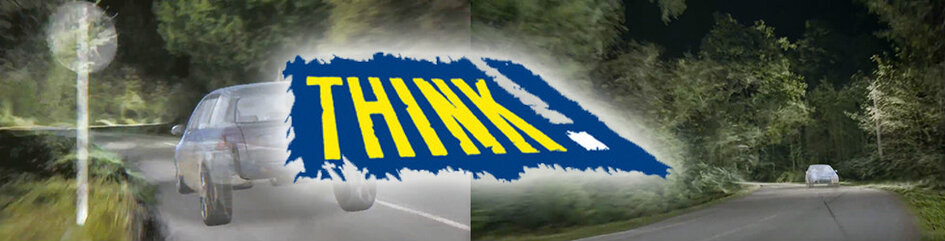
In the UK 60% of all fatalities occur on country roads. These roads often have sharp bends, blind bends and unexpected hazards so brake before the bend to give yourself time to react and stay in control. In many parts of the world, these types of roads are the main style of major roads in low and middle income countries and so guidance here could apply globally.

The facts: 60% of all fatalities occur on country roads in the UK, three people die each day on average on country roads, the number of people killed on country roads is nearly 11 times higher than on motorways, in 2013, there were 1,070 fatalities and 9,104 serious injuries on country roads.

In many parts of the world, country roads in the UK are often the major style of road networks in low and middle income countries. Therfore the advice given in the UK for country roads could be applicable to road networks around the world.

Alison’s story
Alison, who works at a riding school, was riding with her 10 year old son and her boss in November 2013. They were all experienced riders and were wearing high viz tabards and so were the horses. They were returning to the stable yard, it was approaching dusk and raining, and they were about to turn right into the yard. A car coming towards them was approaching slowly, which prevented them from making the turn home.

Alison was at the rear and heard a car from behind coming over the hill. She expected to hear braking, but instead the car ploughed into Alison and her horse at 45mph, throwing them on to the car bonnet and then off into the other riders. Alison lay on the ground concussed. Her horse had gone through the car’s windscreen and broken its back, so had to be put down at the scene. The other two horses were injured, one broke its jaw and the other injured its leg. Alison’s son thought she had been killed.

Alison spoke with the driver in court. He said he didn’t see them although it was a straight road. He suggested it was due to him dipping his headlights as he saw the other car coming past. The driver received 9 points and a fine.
The riding school, where Alison works, has to regularly use this part of this road when they take children and adult riders out for hacks. There is also a livery yard and a dairy farm on it. There have been 2 other direct hits in this 2 mile radius in the past 2 years.

In many countries, sharp and winding roads, hillier areas and a lack of signage can make these roads very dangerous.

“We were ploughed into from behind, a bit like sitting ducks really. As well as losing my horse, it has had a terrible effect on my 10 year old son. He saw that I wasn’t moving and thought I was dead. He’s now receiving counselling.

“I’ve had 3 other near misses on that road, we regularly get abuse from drivers who are annoyed about having to slow down. There have been 8 or 9 incidents in one small area over the past few years.”

THINK! Advice

  • The best drivers read the road ahead and anticipate potential hazards. Look out for upcoming bends, hidden dips, blind summits and concealed entrances.
  • Country roads often have sharp bends. To stay in control and give yourself time to react to unexpected hazards, brake before the bend, not in it.
  • Overgrown verges, bushes and trees on country roads can block your view and potentially obscure an oncoming hazard. Always drive at a speed which will allow you to stop in the distance you can see to be clear (double that on a single track road). Allow more time to stop on wet or slippy surfaces.
  • The speed limit is a limit not a target. The national speed limit on single carriage roads is 60mph, but there will be times you need to drive under that in order to drive correctly for the conditions. In fact most people do on these roads – the average free flow speed is 48mph.
  • If you get stuck behind a slow moving vehicle be patient. Dips in roads, bends and other junctions joining your road often hide oncoming vehicles, so unless it’s absolutely essential, don’t overtake.
  • If passing more vulnerable road users such as horse riders, cyclists and walkers, pass wide and slow.
  • Even if you’re familiar with a country road, never take it for granted as the conditions can be different every time.

Read more about the country roads campaign here.

The facts: 60% of all fatalities occur on country roads in the UK, three people die each day on average on country roads, the number of people killed on country roads is nearly 11 times higher than on motorways, in 2013, there were 1,070 fatalities and 9,104 serious injuries on country roads.

Concrete action underway in Belize after Training of Facilitators

Concrete action underway in Belize after Training of Facilitators

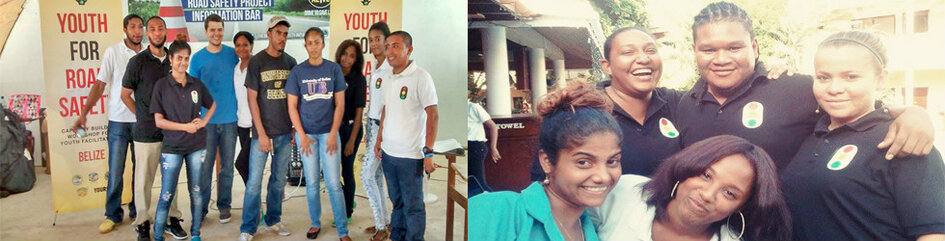
Its only been around 4 months since the YOURS Training of Facilitators took place in Belmopan, Belize in partnership with the Caribbean Development Bank and the Government of Belize. In such a short time, the 19 youth that underwent the training programme have started delivering concrete results in their country.

The Belizean Youth for Road Safety (BYRS) is made up of young, dynamic and motivated individuals with a passion for delivering the road safety message across the country of Belize starting with the demonstration corridor of the Belize Road Safety Project, doing their part to save lives.

“We are a newly formed NGO and our Mission Statement is Youths encouraging, empowering and inspiring others to become advocates of road safety by generating awareness using innovative and interactive activities to reduce the numbers road traffic deaths and injuries in Belize”.

Their Vision Statement is to “Generate and sustain road safety awareness by promoting appropriate behavioral skills and attitudes to improve road user behaviour through education and publicity and to increase community participation and commitment to road safety practices”. Their main objective is targeting a minimum of 2000+ youth between the ages of 16-29 to disseminate workshops with a youthful vibe/ youth friendly manner that will assist in the learning of Drunk Driving, Distracted Driving, Speeding and get them to understand the concept of the importance of Road Safety in Belize.

Updates:
Orientation at University of Belize, Belmopan and Punta Gorda Campuses
In July 2014 the youth were invited by the University of Belize to attend and participate in a four day orientation that was held in Belmopan. It was scheduled from (July 28- July 31) and on 1st August 2014 we travelled to the University of Belize’s Toledo Campus. During that time (BYRS) members participated in the orientation there and showed their drive in presenting to the newly devoted college students about the importance of road safety through charts, flyers, testimonial and other road Safety Videos  any why they should carry on with it and try to spread the word in their everyday lives. We reached over 2,700 young men and women between the ages of 16-29 years.  In addition, thery reached over 700 men and women thirty years and older.

Trained facilitators at the Univesity of Belize

International Costa Maya Festival
During the month of August 2014, the youth made their appearances once again in the public to create awareness but at the International Costa Maya Festival in San Pedro as a part of their initiative to help educate road users both young and old about the importance of road safety. They had an information booth set up for viewers along with plenty games and ensured that we were visible. They also had “one-on-one” conversation with people who would visit the booth and ask about our target.  The youth reached approximately 500 young men and women between the age of 16 to 29, 35 boys and girls less than 15 years old and approximately 100 men and women thirty years and older.

Belize youth facilitators at the Costa Maya festival

Annual Expo
In the month of August 2014 the BYRS obtained and utilized a booth at The Annual Expo Belize market place. They further introduced the group’s focus and commitment in creating road safety awareness to reach a much larger audience, people of all ages attended this annual event and they strongly believe that the message we have delivered benefitted everyone some way or another. Approximately 19,000 persons were recorded by the Belize Chamber of Commerce for this event and it is believed that approximately 40% (7,600 males and females approximately) of these persons visited the booth.  Of the approximately 40% that visited the booth, approximately 34% (2,584) were our peers. This was a well organized event and their aim is to partake on an annual basis.

Belize youth facilitators at the Annual Exp

Police Recruits
The Belize Facilitators reported, “The turnout for the workshop was amazing; the energy from the participants was exhilarating. At the Police Training Academy, the young recruits were well mannered and eager to learn, the facilitators could not have asked for a better group of people. As we prepared the room with posters and other materials needed for the session, extremely nervous and excited, we kept in mind that this workshop was very important, not only will it be educating our peers and having fun but that these are future police men and women, law enforcers! These participants will be able to connect to others on a whole new level depending on what we had to inspire and motivate them.  As we planted the seed that road safety is everyone’s business and responsibility it wad heart warming to see the feedback and listen to the views that came from these new intelligent law enforcer’s minds. At the end, it was overwhelming to know that by sharing the things you know can help save one life”.

Belizean youth facilitators training police recruits.

Radio Show
Juan Caal and Quincy Jones are leading the awareness campaign on Road Safety in the South where they are hosting a series of talk show on one of the most “tuned into” radio station in the Toledo District: Ak’kutan Radio 96.1 FM. They host a Monday and a Thursday radio show from 5:00 p.m. to 6:30 p.m.  This effort has successfully educated and touched the lives of over 10,000 persons in the Toledo District where the sensitization of people is hard to attain.

Quincy Jones aka “Fada Cue” and Juan Caal on their regular radio show for road safety.

As you can tell, the youth in Belize are incredibly passionate abou the cause and are championing road safety in the own unique youth style. The told us:

“The Belizean Youth for Road Safety (BYRS) remains committed to generate and sustain road safety awareness by promoting appropriate behavioral skills and attitudes to:  (1) improve road user behaviour through education and publicity; and (2) increase community participation and commitment to road safety practices.  BYRS has reached over 3,200 of its peers, 35 boys and girls and approximately ___ men and women over thirty years and older.  As per commitment with the Government of Belize and the Caribbean Development Bank, BYRS has met approximately 19.25% as of ending September 2014.  The aim is to transfer knowledge to the 2,000 young men and women between ages 16 to 29 years of age by December 2014. This process will no doubt create a multiplier effect and the information transferred to our peers will reach the homes and communities”.

More reports are due to come at the end of the year!

Indian cinema superstars show their support for road safety

Indian cinema superstars show their support for road safety

With nearly 115 million registered vehicles on the road and the world’s second largest population, road safety is a real concern for the citizens of India. As an ever growing economy, India is taking steps to educate the masses on road safety. In it’s most recent actions, Bollywood superstar actors have recently endorsed road safety messages.

Bollywood is a multi-billion dolar industry; the largest film producers in India and one of the largest centres of film production in the world. It’s film output is almost ten times that of Hollywood and consquently, its actors and actresses are revered as superstar role models all around the world.

Holding the second largest population in the world, India’s road safety status is somewhat below average with a deathrate per 100,000 of 18.9 and over 110,000 deaths every year. In a strengthened bid to reach out to the masses on road safety messaging, Bollywood superstars Aamir Khan and Karishma Kapoor both revered film stars have endorsed road safety messages.

The second episode of the third season of Satyamev Jayate, an nationwide Indian show, dealt with a subject of road accidents in India. Every year, an astounding number of people lose their lives due to road accidents many times when it is not even their fault but the other driver’s. About 6,000 children too are victims of road accidents. This numbercan only be brought down when there are strict rules and regulations not just on paper but in practice too.

The episode featured several cases wherein lives of many individuals could have been saved due to timely action or by following rules. In the end, Aamir Khan shared a few road safety and safe driving tips which if followed by all citizens can drastically bring down the number of such accidents. Here are the tips:

  • Do not go over the speed limit: Overspeeding can be a lot of fun until the accident. It is essential we all follow the set speed limit to avoid such ill-fated incidents.
  • Follow traffic rules: Even if there isn’t any traffic police present, do not break driving rules such as jumping the signal even when it is still red. Wait for it to be green to drive ahead even if the road is empty. As Aamir rightly pointed out, ‘These rules are for our own safety.’
  • Wear a good quality helmet: Aamir stressed enough on this point that no one should ride a two-wheeler without wearing a good quality helmet. Not just the person sitting ahead, but also the pillion needs to protect their head with a helmet.
  • No drinking and driving: Never should one drive under the influence of alcohol or any other such substance. It not only puts your life in danger but also the people sitting in your vehicle and others driving on the same road as even one mistake can sometimes be fatal. 

Friend of YOURS and member of the Global Alliance for Road Safety NGOs, Mr Harman Sidhu of Arrive Safe Delivers the message of Decade of Action to Bollywood superstar Aamir Khan.

  • Wear a seatbelt: We often only wear a seatbelt when we see traffic police on the road to avoid getting fined for it. But it is vital that we start putting it on the moment we sit in the car for our own protection. Not just the driver, others sitting in the car should follow this rule too.
  • Never talk on the phone while driving: This is highly important as one can lose their focus and pay more attention to the conversation than driving which can lead to accidents on the road.
  • Help someone in need: Aamir urged viewers to help out anyone in need if they’ve met with an accident on the road without thinking of the hassles of court, hospitals, etc.


In addition this this, Aamir also asked parents to watch out for their kids’ safety by ensuring that their school buses have seatbelts and that every kid on the bus is wearing one.If each one of us starts following these, it is possible to avoid and lower the number of road accidents.

Bangalore: Celebrities Karisma Kapoor and Anil Kumble have lent their star power to ‘Road to Safety’, a nationwide campaign to make Indian roads safer.

Supported by Karnataka Transport Minister Ramalinga Reddy, the initiative was launched by Diageo and NDTV here Thursday. It aims to make the country’s roads safer and reduce the number of preventable accidents by encouraging citizens, specially the youth of India, to be more responsible behind the wheel and to avoid drunken driving.

Talking about the issue, Karisma said in a statement: “So many lives are lost every year in India due to a casual approach and lack of knowledge about road safety. Initiatives like this will go a long way in educating people about road safety measures and in turn will help save lives.”

Anand Kripalu, managing director, United Spirits (a Diageo group company), said that the initiative is a year-long programme of partnership with government, NGOs and educational institutes to cause a paradigm shift in people’s approach to road safety in India.

Pedestrian Safety and Kids – USA study from Safe Kids Worldwide

Pedestrian Safety and Kids – USA study from Safe Kids Worldwide

According to a new Safe Kids research report, half of teens surveyed say they cross the street while distracted by a mobile device. Teens who had been hit or nearly hit more frequently reported crossing in the middle of a block or running across the street. The research includes an examination of fatality data that shows 75 percent of teen pedestrian deaths occur between 7 p.m. and 7 a.m., when it’s dark out.

Safe Kids Worldwide, with the support of FedEx, surveyed 1,040 teens ages 13 to 18 to explore walking behaviors and their experiences as pedestrians. They learned that 40 percent of teens say they have been hit or nearly hit by a car, bike or motorcycle while walking. See the infographic below:

Read more about the Safe Kids Worldwide ‘Teens on the Move’ study by visiting their website here.