Brian’s Column: A ‘Spirit of Death’ on African Roads?

Brian’s Column: A ‘Spirit of Death’ on African Roads?

This month, our regular columnist on all things African Youth and Road Safety issues, Mr Brian Bilal Mwebaze is back with an observational column on his recent experiences in the Democratic Republic of Congo. While road safety remains a struggle, certain transport methods can make it almost impossible to reach somewhere safely.

As most of you were chilling and having all tons of ‘Merry Christmas’ and ‘Happy new year’ gifts, some of us ‘Ethiopians’  were at work in the biggest city in Eastern & Central Africa:- Kinshasa. I don’t need to remind you that Ethiopia uses a sidereal calendar based on the older Alexandrian or Coptic calendar, which in turn derives from the Egyptian calendar with the rest of the world using the usual Julian calendar: You therefore need not a calculator to note that since it’s 2007 here, and with the new year being celebrated in September, you will be 7 years younger when you visit Ethiopia?

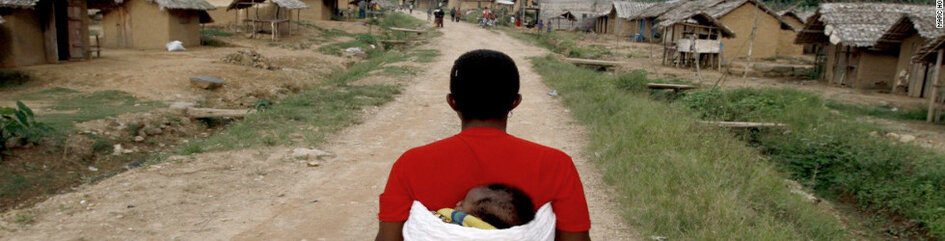
The ‘Spirit of Death’ pictured left and a form of travel right.

Between 22nd-28th December 2014, I was with the Ethiopian team from the African Union headquarters in Addis Ababa to Kinshasa to help in the pre deployment process of the Ebola Volunteers to West Africa: Ebola, being an infectious disease with a very high virulence has caught attention of many decision makers and member states showing solidarity with Sierra Leone, Equatorial Guinea and Liberia. Anyways, then we saw the ‘Spirit of Death’ on the road!

Les Esprit de Mort literally translated as ‘Spirit of Death’ is a trademark taxi-bus Mercedes 207 which provides public transport for over 10 million Kinshasa city dwellers daily. The physical condition of the ‘Spirit of death’ needs so much polishing that God could as well spend 14 days working on it, despite spending 7 days creating the universe! Made from old scrap evidenced by ridges in the sides of the car body, and coal-like fumes struggling to exit from the exhaust pipe, the ‘Spirit of death’ is arguably the most dangerous thing in the streets of Kinshasa! But that’s nothing: In 2012 alone, the ‘Spirit of death’ was involved in 1000 reported road traffic crashes with, 200 real people loosing their lives. (source BBC Documentary, June 26, 2013) Compared to other developing countries where the ‘Spirit of motorcycles’ have killed even more, ‘Spirit of death’ takes the Ballor D’or in Kinshasa.

Over in Kenya, the Matatu and the Boda Boda pose similar risks on the road.

Yes, and they speed too! (Not overspeed)! With the conductor standing all the time at the edge of the open sliding door yelling ‘On y va?’ Literally meaning ‘Are you going’ to the potential passengers, the car is moving at approximately 50km/hr in the middle of the town! As we were informed later however, the government procured some city buses to replace ‘Les esprit de mort’ but clearly, they are so popular because of their ability to deliver passengers at any stage! So while we continue with major steps forward in road safety, through advocacy, through education and through road safety consciousness, things like the ‘Spirit of Death’ actually continue the spirit of death for road safety.

It’s clear that these types of vehicles are prominent in Africa, whether it’s the Matatu (small mini bus) in Kenya, or the Boda Boda (taxi motorbike) that both pose serious problems in terms of safe road behaviour. While a money maker for the transport drivers, the economic cost to the country is much higher. It’s time to start improving infrastructure to enable safer means of transport for people to get around, at the very least, we should be educating the drivers of the Spirit of Death, Matatu, Boda Boda and all the other dangerous transport methods on the importance of safety. Afterall, people need to be alive for business to continue right?

Stay safe! Hello 2015!
Beyond the Driving Test – Tire safety and maintenance from Michelin

Beyond the Driving Test – Tire safety and maintenance from Michelin

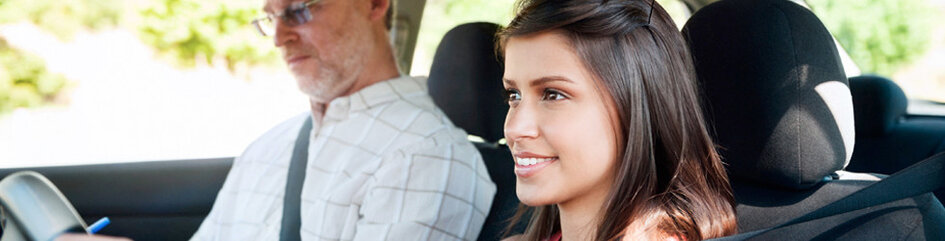
YOURS Founding Member Michelin has recently published a brilliant guide to tire safety called, ‘Beyond the Driving Test’. Automobile accidents are the No. 1 killer of teens in America, with 5,000 deaths each year. What’s more, of the 2.2 million accidents per year among inexperienced drivers, 12 percent can be attributed to tire related issues, such as insufficient tread or pressure. Even so, few driver’s education programs offer instruction on tire maintenance and safety.

Because many of these accidents are preventable, Michelin and FIA have joined together to launch a new campaign, Beyond the Driving Test, to raise awareness of tire maintenance and safety. This will make available resources designed to initiate conversation between parents and teens, and among teen drivers and their peers. The two organizations will also be working with national groups and state organizations to meet the goal of having all 50 states include some form of tire safety information in their individual driver’s education curricula by 2020.

Infographic: Click here for an eye-opening infographic on whether driver’s education is failing our teenage drivers and not adequately preparing them for the road.

Glove Box Guide: Click here to help teens take control of their vehicle’s routine maintenance by downloading and printing out this handy guide for the glove box.

Read more about Beyond the Driving Test.

Street plays, rich in historical culture promote road safety in India

Street plays, rich in historical culture promote road safety in India

In India, the rich tapestry of cultural stories are told to children from a very young age. This include stories of Gods, villians, heroes and demons. Playing on cultural values, Transport and Police Departments in India have supported a street play that brings back the messengers of death on the road to warn people of their actions on the road in an indirect yet personal way.

Adapted from The Hindu Online

At times, a rude awakening etches experience of the moment in the mind. So felt the Transport and Police departments in India that organised street plays separately to sensitise masses to road safety rules through instilling a sense of fear for life.

Invoking mythology, the Transport Department had two students of Rajiv Gandhi Polytechnic College don the roles of Yama, the lord of death, and his key aide Chitragupta. They traversed through the city on an open cargo vehicle making loud and clear conversations that sought to send shivers down spines.

Dressed as the mythical characters, they agreed on the point that their visit to earth had been long overdue and that they must make the most of their stay to take back as many lives as possible before returning to their abode. And they decide to narrow down on those flouting road rules, by prompting the reckless drivers into getting into accidents, saying they do not deserve to live anymore, no matter what their age is.

Transport Department enlivens mythical characters to drive home the dangers of reckless driving as part of Road Safety Week celebrations in Erode on Monday.— PHOTO: M.GOVARTHAN

The cultural programmes are organised on the theme ‘Safety is not just a slogan; it is a way of life’.

District Collector K. Maharabushanam inaugurated the cultural programmes on the Collectorate campus, in the presence of Velusamy, Deputy Transport Commissioner, and RTOs – Senthilvelan (Sankagiri), Ravikumar (Salem south), Subramaniam (Salem West), V. Jayagowri (Salem East) and Rajendran (Attur).

Cultural programmes organised by Transport Department in connection with Road Safety Week at the Collectorate in Salem on Monday.PHOTO: P. GOUTHAM

Later, the troupe performed at Collectorate round about, five roads junction and new bus stand.The Indian Red Cross Society launched a mobile campaign van to create awareness on safe travel.Mr. Maharabushanam, who is also the president of district Red Cross, flagged off the rally, in the presence of J. Munna, chairman, L. Anil, vice-president, J. Jakir Hussain, its secretary, Prabakaran, Junior Red Cross convener. The members of the Red Cross and the Junior Red Cross visited various parts of the city and made announcements on the road rules and the need to follow them strictly.

Embedding road safety with a cultural focus can be a powerful way to personalize messages to a local context that citizens can relate to.

Scary road safety adverts don’t work, yet they’re everywhere – The Economist

Scary road safety adverts don’t work, yet they’re everywhere – The Economist

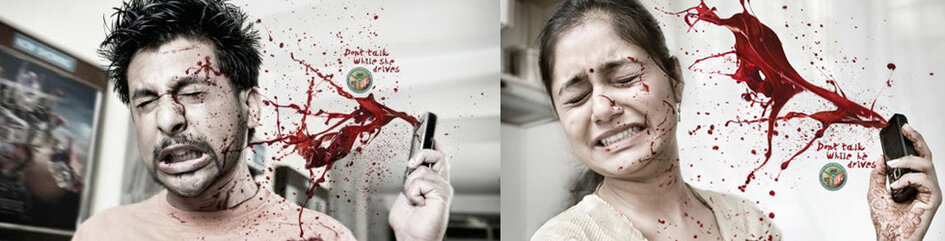
Its a well documented topic of debate in the road safety community, do blood and guts adverts in road safety public service announcements have an impact on a road user’s behaviour? According to new research, scary adverts are more memorable but less likely to change behaviour.

Chattering schoolchildren don colourful anoraks; clutching hands, they depart for a woodland picnic. Elsewhere a young man leaps into his car and speeds off to work. Moments later he careers off the road and his spinning car kills each one of the cheery youngsters. The camera lingers on their dead hands and the now-empty classroom. A grim voice explains that they represent the children killed as a result of speeding in Northern Ireland since 2000.

British road-safety adverts are more shocking than those broadcast in America, says Anne McCartt of the Insurance Institute for Highway Safety, an independent research group there.

The British penchant for horror might reflect the nation’s long tradition of public-service broadcasting, which seeks to entertain and inform at once. But do the ads work?

Though gory, shocking public-information films linger in people’s heads, they seem not to alter behaviour much. If the consequences seem too extreme, the threat may seem too far-fetched, says Josh Bullmore, who has both made and studied such adverts. Few may believe that disaster could befall them or adjust their behaviour accordingly. Tessa Langley of the University of Nottingham has compared the impact of smoking campaigns that showed tumours erupting disgustingly out of cigarettes with more positive ones that also urged people to quit. The former proved more memorable, but the latter led more people to ring the national smoking helpline.

The budget for public-information films is shrinking. The Central Office of Information, the government’s marketing department, was closed in 2011. In 2008-09 the Department for Transport (DfT) spent almost £3m on its drink-drive advertising campaign. In 2013-14 spending fell to less than £1m. Unable to afford as many spots on television, the scaremongers hope their films will be shared on social media. And that is encouraging them to churn out the gory kind. In a recent advert from the DfT, men washing their hands in a pub toilet are startled by the face of a mannequin smashing bloodily through the mirror. The ad suggests a hashtag, #publooshocker, for online sharing. Less shocking adverts might work better, but fewer people would see them.

What do you think? Has a scary road safety advert encouraged you to change your behaviour on the road?

Happy New Year from YOURS here’s to a productive and safe 2015!

Happy New Year from YOURS here’s to a productive and safe 2015!

As we wished a warm goodbye to 2014 and ushered in 2015, we look ahead to the new year bringing with it renewed resolve to make following 12 months successful for our global mission of safer roads the world over. There are some massive plans here at YOURS for 2015 as we continue with our role to make the world’s roads safer for young people. We reflect on 2014 and look ahead to a productive and safe 2015.

Since we officially launched in late 2009, we have been connecting young people all around to build a strong community of road safety ambassadors all around the world. Now approaching our fifth year of operation, YOURS continues to embed youth and road safety efforts in communities across the world and 2015 is set to be another groundbreaking year for the cause.

There were lots of great activities last year in 2014 and we feature some of the key activities here as we reflect on a year of continued road safety action:

New CORE Group 2014-2016
A full CORE Group representing every single region of the world at the start of the year. This means that we now have representation on every part of the world bringing us closer to young people on the ground as well as illustrating that young people all around the world care about road safety and are taking action! They continue their work in 2015. Meet the CORE Group.

YOURS involvement in Youth Post-2015 Development Agenda
We took a big role in bringing road safety to the forefront of consultations for the youth elements of the Post-2015 Develoment Agenda including consultations at the World Conference on Youth in Sri Lanka, the online GPY2015 crowsdourcing platform, writing my UN envoys as well as attending the ECOSOC Forum in New York. We continue our input into 2015 as the ageda is finalised. Read more.

YOURS joined SloCaT Partnership

We are very happy to announce that we have officially joined Partnership on Sustainable Low Carbon Transport (SLoCaT), a multi-stakeholder partnership of over 80 organizations (representing UN organizations, Multilateral and Bilateral development organizations, NGOs and Foundations, Academe and the Business Sector). SLoCaT promotes the integration on sustainable transport in global policies on sustainable development and climate change. Read more.

Training of Facilitators Belize
We successfully completed the first stage of the Training of Facilitators in Collaboration with the Caribbean Development Bank, Government of Belize and Belize Road Safety Initiative. The training took place in Belmopan, Belize and concluded on the 27th June 2014. 19 youth leaders were equipped with the skills, knowledge and ignited passion to reach more than 2000 young people through road safety workshops across Belize. YOURS will conduct phase 2 of the training in 2015. Read more.

WHO Road Safety PSA Project

YOURS was recently involved in a project to assist the World Health Organization in identifying public service announcements (PSAs) for road safety. The finished result is a searchable online database of effective road safety PSAs from around the world illustrating impactful road safety campaigns. Read more.

Brian’s Column
In 2014, we published a Brian’s column every single month with news, opportunities and discussion points from the world of African youth and road safety through the eyes of Brian Mwebaze. His columns are a popular feature that raise some pertinent questions on the role of African youth in terms of road safety development. Read more.

As we look ahead to 2015, we continue our focus on the #SaveKidsLives campaign for the third UN Road Safety Week. We encourage you to log on and take part here by reading and signing the declaration and taking a #Safie.

We also continue our work in Capacity Development as we plan for further trainings of facilitators workshops for the new year. We will keep you posted on the process of finalising the Post-2015 Development Agenda as it reaches its climax this year.

Road safety tips for the festive season – keep safe and enjoy yourself!

Road safety tips for the festive season – keep safe and enjoy yourself!

It seems everyone is in a hurry trying to wrap up their shopping and enjoy festive celebrations. But as you’re dashing around town, it’s important to keep road safety top of mind, as the streets are busier and drivers are distracted by their holiday to do lists, the roads often face icier conditions in the Western Hemisphere and the yule tide celebration can bring alcohol to the forefront.

Road Cover South Africa offer some tips for the festive period to ensure your festive season is enjoyed without a hitch – we have adapted their tips to a global context.

People are urged to to be more careful on the roads. Here are a few friendly tips to ensure your Festive season is a safe one:

Don’t drink and drive
Drunk driving is a major contributory factor to road crashes and road deaths in the world. If you going to a Christmas party and plan to indulge in a drink or two and get merry,  don’t drive. Stay the night or plan a safe alternative to get home such as a cab or designated driver who does not drink all night. Did you know that even in the morning after you have slept you could still be drunk and over the limit? Read more about how drinking is absorbed into the body and how the body passes the alcohol with this calculator. This

Slow down
In the rush to get to a Christmas party or do your Christmas shopping before the malls close, you may be tempted to speed. But police presence is greater on the roads both day and night throughout the season, and a speeding ticket and possible accidents are not likely on your holiday wish list. Speeding increases the likliness of a crash.

Wear your seat belt
Always buckle up. Wearing your seat belt can reduce your risk of dying in a crash by about half or more.  Also, make sure young passengers are buckled into appropriate safety seats.

Watch for emergency vehicles.
In an emergency, every second counts. When you hear a siren, be sure to pull off to the side of the road to allow the ambulance, police car or fire truck to pass. Do as the rules say in this situation and be safe.

Carry an Emergency Kit
Always be prepared.The kit should include items that would come in handy if you are stranded on the side of the road or involved in a vehicle accident.

Pull Off the Road if You Feel Tired
Please don’t try to drive when your eyes are shutting; you could kill yourself or others if you fall asleep. Have turns driving if there is another licensed person in the vehicle.  Stop regularly to take breaks.

Be extra careful!
In many parts of the world, the temperature gets colder, the nights darker and the roads icy, slippery, wet or snow covered. In these situations, only drive when absolutely necessary and if you must, be extra careful. Its a sad fact that many people drive drunk during the Christmas perid so be extra vigilant of others, of pedestrians and other road users!

Here are a few checks that you can do, to make sure your car is ready for winter:

  • Lights – see and be seen. Keep your indicators and headlamps clean and working and carry spare bulbs in the glove box   
  • Fuel – stay out the red! A serious traffic jam can easily finish off a near empty tank. Not nice at any time of the year, but potentially deadly in the snow.
  • Windscreen wipers – make sure they’re in working order, your windows are clean and your washer bottle is filled with screen wash.
  • Tyres – check the condition, pressure and depth of your tyres (including the spare). Check tyre tread depth regularly to reduce the risk of aquaplaning.  The law requires car tyres to have a minimum tread depth of 1.6mm.
  • Brakes – make sure they are working well.
  • Fluids – are topped up to the correct level, including oil, anti-freeze and water
  • Emergency kit – put one in your car just in case you get stranded. Include things such as a phone, medication, a torch, food, extra clothes and blankets

Be prepared for bad weather:

  • Plan your journey before you set off and allow yourself extra time:
  • Check weather reports. Don’t make unnecessary journeys if there are severe weather warnings in place
  • Tell someone where you are going and when you expect to get there
  • Drive carefully and take account of the weather conditions. Leave a greater distance between you and the car in front – remember, it may take up to 10 times longer to stop in some conditions
  • Winter sun – the sun can be dangerous in winter too. Be careful of dazzling rays when you are driving.

So enjoy the festive season, be safe and we will see you in 2015!