The benefits of less speed – NZTA’s new advert explains all

The benefits of less speed – NZTA’s new advert explains all

This campaign puts a twist on previous campaigns which have focused on the consequences of more speed. This time it looks at the benefits of less speed.

The big challenge in the area of speed is to get people to stop defending their perceived right to speed. As a contributing factor in 20% of all fatal and serious injury crashes, speed continues to be a serious issue on New Zealand roads. In 2015, 87 people were killed and 466 were seriously injured in speed-related crashes.

Thank you for your speed…

Previous campaigns have shown that irrespective of your personal driving ability and skill, there are others on the road who make mistakes. Safe speeds are essential for this reason; drivers can’t control the behaviour of other road users but they can control their own.

The target audience

The campaign aims to get competent drivers, who like driving fast and see the speed they chose to travel as a personal thing, to realise that speed is not just a personal choice, because other people get hurt as well.

Routinely driving at speeds above the limit, they’re the people who travel faster than the traffic around them; they frequently overtake, tailgate and cut corners. Confident in their driving ability and the fact that nothing untoward is likely to happen, they recognise that speed can affect the outcome of a crash but don’t see this as their issue.

Drivers naturally defend their choice to drive at the speeds they do – that’s just human nature. Their own experience reinforces their belief that their speed isn’t the problem. They believe it’s their choice to drive at the speeds they travel at and they don’t like being told to slow down.

We want them to acknowledge that their speed isn’t just a personal choice. Sure – most of the time when they speed nothing happens, but what if something does?

“While they might not be at fault, the speed they choose to drive at determines the outcome of any crash”.

Ultimately the goal is to get these people to make the choice to slow down. By choosing a safe speed, they choose what happens next.

Video from Alliance Academy training is now live!

Video from Alliance Academy training is now live!

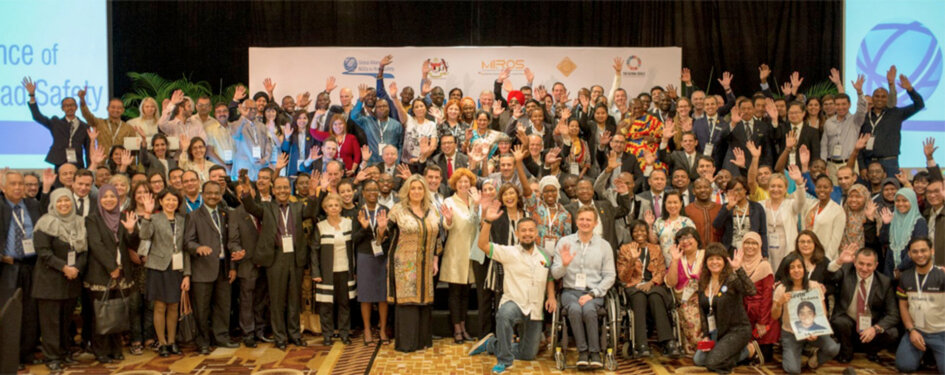
In September 2016, we helped deliver the Alliance Academy in Memphis, Tennessee at the headquarters of FedEx in USA. FedEx have produced a great video featuring highlights from the training and testimonials.

The Global Alliance of NGOs for Road Safety (also known as ‘The Alliance’) received a generous grant from FedEx to help further develop the capacity of the 180+ Alliance members in 90 countries.

The Alliance created the ‘Alliance Empowerment Program’, an overarching program that has the aim to work with NGO leaders to improve their effectiveness and impact. Members of the Alliance identified several key areas for development that would help them in their road safety missions on the ground. This was realized through an Alliance wide ‘Learning Needs Assessment’ in which members reviewed the skills they need to make real lasting change in road safety. In response to a clear capacity development need, the Alliance developed supportive programs under the banner of the Empowerment Program. These include: The Alliance Academy: which offers trainings such as online webinars and in-person training workshops.

The Academy Advocates: is an initiative that results from the Alliance Academy. The overall aim is to increase the quality of work that Alliance member NGOs implement. It builds on key skills such as planning, identify funding, implementing and evaluating effective advocacy activities, community mobilization, press attention, legislative change and more.

We (YOURS), were called in to develop the training curriculum based on our training experience. The curriculum was developed through month-long consultations with the Alliance and informed by the Learning Needs Assessment.

We used our track record in workshop delivery to design, develop and implement the training. Floor Lieshout conducted the training and Alliance Member, National Road Safety Council NGO’s staff, Poghos Shahinyan also provided training inputs directly related to his extensive experience in advocacy. External facilitators, such as Safe Kids and Johns Hopkins, Bloomberg School of Public Health as well as FedEx staff were brought in to provide specific inputs to compliment the training.

Read more about the Alliance Academy Training

Check out the video from FedEx here:

The role of youth in promoting the SDGs and their attainment – UN ECOSOC

The role of youth in promoting the SDGs and their attainment – UN ECOSOC

The annual Youth Forum of the Economic and Social Council (ECOSOC), is a platform where young people can contribute to policy discussions at the United Nations through their collective ideas, solutions and innovations. The Forum allows representatives of youth-led and youth-focused organizations and networks, youth advocates and others to dialogue with Member States, and to explore ways and means of promoting youth development and engagement.

This year’s annual ECOSOC Forum concluded on 31st January 2017 focusing on achieving the Sustainable Development Goals (SDGs) and doing so, harnessing the power of youth to help achieve these goals. For global road safety, the goal remaining most pressing and relevant is:

3.6 – By 2020, halve the number of global deaths and injuries from road traffic accidents.

UN Secretary-General António Guterres gave a video message to ECOSOC Youth Forum 2017

“Young people care about global issues…these issues affect you, your friends and families and you live them. You the youth can inspire change as entrepreneurs and leaders to help achieve the goals in the 2030 Agenda for Sustainable Development .” – UN Secretary-General António Guterres


At Youth Forum, UN calls on young people to help realize a better future for all

Drawing attention challenges such as climate change, unemployment and inequality, confronting young people around the world, including in places where peace prevails, United Nations Secretary-General António Guterres today called for the youth to speak up and share their stories.

According to estimates, about 74 million young people around the world cannot find a job, many youth are driven from their homes due to conflicts, and, in places where there is peace, they suffer violence and discrimination.

Road traffic crashes remain the single biggest killer of young people globally.

The Youth Forum, is held annually by the UN Economic and Social Council (ECOSOC) since 2012, offers young people an opportunity to voice their opinions, share ideas, and think together about what they can do to achieve sustainable development.

 Also speaking at the occasion, ECOSOC President Frederick Musiiwa Makamure Shava stressed that every day, a number of young people risk their lives, attempting treacherous journeys, seeking refuge from war and conflict. Furthermore, many are fleeing crises caused by financial dislocations and climate change.

Such unplanned movements combined with other processes associated with globalization, he added, “are seen as a path to lower wages, a weakening of cultural and religious identities and rising inequality.”

Underlining the importance of the Sustainable Development Goals (SDGs), particularly for young people, he noted:

“It is your future we are building in implementing the Agenda. This is why we need you to play a role in shaping the world you will be living in.”

Similarly, the President of the UN General Assembly, Peter Thomson also highlighted the importance of the SDGs and said that the 2030 Agenda together with Paris Agreement on climate change provides a universal masterplan to place humanity on a trajectory to a safe, secure and prosperous future for all.

“Implemented urgently, effectively and at scale, these agreements will transform our world, to one in which extreme poverty is eliminated and prosperity is increased and shared more equitably,” he said, and added that achieving a future envisioned in these documents would require new and bold ideas, innovative and strategic thinking, and urgent collaborative action.

“It will require fundamental changes in the way we produce goods and consume them if our world is to be sustainable,” he added, underscoring: “Youth will have to be at the forefront of this transformation.”

Also speaking at the Forum, Ahmad Alhendawi, Envoy of the Secretary-General on Youth called on young people not to lose hope but to become a source of hope to the world and called on all sectors of the society to work with the youth.

The two-day Forum was organized by the UN Department of Economic and Social Affairs, in collaboration with the Office of the Youth Envoy of the Secretary-General and the UN Inter-agency Network on Youth Development.

YOURS previously attended the Fifth ECOSOC Youth Forum which, in collaboration with global efforts culminated in road traffic crashes and injuries being discussed as the number one health concern for young people.

The world has just under 4 years to achive the ambitious goal halving road traffic deaths by 2020, we must speed up our inclusion of young people in the road safety decision making process to help tackle this crisis.

This means supporting young people to create solutions, educate their peers, work with government and harness their talent, skills and insights to reduce road traffic crashes.

READ MORE ABOUT HOW TO ENAGAGE YOUTH IN ROAD SAFETY.

Reducing casualties involving young drivers and riders in Europe – a report

Reducing casualties involving young drivers and riders in Europe – a report

Young drivers and riders aged 15-25 are more likely to be killed on Europe’s roads than their older counterparts, despite continued improvements in road safety. Road collisions remain one of the highest external causes of death for young people. The risks are especially high for young males and for young riders.

This high collision risk is caused by a combination of factors. Biological and social changes between the ages of 15-25 affect the risk perception of young people and lead to an increase in social activity and associated pressure from peers.

A lack of experience on the road means that young people are worse at anticipating and reacting to hazards.

They are also less aware of how best to drive and ride in particular road conditions and situations.

A range of impairments and distractions affect young people. This is linked to the increased social activity they experience during the ages of 15-25, which includes a greater exposure to alcohol and drugs, the influence of peer-age passengers and the effects of fatigue. In-car distraction from mobile devices is also a problem.

Young people tend to drive smaller and older vehicles as they are cheaper and more practical. These cars often have a lower crashworthiness and lack the safety technologies featured in newer, larger cars. The use of seat belts and protective clothing is also poor amongst young people.

A variety of countermeasures have been adopted across Europe and further afield, with the aim of reducing the collision risk of young people.

General safety measures

Countries with higher general road safety standards also have safer young road users. Better enforcement of speed and drink-drive limits and of seat belt wearing particularly helps protect young people.

Training and education

Introduce hazard perception training, expand formal training to cover driving and riding style as well as skills and encourage more accompanied driving to help gain experience.

Licensing systems and testing

Adopt graduated licensing systems that encourage young people to gain more experience while limiting certain high-risk activities such as driving at night and with passengers. Ensure testing allows examiners to ascertain a safe driving style by including aspects such as independent driving. Lower the BAC limit for all young drivers including novice drivers.

Safer vehicles and telematics

Encourage young people to use safer vehicles and utilise assistive technologies. Further explore the link between telematics-based insurance and safe driving.

DOWNLOAD THE ETSC YOUNG DRIVER REPORT

Get ready for the 4th United Nations Global Road Safety Week

Get ready for the 4th United Nations Global Road Safety Week

We all want to arrive safely at our destinations. By slowing down we make roads safer for our children, families and friends. The Fourth United Nations Global Road Safety Week will take place from 8-14th May 2017. We are getting ready for it now, join us!

The Week will focus on speed management and what can be done to address this key risk factor for road traffic deaths and injuries. The Fourth UN Global Road Safety Week seeks to increase understanding of the dangers of speed and generate action on measures to address speed, thereby saving lives on the roads.

Speed contributes to around one-third of all fatal road traffic crashes in high-income countries, and up to half in low- and middle-income countries.


The Save Lives: #SlowDown campaign will be hosted on a new platform at www.unroadsafetyweek.org which is launching soon!

You can follow the campaign on social media for the latest updates before the website launches:

logo facebook
Follow UNGRSW on Facebook


twitter icon

Follow UNGRSW on Twitter

We will be assisting the World Health Organization (WHO) on the coordination, production and dissemination of the fourth week. This week will follow the legacy of the #SaveKidsLives campaign, which was highly interactive and engaging attracting over 1 million people globally in support of its message.

In developing the week, a new online platform will be created to host the week, which will also host information about all other weeks. This ensures that the fourth week and subsequent weeks will be consistently engaging, easy to navigate and connected.

Stay tuned for more updates!

Life and death on Thailand’s lethal roads – A global feature

Life and death on Thailand’s lethal roads – A global feature

There is a ritual that is now very familiar to Thais, before the two big holiday seasons of the year, in late December for the new year, and in April for the Songkran Festival.

The government will set a target for reducing fatalities on Thailand’s notoriously dangerous roads, exhorting Thais not to speed, or drink and drive. Sometimes good citizens will run publicity stunts, like the coffin-maker, who last year invited journalists to film the huge stockpile his workers were building up for the holiday season. And every year these efforts fail.

Thailand remains a popular tourist hotspot for its paradise like beaches and cosmopolitan cities.

The grim statistics of death and injury on the roads are tallied each day in the media with, as often as not, worse figures than the year before.

And so it was this last new year – 478 people lost their lives on the roads in just seven days.

In one horrific collision in Chonburi on 2 January, 25 people died – some burned to death in a crushed and overcrowded passenger van they could not escape.

Thailand’s roads are currently ranked the second most lethal in the world after Libya’s by the World Health Organization.This status is all the more extraordinary given the fact that Thailand has been peaceful and increasingly prosperous for decades, with governments that in other fields, like healthcare and infrastructure, have made impressive progress. In 2011 the then-government announced the following ten years as Thailand’s ‘Decade of Action on Road Safety’.

It declared 2012 as the year of 100 percent helmet use on motorbikes.

In 2015 the Department of Disaster Prevention, which is tasked with road safety in addition to problems like floods and landslides, boldly announced a target of reducing road deaths by 80%. All in vain.

The challenge they face is not hard to see. Thailand’s rapid development has bequeathed it an unrivalled network of 462,133 roads in the region, nearly all paved, with plenty of multi-lane highways. There are 37 million registered vehicles, 20 million of them motorbikes, and millions more that are unregistered.

In the latest high-profile accident, a pick-up truck collided with a passenger van, killing 25 people

Driving on a Thai expressway is akin to playing a hyper-caffeinated video game. A cursory web search for road accident videos will throw up examples of breathtaking, sometimes suicidal, recklessness. Drunk driving is a huge problem.

Road crashes in Thailand

  • 2nd in the world for road accident deaths, after Libya.
  • 24,000 people are estimated to die on Thai roads every year.
  • 73% of those killed are motorcyclists.
  • 36.9m vehicles ply Thai roads – it’s gone up by 30% in the last five years.

Police Sergeant-Major Kanthachat Nua-on can attest to that. At a speed trap he had set up on a stretch of elevated expressway outside Bangkok, he watched car after car pass him at speeds well in excess of the 80km/h (50 mph) limit. He did not bother to ticket them.

“If we strictly follow what the law says, and issue a ticket for people driving over the speed limit, then we will end up booking everyone.”

He booked just one car, travelling at 129km/h. But the fines are small, and more than half of those ticketed do not bother to pay, with little follow-up.

In recent years there have been a number of cases where drivers from wealthy families have killed, and been treated with extraordinary leniency.In 2012 the grandson of the man who made a fortune from the Red Bull energy drink killed a policeman while driving at speed in his Ferrari. He was charged, but has repeatedly failed to show up in court.

Another case was that of a 16-year-old girl from an influential family, driving without a license, who struck a passenger van, killing nine of its occupants. She was given a suspended prison sentence, and ordered to do community service – which it turned out two years later she had avoided doing.

Law enforcement problem

“Enforcement is the key”, says Ratana Winther. “But that is not just about telling the police to enforce the law. The police should be told to prioritise traffic policing over traffic management.

“But it is a multi-sectoral challenge. The punishment needs to be big enough for people to be afraid of it. And the safety campaigns must be continuous, not just at peak seasons. Then we need to move on to issues like improving the engineering of roads.”

Former Deputy Transport Minister and safety campaigner Nikorn Chamnong goes further.

“We need to go back and change the DNA of the country,” he says. “Education, right back in schools, is important”.

He has been petitioning the current military-appointed National Assembly to do more. It is now on the point of approving ten changes to driving laws, including mandating the use of rear seatbelts – overall the largest overhaul of road safety legislation in 40 years. But no-one knows how well these laws will be enforced.

Members of the public are cynical. “There is a saying, that a true Thai follows his own rules,” said Pongsak Putta, a motorbike taxi driver, who was hit by a car and injured over the new year.

“As long as it does not happen to them, people do not think safety is an issue,” said Pornpen Wongbantoon, who complains about the poor driving of the buses she has to take to work.

“Enforcement is everything,” says Dr Liviu Vedrasco, who works on road safety at the World Health Organization.

The government officials he works with are serious about road safety, he believes, but co-ordination is a real challenge.

Separate motorbike lane?

The Road Safety Direction Centre is responsible for leading on the issue, but is subsumed within the Disaster Prevention and Mitigation Department, which is itself within the Ministry of Interior. Roads are the responsibility of the Ministry of Transport.

Dr Vedrasco believes the best way to cut the appalling death toll on the roads is to focus on the most vulnerable group, motorbikes, which account for 80% of deaths.

“If you cannot reduce the number of motorbikes, the next best thing is separating them. Make a dedicated lane; maybe not a hundred percent of roads in Thailand, but aim to increase the percentage of roads with separated traffic – this will definitely have a tremendous impact.”

The parents of Hathaitip Modpai, one of the victims of the 2 January crash, have been grieving their daughter’s death.

After the shocking collision in Chonburi, the government has promised to phase out passenger vans, which it says are not designed to carry up to 15 people over long distances.

The police believe the 64 year-old driver fell asleep at the wheel. He was on his fifth 300km, 3.5 hour journey in 33 hours.

Twenty-six-year-old Hathaitip Modpai was one of the victims. She had been travelling in the van back from a new year visit to her parents to Bangkok, where she worked as a car saleswoman. She was an only child.

After her funeral, her mother, Wimol, reflected on what the impact of her daughter’s death would be.

“I wish the government would do more,” she said. “After the accident people got excited for a while, but once the fuss dies down, everything will go back to the way it was before.” Read the article at BBC.