Be a superhero role model this festive season – youth road safety tips!

Be a superhero role model this festive season – youth road safety tips!

The festive period is a time for family and good company, food, drinks, indulgence, presents and fun! Did we miss anything out? While the positive sides of xmas and new year ring true for many of us and are season to look forward too, year on year road traffic crashes peak during this period. It’s a sad reality that dampens festive spirits and in the worse cases, destroys the peace of mind of families everywhere.

For some young people, having a ‘lit’ holiday sometimes means indulging, in drinks or drugs (legal highs or illegal), this is also a reality facing youth. In many cultures where drinking is the center point of socialization, we as young people can take real meaningful steps to ensure we are safe on the road. It starts with us, it starts with being a superhero role model; not all heroes wear capes!

Check out the information below, including tips, hints and cheats on how to become a superhero role model for road safety in no time!

Drinking and driving

Drunk driving is a major contributory factor to road crashes and road deaths in the world. If you going to a Christmas party and plan to indulge in a drink or two and get merry, don’t drive. Stay the night or plan a safe alternative to get home such as a cab or designated driver who does not drink all night. If friends are drunk, don’t let them drive home. It’s everyone’s responsibility to look out for each other, friends don’t let friends drive drunk.

Did you know that even in the morning after you have slept you could still be drunk and over the limit? Read more about how drinking is absorbed into the body and how the body passes the alcohol with this calculator.

READ MORE ABOUT DRINK DRIVING

Drink driving has widely become a socially unacceptable pheneomena, but it still happens. Check out 50 years of drink driving adverts from the UK:

Drug and driving

In many parts of the world, similar to drink driving, the police have a roadside test that makes it easier to detect those who are driving under the influence of illegal drugs.

Driving under the influence of drugs is extremely dangerous and can affect driving skills in a number of ways.

Cannabis users often think they are safer when they are under the influence because they drive more slowly. However, cannabis slows reaction and decision times. It can also distort perception of time and distance, and result in poorer concentration and control of the vehicle.

Cocaine leads to a sense of over-confidence and this is reflected in user’s driving style. Users typically perform higher risk, more aggressive manoeuvres at greater speeds.

Ecstasy (MDMA) is extremely dangerous to drive on because it results in distorted vision, heightened perception of sounds, altered perception and judgment of risks and an over-confident driving attitude.

During the phase whilst the effects of any illegal drugs are wearing off the user may feel fatigued, affecting concentration levels.

Driving in any of these conditions is a bad idea – not just for the driver but for their passengers and other road users.

Helmets!

Most injuries resulting from motorcycle crashes are head injuries. On a motorcycle or bike your body is totally exposed, with no metallic framework for protection and no seatbelt to hold you in your seat. In European countries, head injuries contribute to around 75% of deaths among motorcycle users.

This figure rises to 88% in some low and middle income countries. Head injuries that do not result in death may still have a long-term impact. Solutions? Check out the:Check some of the myths about the use of helmets.

READ MORE ABOUT HELMETS

#SlowDown

In the rush to get to a Christmas party or do your Christmas shopping before the malls close, you may be tempted to speed. But police presence is greater on the roads both day and night throughout the season, and a speeding ticket and possible accidents are not likely on your holiday wish list. Speeding increases the likliness of a crash. Go one step further and pledge to #SlowDown

Seatbelts all round!

Seatbelts save lives: it is now known that the simple action of belting up has saved more lives than any other road safety intervention in history.
Even still, some people think that wearing a seatbelt is a waste of time or will cause them more injury in a crash… let’s explore the facts!

Always buckle up. Wearing your seat belt can reduce your risk of dying in a crash by about half or more.  Also, make sure young passengers are buckled into appropriate safety seats. Front and back, no excuses! Or are there? Check out a common myths around wearing seatbelts.

READ MORE ABOUT SEATBELTS

More tips!

Watch for emergency vehicles.
In an emergency, every second counts. When you hear a siren, be sure to pull off to the side of the road to allow the ambulance, police car or fire truck to pass. Do as the rules say in this situation and be safe.

Carry an Emergency Kit
Always be prepared.The kit should include items that would come in handy if you are stranded on the side of the road or involved in a vehicle accident.

Pull Off the Road if You Feel Tired
Please don’t try to drive when your eyes are shutting; you could kill yourself or others if you fall asleep. Have turns driving if there is another licensed person in the vehicle.  Stop regularly to take breaks.

Be extra careful!
In many parts of the world, the temperature gets colder, the nights darker and the roads icy, slippery, wet or snow covered. In these situations, only drive when absolutely necessary and if you must, be extra careful. Its a sad fact that many people drive drunk during the Christmas perid so be extra vigilant of others, of pedestrians and other road users!

Here are a few checks that you can do, to make sure your car is ready for winter:

  • Lights – see and be seen. Keep your indicators and headlamps clean and working and carry spare bulbs in the glove box   
  • Fuel – stay out the red! A serious traffic jam can easily finish off a near empty tank. Not nice at any time of the year, but potentially deadly in the snow.
  • Windscreen wipers – make sure they’re in working order, your windows are clean and your washer bottle is filled with screen wash.
  • Tyres – check the condition, pressure and depth of your tyres (including the spare). Check tyre tread depth regularly to reduce the risk of aquaplaning.  The law requires car tyres to have a minimum tread depth of 1.6mm.
  • Brakes – make sure they are working well.
  • Fluids – are topped up to the correct level, including oil, anti-freeze and water
  • Emergency kit – put one in your car just in case you get stranded. Include things such as a phone, medication, a torch, food, extra clothes and blankets

Be prepared for bad weather:

  • Plan your journey before you set off and allow yourself extra time:
  • Check weather reports. Don’t make unnecessary journeys if there are severe weather warnings in place
  • Tell someone where you are going and when you expect to get there
  • Drive carefully and take account of the weather conditions. Leave a greater distance between you and the car in front – remember, it may take up to 10 times longer to stop in some conditions
  • Winter sun – the sun can be dangerous in winter too. Be careful of dazzling rays when you are driving.

SIGN UP TO BECOME A ROAD SAFETY SUPERHERO CHAMPION!

WANT TO TAKE ACTION? CHECK OUT THE YOUTH AND ROAD SAFETY ACTION KIT

#SaveKidsLives moves into the next phase of campaigning: #EveryLife

#SaveKidsLives moves into the next phase of campaigning: #EveryLife

As part of the campaigning team, we’re building on the momentum that campaigners helped achieve and today we’ a new phase is launching: the #EveryLife campaign. The campaign is stepping up to call for safe and healthy streets for every child – including air quality as well as traffic injury.

As a mission, the campaign states, “With your continued support, we will fight to protect every child worldwide from needlessly dying on unsafe roads or suffering lifelong health problems due to breathing in toxic air. Road traffic is a major health burden to children causing both injury and respiratory illness. We are calling for action!”

#EveryLife calls for commitments to protect six fundamental child rights:

  1. the right to use streets without threat to life or health;
  2. the right to breathe clean air;
  3. the right to an education without risk of injury;
  4. the right to explore the world in safety;
  5. the right to protection from the violence of high traffic speeds;
  6. the right to be heard.

It is time again to call for real action, in every city, in every country around the world. We want action for every single child worldwide. We’re calling for action on a simple but powerful priority, one which has been neglected: A Safe and Heathy Journey for Every Child. This is a fundamental right for children but far too little is being done.

#SaveKidsLives, built a global movement urging action to keep children safe on the roads. Thanks to you supporter, and many others worldwide, our leaders made a global commitment to save lives on the roads in the Sustainable Development Goals.

This was a huge achievement – but there is still a long way to go! With your help we can achieve even more to protect the most vulnerable in our society. Your voice will be vital to get global leaders to commit to protecting the rights of children.

To support #EveryLife, enter your email address here: www.everylife.org
Let’s build on our momentum and push for further change

#EveryLife is the next phase of the #SaveKidsLives campaign. We’re collaborating with Youth for Road Safety who managed the first phase of campaigning. #EveryLife is a campaign of the Child Health Initiative www.childhealthinitiative.org

Mark the World Day of Remembrance – 19th November 2017

Mark the World Day of Remembrance – 19th November 2017

The World Day of Remembrance for Road Traffic Victims (WDR) is commemorated on the third Sunday of November each year – to remember the many millions killed and injured on the world’s roads, together with their families, friends and many others who are also affected. It is also a Day on which we thank the emergency services and reflect on the tremendous burden and cost of this daily continuing disaster to families, communities and countries, and on ways to halt it.

Road deaths and injuries are sudden, violent, traumatic events. Their impact is long-lasting, often permanent. Each year, millions of newly injured and bereaved people from every corner of the world are added to the countless millions who already suffer. The cumulative toll is truly tremendous.


The grief and distress experienced by this huge number of people is all the greater because many of the victims are young, because many of the crashes could and should have been prevented and because governments’ and society’s response to road death and injury and to bereaved and injured victims is often inadequate, unsympathetic, and inappropriate to a loss of life or quality of life.

This special Remembrance Day is therefore intended to respond to the great need of road crash victims for public recognition of their loss and suffering. It has also become an important tool for governments and those who work to prevent crashes or respond to the aftermath, since it offers the opportunity to demonstrate the enormous scale and impact of road deaths and injuries and the urgent need for action.

Many varied commemorative events are held on each World Day, or on the days before or after.

Theme for 2017: From Global Remembrance to Global Action across the Decade
2020 Target: reduce road fatalities AND serious injuries by 50%*
Let’s make 2011-2020 a Decade to remember!

* Sustainable Development Goal 3.6: Reduce fatalities & serious injuries by 50% by 2020

This theme is based on Pillar 1 of the Global Plan for the Decade of Action – Road Safety Management.

One of the five indicators for which information is being collected under Pillar 1 is the “No of countries with time-based road safety targets. Targets provide a means to monitor the extent of progres and monitoring of progress is vital in achieving the ultimate goal of the Decade – reducing the forecasted number of road traffic deaths and injuries globally by 2020.”

The 50% target for both deaths and serious injuries (the latter had mostly been ignored until now) has been chosen because this target is part of the Sustainable Development Goal adopted by the UN General Assembly.

DOWNLOAD THE GLOBAL ALLIANCE’S TOOLKIT FOR #WDOR2017

VISIT THE #WDOR2017 WEBSITE

One by One – a song for the World Day of Remembrance by iRAP

One by One – a song for the World Day of Remembrance by iRAP

The World Day of Remembrance for Road Traffic Victims is held on the third Sunday of November. This day is dedicated to remembering the many millions killed or injured in road crashes and their families and communities. 

We also pay tribute to the dedicated emergency crews, police and medical professionals who deal with the traumatic aftermath of road death and injury on a daily basis.

One by One has been a volunteer effort by iRAP and they are thankful to all who have contributed their talent and time.

The World Day of Remembrance for Road Traffic Victims is held on the third Sunday of November. This day is dedicated to remembering the many millions killed or injured in road crashes and their families and communities.

One by one, the lives are lost

One by one, we mourn their loss

One by one, we count the cost

One by one is one too many

Music:  Simon Barlow and Aaron Schultz
Lyrics:  Rob McInerney, Simon Barlow and Aaron Schultz
Video Editing:  Jake Ryan
Inspiration & Images: Brigitte Chaudhry, Jeannot Mersch, Peter Frazer
Images:  Paul Wenham-Clarke (http://www.whenlivescollide.co.uk/)
Crash Footage:  TAC, Clemenger BBDO
Publicity:  Judy Williams & Briarlea Green

The song is a reminder of all the lives lost on the road. Sometimes crashes are presented as numbers, that we need to halve all road crashes by 2020. This means halving the 1.24 million people killed every day on the road. 1.24 million is not ust a number, it is an individual life lost in its own right; a unique tragedy that befalls family, loved ones, friends and communities. As its expressed in the song, one by on is one too many.

Join us to share the song with your networks.

About iRAP
iRAP (the International Road Assessment Programme) is the umbrella programme for Road Assessment Programmes (RAPs) worldwide that are working to save lives.  Like many life-saving charities working in the public health arena, we use a robust, evidence-based approach to prevent unnecessary deaths and suffering.

READ MORE ABOUT IRAP

Brian’s Column: What makes a good road “good”? Reflections after Delft

Brian’s Column: What makes a good road “good”? Reflections after Delft

After successfully graduating from Delft Road Safety Course, a cooperation between Delft University of Technology, SWOV Institute for Road Safety Research, Delft Post Graduate Education and Road Safety for All, Our monthly columnist Brian Kanaahe Mwebaze dares to explore what makes a good road good in Africa.

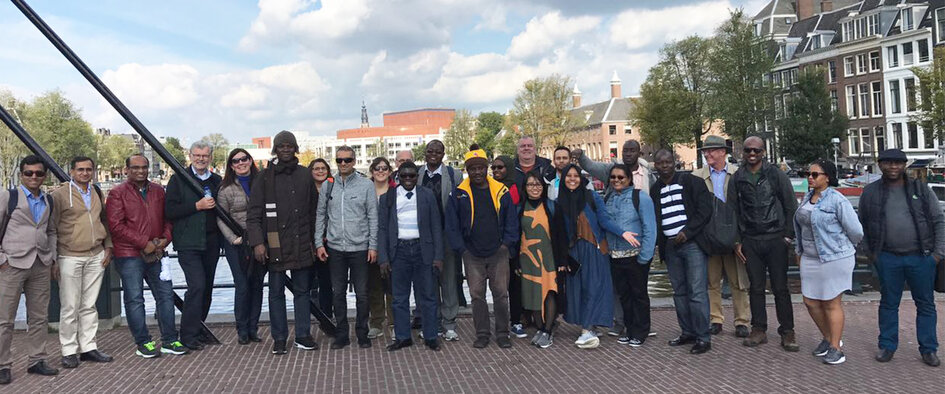
That’s right folks! With support from YOURS, FIA Foundation and Delft University, I finally graduated from the Delft Road Safety Course:-an annual Road Safety capacity building course for road safety professionals in low and middle income countries (LMICs).

I have pregnant post-course actions and like my favorite (retired) Wrestler Dwayne Johnson-The Rock would say, “If you smell what The Rock is cooking?”.

During the lifecycle of the said course that took place at Delft University in the Netherlands, there were several road safety delicacies to eat and reflect on which I managed to put in the refrigerator under this link “Midway reflections from @DelftRoadSafety Course 2017 #DRSC2017.

There’s a lot that was posted by over 25 participants under the hashtag #DRSC2017 on twitter so throw an eye over there. Perhaps, the most finger-licking experience came when we took an out of class session visiting local communities around Delft, learning about road designs and road user behavior that reminded me of how, back at home we define a good road.

You see, to a 95% confidence interval, our case definition of a good road is justified by 2 indicators, make a road with no potholes, make it wide to accommodate 2 way traffic on each side and we shall love you till River Nile dries! (it’s beginning to loose water volumes though).

Learning session at SWOV

Hold on a sec…humans and animals use roads, so shouldn’t we be defining the goodness of our roads by how safe we’re while using them? If a road could literally deliver zero crashes, zero deaths by protecting pedestrians, passengers and vehicle from skidding, turning multiple times off the road, wouldn’t this be the ideal road? The Dutch, Swedish (and most other countries) are defining their roads using these indicators.

As a result, they have consistently invested in sustainable road engineering, education and enforcement. They have strengthened preparedness and response before the crash, during the crash and post-crash so deep that if an ambulance arrives 10minutes after the crash:-someone could resign for not doing their job right.

A typical ‘Good’ road in Uganda

It’s envious to see a folk waiting for the green traffic light even when there’s no cop looking at them: people jogging on clearly marked pedestrian walkways (I did this for a fact), Cyclists doing their businesses in cyclist lanes, drivers negotiating double roundabouts and roads as old as 20 years without being re-furnished. Seeing all this is terrifying to acknowledge the fact that we’re always flirting with and cheating death (literally by the hair of our butts) while on our roads.

Is this all possible in our neighbors? Prof. Weigmann (Our course leader) would say “It requires sheer commitment from your governments and impatient generation of communities demanding for safer roads. You will have to adapt what you see here to your local contexts…and never forget the value of road safety data whatever you do”.

Stay safe!

Road Safety Annual Report 2017 focuses on serious action needed

Road Safety Annual Report 2017 focuses on serious action needed

The IRTAD Road Safety Annual Report 2017 provides an overview of road safety performance for 2015 in 40 countries, with preliminary data for 2016, and detailed reports for each country. It includes tables with cross country comparisons on key safety indicators.

The report outlines the most recent safety data in IRTAD countries, including detailed analysis by road user, age group and type of road. It describes the crash data collection process in IRTAD countries, the road safety strategies and targets in place, and information on recent trends in speeding, drink-driving and other aspects of road user behaviour. The 2017 edition of the IRTAD Road Safety Annual Report puts special emphasis on road safety for an ageing population, which represents a growing concern in many countries.

Executive Summary

Background – Road Safety Annual Report 2017

Road crashes kill about 1.3 million people worldwide every year and severely injure an estimated 50 million. Out of ten lives lost in traffic, nine are lost in low- and middle- income countries. But the number of road deaths is on the rise again even in some countries with impressive road safety improvements. The increasing share of vulnerable road users such as seniors, pedestrian, cyclists and motorcyclists that become victims of road traffic raises particular concerns.

Reliable data on traffic crashes is crucial for effective action on road safety. Without hard facts about the scale of the problem, the exposure to crash risks and the effectiveness of policies the problems cannot be addressed at the core. The International Traffic Safety Data and Analysis Group (IRTAD) of the International Transport Forum (ITF) brings together transport ministries, road safety agencies, research institutes, industry and non-governmental organisations to ensure co-operation around improving the collection and analysis of data, understanding trends and shaping better road safety policies. Common reporting standards allow benchmarking of performance across IRTAD membership. The 2017 Road Safety Annual Report provides the most recent road safety data for member countries, including provisional data for 2016 and an overview of road safety strategies in each country.

The visibility of the tragedy on the world’s roads and the sense of urgency to achieve significant reductions in the number of road deaths globally has been much strengthened by inclusion of road safety targets in the UN Sustainable Development Goals (SDGs). SDG 3.2 aspires to reduce global road traffic deaths and injuries by 50% by the year 2020, compared to their 2010 levels. SDG 11.2 calls to “provide access to safe, affordable, accessible and sustainable transport systems for all, improving road safety, notably by expanding public transport, with special attention to the needs of those in vulnerable situations, women, children, persons with disabilities and older persons” by 2030. Today, most countries have national road safety strategies in place, often with ambitious targets. Still, the aspiration set out in the SDGs requires countries to further intensify efforts, and strengthening the capacity to collect and analyse road safety data will have to be among these.

Road safety by age group

Since 1990, the reduction in fatalities has benefited all age groups, but the most impressive reduction concerns children aged 0 to 14 years (by almost 83%), as well as the groups of young people aged 15-17 and 18-20 (more than 76% and 83%, respectively). Despite substantial reductions, young people aged 18-24 are still a high-risk group, with a fatality rate nearly twice as high as that of the general population. Improvements were weaker for the senior population of those 65 years and older, with a reduction of only 45% when compared to 1990.

Since 2000, the situation has improved for all age groups, except for those 85 and over. However, since 2010 the situation has deteriorated for the over 65s (except a small decrease for the 75-84).

The analysis of developments since 2010 shows an improvement in youth mortality.


Findings

The positive trend over the last few years of reduced road fatalities did not continue in 2015 and 2016. The 31 IRTAD member countries for which data are consistently available registered a 3.3% increase in road fatalities in 2015 compared to 2014. In 2015, the number of road deaths increased in 21 countries compared to 2014. In 2016, the number of fatalities increased in 14 countries. Ten countries registered more road deaths for two consecutive years, i.e. in both 2015 and 2016.

Looking at the longer-term developments since 2010, the number of road deaths has decreased in all but three countries with validated data. Thirteen countries form a group of relatively well-performing countries with mortality rates per 100 000 inhabitants of five or less. Three of these had in 2015 mortality rate of three or less. Yet data for some IRTAD accession and observer countries suggest much higher rates, with more than 20 deaths per 100 000 inhabitants. These can be taken as an indicator for the situation in the many low and middle income countries not included in this report.

Recent statistics from the 2015 Global Status Report on Road Safety, World Health Organization

Road safety for an ageing population is a growing concern in nearly all countries. Older people are the world’s fastest-growing age group, and the share of people aged 60 or above is expected to reach 21% of the world population by 2050, up from 9% in 1994. At the same time, senior citizens have become more mobile than in the past and therefore more exposed to traffic risk.

This creates significant challenges for road safety. The share of old people killed in traffic is already larger than their share in the total population, and it is growing. Seniors have not benefited from improved road safety at the same pace as the general population in past years. While the number of road deaths declined by 6.5% overall between 2010 and 2015 across IRTAD countries, that of senior citizens killed in crashes increased by 3.4%. More than half of the road fatalities among seniors above 65 falls into the vulnerable road users category, i.e. concern older pedestrians, cyclists and motorcyclists.

READ THE REPORT HERE