Brian’s Column: Why are roads chronically being designed for vehicles?

Brian’s Column: Why are roads chronically being designed for vehicles?

Brian is back with his regular columns of road safety through the eyes of a young person in Africa. He asks the question, Why are roads designed only for vehciles? Calling out the system to take a human centered approach.

A safety risk guaranteeing future casualties in Africa.

What’s the easiest mode of transport to get to and away from most airports here? I find myself asking this rather strange question to my guide-turned-friend Hannes Kaltenecker during the International Students Week at the Technical University of Ilmenau, Germany earlier this month. Not only are we both “certified health freaks”, but we’re also owned by 2 dogs! Well, he adjusts his eyeglasses, turns and looks at me, as if he didn’t hear me at first. “Train, of course”, he responds. “What about you?”, he asks of me.

Where does one start? The start of course…

There’s a growing repute for most African countries to venture into the Airline business. A few months ago, Uganda brought in a few aircraft to rejuvenate her airline hopes, sadly not on time to fly the National Team to Egypt where the #AFCON2019 is set for kick off. Google that. Ethiopia has now, an undisputed busiest Airport able to serve 21 million people a year: -the closest rival is OR Tambo in South Africa at an estimated 17 million. Casablanca still topping the size charts as the elephant in the room. Jomo Kenyatta International Airport in Kenya could take gold if it were a marathon. We all know those Kenyans can run don’t we

However, apart from those few airports, getting to and fro airports in our continent can be quite the hell. Let’s see…

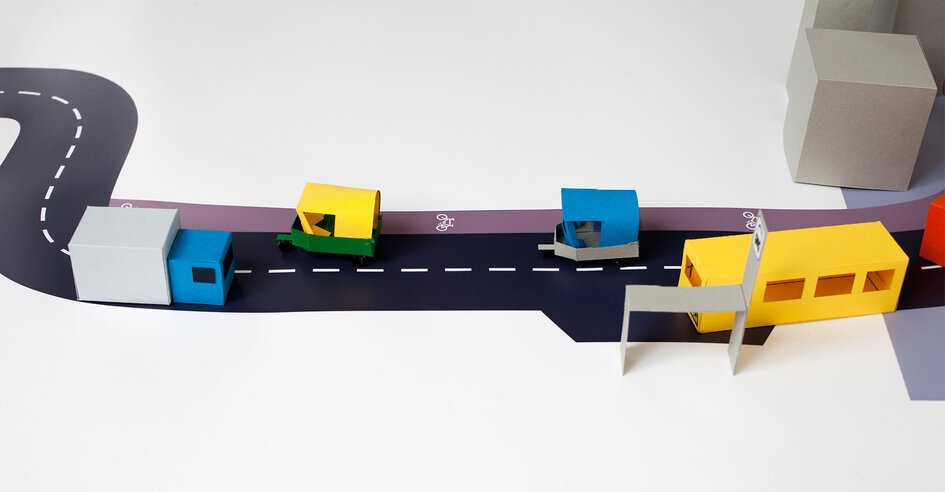
001 taxiThe commonest way is to grab an airport taxi. This is equivalent to being driven to the airport by a friend (or whatever you prefer to call him/her). We all know how this will go, as you will be chillaxing in a traffic jam for more time than you will be on that plane. It won’t be long before you begin to curse your gods.

002 busThe second best alternative, take public transport? A suicidal mission? Maybe! Many will agree for its sheer consistency in delays most often making unsolicited stopovers literally anything and everywhere: from dropping a passenger 100m from where they were picked to someone wanting to buy a fruit from the hawker et.al. Mind you, this bus or whatever it is, shall stop 5+km away from the airport. You can (almost) be guaranteed to arrive too early for your next probable flight.

003 scooterThe third option, let’s explore them, shall we? Consider Commercial Motorcycle Service. There has been growth spurts in this line of business, with innovations from Safeboda, Uber helping to connect the customer and the biker through a tap on the phone.

They will manoeuvre through the monstrous lanes of traffic, leaving jealous, stuck drivers and passengers alike cursing at the back of their teeth as you glide past them. It’s still dangerous though. There’re no clear lanes for 2 wheeled vehicles. Traffic lights don’t signal for 2 wheeled vehicles. There’re no established schools training and certifying these bikers, so you have to say a prayer (literally) on safe arrival. When it does make it though, you will hi5 the biker, become bros and sis for real until you probably need that liver transplant. God bless thee.

004 bicycleFourth option, bike your way to the airport. Possible time saving, environment, health and energy benefits. The weak clammy grip of hope doesn’t lie. Truth is, you can’t bike to most airports. Designated places for parking are inexistent in addition to the many challenges stated already for 2 wheeled vehicles.

There have been meetings on meetings,  calls on calls for African countries to halve traffic deaths including THIS that was made at this year’s UN Road Safety Week by the UN Economic Commission for Africa. In South Africa, the new Transport Minister declared 3 days ago, Road Safety as a National Crisis citing ineffective law enforcement and the need to introduce safer cars. YOURS was in Stockholm, Sweden and gave input on the importance of meaningful youth participation within the 3rd Global Ministerial Conference on Road Safety. This included some great progress preparing the 2nd World Youth Assembly for Road Safety! Keep your eyes open to this.

Without fixing our road designs to be human-focused, despite the development indicators we project to brand ourselves, we’re all future casualties. Major ambitions should focus on vision zero for road traffic deaths.

FOLLOW BRIAN ON TWITTER

We launch our new ‘Youth Stars’ programme in collaboration with iRAP and FedEx

We launch our new ‘Youth Stars’ programme in collaboration with iRAP and FedEx

YOURS has teamed up with International Road Assessment Programme (iRAP) to create our new ‘Youth Stars’ programme, sponsored by FedEx. The three year programme will see a group of 5 Master Trainers from around the world be trained on the principles of the new ‘Star Rating for Schools’ methodology pioneered by iRAP. Youth Stars will is a programme expanding across the world with the potential to save young lives around universities and schools.

The Youth Stars programme is an opportunity for our Master Trainers to be trained on a powerful road safety approach; Star Rating for Schools.

Too many young people are dying on the way to get an education because of poor infrastructure and a lack of protection around school/university zones.

This Youth Stars programme will equip our 5 Master Trainers with the skills to rate school zones. We want to take school zones to a minimum 3* rating which can significantly improve road safety around schools and for all society. The star rating approach is evidence based and lifesaving and our Master Trainers will be to equipped the skills and knowledge to undertake star assessments in their local area, and support our group of Coalition Partners in the coming year.

002 starOverview of the programme
The project focuses on attracting youth organizations that work with or represent youth and students of university/college age (16-25) around the globe to actively assess and rate zones (roads) around university/educational institutions. This includes the route to and from places of education.

Objectives: Over the three years the programme will:

  1. train a CORE Group of Master Trainers in using and explaining the SR4S app;
  2. recruit a coalition of partners who will be trained on using the app by Master Trainers;
  3. see partners conduct assessments around  schools/colleges/universities in their country/area;
  4. empower partners to run advocacy activities to call for   infrastructure changes;
  5. enable partners to roll out the programme further in the   country by training others to use the app.
  6. enhance the app to provide functionality in line with other   objective


In year one Master Trainers will be trained on all elements of undertaking Star Rating Assessments by iRAP and YOURS as well as understanding the advocacy activities that stimulate infrastructure changes.

In year two, Master Trainers will work with a Coalition of Partners to support them to undertake Star Ratings around schools/educational institutions and the advocacy activities needed to improve school zones.

In year three, Coalition Partners will reach out to other organizations in their network to support them in undertaking more assessments.

After assessing and rating the zones, organizations will follow up by advocating recommendations for improvement to take roads to a minimum 3* around their educational institutions.

Meet our Master Trainers
Master Trainers (MTs) have been recruited by YOURS to be trained on conducting Star Ratings for Schools/Universities and be able to train Coalition Partners in the coming year.

alex ayubAlex Ayub
Alex is from Kenya and is a passionate young leader who has been working road safety for some years. He was trained by YOURS as a Road Safety Youth Facilitator and currently works for the Kenya Red Cross managing youth programmes.

daniel canoDaniel Cano
Daniel is from Colombia and is a strong advocate for road safey in South American Region. He works with YOURS as a Regional Champion for Road Safety in the region and currently works for the World Resources Institute in Mexico

jacob smithJacob Smith
Jacob is from the United States of America and is a survivor of a horrific road crash. Since then, he has been a vocal global advocate for road safety and young people. He is highly experienced in road safety and woks with YOURS as a Regional Champion for North America. He currently works for the National Safety Council.

shantel jacobsShantel Jacobs
Shantel is from Belize and was trained by YOURS as a peer-educator and youth facilitator. She was the engine behind setting up the Belizean Youth for Road Safety NGO and is currently its head. She is an active and passionate voice for road safety in the country. She currently works for the Belizean Government.

minh voMinh Vo
Minh is from Vietnam and is a graduate in urban planning. She has lots of experience of using the Star Rating for School app in Ho Chi Minh City in Vietnam and is passionate about road safety and its impact on communities. She currently works for the Asian Injury Prevention Foundation (AIP Foundation).

Project Coordinator, Manpreet Darroch said, ‘This is a great opportunity for our young people to have another powerful tool in their campaigner toolkit to work on infrastructure changes around schools. This simple Star Rating for School Methodology gives young poeple a strong case for advocacy when looking at evidence based improvedments around schools that can save lives.

Thank you to our sponsor FedEx for bringing this programme to fruition and our collaborating partner iRAP, with whom we will be working closely with over the course of the programme.”

irap squareRafaela MachadoStar Rating for Schools Global Coordinator said, “As SR4S Lead Partner, YOURS has been playing a valuable role in the development of Star Rating for Schools Programme, helping to shape the programme to the needs of partners and users around the world. We are very excited with the launch of the Youth Stars programme and its potential to help communities all over the world to create safer school environments. The Master Trainers are enthusiastic road safety champions that will certainly achieve great results empowering communities in demanding safer roads through evidence-based approaches, at the same time that will contribute to the continuous enhancement of the SR4S system”.

More details about the programme will be updated online.

MORE ABOUT GLOBAL ADVOCACY

70% of road deaths in European cities are pedestrians, cyclists and motorcyclists

70% of road deaths in European cities are pedestrians, cyclists and motorcyclists

Tackling urban road safety must be a key priority for the European Union and European countries over the next decade, according to the European Transport Safety Council, authors of a new report. According to the data revealed today, road deaths on urban roads decreased at around half the rate of those on rural roads over the period 2010-2017.

Pedestrians, cyclists and motorcyclists – the three most vulnerable road user groups – represent 70% of those killed and seriously injured on urban roads.

Dovilė Adminaitė-Fodor, lead author of the report, commented:

dovile e1421322252598 720x479“As long as people don’t feel safe walking and cycling in our towns and cities, many will be discouraged from using the most sustainable modes of transport.  This can create a vicious circle because people who take the car instead put all the vulnerable road users around them at greater risk.

“Over the next ten years, we want to see the EU and all European countries investing in urban transport in a way that prioritises the most vulnerable road users.  This is not just about safer infrastructure and setting safe speed limits but also better enforcement of speed limits as well as reducing drink driving and distraction.

“Many cities and towns are rightly focussing on improving air quality and sustainability in cities, and discouraging private car use.  But safety concerns must go hand-in-hand to ensure that more people cycling and walking are able to do so in a safe environment.”

pin report juneOne of the key challenges for cities is enforcing safe speed limits.  Among the countries that monitor levels of speed compliance on urban roads countrywide, between 35% and 75% of observed vehicle speeds in free-flowing urban traffic are higher than the 50 km/h limit.

The report also found vast differences in the level of safety across the European Union.  Mortality on urban roads is highest in Romania with 105 road users killed annually per million urban inhabitants – four times the EU average.  But there are also several countries leading the way.  Around nine people per million urban inhabitants are killed on urban roads in Sweden, 11 in the UK, 13 in the Netherlands and 14 in Ireland and Spain.

In terms of recent progress, Latvia, Greece, Portugal and Poland are the EU countries that made the most progress in reducing urban road deaths between 2010 and 2017.

The authors of the report also say that changes in mobility patterns might have a profound effect on urban mobility and urban road safety in the future. The restricted space in urban areas must be used intelligently and effectively to enable increased mobility without putting road users in danger.

The uptake of e-scooters and other new forms of mobility might also require new national legislation or city-level regulations, infrastructure adjustments and educational activities, similar to the road safety adaptations required for more cycling. A lack of data and regulation is hindering progress in this area at the present time, according to the report.

The report contains more than twenty main recommendations for action at EU, country and city authority level and can be downloaded from the ETSC website at: www.etsc.eu/pinflash37.

Summary of the Report infographic:

World Bicyle Day has so many benefits – celebrate it this week!

World Bicyle Day has so many benefits – celebrate it this week!

The mobility needs of people who walk and cycle – often the majority of citizens in a city – continue to be overlooked, states Share the Road Programme Annual Report 2018. Even though the benefits of investing in pedestrians and cyclists can save lives, help protect the environment and support poverty reduction. Meeting the needs of people who walk and cycle continues to be a critical part of the mobility solution for helping cities de-couple population growth from increased emissions, and to improve air quality and road safety.


According to the World Health Organization
 (WHO), safe infrastructure for walking and cycling is also a pathway for achieving greater health equity. For the poorest urban sector who often cannot afford private vehicles, walking and cycling can provide a form of transport while reducing the risk of heart disease, stroke, certain cancers, diabetes, and even death. Accordingly, improved active transport is not only healthy; it is also equitable and cost-effective.

Why celebrate the bicycle?

  • The bicycle is a simple, affordable, reliable, clean and environmentally fit sustainable means of transportation;

  • The bicycle can serve as a tool for development and as a means not just of transportation but also of access to education, health care and sport;
  • The synergy between the bicycle and the user fosters creativity and social engagement and gives the user an immediate awareness of the local environment;
  • The bicycle is a symbol of sustainable transportation and conveys a positive message to foster sustainable consumption and production, and has a positive impact on climate

World Bicycle Day

  • Encourages Member States to devote particular attention to the bicycle in cross-cutting development strategies and to include the bicycle in international, regional, national and subnational development policies and programmes;

  • Encourages Member States to improve road safety and integrate it into sustainable mobility and transport infrastructure planning and design, in particular through policies and measures to actively protect and promote pedestrian safety and cycling mobility, with a view to broader health outcomes, particularly the prevention of injuries and non-communicable diseases;
  • Encourages stakeholders to emphasize and advance the use of the bicycle as a means of fostering sustainable development, strengthening education, including physical education, for children and young people, promoting health, preventing disease, promoting tolerance, mutual understanding and respect and facilitating social inclusion and a culture of peace;
  • Encourages Member States to adopt best practices and means to promote the bicycle among all members of society, and in this regard welcomes initiatives to organize bicycle rides at the national and local levels as a means of strengthening physical and mental health and well-being and developing a culture of cycling in society.


DOWNLOAD SOCIAL MEDIA IMAGES

South African Youth Ambassadors project officially handed over to the province

South African Youth Ambassadors project officially handed over to the province

After a long and exciting journey with the Limpopo road safety ambassadors, GRSP South Africa and Michelin officially handed over the project to the Limpopo Department of Transport (DoT).

South Africans pay a high toll for road traffic crashes, especially amongst young males aged 14-35. In July 2017, we partnered with the Global Road Safety Partnership South Africa (GRSP ZA), the Government of South Africa (Ministry of Health and Transport) and the Michelin Corporate Foundation to deliver the first Youth Ambassadors for Road Safety Training in the country. 20 young leaders, selected for their activism and standing in their communities joined YOURS in Limpopo Province to be trained on road safety knowledge and peer education methods.

Michelin, in their ground breaking approach to global road safety, and whom are long standing founding member of YOURS funded the programme (through the Michelin Corporate Foundation) to equip these young people with the skills they needed to reach out to their communities and raise road safety consciousness across society. The project was organized by GRSP ZA in collaboration with the Provincial Government of Limpopo and the Department for Transport.

Ambassadors follow meeting up in July 2018

Youth Ambassadors: 
‘Empowered young people change the world’. Over five days in 2017, we trained 20 young people in road safety theory. From understanding why young people are at particular risk on the road to understanding the situation facing South African youth in terms of road crashes. Focusing on a number of key engagement methods in peer education, facilitation and campaigning, the youth Ambassadors also grasped the key risk factors facing youth in their communities; speeding, drink and drug driving, non-use of seatbelts and distracted driving.

Taking the Ambassador approach, these 20 young people have set about filtering road safety messaging back in their individual communities through workshops, media outreach, word-of-mouth and active campaigning. This programme acts as a pilot for the country, where stakeholders will observe the power of activated youth in road safety with the potential to scaling the project to other regions. In 2018, we revisted South Africa to follow up with the Ambassadors.

The project was officialy handed over to the Provincial Government of Limpopo. The invitees included representatives from Michelin SA, GRSP ZA, national DoT, provincial DoT, provincial Department of Education, the Youth Ambassadors, Michelin Foundation, GRSP Geneva and the media.

The official handover event included:

  • School visit to a school near Polokwane where a demonstration of what has been achieved was done by the scholars and the relevant Youth Ambassador.
  • A presentation giving an overview of the implementation of the project focusing on the highlights and successes.
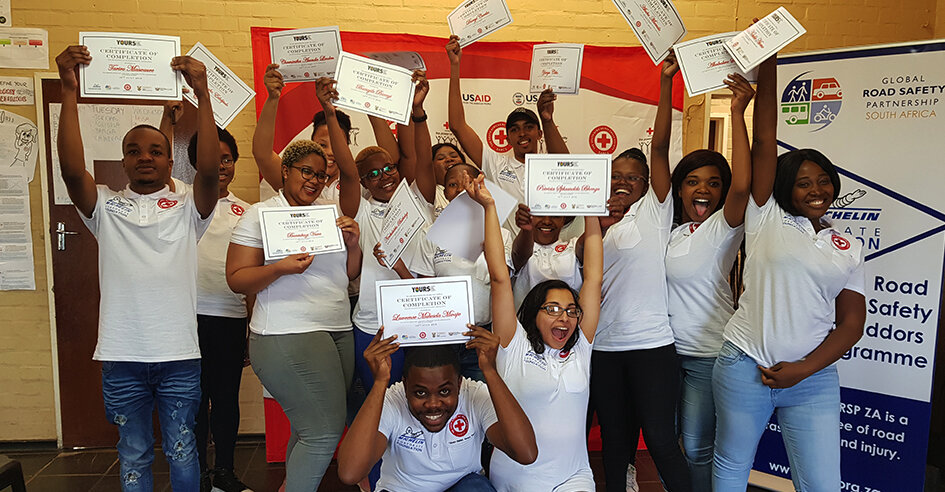
  • The ambassadors and other stakeholders receiving certificates of participation.

GRSP South Africa hope that with the two extensive road safety and capacity building training they have received from YOURS, the ambassadors will continue to apply their road safety skills and knowledge to the communities in the province. 

WORKSHOPS AT YOURS

Commonwealth Road Safety Initiative officially launches in London

Commonwealth Road Safety Initiative officially launches in London

Every year over 210,000 people are killed in road crashes and millions more are seriously injured in Commonwealth countries. Today road traffic injuries are the leading cause of death for children and young people aged 5-29 years. This is a major challenge for Commonwealth countries as over 60% of their populations are under 30. Improved road safety must become a major priority for Commonwealth countries concerned to protect the wellbeing and health of their children and young people.

Commonwealth Road Safety Initiative launched by the Towards Zero Foundation: setting an agenda to halve road fatalities and serious injuries by 2030

Road safety in the 53 countries of the Commonwealth is very diverse. Fatality rates in road crashes range from 3 to 35 per 100,000 population. However, in nearly all Commonwealth countries fatality and injury rates are rising rather than falling. In 2015 Commonwealth countries strongly supported the United Nations Sustainable Development Goals (SDGs) which include commitments to road safety. Urgent action is now required to ensure that road deaths and serious injuries across the Commonwealth are halved by 2030.

Hosted by the Towards Zero Foundation, under the patronage of His Royal Highness, Prince Michael of Kent, the new Commonwealth Road Safety Initiative (CRSI) addressed the action needed to prevent a decade of predictable and preventable death and serious injury on the roads of Commonwealth countries.

Statement by HRH Prince Michael of Kent

“I am proud to serve as the Patron of the Commonwealth Road Safety Initiative (CRSI). The purpose of the CRSI is to raise the profile of road safety on the agenda of the Commonwealth and encourage stronger action by its 53 members countries to reduce traffic deaths and serious injuries. Every year over 210,000 people are killed in road crashes in Commonwealth countries and many more experience life changing injuries. Children and young people, accounting for over 60% of the population of the Commonwealth, are especially at risk.

Based on the Commonwealth’s current priorities for youth, health, and sustainable development, the CRSI aims to halve the number of people killed or seriously injured in a new decade of action for road safety to 2030. Bringing together experts and practitioners from across the Commonwealth, the Initiative will encourage implementation of effective, evidence based, policies that can save lives.

Even though the road safety performance of many Commonwealth country differs widely, they all face a common challenge to prevent a rising tide of road crash injury. Asdemand for road transport increases the task of improving road safety becomes ever more urgent. We need a combination of safer roads, safer road users, and safer vehicles, all managed together in a road transport system that is safer and sustainable by design. And with road traffic injuries now the leading cause of death for children and young adults aged 5-29 years, I strongly believe that road safety mustbe also become a major priority in child and adolescent health. We know that most traffic deaths and serious injuries are predictable and preventable. The Commonwealth is a unique forum that is well placed to share expertise and to foster partnerships for road injury prevention. That is why I believe the Commonwealth in the decade ahead can and should become a world leader in road safety”.

The CRSI has brought together a distinguished panel of road safety experts to prepare a report of recommendations for Commonwealth countries. Building on established Commonwealth commitments to youth, health, and the SDGs, the CRSI will highlight the importance of:

  • setting a Commonwealth target to halve road deaths and serious injuries by 2030
  • prioritising road safety as a key focus issue for child, youth and adolescent health;
  • adopting the Safe System Approach to road injury prevention in high, middle, & low-income Commonwealth countries;
  • action to promote safer roads, safer vehicles, and safer road users;
  • promoting good governance and road safety;
  • promoting workplace road safety;
  • building multi-sector Commonwealth partnerships for road safety;
  • integrating road safety within the Sustainable Development Goals.

Members of the Commonwealth Road Safety Initiative Expert Panel includes our staff Manpreet Darroch

For more information visit www.commonwealthrsi.org