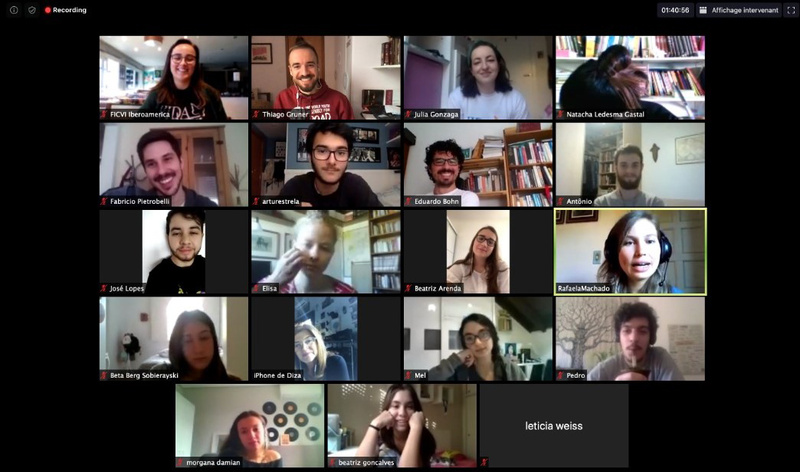
What does COVID-19 mean for road safety? A Global Alliance perspective

What does COVID-19 mean for road safety? A Global Alliance perspective

With nearly every country around the world either battling to cope with outbreaks of the COVID-19 virus or preparing and monitoring in anticipation, people’s lives have changed dramatically in the last month. It has implications for nearly every area of our lives and our work. Road safety is no exception. We unpack several areas below with inputs from our members and other sources.


What impact will COVID-19 have on mobility and safety?

Less people are travelling

Work and travel restrictions in many countries mean that overall, it is likely that less journeys are being made. For road safety, this may be an upside: less journeys should theoretically mean less crashes. Viviam Perrone, Asociación Civil Madres del Dolor, Argentina, points out that “Some radio programs and news reels are showing empty streets and realizing that it’s true that there are no road crashes because of this, but what will happen when we all go out again? … we should learn to life with our foot off the accelerator when we return to the streets.”

The reduction in travel has also been connected to reduced pollution levels in China where the pandemic was first identified and containment measures applied.  Experts estimate that between 50,000 – 75,000 premature deaths related to air pollution may have been saved over two months due to the lockdown.

Less people are taking public transport

Less people are taking public transport, either because transit services have been cancelled partially or completely, or because people are avoiding it because they fear infection. Mass transit usually safer than other methods of transport, better for the environment, and reduces congestion. However, it means that people are in close contact with one another for extended periods of time making it easy for the virus to spread.

If people choose to use their private cars instead of taking public transport, pollution and crash rates could increase. Instead, however, this is an opportunity for governments and activists to promote cycling and walking, increasing the sustainability of their cities.

Availability of safe public transport also raised equality issues. Many low-paid workers may be forced to continue using public transport, because they are unable to work from home, cannot afford to stay home, and may not have access to a private car or motorcycle. This is also true of key workers, such as medical staff, whose health and safety we will all rely on during the pandemic. How authorities are keeping these vulnerable and essential groups safe is a key mobility concern. See resources from the Transformation Urban Mobility Initiative (TUMI) below.

Road safety implementation, policy, and enforcement may stall for now

As governments focus their attention on addressing the pandemic in their countries, other priorities are scaled back. This is likely to mean delays and cancellation of planned legislation and infrastructure implementations in the short-term. Several countries including the U.S. and various countries in Europe have temporarily relaxed regulation on driver hours for truck drivers transporting medical supplies and consumer goods. The pandemic may also mean less police capacity for enforcement. In New South Wales, Australia, Julie Power and Lucy Cormack, reporting for the New Sydney Herald, write that random breath testing of drivers will be reduced, partly to save resources and partly because of the risk of transmitting COVID-19. 

For safety activists, this also means less attention for behavior change campaigns and advocacy. Charlie Mock, Professor of Global Health, University of Washington, notes that “In general, it would seem that most of the public will be distracted, from road safety messages and that perhaps some of what we road safety advocates might usually be doing might need to wait until COVID comes under control.” 

Emergency services are stretched: this will impact road victims

Both Valentina Pomatto, Advocacy Officer, Humanity and Inclusion, and Charlie note the increased risk for road crash victims during the Coronavirus pandemic. Says Valentina, “Hospitals are going to be (if they are not yet) overwhelmed to respond to the COVID-19 emergency. This means fewer beds in ‘intensive care’ units available, a slower response by ambulances.” Charlie adds that “There is even more reason than usual to drive safely (including obeying speed limits), to avoid alcohol-impaired driving, and to use proper restraints. There is also good reason to avoid driving unless you really need to.”  

What does this mean for road safety NGOs?

As a community, we find ourselves in challenging times. Now is not the time for us to push new legislation or initiatives with our governments unless they are connected to the pandemic; events such as school workshops, training, street events and campaigns, and meetings are cancelled; media is focused on COVID so safety messages struggle to be heard, and funding is being channelled toward the pandemic effort.

NGOs are adapting their messaging to incorporate the COVID message within their messaging, such as Fundação Thiago de Moraes Gonzaga, which has been using social media cards and Instagram stories to push the message to stay home, but if you must travel, how to stay safe. Others, such as the Association for Safe International Travel, are reconnecting with their network and viewing it, in the short-term, as a useful planning period. Many are thinking about the long-term impact and how to adapt. The Alliance will be holding a series of calls for NGOs to discuss what the pandemic means for road safety, how we respond now, and how we equip ourselves for new challenges and ways of working. Sign up HERE

The Coronavirus pandemic shows us what can be achieved through government action and community mobilization. As Valentina says, “People will mobilize if they perceive that it is an urgent emergency.”

Ema Cibotti, ACTIVVAS, Argentina, draws the parallel between the public health crisis we are seeing now and the result of inaction that has lead to the level of road deaths on our streets: “It will be the same as what inaction in road safety means. Because COVID-19 is also avoidable in its deadly consequences if countries had robust public health systems.” Through it, however, she raises the hope that the systemic changes needed to fix the public health system will also enable road safety activists to be better understood, “Our NGO has a #hashtag that we use a lot which is #RoadHealth. We created it working together with the Trauma Foundation in Argentina and I am sure that [in future, when the pandemic has passed] more and more there will be a better understanding of what we are saying.”

Activists should watch the progress of these measures and what motivates people to act. The scale of what we are seeing is unprecedented, but there are elements that we can learn from for our own advocacy when life returns to normal.

Useful links from around the sector

A selection of interesting articles referenced in this article


Adapted from the original article by the Global Alliance of NGOs for Road Safety.

In a Global Health Emergency, the Bicycle Shines – Citylabs perspective

In a Global Health Emergency, the Bicycle Shines – Citylabs perspective

A group of Serbian students recently shared their campaign video with us on the trend of young using social media behind the wheel. In their efforts to raise awareness, the girls have created a campaign video focusing on “selfies” behind the wheel. Check it out here.

Students studying Traffic Engineering with a focus on road traffic safety, in their pre-exam period worked on a special road safety campaign project; shooting video and creating the preliminary design of posters.

The aim of the campaign is to point out how dangerous it is to use a mobile phone while driving, whether for communication and especially when taking photos a.k.a #selfies. Although the Law on Road Traffic Safety allowed the use of hands-free devices, it is not considered completely safe and recommended that the mobile phone is not used while driving.

Cycling can help communities in “food deserts” access shops that are farther than a walk away. It speeds the delivery of food and medicine for households without a car, or those who are quarantined at home. And it helps people avoid car trips, cutting air pollution and freeing up public transit for those who absolutely need it.

To protect people doing essential trips — including medical staff, who need to get to work — networks of emergency cycleways could be built quickly and cheaply, using easy-to-install temporary bollards and wands, as the city of Seville once did. Low-traffic neighborhoods can connect those routes, stopping shortcutting drivers using residential streets with low-tech planters and bollards, while allowing residents in and out by bike. During the crisis, and as society recovers, this network could keep residents active and healthy, where local restrictions permit. It would also be free to use — more valuable than ever amid a global economic disruption. Once we reach the other side, communities could decide whether to keep the new infrastructure or not.

This is hardly the first time that cities have used cycling as an emergency transportation solution. The usefulness of bicycles in disaster recovery was demonstrated anew after severe earthquakes in Mexico City in 2017 and Tokyo in 2011. A broader global crisis — the 1973 OPEC oil embargo — offered another opportunity for bicycles to step up. That shock to the gasoline supply dealt a severe blow to daily life in the U.S. and many car-dependent Western European nations. But in the Netherlands, where the country’s own mid-century car boom had driven up road fatalities and stoked widespread public protests, it helped trigger a transport revolution. The Dutch government enacted a mass program of cycle track construction that continues to this day. Now, nearly 30% of all trips nationwide happen on a bike, and cities are even connected by bicycle “superhighways.”

“Even if they are not building new infrastructure, other places are protecting the right to cycle during the pandemic crisis”.

As with the oil crisis, city leaders around the world have responded in different ways to keep people moving during the coronavirus emergency. It is heartening to see many governments recognizing and uplifting the value of the bike: Bogotá, Colombia, is installing tens of kilometers of emergency cycleways to keep people moving while enhancing social distancing. The mayor, Claudia López, described cycling as “one of the most hygienic alternatives for the prevention of the virus.” Mexico City is now considering a similar plan. In the U.S., New York City leaders are looking at ways to accommodate new riders, and say they will build two emergency bicycle lanes to plug gaps in the network.

And even if they are not building new infrastructure, other places are protecting the right to cycle. Last week, Germany’s Federal Minister of Health, Jens Spahn, recommended that people walk or cycle to work rather than use public transport as states around the country impose lockdowns. Amsterdam residents, already avid cyclists, are being encouraged to ride to stay healthy while public gatherings are banned and social distancing orders are in place. In London, the city’s bikeshare system is now free for health workers to use. And in New YorkSan FranciscoBerlin, and across the U.K., bike shops have been allowed to stay open as essential services — but not so everywhere.

Alas, not all nations are in the same lane. France and Spain, two European nations worst hit by coronavirus, are in the latter camp, having banned recreational cycling in attempts to contain the virus’s spread. In France, people are restricted to within two kilometers of home for exercise, and it is not clear whether cycling for essential trips is permitted. In Italy, only cycling for essential trips is permitted, and for physical activity, so long as people stay one meter apart. In Spain, riders flouting leisure cycling bans have been fined.

That is why, prior to the U.K.’s lockdown, more than 80 experts in transportation and public health signed a letter asking the U.K. government to allow safe walking and cycling to continue during the pandemic. “Confinement, sometimes in overcrowded accommodation with little or no private green space, and particularly during times of anxiety has health risks,” their letter states, adding that green spaces should be kept open for walking and cycling, to allow for exercise and the psychological benefits that accompany it. For trips such as shopping, and for those critical workers who still need to commute, walking and cycling should be supported. “We call on decision-makers to protect the right to walk and cycle safely (from risk of infection and traffic injury) for those who are not symptomatic.”

Adapted from the original article here.

Brian’s Column: Comparing the fatalities of Coronavirus & Road Crashes is wrong

Brian’s Column: Comparing the fatalities of Coronavirus & Road Crashes is wrong

In uncertain times, where the world is seeing unprecedented changes, our regular columnist reflects on the COVID19 pandemic and the way it is being discussed in development circles. Remember, stay safe and #StayHome.

These are strange times indeed that remind all of us that we’re humans after all. In the world of football (which has been suspended indefinitely), we would call Corona Virus an *Equalizer*. A few years back, Africa became a butt of sick jokes related to Ebola, SARS, West Nile Virus and to a certain extent, HIV/AIDS. It looked like Africa was like that boy next door your mother warned you about. But well, how times have changed.


It’s not news anymore, but truly, the COVID19 decided to come out in China, spreading to almost all countries on earth. The CDC has set up a global map showing the distribution of cases. Reports from astronauts shall be coming to my table in the next few hours to ascertain the existence of Coronavirus in the mesosphere and other planets. Until then…the disease has hit the transport sector quite hard, of course with the general WHO recommendation asking humans to #StayAtHome. While this has adverse effects on the economy, education and security, it is, directly a cheaper way of fighting any pandemic. The science is quite simple, to stop the multiplier effect of the virus making it easier to track and manage at a specific place, at a specific time with a specific person while monitoring the agent, host and the environment: that’s what epidemiologists shall tell you in their scary gigantic words *Epidemiological Triad*.

In most countries, there have been calls to suspend public transport. Only cargo planes, cargo vehicles are allowed in and out with very minimal operational personnel. Borders have been closed for all humans. This is not a good time for a sick person to seek treatment outside their country, probably a note to a number of countries who suffer from this undiagnosed social disease. Transport and fuel costs are competing with each other in an unhealthy, unpredictable hell of a marathon. Schools, churches and other public gatherings exceeding 10 humans have been banned. It’s a trend that we can only forecast how long it will go.

Now, as this happens, self-styled Public Health Analysts and Advocates are throwing stones at their own houses by comparing the deaths rates (mortality rates) arising from Corona Virus and those from Road Traffic Crashes. And oh my word, it’s probably the most inhumane comparison I have seen for the 2 times I have been on earth. I have heard some young people claim medical trances of how the virus only kills the elderly! It’s a total blatant all day long naked lie and completely insensitive.  Save the drama, but you see you can’t measure the severity of any disease by the number of people it kills, that’s kindergarten level statistical analysis and neither me nor certified Public Health Specialists have the time right now to take y’all into University level statistical analyses. At the time when we’re supposed to be supporting each other’s spine, throwing lines about how Corona Virus is getting more attention than road safety is a direct own goal. This is not the time, certainly not the period to remind your neighbour how they have to pay back the offspring of the cow you gifted them last year! (It’s a common cultural practice that if I give you a cow or any animal today when it calves down, you ought to give me back the calf.)

Let’s be human and stick to the recommendations from the Ministries of Health and WHO. For those who pray, do so even more, scream, that the political leaders make better choices to direct traffic to control this global pandemic. After this strange illness, I hope we shall have a mutually respective conversation without pointing fingers, setting unrealistic expectations and conditions based on your geographical coordinates. Stay Safe Humanity.

Watch the speeches, performances and discussions from the WYA in video!

Watch the speeches, performances and discussions from the WYA in video!

Its been just over a month since we celebrated the 2nd World Youth Assembly for Road Safety. Of course, the world has changed dramatically in the face of a global pandemic meaning, if the Assembly was scheduled just a month later, it would not have happened!

So, we are truly grateful and thankful that our injection of energy into the global youth movement for road safety was able to take place while many crucial events for road safety are being postponed. With that in mind, we look back at a super successful event through videos from the event that cover speeches, performances and discussions.

Showcasing some of the leading thinkers, practitioners and change-agents in road safety, we are delighted to share some videos from the event covering all the keynote speeches in the opening ceremony, panel discussions and performances. You can now check out what happened at the Assembly through our selection of videos.

Opening Ceremony Speeches

Check out the pictures from the 2nd World Youth Assembly for Road Safety!

Check out the pictures from the 2nd World Youth Assembly for Road Safety!

February was an epic month for road safety action. We celebrate the 2nd World Youth Assembly for Road Safety with more than 160 youth leaders from 75 countries. A culmination of lots of hard work from the Global Youth Taskforce for Road Safety and key partners, the Assembly was a big success, bringing together a new wave of youth to take action in road safety and beyond. A major step forward in youth and road safety advocacy was the adoption of the Global Youth Statement for Road Safety.

On the 18th February 2020 more than 160 young leaders from 75 countries adopted the Global Youth Statement for Road Safety. The statement was based on the voices of 1500+ young people from around the world that took part in the Youth Consultations.

The statement was delivered during the World Youth Assembly by Global Youth Taskforce Member Allex Ayub from Africa and again during the World Ministerial Conference by World Youth Assembly (WYA) Co-Chairperson Omnia el Omrani from Egypt.

The youth statement resonates with the youth’s cry, exclaiming “enough is enough”. The statement highlights the reality of today’s generation being born in a global road safety crisis with the added challenge of global decision-makers facing the issue with silence, inaction, and exclusion of the youth.

We are calling on decision-makers to start listening to the millions of voices calling for safer roads and safer mobility. The statement presents the glaring threats young road users face from different regions. The youth calls decision-makers to make proactive policies on; badly designed road infrastructure, lack of education and awareness, poor regulation and enforcement, and poor public transportation systems among others. Crucially, it illustrates the power of young people to act as change agents for road safety, through meaningful participation in decision-making and committing to take action. Look out for our videos coming soon!


Download the Global Youth Statement for Road Safety

Young leaders from 75 countries to say “enough is enough” to road crashes at WYA

Young leaders from 75 countries to say “enough is enough” to road crashes at WYA

What is the price young people have to pay for mobility? Over one thousand youth are killed every day globally because of road crashes – the most affected are aged 15-29 years old. The 2nd World Youth Assembly (WYA) will engage and involve young leaders from across the world. At the Assembly, they will be inspired and empowered with the skills and knowledge needed for them to act on issues anchored in road safety and safe mobility.

But this is not just any event. The Assembly is entirely youth-driven and organized by a Global Youth Taskforce of young leaders convened by global NGO YOURS – Youth for Road Safety.

Up to 200 young leaders from more than 75 countries will descend upon Stockholm, all selected for their exemplary leadership activities in the communities. They will engage in a full day of programming including high profile speakers, intergenerational talks, interactive workshops, arts and culture, live performances and action planning. There is also an opportunity to pitch for seed funding for road safety projects.

Through the WYA, youth leaders will adopt a Global Youth Statement on Road Safety that states “enough is enough”. It demands immediate action in protecting young people from this global scourge and expresses their commitment to achieving the goals established in the global agenda.

Young people began engaging their communities through youth consultations in September 2019 and more than 1500 young people in 55 countries spoke up and had their voices heard on safe mobility issues. The youth are calling out to decision-makers to involve them in road safety decision making through meaningful youth participation and stop the ‘business as usual’ approach that is seeing so many youths die every day on the world’s roads.

Young people are not alone in their mission for safe mobility and being supported by major partners including the World Health Organization who is co-sponsor of the event. Main partners include the Michelin Corporate Foundation and the Total Foundation and partners include Fundación MAPFRE and the Volvo Group.

Etienne Krug, Director of the Department of Social Determinants of Health under the World Health Organization says that “Road traffic crashes have become the leading killer of our youth. Young people should therefore be part of addressing this scourge. Inaction and even “business as usual” are not acceptable. We know the solutions and they should be implemented now.  The 2nd World Youth Assembly will catalyse the youth movement for road safety, demanding and generating the action needed.”

Philip Legrez, Executive Director of Foundation Michelin, says that “we have always believed in promoting and supporting safe mobility to help people move forwards. It’s at the core of our values and remains deeply engrained in our DNA.”

Maolin Macatangay, a Global Youth Taskforce Member from the Philippines said, “We do not accept that thousands of our peers die on the roads around us every day and we are #ClaimingOurSpace for safe mobility and at the decision-making table to take action and prevent these daily tragedies”.

Manoelle Lepoutre, Managing Director of Foundation Total, says that “Total Foundation is stepping up alongside young people to support them in helping make real change in society. By including them in discussions and decisions, we will be able to find innovative solutions to make mobility safer.

Jesús Monclús, Road Safety and Preventive Area Director of the Fundación MAPFRE, adds that “We need the passion, creativeness and complicity of every single young girl and boy, woman and man, around the world, and in particular that of the young leaders meeting in Sweden with the goal of changing the world.”

President and CEO of the Volvo Group, Martin Lundstedt explains that the “Volvo Group has a vision of zero accidents with Volvo Group products and our commitment for road safety goes beyond just the products. We believe in unleashing the energy, passion and bright ideas of young people to create innovative solutions towards a safer world”.

The Assembly is a mechanism for youth to come together and bring road safety issues from their communities into the spotlight. Now, more than ever, people need to join the conversation on road safety in order to work toward a solution to curb and eliminate the preventable carnage and trauma on our roads.

Let’s start Claiming Our Space for road safety!


VISIT THE WORLD YOUTH ASSEMBLY WEBSITE