The new Decade of Action for Road Safety: How young people are affected

The new Decade of Action for Road Safety: How young people are affected

The United Nations has prioritized road safety since the first decade of action launched in 2011. The first Decade titled Saving Millions of Lives lays down global road safety data. The document shows that road traffic crashes claim the lives of over a million people annually and leaves another 20-50 million injured. The New Decade of Action recalls and reaffirms earlier resolutions and the United Nations’ commitment to work tirelessly for the full implementation of the agenda by 2030 ensuring no one is left behind.

The First Decade of Action
The First Decade of Action lists a global plan guided by the five pillars of road safety; road safety management, safer roads and mobility, safer vehicles, safer road users, and post-crash response. It calls on member states to implement the global plan, referencing other countries that have had a successful experience with projects that have reduced traffic deaths and injuries.

The document lists youth as supporters in the move to achieve SDG Target 3.6, halving the number of road-related deaths and injuries by the year 2020. It challenges youth to become road safety ambassadors, promoting the importance of safe roads and sustainable mobility. It also invites them to join youth assemblies and help ensure road safety around schools.

Included in the list of supporters are policy-makers, nongovernment organizations, private companies, victims and survivors, and the media to commit to promoting and prioritizing road safety in their respective capacities.

The New Decade of Action
The New Decade of Action for Road Safety, launched last 18 August 2020, sets the new deadline for SDG Target 3.6. The document proclaimed that the New Decade of Action happens during 2021-2030.

The resolution expresses concern about the growing number of road-related deaths and injuries that happen all over the world. It calls on member states who have made successful road safety efforts to continue and invites other countries that have not joined the movement to get involved.

The UN Resolution mentions youth twice. The first as a call to member states to promote road safety knowledge and awareness among the population – especially among youth – through education, training, and publicity campaigns so that they can “propagate good road safety practices in the community. The second mention recognizes youth among the most vulnerable, urging member states to implement road safety policies to protect young people and other vulnerable road users.

Youth and the Road Safety Movement
It is a known fact that youth are the most affected when it comes to road crashes with the majority of the victims coming up to the ages 15-29. Because youth are the most affected, there is a great need to involve them in local, national, and global road safety efforts. 

In a conversation with the Global Alliance of NGOs for Road Safety, Youth Advisory Board Member Ritu Jain talks about what the UN Resolution means for youth. “In order to achieve behavioral change in the highways, governments need to involve youth in educational material designs. Road safety education is not in place in every country; the theory only focuses on signs and laws, but it doesn’t consider behavior changes between different ages. Youth should meaningfully participate in the design of those materials as well.”

Ritu talks about the importance of youth in efforts to achieve SDG Target 3.6 and the rest of the global goals but also raises the importance of equipping them with knowledge through education and other capacity development tools. 

Youth have begun to claim their space. Youth-led efforts toward safer roads and sustainable mobility are beginning to grow and develop. Be part of the road safety revolution today! Learn more about the youth movement for road safety by visiting the Global Youth Coalition. 

LEARN ABOUT THE COALITION 

Road Traffic Management Corporation hosts webinar on youth and road safety

Road Traffic Management Corporation hosts webinar on youth and road safety

As part of continuous efforts to engage and connect with youth and get them involved in road safety, the Road Traffic Management Corporation (RTMC) hosted a webinar that focuses on youth and road safety amidst the COVID-19 Pandemic.

The panelists include Sidumo Khoza, who works under research and development at the RTMC, and Olivia Nalwadda, Youth Advisory Board Member for the Global Youth Coalition for Road Safety. 

Road Safety and the COVID-19 Pandemic
The webinar talked about road safety amidst the COVID-19 pandemic. Earlier this April, His Excellency Fikile Mbalalu, Minister of Transport of South Africa explained that the lockdown has helped curb road fatalities.

He reported that “As at the end of the Easter weekend, 26 fatal crashes were recorded, which resulted in 28 fatalities. Most crashes involved pedestrians and single vehicles overturned, with contributions of 38% and 19% respectively.”

Apart from reducing the number of road-related deaths and injuries, the COVID-19 pandemic has also exposed the need for safer and more sustainable forms of mobility.

It has shown that public transport vehicles work best when passengers and commuters are not overloaded and that other forms of sustainable transport, such as cycling, if effective and convenient provided that cars and other vehicles follow speeding laws. 

South African Youth and Road Safety
According to Safer Spaces, South Africa bears the highest burden of road fatalities in Africa. Road-related deaths in South Africa account for the 25.1 fatalities per 100,000 of the total African population. Road crashes are ranked to be the 9thleading cause of death for youth in Africa.

Because of this, the RTMC sought to create a coalition for road safety for the youth of South Africa. This was attempted a few years back, however, it did not gain momentum because of the lack of commitment and involvement from key stakeholders.

Recent projects, activities, and initiatives by organizations like Youth for Road Safety and the Global Youth Coalition have reignited the need and importance of youth involvement in the road safety revolution.  

Following positive youth feedback. the RTMC is re-energizing the South African Youth Coalition for Road Safety, beginning with the Youth and Road Safety Webinar. 

Impact of the Youth Coalition
As one of the panelists, Youth Advisory Board Member for the Global Youth Coalition, Olivia Nalwaddashared her experience with the Coalition. Olivia talked about how engaging and investing in youth is a long term commitment.

She also emphasized the need to provide youth with the opportunity to connect with key stakeholders, provided that they have been given the skills, knowledge, and capacity development tools needed to create a significant and lasting impact.

YOURS and the Global Youth Coalition continuously work on these key aspects to make sure that youth are engaged and involved in local and global road safety and sustainable mobility efforts.

Learn more about our youth activities by checking out our workshops. Be part of the change and join the movement by becoming a member of the Global Youth Coalition for Road Safety. 

ABOUT THE GLOBAL YOUTH COALITION

The Global Youth Coalition hosts a UN75 youth dialogue on road safety

The Global Youth Coalition hosts a UN75 youth dialogue on road safety

The United Nations has launched a global conversation to tackle the challenges the global community face and identify ways on how we can build back better. These conversations will be known as the UN75 Dialogues. The UN Dialogues are meant to spark conversations in all settings – from classrooms, boardrooms, parliaments, village halls, online channels, and more. 

The outcomes will help the United Nations identify areas that need to be addressed, which issues need to be prioritized, what obstacles hinder development, and the role of the international corporation in making progress. 

To bring road safety into the forefront, the Global Youth Coalition conducted a dialogue with youth leaders from all over the world to talk about the issues surrounding safer roads and sustainable mobility. It was conducted on Wednesday, 16 September 2020. 

Issues Tackled
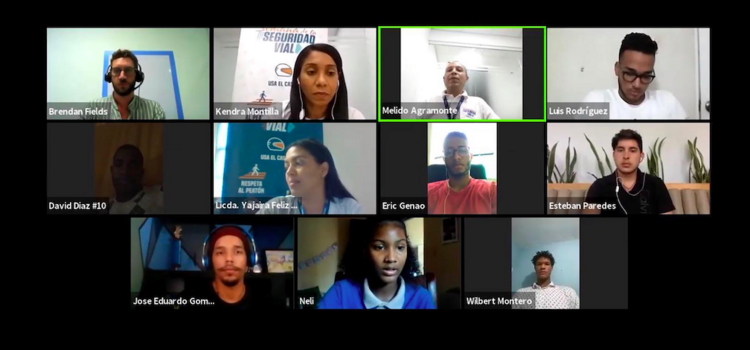
The UN75 Dialogue for Road Safety was conducted via a zoom call with 25 youth leaders from all over the world. The group was divided into five based on the Sustainable Development Goals connected with road safety. Each group session was led by members of the Youth Advisory Board for the Global Youth Coalition.

The groups identified the hindrances toward achieving safer roads and sustainable mobility for all, youth’s vision for the year 2045 – where the UN marks its 100th anniversary, areas where youth need to be placed to further efforts in achieving the global goals, and how the UN can help support efforts for safer roads and sustainable mobility.

Each issue was connected with the specific SDG per group, specifically SDG 3: Health and Wellbeing, SDG 4: Education, SDG 10: Reduced Inequalities, SDG 11: Sustainable Cities, and SDG 13: Climate Action.

Youth Perspective on the UN and Road Safety
From the different group discussions, youth leaders have identified key areas for intervention in the road safety and sustainable mobility sectors.

Reiterating the demands listen in the Global Youth Statement for Road Safety, youth are demanding for educational materials and resources for all road users and the opportunity to bring their opinions, perspectives, and ideas to the decision-making table.

The information and opinions gathered during the dialogues will be featured in the UN General Assembly to present to world leaders at the official commemoration of the UN’s 75th Anniversary in September 2020.

READ MORE: UN75 DIALOGUES

Youth Advisory Board from the Youth Coalition share road safety experiences

Youth Advisory Board from the Youth Coalition share road safety experiences

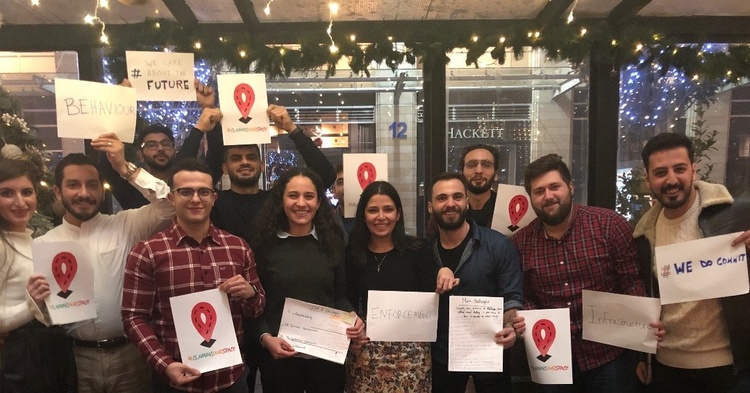
The Global Youth Coalition for Road Safety is powered by the Youth Advisory Board, a powerful group of young people from around the globe from different backgrounds tied together by their passion and commitment for safer roads and sustainable mobility.

Through the coalition website, www.claimingourspace.org, members of the Youth Advisory Board shared how their fields connect with road safety and sustainable mobility. Check out the first batch! 

Redefining the Inevitable – An Opinion Piece from Australia
Grace writes about road safety in Australia and how it was time to work on changing the statistics. With the new Decade of Action for Road Safety, Grace emphasizes that we must commit to achieving Target 3.6 which is to halve the number of road-related deaths and injuries by the year 2030.

As a member of the Youth Advisory Board, Grace assists with global partnerships and advocacy work. Read her article here:

REDEFINING THE INEVITABLE

Road Safety through the Lens of Development Communication
Development Communication is focused on using communication to educate people on the Sustainable Development Goals. In this piece, Maolin discusses the importance of communication in the road safety movement.

She talks about how the use of social media tools help promote and raise awareness on important issues such as road safety and sustainable mobility. She continues by saying that social media and communication are also powerful tools in engaging youth.

Maolin works under communications and capacity development as a youth advisory board member. Read her article here:

ROAD SAFETY THROUGH THE LENS OF DEVELOPMENT COMMUNICATION 

The Correlation Between Climate and Road Safety
A clear connection between climate and road safety is seen through the release of greenhouse gases into the atmosphere by modern machines such as cars and other road safety vehicles.

In her article, Soumita notes that urbanization, connectivity, and daily commute have made the transport system necessary for success and progress. A busier transport system means more options for safer and more sustainable mobility.

As a member of the Youth Advisory Board, Soumita handles the capacity development needs of the group – providing materials and resources that could improve the knowledge and abilities of coalition members.

Read her article here:

THE CORRELATION BETWEEN CLIMATE AND ACTION

Vida Urgente: Youth Leading the Change
Vida Urgente is a program under the Thiago de Moraes Foundation that develops projects and actions of education, culture, assistance, and social mobilization as guided by its mission to preserve life and road safety. 

In his article, Thiago talks about how Vida Urgente continues to empower youth to become road safety leaders and activists. He talks about how youth are leading the change for safer roads and sustainable mobility.

As a youth advisory board member, Thiago helps in planning and executing advocacy activities. Read his article here:

VIDA URGENTE: YOUTH LEADING THE CHANGE 

United Nations Declares New Decade of Action for Road Safety 2021-2030

United Nations Declares New Decade of Action for Road Safety 2021-2030

The United Nations has declared the years 2021 to 2030 as the new Decade of Action for Road Safety. The declaration reaffirms the UN’s commitment to work tirelessly to implement the new agenda by the year 2030 referencing Resolution 70/1 entitled “Transforming Our World: The 2030 Agenda for Sustainable Development”.

The first Decade of Action was proclaimed in March 2010. It reported that road traffic crashes are a major public health threat, claiming 1.3 million lives every year and injuring about 20 to 50 million people more.

Youth are the most affected with a large proportion of the victims aged 15-29 years old. Youth living in low and middle-income countries (LMICs) are also more vulnerable to the dangers of road crashes with a recorded 90% of the total road crashes.

The action plan sought to guide road safety efforts at both national and local levels. The document sought to save 5 million lives from death, 50 million people from serious injury, and 5 Trillion USD of funds within the decade.

Moving Forward
The UN recognizes that target 3.6 of SDG 3, which was to halve the number of road-related deaths and injuries by the year 2020, was not met. It does acknowledge that progress toward target 3.6 and other road-related goals can be achieved through stronger national leadership, global cooperation, implementation of evidence-based strategies, and engagement with relevant stakeholders such as youth. 

The UN commends global efforts geared toward safer roads and sustainability. Member states have made great efforts in adopting comprehensive legislation which mandates road safety measures such as the use of seatbelts, the use of helmets, penalizes drunk and drugged driving, and enhances post-crash efforts.

The UN System implements and monitors various aspects of the Global Plan for the Decade of Action and supports efforts to implement road safety projects and programs. Member states that have been working on road safety efforts are encouraged to continue whereas member states who have not made the commitment are encouraged to join and become contracting parties to the UN as instruments for road safety.

Youth and Road Safety
We understand that youth play a vital role in the road safety revolution. As the most affected sector, youth need to be given a place at the decision-making table for road safety.

Youth for Road Safety – YOURS and the Global Youth Coalition for Road Safety work with youth to explore opportunities and resources to become leaders and activists in the road safety movement.

The Global Youth Statement for Road Safety, created last February 2020 during the 2nd World Youth Assembly for Road Safety, lists the demands and the commitments of the youth for safer roads and sustainable mobility. With youth from around the world ready and willing to take action for road safety, we are ready to commit to the new Decade of Action.

If you’re interested in joining the road safety revolution, join the Global Youth Coalition today! Register at

WWW.CLAIMINGOURSPACE.ORG/REGISTER

Redefining the Inevitable – An Opinion Piece from Australia

Redefining the Inevitable – An Opinion Piece from Australia

Australia is lucky to have a government system where the decision-makers consider and provide funding for road safety issues – these include infrastructure upgrades, enforcement, and education – but it is clear that we are taking this for granted.

Growing up, hearing about another person losing their life in the roads of my small rural community was a common event. 

There was an average death toll of 23 road-related deaths across Australia in 2019, with over 40,000 injuries happening annually, it’s easy to see how Australians have become desensitized to the trauma and accept traffic deaths as inevitable.

However, the most important thing to realize is that our acceptance of road-related deaths as inevitable is the biggest barrier in the efforts to save lives.

The acceptance means that we consent to lose loved ones as a trade-off for speeding on the roads, cheap and unsafe vehicles, and unsafe roads.

The International Road Assessment Program (iRAP) estimates that the financial cost of road trauma in Australia every year comes up to $17.2 Billion.

It doesn’t have to be that way. For instance, Norway’s capital city, Oslo, with a population of almost 700,000, had only one road-related death in 2019. 

“The new Decade of Action for Road Safety is about to begin and we have to take action, set targets, and be accountable.”

The new Decade of Action for Road Safety is about to begin and we have to take action, set targets, and be accountable. To meet the United Nation’s Sustainable Development Goal (SDG) 3.6 or to halve road-related deaths and injuries by 2030, we must all commit to this goal immediately. 

A halt in our actions is not an option because creating live-saving infrastructure, participating in legislative reforms, and establishing behavior change has a lag time. If we had started years ago, we would already be seeing the impact of our actions toward safety. 

We must change the conversation about what is acceptable and achievable in saving lives.

It is disturbing to know that 62% of Queensland drivers admit to speeding. It shows that we have a long way to go if we are to change driver behavior, build safe infrastructure, and change the notion that road deaths are inevitable.

If we continue the way we are, approximately 12,000 more Australians will die on the roads in the next 10 years. To save their lives by 2030, we need to start working today. 

Every day we wait, we are accepting the death of 23 more people.

This is no longer acceptable.