Happy first anniversary of the 2nd World Youth Assembly for Road Safety!

Happy first anniversary of the 2nd World Youth Assembly for Road Safety!

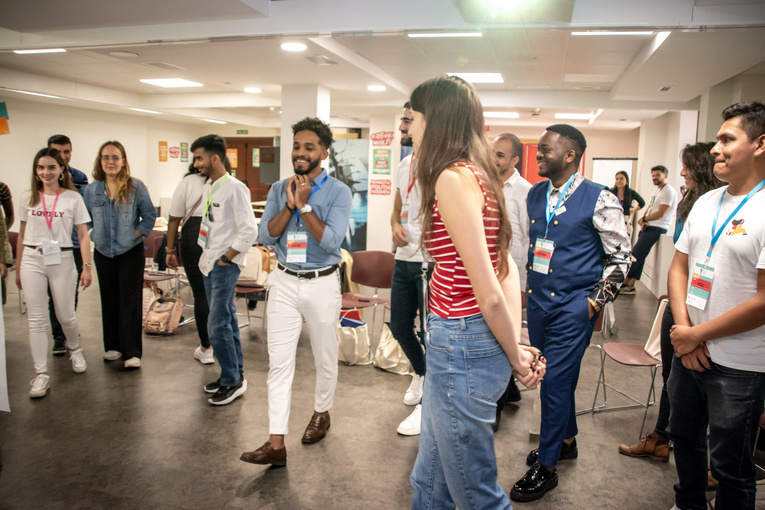
Today, 18th February 2021 we are celebrating the first year anniversary of the 2nd World Youth Assembly for Road Safety! This time last year, more than 160 youth leaders from 75 countries came together and started our collective journey of #ClaimingOurSpace for safe mobility! It was a momentous occasion and we are so thankful we got to meet before the world dramatically changed!

The World Youth Assembly for Road Safety

The 2nd WYA was a pre-event to the event under the framework of the 3rd Ministerial Conference for road Safety. It was held in Stockholm, Sweden on February 18, 2020.

During the Assembly, the delegates and their organizations were empowered to achieve SDG Targets 3.6 – halving the number of road-related deaths and injuries by the year 2030 and 11.2 – provide access to safe, affordable, accessible, and sustainable transport systems for all, improving road safety, notably by expanding public transport, with special attention to the needs of those in vulnerable situations, women, children, persons with disabilities and older persons.

The main goal of the Assembly was to provide young people with the opportunity, resources, networks, and platform necessary to help prevent the premature death of their peers on the world’s roads.

The Assembly was initiated by YOURS – Youth for Road Safety and co-sponsored by the World Health Organizations (WHO) with partners, Michelin Corporate Foundation and Total Foundation. Partners of the Assembly were Fundación MAPFRE and VOLVO Group.

The Youth Assembly was organized for youth, by youth. The Global Youth Taskforce, a selected group of 11 young leaders from around the World, led the organization and creation of the event.

Out of the 2nd WYA, two major outputs were produced, the Global Youth Statement for Road Safety and the Global Youth Coalition for Road Safety.

One year later

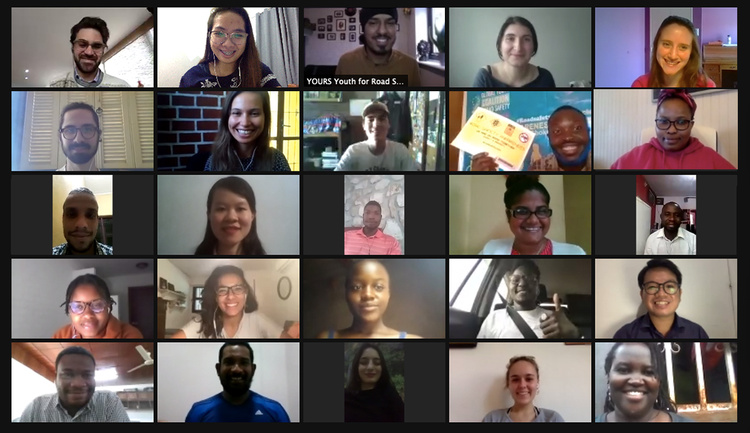
To celebrate this milestone, we caught up with the 2nd WYA delegates and now members of the Global Youth Coalition about what they’ve been doing since the Assembly.

2nd WYA delegates and Coalition members Alison Collard De Beaufort, Mariam Kukava, Nishant Bhatnagar, Dr. Nkateko Mnisi, and Tendekayi Marapara talked about their favorite moments during the WYA with experiences from meeting their fellow delegates to the artwork throughout the event.

Dr. Nkateko expressed that, for her, the best moment during the Assembly was when all the delegates read the Global Youth Statement together and chanted in support of it. She described the moment as “electrifying”.

Nishant recalled how the presentation of the Global Youth Statement during the 3rd Ministerial Conference for Road Safety made it into the highlights of his experience. 

“My favorite moment during the Assembly was during the second day of the conference when we delivered the youth statement inside the hall full of ministers and delegations from all over the world,” – Nishant Bhatnagar

Since the Assembly, our delegates have been hard at work making sure to keep fighting for road safety, sustainable mobility, and meaningful youth involvement in their communities. Their work is guided by the Global Youth Statement for Road Safety and is supported by the Global Youth Coalition.


JOIN THE GLOBAL YOUTH COALITION FOR ROAD SAFETY 

Calling all young leaders to join the ECOSOC Youth Forum 2021

Calling all young leaders to join the ECOSOC Youth Forum 2021

The Economic and Social Council (ECOSOC) is inviting YOUNGO – the official youth constituency at the United Nations Framework on Climate Change (UNFCCC) and other youth organizations – to join the ECOSOC Youth Forum that will be held virtually on 7 and 8 April 2021. Upon registering, applicants will be contacted by the end of March 2021 for updates on the event. 

About the Youth Forum
The ECOSOC Youth Forum provides young people with a platform to connect and converse with Member States and other young leaders around the world to discuss possible solutions to the challenges affecting youth-wellbeing. The Forum will provide a unique space for young people to share their vision and actions on the implementation of the global goals identified in the 2030 agenda.

Consideration will also be given to the group of Sustainable Development Goals (SDGs) decided by Member States for in-depth discussions at the 2021 High-Level Political Forum (HLPF), specifically SDGs 1: No poverty, SDG 2: Zero hunger, SDG 3: Good health and well-being, SDG 8: Decent work and economic growth, SDG 10: Reduced Inequalities, SDG 12: Responsible production and consumption, SDG 13: Climate action, SDG 16: Peace, justice, and strong institutions, and SDG 17: Partnerships for the goals.

The discussion in the Forum will be guided by the overall theme for the ECOSOC HLPF on sustainable development which is “Sustainable and resilient recovery from the COVID-19 pandemic, that promotes the economic, social, and environmental dimensions of sustainable development: Building an inclusive and effective path for the achievement of the 2030 Agenda in the context of the decade of action and delivery of sustainable development”.

The Forum is organized by the UN Department of Economic Affairs (UNDESA) in collaboration with the Office of the Secretary General’s Envoy on Youth (OSGEY), Major Group for Children and Youth (MGCY), and International Coordination Meeting of Youth Organizations (ICMYO) along with the assistance of the partners in the UN system.

Source: https://www.un.org/ecosoc/en/content/ecosoc-youth-forum-2021

The 2030 Agenda and road safety
Last year, the United Nations declared the years 2021-2030 as the new Decade of Action for Road Safety. Under the decade of action, road traffic crashes are reported to be a major public health threat, claiming over 1.3 million lives every year and injuring 20 to 50 million more. Young people are the most affected by road traffic crashes with a large portion of victims are aged 15 to 29 years old.

With young people being the most affected, it makes sense that they should be involved meaningfully in all stages of the decision-making process in local and global road safety efforts through participation. The Global Youth Coalition for Road Safety unites young people and maximizes their impact on road safety and sustainable mobility in their communities. The Coalition amplifies youth voices all over the world to support them in their work, projects, and initiatives.

Through the Coalition and the Forum, youth voices, ideas, and perspectives will be elevated in the international platform. Get the chance to raise awareness on road safety and other development issues by participating in the global movement.

Deadline to apply is 17th March 2021.


REGISTER FOR THE ECOSOC YOUTH FORUM 2021   JOIN THE COALITION

The National Safety Council invites you to join their Road to Zero webinar

The National Safety Council invites you to join their Road to Zero webinar

The National Road Safety Council (NSC) is inviting all those interested to join the Road to Zero Coalition webinar to learn about how to make roads safer. National Coalition of Safer Roads (NCSR) president, Melissa Wandall, invited everyone to take part in the webinar so that people can listen, learn, and look at what’s ahead for the mission of safer roads in 2021 in the United States and beyond. The webinar is scheduled for Thursday, February 4 at 2 pm Eastern Time. 

screen shot 2021 01 27 at 6 47 33 pmRoad to Zero Coalition
Road to Zero Coalition is a nonprofit and nonpartisan research institute managed by NSC. It has identified three major initiatives to reduce roadway fatalities; double down on evidence-based road safety strategies, help advance life-saving technology in vehicles and infrastructure, and adapt the safe systems approach.

In a report that lays out the strategies to end roadway deaths in the United States by 2050, the Road to Zero Coalition emphasizes that young people are affected disproportionately as road crashes are the leading cause of death for youth aged 15-24.

The report does not just list young people as victims of road crashes but as at-risk drivers who may be affected by external factors such as weather and other road infrastructures. It also notes how the perception of young people started to change as different sectors started to discuss health and transport with youth, teaching them about land-use policies and urban design that affects the community.

Keeping roads safe
NSC focuses on eliminating the leading cause of preventable death: road crashes. Apart from the goal of ending road crashes by 2050, NSC also has other initiatives to make roads safer for everyone.

In efforts to protect young people, specifically children, NSC manages the National Child Passenger Safety Board that certifies technicians to ensure children are secured safely on every ride.

YOURS shares a similar mission in terms of its work to make the world’s roads safe for young people through meaningful youth engagement. YOURS believes that young people have a right to be adequately informed, consulted, and empowered on road safety as they are the most affected by this crisis.

The goal is to meet the road safety targets presented in the new Decade of Action for Road Safety by 2030.

“Youth are the main victims of road crashes and meaningfully involving them bene ts all parts of society. Through meaningful youth participation in road safety, we can empower young people to become the change agents of their communities. Who is better positioned to lead the charge for road safety from the grassroots up?” – Floor Lieshout

Stay informed on global efforts to make the world’s roads safer! 


REGISTER FOR THE ROAD TO ZERO WEBINAR

Global Youth Coalition for Road Safety launches Local Actions – take part!

Global Youth Coalition for Road Safety launches Local Actions – take part!

The Global Youth Coalition for Road Safety has launched a search for proposals to help achieve the demands listed in the Global Youth Statement for Road Safety through Local Actions. A local action is a short-term or mid-term grassroots action plan oriented to address the most pressing issues in the city or area where the youth member belongs. Applications are open from 22 January to 12 February. Get involved!

Local Action guidelines
The call for proposals is exclusive for members of the Global Youth Coalition for Road Safety. Apart from being a member, the applicant must have conducted at least one youth consultation so that they can be guided in shaping their project plan through their conversation with youth leaders in the local area.

The project proposals are required to address the most urgent road safety needs in the community, as outlined in the Global Youth Statement. The projects will have a direct link with Sustainable Development Goals (SDGs) that have direct connections with road safety and sustainable mobility such as health, education, reduced inequalities, sustainable cities, and climate action.

Applicants are requested to develop original, impactful, innovative, and innovative projects that focus on three key strategies; community mobilization and awareness, advocacy, or peer-to-peer engagement.

Community mobilization projects help bring together stakeholders to raise awareness on important road safety issues in the community. advocacy projects focus on developing concrete and tangible actions and petitions to influence decision-makers to further the road safety agenda, and peer-to-peer engagement projects lean more on helping young leaders to facilitate, train, consult, and collaborate with other young leaders.

Winning project proposals
Winners of the local actions will be determined by our selection committee – an international and diverse group of experts who will judge proposals based on presentation, sustainability, impact, evidence-based actions, SDG inclusion, connection with road safety, project structure, and project implementation.

Winning applicants will receive support from the Global Youth Coalition in terms of three aspects; seed funding worth € 5000 for the implementation of the project, support in the development of a project plan to map out the project, and mentorship from the Coalition in areas such as communication, fundraising, networking, youth participation, and more.

Help turn the Global Youth Statement for Road Safety into a reality by sending in your proposal! 


JOIN THE COALITION   GO TO LOCAL ACTIONS    

DOWNLOAD GUIDELINES

UNICEF releases guidance for safe and healthy journeys to school in COVID

UNICEF releases guidance for safe and healthy journeys to school in COVID

In light of the global pandemic, the United Nations International Children’s Emergency Fund (UNICEF), in partnership with FIA Foundation and Child Health Initiative, published a guidance manual for safe and healthy journeys to school during the COVID-19 pandemic and beyond. The document will be a guide for individuals and organizations when schools reopen, discussing the measures to help keep students safe on school premises. 

COVID: the latest facts
In the time of COVID, the goal is to prevent the spread of the virus. In the context of the safe journeys manual, preventing transmission of the virus would revolve around school journeys while also addressing the risk of road traffic injury and air pollution.  

COVID-19 and road safety have a common unfortunate characteristic – they hit the most vulnerable people the hardest – Hartwig Schafer

09 how simple street design interventions are saving kids lives in africa 520x292The assumption that road deaths would go down because of global lockdowns was addressed by Mr. Schafer in his article Road Safety Matters, more so during COVID-19, saying that a closer look at the traffic data reveals that fatality rates per kilometer traveled have increased. He cites higher traffic speed due to lower traffic volumes, lack of enforcement and larger proportions of vulnerable road users account for the increase in road-related fatalities. 

The Association for Safe International Road Travel expressed the same observation in their article Road Safety During COVID-19, saying that as roads become less crowded with vehicles, many drivers exceed the speed limit at dangerous levels.

Key Actions
To help keep students safe, UNICEF has listed ten key actions that could be integrated into school reopening plans, mainly; engage the entire community, ensure physical distancing, prioritize non-motorized transport to support physical distancing, make it safe for vulnerable road users, help students who use non-motorized modes of transport, reduce private vehicle use, treat school buses as extensions of classrooms, promote safety and hygiene, ensure equal access to transport, and sustain changes in the long term.

Under these key actions, more specific tasks are identified and described so that it can guide groups from community members to policymakers in efforts to help keep students safe on their way to school and the rest of their educational journey. 

In the manual, UNICEF adds a checklist for different stakeholders to support safe and healthy journeys to school.


DOWNLOAD UNICEF MANUAL HERE 

Join the International Conference on Road Safety, Transport, and Road Statistics

Join the International Conference on Road Safety, Transport, and Road Statistics

Earlier this month, the World Academy of Science, Engineering, and Technology launched the International Research Conference on Road Safety, Transport, and Road Statistics which is dedicated to bringing together leading academic scientists, researchers, and research scholars to exchange and share experiences and research results in all aspects of road safety. 

International Research Conference
The conference on road safety, transport, and road statistics is part of the International Research Conference – a federated organization dedicated to bringing together significant numbers of diverse and scholarly events for presentation.

World Academy of Science, Engineering, and Technology describes the conference as a premier interdisciplinary platform for researchers, practitioners, and educators to present and discuss the most recent innovations, trends, concerns, and solutions in the field of road safety, transport, and road statistics.

Applicants are invited to submit research abstracts, papers, e-posters, and research contributions describing original and unpublished results in all areas of road safety.

The deadline to submit abstracts and Full-Text Papers is on 28 January 2021 for the November conference in Rome, Italy.

Road Safety in Data
The World Health Organization (WHO) emphasizes the importance of data in saying that it can be used to raise awareness about particular road safety issues. Road safety data also acts as evidence and is able to draw support for policies, programs, or allocation of resources.

Having accurate road safety data allows different organizations to create successful plans, projects, and initiatives that can address road safety issues in local and global settings. In the latest Capacity Development session launched by the Global Youth Coalition for Road Safety, YOURS Executive Director, Floor Lieshout, raised the importance of gathering road safety data before creating a project plan.

Help contribute to the data and resources in road safety, transport, and road safety statistics by sending your paper.


MORE INFORMATION HERE