Guide for Interventions: Evidence of What Works and What Does Not Work

Guide for Interventions: Evidence of What Works and What Does Not Work

The World Bank Group and the Global Road Safety Facility (GRSF) published a guide for road safety interventions to help ensure the safety of all road users. The guide talks about the current issues around road crashes, vulnerable road users, the safe system approach, post-crash care, and more. The document will help individuals and organizations working on road safety policies. We reproduced the article here:

Road traffic crashes result in an estimated 1.35 million deaths and 50 million injuries worldwide per year with over 90 percent of these occurring in Low-Middle Income Countries (LMICs). Aside from the obvious pain and suffering this inflicts on individuals and communities, these deaths and injuries also place a large financial burden particularly on LMICs, by slowing economic growth.  

The scale of the current response to this continuing crisis does not match the size of the problem. In addition, limited road safety resources are often expended on ineffective or suboptimal interventions. While road safety knowledge has improved over recent decades, there is still a need to improve decision-making when selecting and applying effective evidence-based road safety interventions. Effective interventions are those that reduce fatal and serious injuries. 

The World Bank’s Global Road Safety Facility (GRSF) has developed this evidence-based guide on “What Works and What Does Not Work” in road safety in response to the critical need for effective evidence-based solutions.

This guide has been prepared to help readers understand that not all road safety interventions are equally effective and that what appear to be “common-sense” approaches to selecting road safety interventions will often not be the best.  Although some provide benefits, others have very limited or even negative impacts, despite being commonly—and mistakenly—recommended or accepted. The guide offers a range of recommendations with a focus on interventions in LMICs, although the information may also be of relevance to all countries. 

screen shot 2021 03 22 at 4 15 08 pmThe contents will be valuable to those working on road safety at policy or practitioner levels, including World Bank technical team leaders and others who seek to establish, expand, or improve road safety programs in LMICs.

The guide sets knowledge on evidence-based interventions within a “Safe System” context, providing advice on each of the Safe System pillars (road safety management, safe roads, safe speeds, safe vehicles, safe road users, and post-crash care) while recognizing that evidence-based solutions must be drawn from across pillars to produce effective road safety outcomes.

At the core of this document is a summary table with an overview of beneficial and non-beneficial interventions based on sound scientific evidence. This is followed by more detailed information including case studies and references to the evidence base to support the summary.

Many safe road interventions are recommended for adoption, including integrated public transport, roadside, and central barrier systems, medians, infrastructure to support appropriate operational speed for road users, roundabouts, grade separation, and interventions to reduce exposure to risk at intersections, pedestrian footpaths, and crossings, separated bicycle and motorcycle facilities, and traffic signs and line marking (including audio-tactile line marking).

Some of these are highly effective, with up to a 70 or 80 percent reduction in fatalities and severe injuries (for example, safety barriers and roundabouts). 

Various speed-related interventions also produce significant benefits, with some able to almost eliminate death and serious injury. Examples of effective speed interventions include traffic calming (including humps and chicanes), roundabouts, raised intersections and crossings, gateway treatments, lower speed limits (including 30 km/h (20 mph) zones for pedestrians), and speed cameras.

A variety of road user-based interventions have been implemented over many years, with effective examples including extensive supervised on-road practice and/or graduated licensing systems as part of the driver-licensing system, increased age for driving license eligibility, hazard perception training and testing, public education, and campaigns as part of an integrated strategy (especially communicating enforcement to increase general deterrence), enforcement, penalties, alcohol interlocks, fatigue and speed monitoring, and increased helmet wearing rates.

Key vehicle-based interventions include applying minimum vehicle safety standards and vehicle ratings (through the Global New Car Assessment Program, or “NCAP”), seat belts, periodic vehicle maintenance, daytime running lights, under-run guards on trucks, Electronic Stability Control, and other advanced vehicle technologies.

nicolai plenk woiibbkwhsy unsplashEnhanced post-crash care can also produce better road safety outcomes, including systems to improve emergency response time, better emergency care, improved first aid skills for the public, and improved hospital care.

Equally important, the report also identifies clear examples where interventions are not effective. The worst of these are interventions that increase risk.

These include increasing travel speed without improving the quality of safety infrastructure, most forms of post-license driver and rider education and training, and many (but not all) forms of regular school-based driver education (such as those that seek to increase car-handling skills). The increase in risk is typical because such initiatives increase the level of confidence leading to an increase in risk-taking.

Other interventions that have no demonstrated safety benefits are to be avoided. These include license schemes through application or payment, training programs or education within schools that aim to improve road safety knowledge (including ad hoc visits by road safety experts or enthusiasts), and education campaigns conducted in isolation.

There are effective alternative interventions for each of these as described within this document, and these should be applied instead. It is extremely important that resources are not wasted on ineffective interventions on behalf of road safety but rather that evidence-based road safety interventions are employed.

There are a variety of documents available on the issue of road safety intervention effectiveness, many of which are referenced here. However, there are some key points of differences and added value in this guide, including a synthesis of the evidence on a broad range of interventions and contrast between effective and ineffective interventions, allowing readers to compare options.

Where ineffective interventions are identified, viable effective interventions are provided thereby supporting decision making. The guide also provides direct advice to those working in LMICs, drawing on key sources of information where this is available. Importantly, concise yet robust evidence is provided across each of the Safe System pillars.

There is a need to continue building the knowledge base on effective road safety interventions, particularly in LMICs where there are a number of gaps in knowledge. The contents of this guide represent a useful, up-to-date summary of current knowledge for application.
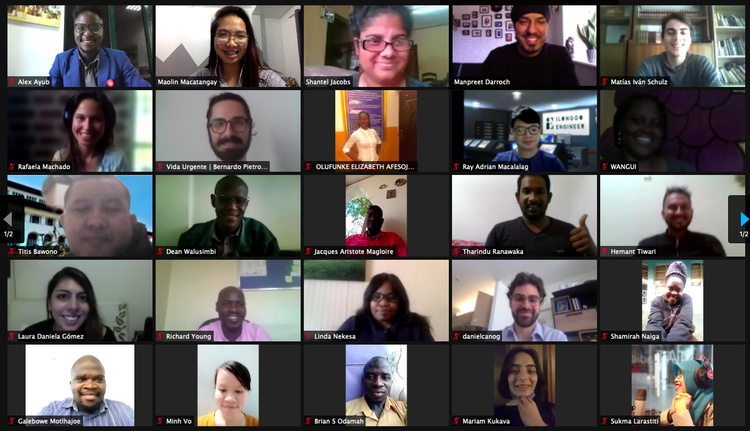
 
 
Second session of Youth Stars Programme tackles SR4S project structure

Second session of Youth Stars Programme tackles SR4S project structure

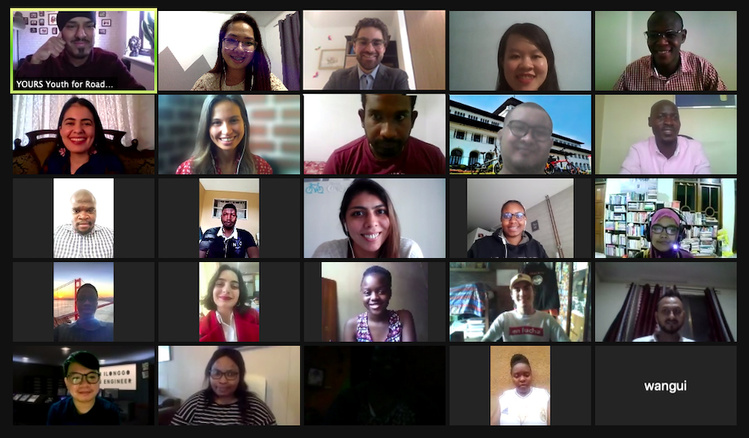
YOURS – Youth for Road Safety with iRAP – International Road Assessment Programme and the Global Youth Coalition for Road Safety continues with the Youth Stars Programme with its second session on project structure launched last Monday, March 3. The programme is training over thirty members of the Global Youth Coalition. 

Introduction to the Youth Stars Programme
When the Youth Stars Programme was initially released in 2019, it trained five young leaders to become Master Trainers capable of training fellow young people about the SR4S methodology and the star ratings tool. It utilizes the pedestrian component of Star Ratings to provide a measure of the contribution of road design to the risk of each pedestrian

screen shot 2021 03 24 at 4 27 36 pmNow the Master Trainers are training fellow youth leaders to use the Star Rating for Schools methodology and the Star Ratings tool.

The first session was launched a week before, on March 15. During the first session, Master Trainers Daniel Cano from Colombia and Minh Vo from Vietnam talked about what participants could expect from the Youth Stars Programme. Daniel and Minh also gave an overview of how the participants can use the Star Rating for Schools (SR4S) methodology and the Star Rating tool to improve the roads in their communities.

Project Management
The second session was led by Master Trainers Alex Ayub from Kenya and Shantel Jacobs from Belize. The session focused on the project structure behind SR4S. Alex, Shantel, and iRAP Global Project Coordinator, Rafaela Machado, gave participants some tips on how to ensure the success, continuity, and ease of starting a rating project through the SR4S methodology and the star rating tool.

Participants were also guided through the data collection process when rating roads. With the SR4S app, participants can establish a project that identifies the school zone to rate and eventually record the road features. Through this process, participants will be able to generate star ratings and upload the results.

Apart from the technical aspects of the SR4S methodology, the Master Trainers also discussed the importance of following ethical and legal procedures.  

“Let them [the community and authorities] know exactly what you are doing and let them know how it will help the community” – Alex Ayub, Master Trainer

The Youth Stars Programme, sponsored by FedEx, trains young leaders to use and apply the Star Rating for Schools (SR4S) methodology that was pioneered by iRAP. It runs for a total of four sessions, each held every Monday. 


READ ABOUT SESSION 1 HERE 

6th UN Road Safety Week launches with the strapline Streets for Life #Love30 campaign

6th UN Road Safety Week launches with the strapline Streets for Life #Love30 campaign

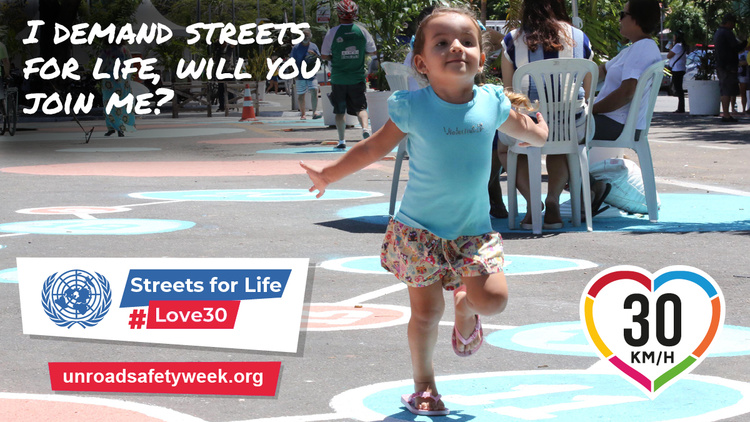
Earlier this week, March 18, UN Road Safety Collaboration (UNRSC) announced the launch of the Streets for Life #Love30 campaign for UN Road Safety Week set this May 2021. This year’s theme will focus on reduced speed and how tackling speed limits will help meet SDG Target 3.6 and reduce road-related deaths by 50% by the year 2030.

Streets for life: Why #Love30
The #StreetsforLife and #Love30 campaign calls for all to shift towards a new 30 km/h approach as the new normal to liveable streets.  A 30 km/h or 20 mph speed helps make streets that are healthy, green, and livable.

30 km/h streets save lives and protect all those who use them, especially vulnerable road users like pedestrians, cyclists, children, senior citizens, and people with disabilities.

Addressing the risk of death in road traffic is fundamental to achieve the Sustainable Development Goals (SDGs), specifically those that affect health security, sustainable cities, poverty, and reducing inequalities among and within countries around the world.

The campaign calls decision-makers to act for low-speed streets worldwide and limit traffic speeds to 30 km/h so people can walk, live, and play safely. Policies that tackle the impact of road traffic and unlock action to protect the climate and promote gender equality will help create an environment for safe, sustainable, and inclusive actions.

screen shot 2021 03 19 at 6 06 18 pmAddressing myths and facts around 30 km/h
Through road safety week and the #StreetsforLife and #Love30 campaign, UNRSC will address different myths around implementing 30 km/h on the world’s roads.

The campaign emphasizes the fact that a 30 km/h speed limit makes a difference with evidence from around the world showing that low-speed streets reduce the risk of serious injuries and ultimately help save lives.

study from London found that lower speed limits (in this case 20mph zones) were associated with a 42% reduction in road casualties. In Bristol, the introduction of 20mph limits was associated with a 63% reduction in fatal injuries between 2008 and 2016.

Above 30 km/h impact speeds, pedestrians are at a considerably greater risk of death. This is even greater for the young and elderly.  In the distance a 30km/h car can stop, a 50km/h car is still driving. Higher speeds narrow motorists’ peripheral vision and impact their reaction times.

Other myths include the increase in journey times, the unpopularity of 30 km/h, that 30 km/h is only available for a fewunnamed 4 countries, and that 30 km/h limits are anti-motorist.

It is emphasized that the time difference between driving at a maximum of 30 km/h or 50km/h is minimal through real-world tests, that majority of people agree that 30 km/h is the correct speed limit for residential roads, that 30 km/h zones have been successfully set in neighborhoods in Africa, North America, Asia, Europe, Latin America, and Australasia, and that Low-speed streets can actually make life better for motorists.

Show your support for #StreetsforLife and #Love30 by getting involved!

Visit the website for more details!


VISIT THE UN ROAD SAFETY WEEK WEBSITE 

In our society, more and more young people use social networks such as Facebook, Twitter, Instagram and the like, and every day on these networks put their photos taken in different situations.

Youth Stars Programme kicks off with first session led by Master trainers

Youth Stars Programme kicks off with first session led by Master trainers

Last Monday, March 15, YOURS – Youth for Road Safety with iRAP – International Road Assessment Programme and the the Global Youth Coalition for Road Safety launched the first session of the Youth Stars Programme. The session comes after the Coalition’s fourth capacity development series on an Introduction to Star Rating for Schools launched on Wednesday, February 24. 

The Star Rating for Schools Methodology
The Youth Stars Programme, sponsored by FedEx, trains young leaders to use and apply the Star Rating for Schools (SR4S) methodology that was pioneered by iRAP.

SR4S is an evidence-based tool for measuring, managing, and communicating the risk children are exposed to on their journey to school. The programme and the tool support quick interventions that save lives and prevent serious injuries for students everywhere.

SR4S uses and utilizes the iRAP Star Ratings to measure the risk children are exposed to on their journey to school. The Star Ratings are an internationally recognized measure of risks on roads with the least safe roads rated as one-star and the safest as five-star.

When the Youth Stars Programme was initially released in 2019, it trained five young leaders to become Master Trainers capable of training fellow young people about the SR4S methodology and the star ratings tool. It utilizes the pedestrian component of Star Ratings to provide a measure of the contribution of road design to the risk of each pedestrian.

In the second year of the programme, the Master Trainers will be training members of the Coalition to use the SR4S methodology and the Star Rating tool. The training will run for one month and will be split into four sessions; introduction, discussion of the project structure, data collection, and FAQs and cases. 

In our society, more and more young people use social networks such as Facebook, Twitter, Instagram and the like, and every day on these networks put their photos taken in different situations.

About the Youth Stars programme
The first session of the Youth Stars programme was led by Master Trainers Daniel Cano from Cambodia and Minh Vo from Vietnam. More than 30 participants joined the session where they were able to ask and interact with the Master Trainers and Star Rating for Schools Global Coordinator, Rafaela Machado.

screen shot 2021 03 16 at 4 04 54 pmThe session talked about the SR4S programme as part of a larger project that would help build the foundation of other road infrastructure projects, plan road infrastructure assessments, conduct school safety assessments, and communicate results and scale up positive outcomes.

Other topics covered were the SR4S process, the road safety attributed recorded, key principles behind the methodology, and access to resources that would support the Youth Stars sessions. 

“My dream is for every school in the world to be star rated so that no child has to die needlessly on his or her way to school” – Shane O’Connor – FedEx (USA) 

The sessions run every Monday for the next few weeks. 


LEARN MORE ABOUT STAR RATING FOR SCHOOLS 

A Decade of Action for Safer Roads: iRAP releases results

A Decade of Action for Safer Roads: iRAP releases results

In 2019, YOURS – Youth for Road Safety and iRAP – International Road Assessment Programme launched the Youth Stars Programme, sponsored by FedEx. The three-year programme will see a group of 5 Master Trainers from around the world be trained on the principles of the new ‘Star Rating for Schools’ methodology pioneered by iRAP.iRAP has published the First Decade of Action and features the results of the Star Rating for Schools program led by iRAP and YOURS. We reproduced the article here.

One year on from the 3rd Global Ministerial Conference on Road Safety, iRAP has captured its first Decade impact with an image-rich virtual story – “A World Free of High-Risk Roads: A Decade of Action to Save Lives”.

iRAP partnerships with Donors, Development Banks, Governments, Mobility Clubs, NGOs, Industry, and Research experts worldwide are now saving lives on a scale that matters. The elimination of high-risk roads and increased travel on 3-star and better roads is making a difference. Lives are being saved. Journeys are being made safer.

iRAP and its partners’ impact during the United Nations first Decade of Action for Road Safety 2011-2020 can be summarised with 20 key achievements in the charity’s 2020 Vision:

    1. Shared Innovation, shared success
    2. A charity to make safer roads accessible to the world
    3. A global commitment
    4. 2,600,000 km of the world’s roads assessed for safety
    5. Safety of the world’s roads revealed
    6. World-class software for all to use
    7. A free road safety toolkit
    8. The Bloomberg Initiative for Global Road Safety
    9. iRAP Global Standard and 3-Star or Better Policy Targets
    10. Development Bank partnerships for safer roads investment
    11. Helped more than 100 countries make their roads safer
    12. Locally owned and led road assessment programmes
    13. Safer journeys to school and kids’ lives saved
    14. Improved safety in road designs
    15. USD$81.5 billion of road investment made safer
    16. 28,000 people trained across 121 countries
    17. Innovation partnerships bringing together world-leading expertise
    18. Innovation Workshops, Conferences, and Events share safer roads expertise
    19. 10-Step Plan for the future
    20. Prince Michael international recognition

iRAP CEO Rob McInerney said, “iRAP’s Decade of impact has been made possible thanks to the support of our major donor FIA FoundationFedEx, the Global Road Safety Facility (GRSF) and our more than 15,000 partners across the world.”

Where to for the next Decade?

The Second Decade of Action 2021-2030 has reaffirmed the ambitious target of halving the raw number of road traffic deaths and injuries by 2030. iRAP will continue to play a key role in planning and supporting the next Decade of action alongside the UN Road Safety Collaboration and iRAP’s more than 15,000 partners and connections worldwide.

The Second Decade will continue to reinforce the 12 Global Road Safety Performance Targets, including Target 3 for all new roads to be 3-star or better for all road users and Target 4 for >75% of travel to be on the equivalent of 3-star or better roads for all by 2030.  The iRAP global Star Rating standard and supporting KPIs, Risk Mapping, fatality and injury estimations, investment plans and innovative tools like ViDA, Star Rating for Designs, Star Rating for Schools and AiRAP will empower partners to act and celebrate success.

“Achieving Targets 3 and 4 in the Decade ahead stands to save 450,000 lives a year,” Mr. McInerney said.

“We know road injury is preventable. We have the engineering know-how, a global road infrastructure safety standard for benchmarking, and free tools, training, and support to make the world’s roads safer. To assess risk, build safety into road designs, and reduce danger for pedestrians, motorcyclists, cyclists, and vehicle occupants. From world-class highways to toll concessions, rural roads, and city streets where our children walk to school and live.

“In simple terms, we will work with our global partners to make sure new roads are safe and high-risk existing roads are financed and improved on a scale that matters. We will save lives,” he said.

LEARN MORE ABOUT IRAP 

Meet the Coalition members behind the winning Local Actions projects!

Meet the Coalition members behind the winning Local Actions projects!

The Global Youth Coalition for Road Safety launched Local Actions last January 22 and invited its members to develop original, impactful, and innovative projects to addressed the most urgent needs and commitments outlined in the Global Youth Statement for Road Safety.  After a rigorous process, twelve projects were selected to be funded. Learn more about the winning projects here: 

akash 2Akash Upase, India

Akash is a youth worker leading Community Connect at the Blue Ribbon Movement. His project, Community Connect, is a leadership program that will build active citizenship in youth by solving local civic issues. The program intends to engage with different stakeholders to build better infrastructure for the city.

alex no captionAlex Ayub, Kenya

Alex currently works with the Kenya Red Cross Society – National Youth as a Programmes Coordinator. He is also a lawyer by profession. His project, Safe School Zones, aims to provide evidence-based data to inform decision-makers on areas of improvement around learning institutions. It further provides a platform for school communities to promote safe road usage.

aldo 2Aldo González Barrera, Mexico

Aldo is an urban planner and pedestrian activist. He has worked as an urban and architectural designer. His project, Retorno Seguro a Clases (Safe back to School Challenge), will address the challenges for youth activists and the issue of dangerous school zones in Mexico. The project will hep guarantee a safe return to schools in a post-pandemic world.

bernardo no captionBernardo Pietrobelli, Brazil 

Bernardo is a Master’s student in Economics and a volunteer for Fundação Thiago Gonzaga – Vida Urgente. His project, COLETI.VU, is designed to put together a group of young people advocating for increased social participation in the city administration on road safety. It will allow youth to monitor public mobility policies and propose projects and actions aimed at young people.

daniela no captionLaura Daniela Gómez, Colombia

Daniela is currently enrolled in post-graduate studies in Public Management. Her project, Youth influencing bike policy change in Bogotá, will strengthen the capacities of members of the Local Bicycle Board Members and provide them with tools to advocate for better bicycle policies to decision-makers. 


kenny 2Kenneth Mulinde, Uganda

Kenneth is a multimedia producer. He works with Action Aid International Uganda and Youth Arts Movement Uganda. His project, Safe Ride, is a participatory project that uses “Artivism” to mobilize and organize vulnerable road users and motorists in Uganda through campaigns and workshops. 


linda no captionLinda Nekesa Masibo, Belgium

Linda is a masters student at Hasselt University in Belgium studying transportation sciences specializing in road safety in the Global South. Her project, #MovingSafe2HasseltUniversity, is an online road safety education and awareness campaign for international students outside the European Union. 


amie 2Nkumbuye Ami, Rwanda

Amie is a medical Doctor at Kabutare District Hospital. He is the founder and president of Vision Zero Youth Council Rwanda chapter. His project, Traffic Care Youth Initiative, focuses on community awareness through teaching sessions on road safety. A radio talk show campaign will also be done to spread road safety messages in Rwanda and other parts of Africa.

olivia no captionOlivia Nalwadda, Uganda

Olivia is a young female on a mission to recourse the traffic experiences of children and youth in Uganda and Africa at large. Her project, Together for Safer School Journeys (TOSS-365), aims to foster youth leadership in advocating for safer school journeys. The project will be implemented in Eastern Uganda in close collaboration with stakeholders and cultural and religious leaders.

providence no captionProvidence Klugan, Ghana

Providence is an accountant for the international NGO, Amend Road Safety. His project, Kids’ Road Safety Panel (KRSP), is about educating children from two schools with high-risk road traffic. A panel of dedicated and committed young people will be created to educate the community on road safety.


sanaa 2Sana’a Khasawneh, Jordan

Sana’a is an architect. She recently graduated from USJ with a master’s degree in Road Safety Management. Her project, UP TO ZER0, aims to make Jordanian youth more aware about road safety and Vision Zero. It will encourage young people to be more involved in road safety efforts.The project establishes Jordan’s chapter of the Vision Zero Youth Council.

titis no captionTitis Efrindu Bawono, Indonesia


Titis is currently a transportation planner for urban mobility arrangement. His project, Safer Street Participatory Design with Youth, involves youth learning and practicing road safety risk assessment at surrounding areas. The approach aims to raise collective awareness on road safety issues.

“We received 39 youth-led projects from all over the world. It was a tough process to come up with a shortlist; I was amazed by the young leader’s creativity and the quality of projects. It is exciting to start working with the 12 winning leaders; I am convinced and excited that they will deliver impactful and sustainable actions for their communities to reduce road traffic injuries and promote a sustainable mobility system. Although we have chosen 12 winners, I want to let the others know that the Coalition is still here to support your efforts through our numerous tools, activities and events!” – Selection committee

Congratulations to all the winners! 

READ MORE ABOUT THE WINNING PROJECTS HERE