World Crossing Campaign video is ready!

World Crossing Campaign video is ready!

We received lots of videos from young people from all over the world and we now have merged them together to create our awareness video! We would like to thank all participants for showing their commitment to making a change and keeping their peers safe on the road. The jury had a hard time selecting the best video, because there were so many good ones! In the end they selected the participant who contributed with the best video(s), considering the theme ´visibility´ and road safety.

We wanted to create, together with you, a strong statement to the rest of the world that young people are committed to keep young people safe on the worlds´ roads. Many of you participated in the World Crossing Campaign and on the right hand side of this page you can view the end result! We would like to extend a massive thank you for all of your contributions and please feel free to link the video on your own website, Facebook or Twitter account with the links at the bottom.

With this video, young people have visibly united to stand up against the injustice of road crashes around the world! We are proud to gather this visible want for change and publish it in this video! Young people CAN make a difference in the forthcoming Decade of Action for Road Safety.

And the winner is…
The jury had a very difficult task to select the best video, there were many great videos from all over the world, but they have managed and have selected a prize winner. The winner will have access to a grant of 1000 euro, dedicated to a road safety initiative for young people.

We are very proud to announce that the winner is: Mr. Siaka. K. Dibba from The Gambia. He made, together with his friends, 5 videos with different slogans and the result was both creative and exemplary of safe behaviour. We would like to congratulate him and we will contact him soon to follow up on his future campaign, funded by YOURS.

Special thanks
The World Crossing Campaign was a fruitful collaboration between the Tune into Traffic Campaign and YOURS. We would like to thank Manpreet Darroch for his endless efforts. Furthermore we would like to thank all participants that made the campaign a big success. We hope we can count on you again for our campaign next year which will be even bigger!

Launch of road safety campaign: “We play and drive by the rules”

Launch of road safety campaign: “We play and drive by the rules”

The United Nations Economic Commission for Europe (UNECE) and the International Basketball Federation (FIBA) launch a new information campaign on road safety to coincide with the Basketball World Championship 2010, which will be held in Turkey from 28 August to 12 September.

The campaign will carry the motto “We play and drive by the rules” and has been developed to inform people around the world – especially the young people who are basketball fans or play basketball themselves – and to encourage respect for the rules, on the road as well as on the court.

Every year some 1.3 million people die as a result of road traffic crashes worldwide – amounting to more than 3,500 deaths each day. More than half of the casualties are pedestrians, cyclists or other road users not traveling in a car. Road traffic injuries are the leading cause of death for children and young people aged between 5 and 29. In addition, on average 20 to 50 million people sustain non-fatal injuries from road traffic crashes each year. These injuries are a significant cause of disabilities worldwide.

Experience shows that these are not accidents, but events that can be prevented through daily action and awareness raising. There is ample evidence in many countries in the world that respecting basic road safety rules dramatically reduces the risk of suffering a crash, and, should a crash happen, dramatically reduces its adverse consequences.

The “We play and drive by the rules” campaign is organized with the support of the Turkish Basketball Federation (TBF), which will host the championship, the Spanish Basketball Federation (FEB) and the Turkish National Police (TNP), which is in charge of road safety enforcement in the host country.

The campaign will include video clips with José Calderón, World champion with the Spanish national team, Kerem Tunçeri, of the Turkish national team, and Harun Erdenay, the Turkish Basketball legend. These will be broadcast in the arenas where the games will be played and on the television channels broadcasting the games. Information booths will also be displayed in the arenas in the four cities hosting the games: Ankara, Istanbul, Izmir and Kayseri.

A Declaration for road safety, signed by officials of UNECE, FIBA, TBF and TNP, will be displayed in the arenas to invite the players of the various teams to join the campaign and declare: “We play and drive by the rules”.

Ján Kubiš, UNECE Executive Secretary, said: “The need for action to improve global road safety has been acknowledged by several resolutions of the United Nations General Assembly and by the First Ministerial Conference on Road Safety held in November 2009 in Moscow. We hope that this joint campaign at the FIBA Basketball World Championship 2010 will contribute to spread the road safety message across the world and help save lives”.

Patrick Baumann, FIBA Secretary General, said: “The basketball family has already lost a lot of its members on the road – famous stars as well as amateur players who travel by road every other week to play with their team. This is a needless, shocking and tragic loss of life which needs to be tackled urgently. With this campaign, FIBA hopes to hammer home the message that we want everybody, both in and out of the sport of basketball, to play and drive by the rules.”

Ousmans’ blog on BBC World

Ousmans’ blog on BBC World

We are very proud that our youth Taskforce member Ousman Conteh had the opportunity to publish a blog on road safety for young people on the BBC website. Topic: should talking on cellphones including handsfree be banned when driving? Let the world know what you think.

You can visit the blog of Ousman here: www.bbc.co.uk. Below the blog you can comment on the article and have your say.

If you have a question directly for Ousman, please send an email to info@youthforroadsafety.org and we will forward your question.

2010-2011: UN International Year of Youth (IYY)

2010-2011: UN International Year of Youth (IYY)

Over 1.8 million young people die every year. But an even larger number of youth engage in behaviours that jeopardize not only their current health, but often their health for years to come. The International Year of Youth, which begins today, underscores that health is a human right and an integral part of youth development.

In an effort to harness the energy, imagination and initiative of the world’s youth in overcoming the challenges facing humankind, from enhancing peace to boosting economic development, the United Nations proclaimed an International Year of Youth starting on 12 August 2010.

Road traffic injuries are still named as the leading killer of young people. We think this International Year of Youth is a perfect year to let our voices heard and push Road traffic injuries higher on the international agenda.

“Youth should be given a chance to take an active part in the decision-making of local, national and global levels.”
United Nations Secretary-General Ban Ki-moon.

For this occasion the World Health Organization released a new factsheet on young people: health risks and solutions.

Key Facts:

  • More than 1.8 million young people aged 15 to 24 die each year, mostly due to preventable causes.
  • About 16 million girls aged 15 to 19 give birth every year.
  • Young people, 15 to 24 years old, accounted for 40% of all new HIV infections among adults in 2008.
  • In any given year, about 20% of adolescents will experience a mental health problem, most commonly depression or anxiety.
  • An estimated 150 million young people use tobacco.
  • Approximately 565 young people aged 10 to 29 die every day through interpersonal violence.
  • Road traffic injuries cause an estimated 1 000 young people to die every day.

Overview
Most young people are healthy. However, more that 1.8 million young people aged 15 to 24 die each year. A much greater number of young people suffer from illnesses which hinder their ability to grow and develop to their full potential. A greater number still engage in behaviours that jeopardize not only their current state of health, but often their health for years to come. Nearly two-thirds of premature deaths and one-third of the total disease burden in adults are associated with conditions or behaviours that began in their youth, including: tobacco use, a lack of physical activity, unprotected sex or exposure to violence.

Health issues affecting young people
Some of the main health issues affecting young people are described below.

Injuries
Unintentional injuries are a leading cause of death and disability among young people. Road traffic injuries take the lives of a staggering 1 000 young people every day. Advising young people on driving safely, strictly enforcing laws that prohibit driving under the influence of alcohol and drugs and increasing access to reliable and safe public transportation can reduce road traffic accidents in young people. If road traffic crashes occur, prompt access to effective trauma care can be life saving.

Early pregnancy and childbirth
About 16 million girls aged 15 to 19 years give birth every year – roughly 11% of all births worldwide. The vast majority of adolescents’ births occur in developing countries. The risk of dying from pregnancy-related causes is much higher for adolescents than for older women. The younger the adolescent, the greater the risk. The formulation and enforcement of laws that specify a minimum age of marriage, community mobilization to support these laws, and better access to contraceptive information and services can decrease too-early pregnancies. Those adolescents who do become pregnant should be provided with quality antenatal care and skilled birth attendance. Where permitted by law, those adolescents who opt to terminate their pregnancies should have access to safe abortion.

HIV
Fifteen to 24 year olds accounted for an estimated 40% of all new HIV infections among adults worldwide in 2008. Every day, 2 500 more young people get infected and globally there are more than 5.7 million young people living with HIV/AIDS. Young people need to know how to protect themselves and have the means to do so. This includes condoms to prevent sexual transmission of the virus and clean needles and syringes for those who inject drugs. Currently, only 30% of young men and 19% of young women have the comprehensive and correct knowledge they need to protect themselves from acquiring the virus. Better access to HIV testing and counselling will inform young people about their status, help them to get the care they need, and avoid further spread of the virus. Where social, cultural and economic conditions increase the vulnerability of young people to HIV infection, an effective HIV prevention strategy should aim to address these factors as well.

Malnutrition
Many boys and girls in developing countries enter adolescence undernourished, making them more vulnerable to disease and early death. Conversely, overweight and obesity (another form of malnutrition with serious health consequences and important longer term financial implications for health systems) are increasing among young people in both low- and high-income countries. Adequate nutrition and healthy eating and physical exercise habits at this age are foundations for good health in adulthood. In addition, it is important to prevent nutritional problems by providing advice, food and micronutrient supplementation (e.g. to pregnant adolescents), as well as detecting and managing problems (such as anaemia) promptly and effectively when they occur.

Mental health
In any given year, about 20% of adolescents will experience a mental health problem, most commonly depression or anxiety. The risk is increased by experiences of violence, humiliation, devaluation and poverty, and suicide is one of the leading causes of death in young people. Building life skills in children and adolescents, and providing them with psychosocial support in schools and other community settings can help promote mental health. If problems arise, they should be detected and managed by competent and caring health workers.

Tobacco use
The vast majority of tobacco users worldwide began when they were adolescents. Today an estimated 150 million young people use tobacco. This number is increasing globally, particularly among young women. Half of those users will die prematurely as a result of tobacco use. Banning tobacco advertising, raising the prices of tobacco products and laws prohibiting smoking in public places reduce the number of people who start using tobacco products. They also lower the amount of tobacco consumed by smokers and increase the numbers of young people who quit smoking.

Harmful use of alcohol
Harmful drinking among young people is an increasing concern in many countries. It reduces self-control and increases risky behaviours. It is a primary cause of injuries (including those due to road traffic accidents), violence (especially domestic violence) and premature deaths. Banning alcohol advertising and regulating access to it are effective strategies to reduce alcohol use by young people. Brief interventions of advice and counselling when alcohol use is detected can contribute to reducing harmful use.

Violence
Violence is one of the leading causes of death among young people, particularly males: an estimated 565 young people aged 10 to 29 years die every day through interpersonal violence. For each death, an estimated 20 to 40 youths require hospital treatment for a violence-related injury.

Promoting nurturing relationships between parents and children early in life, providing training in life skills, and reducing access to alcohol and lethal means such as firearms help prevent violence. Effective and empathetic care for adolescent victims of violence and ongoing support can help deal with both the physical and the psychological consequences of violence.

WHO’s response
WHO carries out a range of functions to improve the health of young people:
counting the number of young people who die, experience illness and injury, and the number who engage in behaviours that can lead to illness or injury in the future. It also includes assessing factors in the community that hinder or help the health and development of adolescents;
identifying the most effective ways of promoting good health among young people, preventing health problems and responding to them when they occur;
producing the methods and tools by which evidence can be applied in countries;
ensuring that there are individuals and institutions that can apply these tools in countries;
raising attention of issues among the public at large and among special groups;
building a shared understanding among partners and a shared sense of purpose on what needs to be done;
supporting countries with the formulation of policies and programmes, their implementation, and monitoring and evaluation.

Thank you for participating in the World Crossing Campaign!

Thank you for participating in the World Crossing Campaign!

The deadline has passed for the World Crossing Campaign. We have received many videos and YOURS would like to thank all participated road safety advocates for your great efforts. We are now in the stage editing the entries and merging them into one video. The video will contain young people from all continents crossing the street and revealing their road safety slogan.

We really hope you had fun shooting the video and who know, you might win the 1000 EURO for your own road safety project! This will be determined by our jury. They will analyze all your videos soon and by the end of the month we will present the winner of the World Crossing Campaign. The jury will judge the videos on 1) road safety and 2) creativity with the ‘visibility’ theme.

After we have edited the videos we will upload it on our website, so stay stuned for the end result!

Reporting back from the 3rd European Youth Forum for Road Safety

Reporting back from the 3rd European Youth Forum for Road Safety

Under the auspices of the European Commission the 3rd European Youth Forum for Road Safety was organized on the first and second of July 2010. More than 70 youth delegates from over 35 countries were brought together in Brussels to discuss road safety and to strengthen the European Youth Network. YOURS was honored to report on its activities and how the participants could join the road safety efforts made at a global level.

The event was organized by the Responsible Young Drivers Belgium, with a leading role for our Youth Taskforce member Mr Axl Druart. Together with his colleagues he created an interesting and very pragmatic progamme. The first day was fully focused on sharing road safety information and introducing all organizations represented at the forum. With great enthusiasm the participants shared their campaigns, events and good practices. It was a very inspiring first half with many good ideas. One of the presentations from the UK by Mr Manpreet Darroch, was on the use of (social) media. His Tune into Traffic campaign was a very encouraging example how you can make a road safety campaign attractive and ´sexy´ for young people.

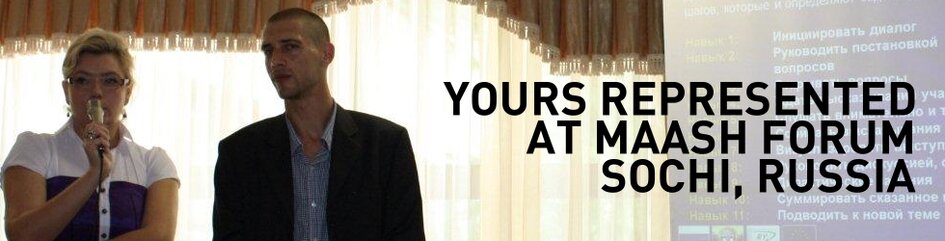
There was also time for ‘setting the scene’ globally, with several presentation from organizations working at an international level. The FIA Foundation presented the future Decade of Action and the Make Roads Safe Campaign, the European Commission presented the just released new outlines to half road deaths by 2020, Mr Aliou Oumarou shared his road safety experiences and problems on the African continent and YOURS gave a global overview of the road safety crisis and how the participants could join the World Crossing Campaign and the MINE section.

The second day offered a hands-on, action oriented agenda. Before July 2011 all participating nations pledged to implement a ´Collective European Action´. The group was split in 4 smaller ones for a two hour workshop. Together they discussed a shared road safety poster for their European Action and made a roadmap who would do what, where and when. Because many young people were focused on the issue alcohol, the European Commission generously provided for each participant an Alcohol Goggle and a box of Alcohol Testers.

During the last session every group presented back the outcomes of their roadmap and gave feedback on the shared poster. Michelin represented the private sector and gave a useful presentation on how to approach a sponsor for financial support. In conclusion, we can look back at a very successful Youth Forum with many motivated and passionate young people determined to make the roads safer for young people