GRSP Asia Seminar 2010 – YOURS Participates

GRSP Asia Seminar 2010 – YOURS Participates

The GRSP/Asia Road Safety Seminar 2010 took place this year in Cambodia. The GRSP were pleased to inform us that they had about 200 participants this year and for YOURS it was a rewarding experience to take part. Clearly, this annual gathering on Road Safety, comprising of road safety experts, government agencies and NGOs, is an important platform for sharing and exchanging information in the Asia Region.

YOURS was once again privileged to have shared a stage with leading road safety orgnisations in presenting its goals to reduce road crashes in the coming years. The even culminated in a range of presentations geared towards planning for the coming Decade of Action for Road Safety starting in 2011 in the Asia region.

YOURS presented about the importance of focusing on young people in the Decade of Action in the Asia, an area of the world that has unprecedented levels of road traffic crashes affecting young people and costing 248 million US$ in Cambodia alone.

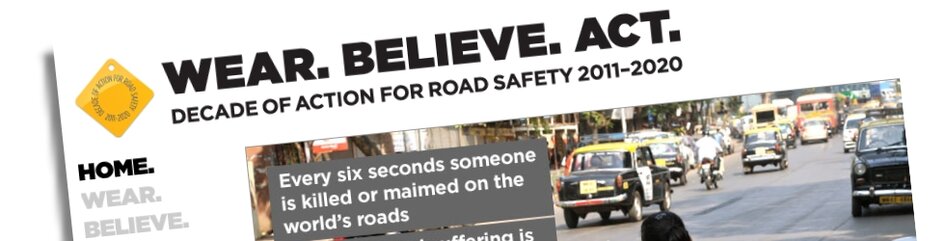
In additon to this, an internation presence from organisations investing in the region to reduce road crashes was visible. The event also launched the official Decade of Action Tag: Wear.Believe.Act giving a promotional edge to the action.

With thanks to GRSP Asia, you can download and read any of the presentations from the event for more information:

Day 1

YOURS continues to work closely to develop the Decade of Action globally and is committed to bringing attention to overrepresentation of young people in road crashes worldwide.

Seminar

  1. Chan Dara – Cambodia RS 2011-2020
  2. Gayle Di Pietro – Global Response
  3. Saul Billingsley – GRSP Asia DOA
  4. Greg Smith – iRAP and the Decade of Action
  5. Floor Lieshout – GRSP Asia Seminar
  6. Datuk Suret Singh – ASEAN UPDATES
  7. Gayle Di Pietro – Good Practice Manuals
  8. Rob McInerney – UNRSC Infrastructure Pillar

Workshop

  1. Blair Turner – Best Practice
  2. Dr. Thaweesak – GRSP
  3. Ian Hughes – Data Systems
  4. Dr. Wiwat – MIS Phuket
  5. Socheata Sann – RCVIS-Cambodia in GRSP-Asia
  6. Dr. Krishnan – Basic principles for Effective Road Safety
  7. Cessie – Road Safety as CSR
  8. Gayle Di Pietro – Sesame Street
  9. Mirjam Sidik – Child Helmet Interventions
  10. Syarifudin – Road Safety Education

Day 2

Seminar

  1. Blair Turner – Taking a Benefit Cost Approach to Road Safety
  2. John Passmore – Public Health Response-RS10
  3. Rebecca Huang – UNESCAP Presentation
  4. Mirjam Sidik – GHVI Presentation
  5. Mirjam Sidik – Global Helmet Vaccine Initiative 2010 (Video)

Workshop

  1. Giri Suseno – Decade of Action
  2. Datuk Suret Singh – GRSP-ASEAN MSRSWG
  3. ISO 39001 RTS Management Systems – PH 20101004
  4. Peter Daly – Road Safety Management
  5. Ann Yuan – Beijing VRU Safety Project
  6. Blair Turner – Evaluating Road Safety Treatments
  7. Jeroen Stol – Helmet Evaluation-Cambodia
  8. John Passmore – GRSP CAM Presentation Helmet Legislation in Vietnam
  9. Raymond Teoh – Evaluation of RSE Programs
  10. Barbara Krol – Changing the Behavior of Young Road Users
  11. Floor Lieshout – Youth for Road Safety
  12. Somporn Suebthawilkul – Social Enforcement Youth Helmet Wearing


Decade of Action for Road Safety Launch Website

Decade of Action for Road Safety Launch Website

As part of the international movement for the Decade of Action for Road Safety, an official website selling the Decade of Action Tag has been launched and is ready for you to purchase to WEAR.BELIEVE.ACT. The site also includes expert resources and infomation of road safety funding.


From: www.decadeofaction.org

Working together, we can all play an important role in achieving the Decade goals.

The first thing you can do is to get a Tag. Wear it, somehow, anyhow. Then tell your friends, family and colleagues to get their Tags too. A red ribbon is just a ribbon, until it is imbued with the hope and energies of millions of people working against HIV/AIDS. The white plastic wristband is just a piece of plastic, until hundreds of thousands of people proudly display it as they march against poverty. Now it is up to all of us to unite and make this small piece of metal – the road safety Tag – a powerful symbol of our fight against the suffering, grief and injustice caused by road deaths and injuries.

You can help by raising awareness and campaigning for safer roads in your community, school and workplace. In the Resources section of the website you will find downloadable leaflets, posters and booklets, as well as the artwork for the Tag symbol. We are adding new information all the time, so please check back regularly.

If you are a non-profit organisation (e.g. a government or government agency, charity or NGO, a volunteer group, university, school or place of worship) you can access and use the Decade of Action symbol freely by accepting terms of use and providing a small amount of information about your organisation and the ways in which you hope to support the Decade of Action for Road Safety.

Please see our Resources section here for more details. If you are a private company or corporation and would like to become an official Supporter of the Decade of Action for Road Safety, please visit our Road Safety Fund website and contact us to find out how you can partner with us to reduce global road casualties.

Spotlight On: ArriveSAFE

Spotlight On: ArriveSAFE

YOURS is very proud to feature the road safety organisation, ‘ArriveSafe’. Headed by international spokesman for road safety, Mr Harman Sidhu, ArriveSafe works with Governmental and Semi-Governmental bodies to further road safety in India and the world.

ArriveSAFE has been developing cost effective dynamic tools to enhance efficiency and deliverability of Road Safety within the existing legal framework. The organization emerged out of Mr Harman Singh Sidhu’s harrowing personal experience of a road crash in October 1996 that left him paralysed neck below due to a spinal injury and living in constant pain since then. The sudden emptiness and a strong desire that the same doesn’t happen to anyone else moved me to work in the field of road safety. YOURS observes his courageous spirit and determination and is inspired by Harman’s work.

ArriveSAFE since then has grown from an one man initiative to an organisation supported by many like minded individuals having concern for road safety and as presence in many states of India.

Main activities:

  • To reach out to Government, Media, Corporate Houses and Community to solicit their support to prevent colossal waste of human life on Indian roads. India holds the dubious distinction of highest road crash fatalities in the World.
  • To work as a pressure group to create political will and help improve road safety situation.
  • Advocacy through media campaigns to draw the attention of decision makers especially politicians and public in general. Sensitize masses by raising awareness about road traffic injuries, their grave consequences and thus build community involvement around the issue of Road Safety. 
  • Develop cost effective road safety educational content [Print and Multimedia based] to increase knowledge, awareness and skills amongst the road users. The content has been developed and supplied to countries like Egypt, Suriname besides India. 
  • To work towards changing the attitudes and behaviours of drivers by creating peoples movement for safe behaviour. 
  • Promote a positive attitude towards enforcement laws and infuse sense of courtesy and concern among road users. 
  • Regularly monitor relevant local and international road statistics and developments in order to effect improvements. 
  • Study the best practices manuals published by WHO/GRSP and implement them, to the extent they can be in the given conditions. 
  • Contributing to the “National Road Safety Policy on Road Safety” and “The National Road Safety and Traffic Management Board Bill”. 
  • Co-coordinating with the “Law Commission of India” in formulating new Laws or amending the existing ones as per the changed circumstances by contributing to the “Consultation Paper on Legal Reform to combat Road Accident”. 
  • Data Collection on Road Crashes – As reaffirmed in the “First Global Ministerial Conference on Road Safety” in Moscow, data led approach is required to focus on targeted interventions and to know their results. We are developing the crash data collection system. 
  • Enforcement – Working closely with the Police Units to improve enforcement by computerization the processes so the habitual offenders are filtered and necessary legal activity is initiated against them.Why you started. 

Impact

Road Safety which was not on the priority of the Authorities and Public is now considered as an “important issue” and State Councils and Advisory Committees are being formulated at state and community level to tackle Road Crashes.

Challenge Bibendum Interviews YOURS CEO

Challenge Bibendum Interviews YOURS CEO

Our YOURS CEO Mr Floor Lieshout has recently been interviewed by Michelin’s Challenge Bibendum. Challenge Bibendum is a forum to address all the issues of a multi-stakeholder sector such as road mobility. We were proud to see the YOURS logo flying high on the front page of The Challenge Bibendum Website.

Mr Lieshout focused on the reasons behind the overrepresentation of young drivers among road victims and the means by which it could be handled.

We insert the text here for you to read taken from: http://www.challengebibendum.com/en

How does road safety affect young people? Why are young people more incline to suffer from road safety issues?

Globally road traffic injuries are the leading killer of 10-24 year olds. More than 400.000 young people die every year and millions more are injured. 90% of these road traffic injuries happen in low and middle income countries. As you can imagine, in some countries young people are often the breadwinners of their families and their death or serious injury in a road crash can plunge entire families into poverty. I would like to stress that we talk about road crashes and don’t talk about road accidents. We do that because road crashes are predictable and preventable whereas the use of the “accident” implies that they are random incidents that suddenly happen. We can, by rational thinking and analysis, decrease road traffic injuries and reduce their impact.

On the question why young people are over represented in these terrible statistics there is no one simple answer. It is highly complex and unfortunately there is not an easy fix. Let me start by saying that there are no “problem young road users”, but that we have a “young road user problem”. Young people are not the cause of all these injuries; they are mainly victims of a failing system. For example there might be no appropriate driver training programme in place, no laws on helmet and seatbelt use, on use of alcohol and drugs while driving, or for speed management. Or in some cases the laws are in place, but their enforcement is poor. Furthermore, road infrastructure is a major factor and a safe road design, that accommodates the needs of young people, is essential. In addition, young people might have limited financial resources and therefore end up with old and unsafe cars, lacking safety features. These are only some of the factors contributing to road traffic injuries among youth, and when combined with brain development issues (some parts of the brain are not fully developed till your mid twenties), peer influence, higher risk taking behaviour and life style factors, young people become extremely vulnerable on the roads.

What kind of concrete actions do you think would be the most efficient to fight road safety issues?

First of all we need all sectors to be involved, public and private sector, researchers and academics, community based organizations and the media. Everybody has to play their part to fight the war on our roads. In road safety we speak about the Safe System Approach. An approach mentioning: safe infrastructure, safe vehicles and safe road users. You would have to work on all of these three factors to tackle the problem. We must strive to achieve a system where the risk that a road crash will occur is minimized and when it does happen the environment is forgiving, meaning that risk of injury or death is minimized. So if you ask me for concrete actions, it all starts with the design and enforcement of proper laws, building safer roads, good education for road users, and effective post-crash trauma care systems. Also effective communication towards road users is essential. For example awareness campaigns explaining the reasons behind these laws make road users better understand the issues and then they are more likely to comply instead of resist. Unfortunately young people are hard to reach for most governments or police. Actually when I think about it, people with authority are probably not the most effective way of reaching out to young people who are rebellious by nature. That is why I believe peer-to-peer communication is one of the answers to get the road safety message across to young people.

What particular measures are lacking in public policies directed towards youth? How hard would it be to put them in place? How costly would they be and how long would it take to see their results?

Well, as I mentioned before, in some countries there is just not a good system in place. For example, I know for a fact that in a number of countries you will get your driving license without taking a test or being trained. A young person or one of his parents just goes to the city hall when they turn 18 and pick it up. Every country has different problems and a different culture, so there is not one policy I could recommend. Sometimes it is extremely hard to put a policy in place. For example when drinking alcohol is a significant part of a country’s culture, you can imagine you will have problems with drinking and driving and it needs long-term steady and continuous effort to deal with it. Also in countries with tropical weather conditions, it is not always “practical” to wear a helmet. Therefore, road safety policies need to be informed by evidence and existing good practice but also highly contextualized to a county’s culture, social norms, and even political system.

Why hasn’t road safety, for many years, received media coverage and investment proportional to the importance of the issue? Do you think it does receive it now?

Yes, you are right. Considering the media coverage it is sadly true that there is no, or very limited attention given to road safety when compared to other issues. Although media has an instrumental role to play: it can create public awareness, advocate and lobby for policies, hold politicians responsible, and keep the public debate alive. Road traffic injuries were considered for a long time the price we have to pay for our mobility and that nothing can be done about them. Road safety was also considered a national problem for the transport sector alone and its health, social, and economic impacts were not highlighted. This has contributed to some kind of acceptance among people, civil society, and governments alike. We need to fight against these ideas. We now know that road traffic injuries are a huge global public health and development problem, it actually threatens the achievement of the UN Millennium Development Goals. Road traffic injuries are also a social equity issue with most of the victims coming from low and middle-income countries or disadvantaged families in high-income countries. I urge media to take their role seriously and join us in our fight. The media should raise the public profile of road safety and communicate important messages. The media also need to bring the faces of the victims to the people and show the human drama behind each fatality.

In conclusion I would like to underline that young people themselves must be involved in road safety as well. They have an important role to play and have to take some of the responsibilities on their own shoulders for keeping themselves, their families and peers safe. Young people are capable of being part of the solution to the road safety problem.

Leave the Phone Alone: A Canadian Initiative

Leave the Phone Alone: A Canadian Initiative

In Canada, one person dies every three hours on the road, this is why the National Remembrance Day for Road Crash Victims serves an important role in commemorating those lives lost. In response to this fact, the event organizers have created a new initiative: Leave the Phone Alone.

Our YOURS representative in Canada, Ms Jennifer Heatley who is also the Chair of The Canadian Road Safety Youth Committee shared with us an incredible new initiative that focuses on online participation to garner ‘pledges’ in combat to a rising health risk in Canada; driving while distracted.

The new campaign entitled, ‘Leave the Phone Alone, while Driving’, takes place alongside the National Day of Remembrance for Road Crash Victims on the 17th November 2010. With startling facts: ‘A recent study found that drivers who text while driving have a crash rate 23 times higher than when than when not texting’,  a strong focus is being placed on reducing this occurence amongst drivers.

The issue is also backed by legislation where over 90% of Canada’s drivers are affected by ‘distraction legislation’ that bans the use of the mobile phone whilst driving.

The Campaign

Leave the Phone Alone is an interactive campaign that gives drivers the opportunity to pledge to ‘leave the phone alone’. Already, over 190 people have pledged to do this and you can too. If you live in Canada, log onto the website and take the pledge online. One pledge does not only have the potential of saving one life, but many lives; we know that the affects of a road crash can destroy several lives simultaneously.

Log on to: Leave the Phone Alone and take the pledge.

World Day of Remembrance for Road Traffic Victims

World Day of Remembrance for Road Traffic Victims

The World Day of Remembrance is the day on which all those killed and injured in road crashes are remembered, together with their families, the emergency services and all others affected or involved in the aftermath.


Why is there a need for a World Day of Remembrance?

Road deaths and injuries are sudden, violent, traumatic events, and their impact is long-lasting, often permanent. Each year, millions of newly bereaved and injured people from every corner of the world are added to the many millions already suffering as the result of a road crash.

The sense of grief and distress of this huge group of people is all the greater because many of the victims are young, because many of the crashes could and should have been prevented and because the response to road death and injury and to road crash victims is often experienced as inadequate, cruelly unsympathetic, and inappropriate to a loss of life or quality of life.

This year, the World Day of Remembrance is taking place on 21st November 2010. YOURS fully endorses the reach and scope of this work and encourages organizations to organize events on this day. Information on how to do this can be found on the attachments.

History of the World Day of Remembrance: Victim organisations establish this day

Observed for ten years from 1993 by victim organisations under the umbrella of the European Federation of Road Traffic Victims, FEVR, this Remembrance Day has become a very important day for bereaved and injured victims and all those supporting them. Gradually it has also come to be seen by many others as an important day on which to highlight the huge scale of road death and injury, its impact and cost, and as an opportunity for taking action. See page 4 of the WDOR guide for more information.

WHO and UN promote global recognition

From 2003 onwards the World Health Organisation has been supporting the recognition of this day by the United Nations and this recognition came with UN resolution 60/5, adopted by the General Assembly on 26 October 2005 who welcomed …the proposal to designate the third Sunday in November as the World Day of Remembrance for Road Traffic Victims, in recognition of road traffic victim and their families’ loss and suffering and invited Member States and the international community to recognize this day. WHO website

World Day is observed worldwide

World Day observance has already spread to all continents and is spreading to more countries on each continent with every year. The Annual Archive will show their rising number, as will some World Day press releases and online research.

Importance of World Day

Giving significance to this Remembrance Day will signal the importance governments accord to the issue of road danger reduction, therefore their response to the call for official World Day recognition will be closely observed.