Creative distracted driving advert from Australia – Get Your Hands Off It

Creative distracted driving advert from Australia – Get Your Hands Off It

Transport New South Wales, Australia have released a new advert campaign focusing on distracted driving themed, ‘Get Your Hands Off It’ featuring comedian and film maker Derek Anderson. The advert is a tongue-in-cheek video that is presented as a spoof music video and raising awareness of distracted driving in an alternative and creative manner.

Shared with us by our Western Pacific Regional Coordinatore Mr Joel Tucker (Australia), this new road safety campaign takes an ‘unconventional’ approach to tackling the issue of distracted driving in a creative music video style advert that promotes the cause through humour and spoof comedy.

Distracted Driving forms a key part of our Youth and Road Safety Action Kit:


Multitasking and driving don’t mix. Even for skilled and experienced drivers, driving safely requires that you use most, if not all, of your mental capacity: it doesn’t take much for your driving to be distracted.

For example, when talking on a mobile phone, one of your hands is holding the phone; your mind is on your conversation; your attention is on the sounds coming from the phone; and although your eyes are on the road, you will not be really ‘seeing’ what
is happening around you. Using an earpiece will not solve the problem. You still have to press a button to take the call; your attention will still be on the voice of the person talking to you, your mind will be processing what you are hearing, and you’ll be thinking of what to say next. The only distraction you have avoided is that of having to carry the phone in your hand.

The result is that drivers using a phone to talk, text, or browse the internet are less able to stay in the appropriate lane, detect any changes around them and respond in time. Drivers talking on the phone are also more likely to exceed the speed limit and not maintain a consistent speed. When texting, people often drive at lower speeds, but their delayed reaction time and inability to maintain appropriate lane positions and assess traffic conditions still makes texting while driving extremely dangerous.

In New South Wales Australia, the Center for Road Safety explain What mobile phone laws mean in their state:

While your vehicle is moving or stationary (but not parked), as a driver you may only use a mobile phone to make or receive a call or use the audio playing function if:

  • the mobile phone is secured in a fixed mounting; or
  • the mobile phone does not require you to touch or manipulate the phone in any way.

All other functions including texting, video messaging, online chatting, reading preview messages and emailing are prohibited.

While your vehicle is moving or stationary (but not parked), as a driver you must not hold your mobile phone in your hand other than to pass the phone to a passenger.

A mobile phone’s GPS (or other driver’s aid) function may only be used if: 

  • the phone is secured in a commercially designed and manufactured fixed mounting, and
  • the mounting is fixed in a location that will not distract or obscure your view in any way, and
  • the use of the driver’s aid does not distract you from driving or from being in proper control of your vehicle.

You can watch the video here.

Speed cameras reduce serious road crashes – The Guardian UK

Speed cameras reduce serious road crashes – The Guardian UK

Speed cameras are a contentious subject and many believe that they operate to make money rather than save lives, however, as a strict area for enforcement of speed limits, cameras are said to save many lives according to a new report by the Royal Automobile Club (RAC) in the UK. RAC study shows serious collisons dropped 27% and if cameras were switched off a further 80 lives would be lost each year.

Speed cameras reduce the number of fatal and serious collisions in the areas they are installed by more than a quarter, a study has found.The RAC Foundation studied 551 fixed cameras in nine areas of England and found that such incidents dropped by 27% after speed cameras were put in place.

But the research also found that at 21 camera sites the number of collisions appeared to have increased. The foundation has written to 11 local authorities to find out why and to suggest they examine whether the cameras should be moved.

Prof Stephen Glaister, director of the RAC Foundation, said that a report it published in 2010 found that without speed cameras there would be about 800 more people killed or seriously injured each year.

Speed cameras on a highway in the UK

He told the BBC: “Safety cameras are contentious. People dispute whether they work. 

“But in fact the general public as a whole like them because they want these roads to be made safer. If cameras were turned off overnight there would be something like 80 people killed extra a year and 800 people killed or seriously injured. So the evidence is very good that on average they do work, they are effective.”

The study looked at data from speed cameras in Cambridge and Peterborough, Leicestershire, Lincolnshire, Merseyside, South Yorkshire, Staffordshire, Sussex, Warwickshire and the Thames valley.

So do speed cameras work?

“Yes, they do, is the short answer,” says Robert Gifford, executive director of the Parliamentary Advisory Council for Transport Safety. “A four-year evaluation of their effectiveness concluded that 100 lives were saved every year.”

The same study concluded that there was a 40% reduction in the number of deaths and injuries on roads with speed cameras.

There are around 6,000 speed cameras on UK roads, including mobile cameras. Claire Armstrong, who runs Safe Speed, a group that campaigns for more road safety but fewer speed cameras, claims that studies which show their efficacy are “politically biased”. “They are a huge distraction,” she says. “If you are concentrating on cameras, you are not concentrating on the road.” She believes that measures such as more safety-awareness campaigns and advanced driving tests would be more effective, and that as the number of speed cameras increases, there is no evidence of a commensurate reduction in the number of road deaths.

Gifford contradicts her. Road deaths, he says, fell below 3,000 for the first time last year and speed is a contributing factor in one in three road deaths. If you go back 10 years ago, “70% of drivers driving in free-flow traffic broke the 30mph speed limit. Now it’s 49%. There has been a big decrease in the deaths of pedestrians, and that is partly due to cameras in urban areas.

What do you think? The conversation continues…

Young Innovators Competition 2013 from ITU – are you an innovator?

Young Innovators Competition 2013 from ITU – are you an innovator?

The International Telecomminications Union (ITU) run an annual ITU World Telecom summit and this year, as part of their mission to find solutions to complex global issues through technology, call upon young innovators to address key issues. As part of those issues, young people are invited to address the road safety crisis through technology! If you’re interested read on!

The ITU are looking for the next generation of social technopreneurs – young people aged between 18 and 26 with an inspirational ICT-based solution to developmental challenges. Ten winning finalists will be selected to attend ITU Telecom World 2013 in Bangkok, taking part in workshops, pitching sessions, mentoring and networking, plus receiving seed funding of up to USD 10,000 per project.

Your idea could be a start-up already up and running but in need of funding to implement the next stage and bring it to scale. Or it could be a concept worked out on paper but in need of support to make it real.

It doesn’t matter: what ITU want want are innovative solutions which can really make an impact on the world and improve people’s lives by using connected technologies (ICTs) to address one of our Six Grand Challenges:

  • Improve employment opportunities for young people and migrant workers
  • Reduce food and water wastage at individual and retail level
  • Facilitate access to public services for the elderly
  • Improve natural disaster prediction and response
  • Improve road safety for both drivers and pedestrians
  • Protect sensitive personal data and inspire the creation of local digital content

Of course, YOURS shares information about this opportunity to encourage youth leaders from our Global Youth Network for Roaf Safety with innovative ideas to address road safety via technology to apply, although you can apply for any category if you fit the criteria.

ITU explain the road safety problem and the need for innovative solutions here:

Around 1.3 million people die each year on the world’s roads and millions sustain non-fatal injuries, particularly young people. Technology has focused on innovation within the automotive sector – it now needs to drive the road safety debate. How can we use technology to make the roads safer for both drivers and pedestrians?

Deadline for applications: June 30th, 2013 at 24:00 GMT+2

Brian’s Column: Community focused post-crash care can save lives!

Brian’s Column: Community focused post-crash care can save lives!

Brian is back with his June column on the importance of the public being trained in basic first aid and post-crash care in low and middle-income countries. In places where roads are less accessible and post-crash vehicles are less readily available, Brian argues that a community focused approach to being able to handle injuries in the first instance can dramatically save lives.

Congratulations to every one for #stayingsafe #walkingsafe #lsw during the #globaroadsafetyweek that focused on pedestrian safety! (Lots of Hash-tags!) This year’s Global Road Safety Week was the best! I have never felt this solidarity feeling before: that innate feeling of ‘Yeah, road safety is our concern!’ from all corners of the continent in Africa and the wider world! That’s exactly what we love to see; dignitaries, children, mothers, fathers, young people, celebrities – needless to mention, animals #WalkingforSafety! I loved it! How about you? In English, they say ‘Keep the candle burning’…me I say ‘Keep a keen eye on a burning candle’…if you know what I mean 😉

Emergency health care facilities in Africa are flooded with road traffic crash victims; and there are the ‘few lucky ones’, who are referred for a touch of professionalism in advanced hospitals. It doesn’t make me proud to write such a true statement this month of June, (which reminds me that Christmas is 6 months away :P) but I find solace in the naked truth that road traffic crashes are preventable, and even after a crash, deaths are preventable and the impact of injuries can be mitigated by timely and effective emergency care.

Now, what really occurs when a road traffic crash happens? The first people on the scene are community members who usually don’t have any form of prior formal training in first aid and emergency medicine. Considering that the response time for emergence medical services or the police in developing countries depends on whether it is raining, whether there is fuel in the response cars (if they exist), whether the road is accessible (of course due to unnecessary traffic jams or congestion), many deaths from injuries, bleeding and avoidable disabilities come into existence; things which would have been addressed if the community members were empowered with basic life saving knowledge and skills. 

In Africa, the quality of post-crash care varies greatly across the continent.

According to WHO (2013) Global Road Safety Report,

“The African region has the highest road traffic fatality rate. The risk of dying as a result of a road traffic injury is highest in the African Region (24.1 per 100 000 population), and lowest in the European Region (10.3 per 100,000)”. 

While delivering the report, the current WHO director general Margaret Chan said, “Political will is needed at the highest level of government to ensure appropriate road safety legislation and stringent enforcement of laws by which we all need to abide.” “If this cannot be ensured, families and communities will continue to grieve, and health systems will continue to bear the brunt of injury and disability due to road traffic crashes.”

Many times, as implementing organizations, we are judged by the impact that we do: Our friend has done and published his evidence: Tiska MA, et al (2012) In Ghana most roadway casualties receive care and transport to the hospital from taxi, bus, or truck drivers. This study reports that control of external hemorrhage was quickly learnt and used appropriately by the drivers. Areas identified needing emphasis in future trainings included consistent use of universal precautions and protection of airways in unconscious persons using the recovery position.

Clearly, it’s possible for low income countries; prehospital trauma care for roadway casualties can be improved by training laypersons already involved in prehospital transport and care. Training should be locally devised, evidence based, educationally appropriate, and focus on practical demonstrations (as visible in the photos in the right column from Uganda Red Cross).

Quite often, we affiliate this ‘Prehospital care and crash stuff’ to medical people! I can tell you that’s not true (because I’ve never spent 6 years or so in medical school, rather 6 months of emergence medicine and prehospital skill training). In fact the Red Cross offers 1 day, 3 days, 5 days + courses on emergence health care and response…so you cant be excused really for saying, the courses are long! LOL.

It is clear that there are many factors that make up the road safety system.

Fact is, the post-crash phase is not only the job of emergency health care workers. The pre-crash phase is also incredibly important whereby road traffic engineers can play a vital role in facilitating access of emergency response teams to crash scenes, by designing emergency lanes or including messages on roadside information screens regarding the positions of emergency vehicles. Road incident management after a crash involves many disciplines, including traffic officials, the police, and the fire department and emergency health care workers. The safe, effective management of a crash scene allows speedy emergency care for the injured. The training of non-medical officials in elementary triage and basic life support would also improve communication between the disciplines and, often, speed up the provision of basic emergency care.

The ultimate goal of road safety is not merely crash prevention, but actually death and disability prevention. With this aim in mind, urgent action should be taken to improve post-crash responses and patient care because prehospital care and post crash care enjoy a husband-wife relationship in road safety in Africa. If we call upon our leaders to take action to improve road safety systems, we benefit all round!

So, exactly what are you waiting for? Get your certification or your organization thinking of certifying their staff, communities in basic life support! The next life to be saved may be YOURS! Oh, and wish me luck in participating in the 27th First Aid Convention Europe this June…hoping to learn as much as my head can take! Until next time #StaySafe

Check out our video on the recent training in Saint Lucia – VYBZING

Check out our video on the recent training in Saint Lucia – VYBZING

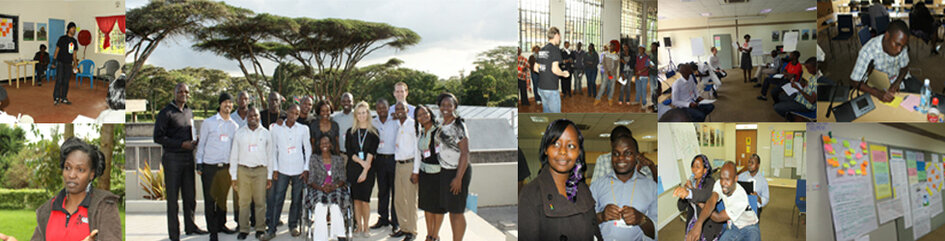
On 15-17th May 2013, YOURS partnered with the Caribbean Development Bank and the Government of Saint Lucia to run the VYBZING Forum on the topic of youth and road safety. The three day forum was a highly interactive workshop and at the end the participants left the forum as road safety advocates and ambassadors ready to create their own proposals for a road safety project in Saint Lucia. Check out our video of the event!

We are very happy to share with you, a video of the VYBZING event that YOURS partnered in delivering last month. It depicts the high energy workshop, which was full of energy and enthusiasm and includes testimonials from our partners at the Caribbean Development Bank, Ms Angela Parris who shares her expectations for the forum at the start of the video and gives her impressions of the finished workshops after the forum. The video also includes some candid testimonials from some of the participants to the forum.

CDB and Youth ‘VYBZING’ Outreach Programme is a platform for youth engagement with emphasis on youth empowerment and participation in the development process.  It facilitates communication among youth and with the Caribbean Development Bank (CDB) on social and economic development issues and challenges that are impacting their lives. This year, CDB alongside Government Ministries of St Lucia; Ministry of Youth Development and Sports, Ministry of Infrastructure, Port Services and Transport, have partnered with YOURS to run the VYBZING Forum on youth and road safety issues, themed ‘ Road Safety: Save a Life, Save a Future’.

The forum was a high energy and completely interactive learning experience and focused on localized road safety knowledge-sharing through a youth orientated training. Every year, VYBZING tackles an issue of importance in relation to young people and youth issues and this year, it focused on addressing the biggest killer of young people globally; road traffic crashes. You can read more about the content of the Forum here.

Supported by the Government of Saint Lucia and initiated by CDB Youth, the forum offered 30 youth leaders from around Saint Lucia the opportunity to be trained in key concepts of road safety through YOURS’ Capacity Development Programme. Honourable Shawn Edward, Minister of Youth Development and Sports, Ministry of Youth Development and Sports also encouraged the youth to take what they learn from the training and share it with their peers. Ms Angela Parris, Manager, Information Services Unit, Caribbean Development Bank and Coordinator of CDB VYBZING opened the forum with a word to the youth that this is the young people’s opportunity to make a change in their country through active participation in VYBZING forum and to use the skills and knowledge that they gain to enact real change on the ground in Saint Lucia.

Youth flashmob for road safety takes place in Athens, Greece

Youth flashmob for road safety takes place in Athens, Greece

As part of the Second UN Global Road Safety Week a flashmob was organized in Syntagma Square, Greece and promoted the message “Stop Road Crashes”. The stunt was organized in Athens by the Hellenic Road Safety Institute (I.O.A.S) – RSI Panos Mylonas with the support of the European Comission and the European Youth Forum for Road Safety.

IOAS Panos Mylonas Announced:

“Big thanks to all volunteers (choreographer Fokas Evagelinos, dance teachers and dancers) for their enthusiastic participation and support as well as all the Authorities who facilitated this impressive event”

The event bought together a group of young people in the Square in Athens, Greece and the undergoing of a live, orchestrated dance to grab attention to the unexecpecting public.

What is a Flashmob?
A flash mob (or flashmob) is a group of people who assemble suddenly in a public place, perform an unusual and seemingly pointless act for a brief time, then quickly disperse, often for the purposes of entertainment, satire, and artistic expression. Flash mobs are organized via telecommunications, social media, or viral emails.

In this case, the flashmob was organized to raise awareness of the United Nations Global Road Safety Week to raise awareness of the cause of pedestrian safety with the immediate audience in the square at the time but also leave a legacy of the event captured in a video.

IOAS thanked Mr. Fokas Evagelinos for the choreography and the teachers and the volunteers – students of his dance school who embraced the effort of RSI, our volunteers and all those who contributed to the achievement of the road safety flash mob. The also thanked George G. Mylonas and Iacovos Argyridis for the event song «Stamata» (stop running / slow down) being the soundtrack of the flash-mob.

The flashmob was a stylish choreographed dance raising awareness of road safety at the end.

The event was coordinated with the support of and with thanks to:

  • the Ministry of Public Order and Citizen Protection, the Road Traffic Police and the Road Traffic Police of Attica,
  • the Municipality of Athens, the Municipal Police and the Administration of Cleaning — Recycling and Maintenance of the Mechanical Equipment,
  • the Attica Perfecture, the Administration of Road Maintenance and Construction Works, • the Athens Urban Transport Organisation,
  • the Ministry of Development, Infrastructure, Transport and Networks,
  • Mr. Kostas Michalos of the SIMA SA for his contribution to the restoration of markings of pedestrian crossing,
  • DIAGEO for its contribution to the program implementation,
  • AXA insurance for the civil liability insurance of dancers and participants,
  • the PUBLIC stores and McDonalds in Filellinon street and the cafe brasserie «Ethnikon» for their hospitality facilitating our volunteers,
  • the Greek Scout Movement, the «Smile of the Child» for their volunteer presence,
  • All the drivers, pedestrians and citizens who were present, supported and participated actively and enthusiastically in the successful realization of the event,
  • The TV channels ANT-1, MEGA, NET, ALPHA, SKAI, STAR, the radio stations Alpha, Skai, Vima FM for the coverage and communication of the message of the event,
  • our associates and representatives of the European Youth Forum and the European
  • Commission for their trust and help to our work in the aim of RSI Panos Mylonas to prevent road crashes.

You can find more information about the organization that coordinated the flashnmob on their Facebook Page here.