WHO calls for stronger focus on adolescent health – RTIs recognized

WHO calls for stronger focus on adolescent health – RTIs recognized

WHO’s “Health for the world’s adolescents” report reveals that depression is the predominant cause of illness and disability for both boys and girls aged 10 to 19 years. The top 3 causes of adolescent deaths globally are road traffic injuries, HIV/AIDS, and suicide. Worldwide, an estimated 1.3 million adolescents died in 2012. This new report recognised road traffic crashes are the leading cause of death for young people the world over and a considerable health burden facing youth.

Drawing on a wealth of published evidence and consultations with 10 to 19-year-olds around the world, the report also brings together, for the first time, all WHO guidance on the full spectrum of health issues affecting adolescents. These include tobacco, alcohol and drug use, HIV, injuries, mental health, nutrition, sexual and reproductive health, and violence. The report recommends key actions to strengthen the ways countries respond to adolescents’ physical and mental health needs.

“We hope this report will focus high-level attention on the health needs of 10 to 19-year-olds and serve as a springboard for accelerated action on adolescent health.” Dr Flavia Bustreo, Assistant Director-General for Family, Women and Children’s Health, WHO

“The world has not paid enough attention to the health of adolescents,” says Dr Flavia Bustreo, Assistant Director-General for Family, Women and Children’s Health, WHO. “We hope this report will focus high-level attention on the health needs of 10 to 19-year-olds and serve as a springboard for accelerated action on adolescent health.”

Road traffic injuries top cause of death
Road traffic injuries are the number 1 cause of adolescent deaths globally, and the number 2 cause of illness and disability. Boys are disproportionately affected, with more than three times the rate of deaths than that of girls. Increasing access to reliable and safe public transport can reduce road traffic injuries among adolescents. Road safety regulations (e.g. alcohol and speed limits), establishing safe pedestrian areas around schools, and graduated licensing schemes where drivers privileges are phased in over time, can all reduce risks. 

Mental health problems take a big toll.
Globally, depression is the number 1 cause of illness and disability in this age group, and suicide ranks number 3 among causes of death. Some studies show that half of all people who develop mental disorders have their first symptoms by the age of 14. If adolescents with mental health problems get the care they need, this can prevent deaths and avoid suffering throughout life.

Pregnancy and childbirth-related deaths have fallen
Deaths due to complications of pregnancy and childbirth among adolescents have dropped significantly since 2000, particularly in regions where maternal mortality rates are highest. WHO’s South-East Asia, Eastern Mediterranean and African Regions have seen estimated declines of 57%, 50% and 37%, respectively. Despite these improvements, maternal mortality still ranks second among causes of death among 15 to 19-year-old girls globally, exceeded only by suicide.

Deaths due to HIV rising

Estimates suggest that the number of HIV-related deaths among adolescents is rising. The increase is predominantly in the African Region, at a time when HIV-related deaths are decreasing in all other population groups. HIV now ranks as the second cause of deaths in adolescents globally.

Some other infectious diseases still major causes of death
Thanks to childhood vaccination, adolescent deaths and disability from measles have fallen markedly—by 90% in the African Region between 2000 and 2012. However, common infectious diseases that have been a focus for action in young children are still killing adolescents. For example, diarrhoea and lower respiratory tract infections now rank second and fourth among causes of death in 10 to 14-year-olds. Combined with meningitis, these conditions account for 18% of all deaths in this age group, little changed from 19% in 2000.

New data on adolescent health behaviours
New data from countries where surveys have been done show that fewer than 1 in every 4 adolescents does enough exercise (WHO recommends at least one hour of moderate to vigorous exercise per day), and in some countries as many as 1 in 3 is obese.

But some trends in adolescent health-related behaviours are improving. For example, rates of cigarette smoking are decreasing among younger adolescents in most high-income countries and in some middle- and low-income countries as well.
Critical period for preventing chronic disease

Adolescence is an important time for laying the foundations of good health in adulthood. Many health-related behaviours and conditions that underlie the major noncommunicable diseases start or are reinforced during this period of life.

“If left unchecked, health problems and behaviours that arise during adolescence—such as tobacco and alcohol use, diet and exercise patterns, overweight and obesity—have a serious impact on the health and development of adolescents today, and potentially devastating effects on their health as adults tomorrow,” says Jane Ferguson, Scientist in WHO’s Department of Maternal, Newborn, Child and Adolescent Health and lead author of the report. “At the same time, we must not let up on efforts to promote and safeguard the sexual and reproductive health of adolescents, including HIV.”

Health policies from 109 countries were reviewed for this report. Among them, 84% give some attention to adolescents. In three-quarters, the focus is on sexual and reproductive health (including HIV/AIDS); approximately one-third address tobacco and alcohol use among adolescents; and one-quarter address mental health. The report highlights the need for more countries to follow the example of countries like India whose new adolescent health strategy addresses a broader spectrum of health issues affecting adolescents, including mental health, nutrition, substance use, violence, and noncommunicable diseases, in addition to sexual and reproductive health.

The report also emphasizes the need for improved data and information about adolescents’ health and the programmes that address it.

Get a snapshot of the report here.

OURS specific mention within this report – see it here.
Roads must be safer. The hazards of the physical environment are at the root of much mortality and disability during the adolescent years. In high income countries, fatalities and injuries among adolescents are mostly related to road crashes and affect both drivers and passengers. In low and middle income countries, it is pedestrians and non-motorized road users who are most affected. The transport sector has a key role to play through road safety initiatives for non-motorized users, including adolescents, and ensuring that vehicle-related legislation and policies are implemented effectively
related to RTA.

The health sector can work with transport authorities on the adoption and enforcement of regulations, as well as supporting awareness campaigns and collecting, analysing and disseminating data on injuries and deaths on the road.13

Issues of road safety have attracted the attention of young people themselves. YOURS (Youth for Road Safety) is a global, youth-led nongovernmental organization that encourages young people worldwide to become advocates and fosters young people’s capacities to make their communities safe.

WCY2014 Sri Lanka- Biggest killer of youth still to be recognized

WCY2014 Sri Lanka- Biggest killer of youth still to be recognized

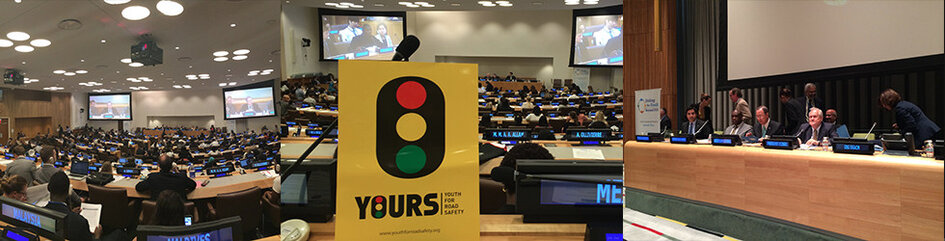
From the 5th – 10th May 2014, the biggest youth conference in the world brought together young people from over 170 countries and took place on the foot of the Indian Ocean in the ‘Wonder of Asia’ Sri Lanka. The event carried the tagline of ‘Mainstreaming Youth in the Post-2015 Development Agenda’ and served as one of the principal methods of hearing young people’s voices in the next development agenda moving beyond Millennium Development Goals.

Last week, I had the honor and huge responsibility of representing the Global Youth Network for Road Safety at the World Conference on Youth 2014, which took place in Colombo, Sri Lanka from 5-10 May. This ambitious event aimed to ‘mainstream’ youth voices in the upcoming development agenda; The Post-2015 Sustainable Development Agenda.

Starting with the clear incredible achievements of the conference, I must commend the organizers on bringing such a diverse group of young people together from every corner of the world. From Angola to Australia, Poland to Palestine and Barbados to Bhutan, it was incredibly exciting to see the sheer assortment of youth passionate about a huge range of burning issues. If one thing is certain, this conference was a testament to knowing that we live in a world where young people are driving real grass roots impact on a range of issues.

The WCY put on an incredibly cultural show capturing the essence of Sri Lanka.

The conference was a good stab at bringing all of these issues together, albeit through a chaotic deliberation process and then gathering these voices by presenting them in a Colombo Declaration on Youth.

My mission stood to bring awareness to the biggest killer of young people in our modern world, road traffic crashes and the unimaginable burden that comes with an unsafe and unsustainable transport system that exists across the world.  I was selected as an International Youth Delegate in this regard.

Our agenda for WCY2014 – briging attention to the biggest killer of young people globally, road traffic crashes.

After a luxurious and (obviously) very expensive opening ceremony consisting of a mile of drummers and dancers welcoming delegates to the grand opening hall President of Sri Lanka Mahinda Rajapaksa, President of the United Nations General Assembly John Ash and UN Secretary General’s Envoy on Youth Ahmad Alhendawi opened the event with inspiring words on making this conference count and calling on the world to ‘listen’ to young people.

The following days consisted of round tables on key foundations and thematic areas of focus where young people discussed their burning desires to change the current status quo challenging injustice, violence, preventable death and inequality, still existing since the Millennium Development Goals.

For me, it was a real shock that many experts and youth didn’t realize that road traffic crashes are the single biggest killer of young people globally.

With that in mind, you would think placing road safety on the agenda would be child’s play. That was not that case. Many people were unaware of the issue, even in the health thematic area. Surely, if we look at the statistic and note which phenomena are killing young people the most, we would see that safe and sustainable transport is urgently required to curb the 1000+ youth killed every day on our roads killing more young people than HIV/AIDs, Malaria and Tuberculosis.  What also was not clear what the input of #GPY2015 and the fact that right to Safe and Sustainable Transport is voted as the number one idea. This platform seemed to exist in isolation.

Round table discussions took place to capture young people’s views on key thematic areas.

Running parallel to the roundtable discussions were the ‘negotiations’ on the Colombo Declaration held with national government representatives and two seemingly self appointed youth negotiators who sat at the negotiating table and fed information from the round table discussions. From here, it became very clear that this was a conference ‘on’ youth and a convoluted process would filter out getting your point across even if you screamed in the round tables. What is further, there was no representation from the big five UN Permanent Members, France, China, Russia, UK or USA meaning that the overall Colombo Declaration process lacked influence from global powers and inevitably, could be sidelined and archived in the global archive of ‘Declarations’, on a shelf somewhere.

In every occasion of the roundtables, road traffic crashes were mentioned and discussed.

In version three of the Colombo Declaration, the term road traffic crashes was included through an addition by our Saint Lucian friends who we worked with during VYBZING 2013 under OP16 of the declaration which focused on the pressing health concerns facing young people. At least in this stage, even though it was pushed through government lobbying, attention to our cause was highlighted.

After extensive lobbying and talks with government representatives, Saint Lucia added road traffic crashes to version 3 of the Colombo Declaration.

However, in the final hours, it was decided that road traffic crashes would fit under ‘non-communicable diseases’ and injuries as a catch-all ‘compromised language’ term.  For me, this made little sense. As the biggest killer of young people, the NUMBER 1 cause of death of youth aged 15-29 is road traffic crashes and to not have a reference to this under health is like saying HIV/AIDs should not have a special mention but be categorized under the wider term of ‘sexually transmitted diseases’.

Non-communicable diseases account for 36 million deaths annually and do not draw attention to the fact that the biggest killer of youth is road crashes. In the same vein, injuries account for thousands of causes.  More needs to be done. Already over 100 countries are working for youth and road safety issues with thousands of young people represented in our network, yet the declaration failed to recognize this.

This illustrates the global struggle to get road safety included on global agendas and that youth themselves still have a way to go to understand and acknowledge the risk that the roads bring to their lives. To me, it was a valuable learning experience in understanding the complexity of the UN system and the great task the global road safety community faces. Nevertheless, we can be proud that have a Decade of Action for Road Safety where 100 countries signed up to make road safety a priority, a UN Resolution on on road safety passed just last month, yet much awareness is still needed. While road crashes exist amidst a huge array of issues affecting young people, for me, the Colombo Declaration was not ambitious or bold enough in stating the needs and recommendations of youth. I don’t deny the enormous task of creating such a document though.

One great outcome of the event was educating young people about road safety and YOURS.

Furthermore, the process of influencing change to the Colombo Declaration was definitely not clear enough leaving many of the delegates in dissolution and confusion. For those with no experience in diplomacy or lobbying, many delegates decided to visit the countryside. Moreover, the fact that governments (namely Saudi Arabia) bombarded the youth ideas with their own agendas stifled the process incredibly especially since key terms such as LGBTIQ, Caste and the definition of marginalized groups such as the plight of the Roma people were removed or not mentioned in the final document; playing it safe. While it remains key that government buy into the declaration and hence sat at the table in the negotiation process, it doesn’t help that most of the world’s governments especially the G5 were not present.

However, overall I must say that as far as youth conferences go, this was by far one of the most visually spectacular events with beach parties, cultural shows, hospitality and the opportunity to meet so many truly inspiring young people from all around the world. I’m sure this will pay dividends to Sri Lankan tourism over the next 15 years.

A spectaluar show for the youth delegates to the conference.

Whether the Colombo Declaration is taken forward or not (whose impact will take years to realize), it is clear that the delegates will return to their homes and continue the real impactful work they do with stronger networks all around the world. I am proud to have been part of such a historic event. On a personal note, I was very happy that hundreds of delegates listened to my passion for road safety and understood the gravity of the situation as well as hearing their important causes too. Youth were definitely given an opportunity to discuss their goals for a Post-2015 Development Agenda but we must always go beyond discussion and ask our leaders, ‘Now what?’. Our work continues.

RTIRN seeking contributions: NGO’s and RTI

RTIRN seeking contributions: NGO’s and RTI

The Road traffic Injuries Research Network (RTIRN) is a partnership of over 1083 individuals and institutions from 113 countries. They are now starting the process of putting together their July-September Newsletter dedicated to “NGO’s and RTI” and they are seeking contributions.

The Road traffic Injuries Research Network (RTIRN) is a partnership of over 1083 (up to December, 2013) individuals and institutions – from 113 countries that collaborate to further research on the impact and causes of Road Traffic Injuries (RTIs) in low- and middle-income countries and to identify appropriate interventions to the problem. YOURS received the following request from the RTIRN secretariat that might be of interest for you:

Dear Partners,

We are now starting the process of putting together our July-September Newsletter dedicated to “NGO’s and RTI” and we are seeking contributions from our partners. In this upcoming issue we are focusing on contributions from our researchers from all regions. Please send your contributions about:

  • Your work in the area of NGO’s and RTI preferably in low and middle income countries.
  • Any new initiatives that are being taken in your region towards NGO’s and RTI
  • Health system response to NGO’s and RTI.


It has only to be a paragraph (300 – 350 words) or so, and the inclusion of pictures would be highly appreciated. The deadline for submitting the contributions is June 10th. 

We shall also appreciate if you send us any recent publications related to road traffic injuries and any future events that you think would be of the interest of the RTIRN community. Be sure your contribution is sent on time.

Hope to hear from you soon!

Best wishes,
RTIRN Secretary
secretariat@rtirn.net

RTIRN VISION: “To reduce the burden of road traffic injuries, particularly in low- and middle-income countries through the promotion, conduct and utilization of research.”

RTIRN GOAL: “To establish networking mechanisms and assist in the creation of partnerships between RTI researchers and institutions globally, to support research and research capacity in low- and middle-income countries.”

YOURS to attend World Conference on Youth – Sri Lanka

YOURS to attend World Conference on Youth – Sri Lanka

Our advocacy pillar has a clear goal; to ensure youth and road safety issues are placed high on international agendas around the world and given the attention it deserves as the number one killer of young people aged 15-29 globally. This is our strategy as a member of the United Nations Road Safety Collaboration and our continued efforts to push for road safety to be recognised as a Post-2015 Development Agenda focus.

World Conference on Youth 2014 will take place from 6th to 10th May, 2014 at Bandaranaike Memorial International Conference Hall in Colombo, Sri Lanka. WCY 2014’s Cross-cutting theme is ‘mainstreaming Youth in the Post-2015 Development Agenda’. YOURS will be attending the event to bring road safety to the agenda and push for it to be included in the youth arm of the SDG.

The Conference has a unique aim of producing a joint outcome document between states and youth, the “Colombo Action Plan”.

Some of the objective of the World Conference Include:

  • To create an inclusive youth participation platform that enables young people to review the progress on the achievement of the Millennium Development Goals
  • To share ideas, experiences and innovative approaches for effectively contributing to the post-2015 development agenda and its implementation
  • To facilitate a process that increases awareness on and implementation of the World Programme for Action on Youth (WPAY)
  • To facilitate effective partnerships with youth, youth-led organisations and youth movements to further strengthen inclusive youth participation in the decision-making processes and implementation of the post-2015 development agenda
  • To contribute to the establishment of a permanent youth engagement mechanism that ensures consistent follow- up with young people and further boosts their participation and partnership in the implementation of the post-2015 development agenda at national, regional and global levels.

Right to Safe and Sustainabe Transport
“We want to see targets, indicators and new partnerships to promote safe and sustainable transport included in the post-2015 ‘Sustainable Development Goals’. When road safety is lacking, development and poverty eradication objectives are undermined. Road traffic injuries are a burden on the poor and vulnerable and are the leading global cause of death among young people aged 15-29. By prioritising road safety we can create safer environments, reduce road traffic deaths and injuries and prevent millions of premature deaths”.

Click to see our campaign leaflet calling for Safe and Sustainable Transport

Proposed Target:
The proposed target by 2030 is to halve the burden of global road traffic crashes from the 2010 baseline in the WHO Global Status Report on Road Safety 2013.

Fatalities target:

  • By 2030, reducing the number of people killed on the world’s roads to less than 620,000 per year from the 2010 baseline of 1.24 million per year.Fatality targets by country income cluster (the Results Framework also includes injury and economic targets by income level). Reduce road traffic fatality rates by 2030 to:

< 4 per 100,000 population in high-income countries (baseline of 8.7 in 2010 )
< 7 per 100,000 population in middle-income countries (baseline of 20.1 in 2010)
< 12 per 100,000 population in low-income countries (baseline of 18.3 in 2010)

Serious Injuries target:

  • By 2030, reduce the number of people seriously injured on the world’s roads to less than 6,200,000 per year from the 2010 baseline of 12.4 million per year.


Economic Impact target:

  • By 2030, reduce the global economic impact of road crashes to less than 1.5% of GDP per year from the current 3% of GDP per year

manpreet pic
Communications Officer and Coordinator of the Global Youth Network for Road Safety, Mr Manpreet Darroch will be attending on behalf of YOURS and representing road safety at the event. Follow him on Twitter for live updates.

VYBZING Forum update: Chousiel Youth & Sports Council project

VYBZING Forum update: Chousiel Youth & Sports Council project

The Caribbean Development Bank (CDB) illustrate their real commitment to youth and road safety. They have awarded a USD10,000 grant to Choiseul Youth and Sports Council, Choiseul, St. Lucia to implement a road safety project in their district. The grant award follows a challenge issued by the Bank in May of this year to participants in its VYBZING Youth Forum in St. Lucia, to prepare and submit proposals for community-based projects for funding consideration, centred around last year’s VYBZING theme, “Road Safety: Save a Life, Save a Future.”

Building on the VYBZING Forum of 2013, we are very happy to see continued impact after the event in the form of a real investment in a youth and road safety project by the Caribbean Development Bank.

Ms. Angela Parris, Manager, Information Services Unit and Coordinator of VYBZING noted, “VYBZING aims to engage and empower young people so that they can become active participants in the development process.  We are very pleased with the response by St. Lucia’s youth to the challenge. The proposals submitted were varied in their focus, and ranged from projects on driving etiquette training for public motor omnibus drivers, to the creation of a Community Academy for Road Safety (CARS). A team of judges from the Bank’s Projects Department and Information Services Unit selected the winning proposal. ”

Photo of Project Team- Chousiel Youth & Sports Council

The winning submission by the Choiseul Youth and Sports Council focuses on the erection of road signage and protective barriers in Sab Wisha and Troumassee, and includes a road safety public awareness campaign.

President of the Council, Mr. Charde Desir explained, “In 2010, 17 persons died in a road accident in Morne Sion, Choiseul, when a bus drove over a cliff and plunged into the sea. This is the single most costly accident in terms of lives lost in St. Lucia’s history. Government has since put safety measures in this area; however, there are other similar areas in Choiseul where improvements in road marking, signage and barriers are desperately needed. CDB’s challenge has provided us with a welcomed opportunity to make improvements in two such areas – Sab Wisha and Troumassee.”

Guard rail project in progress.

The CDB and St. Lucia’s Ministry of Infrastructure, Port Services and Transport will work closely with the Choiseul Youth and Sports Council to refine the proposal for implementation. The project started in November 2013 and is expected to culminate April 2014. The CDB was the executing agency and the St. Lucian Ministry of Infrastructure, Port Services and Transport will monitor and supervise the project.

This project is a direct follow up to the Vybzing Forum lead by YOURS in 2013.

Another great follow up from the VYBZING Forum was the commitment from Mr Erland George, who’s passion for road safety was ignited after the forum where he attended as a participant. His strong application and vision for the Caribbean for road safety makes him a welcome addition to the YOURS CORE Group as Regional Coordinator for the Caribbean Region. We commend the Caribbean Development Bank for their continued investment in youth and road safety issues. 

egpic.jpg
This update was provided by Erland George, VYBZING Forum Participant and Regional Coordinator for the Caribbean Region for YOURS.

Klosters Guide to Bike Safety – Infographic from Australia

Klosters Guide to Bike Safety – Infographic from Australia

Our friends at Klosters, one of Australia’s leading car dealership recently shared their new bike safety initiative to raise awareness about the cause. Their infographic gives a low down on the increase in road traffic crashes and the particular risk of the roads faced by bike riders. Check it out here.

Take one of our magnificent cars, strip it down to the bare chassis and take off two wheels. How confident would you be of driving it on the road?

At Klosters, we’re passionate about driving on four wheels but we understand that nowadays there are plenty of people who love riding on two just as much.

Bicycle sales have beaten car sales 13 years in a row, when comparing statistics from the Cycling Promotion Fund and the Federal Chamber of Automotive Industries. There is no doubt Australians have adopted the bicycle as a common mode of transport over the years but our safety standards have not followed suit.

Transport related deaths involving cyclists have risen 42%, according to the latest report by the Australian Bureau of Statistics. This bucks the trend for any other common mode of transport, which all had decreased number of deaths.

So, who’s at fault? Police records indicate four in five crashes involving a car and a bicycle are the motorists fault, according to a study by the Adelaide University’s Centre for Automotive Safety Research.

If you’ve travelled a bit overseas, you’d know that we haven’t fully adopted the bicycle lanes commonly seen in Europe. Bicycles are recognised as vehicles and have the same rights as motorists in every state and territory of Australia and that means sharing the bitumen safely.

This means a motorist should not overtake a cyclist between two lanes and should definitely not tailgate or rage at a cyclist who is riding slower than the surrounding traffic. Have sympathy for all those brave cyclists attempting a steep hill! 

So, who’s at fault? Police records indicate four in five crashes involving a car and a bicycle are the motorists fault, according to a study by the Adelaide University’s Centre for Automotive Safety Research.

If you’ve travelled a bit overseas, you’d know that we haven’t fully adopted the bicycle lanes commonly seen in Europe. Bicycles are recognised as vehicles and have the same rights as motorists in every state and territory of Australia and that means sharing the bitumen safely.

This means a motorist should not overtake a cyclist between two lanes and should definitely not tailgate or rage at a cyclist who is riding slower than the surrounding traffic. Have sympathy for all those brave cyclists attempting a steep hill!

We are aiming to improve the awareness of sharing the roads with cyclists and since most of the time accidents have been deemed the motorists fault, it is down to us to improve our driving. Below are a few tips on how to protect and be more aware of cyclists on the road.

Read more safety tips and view the full infographic from Klosters here.