Brian’s Column: Hit & runs in Africa – a dangerous trend needs change!

Brian’s Column: Hit & runs in Africa – a dangerous trend needs change!

Brian’s column this month focuses on a serious trend that has says has emerged in Africa; the disturbing act of the ‘hit and run’, a devastating action that destroys lives and illustrates a lack of human emotion in the time of a road traffic crash. As always, Brian’s column is thought provoking and offers us an insight into his perception of the road safety situation in Africa.

The YOURS CORE Group meeting is the first of its kind since the organization began its operations in 2010. After the rigorous process of recruiting and selecting our Coordinators of the Regions (CORE Group) late last year, the group is being brought together for the first time at the World Health Organization headquarters in Geneva, Switzerland to plan for the years ahead in their two year term as coordinators.

The grant provided from the Road Safety Fund with generous support from Johnson & Johnson, will go towards operational costs involved in training our international CORE Group in the work of YOURS and the use of the soon to be published, Youth and Road Safety Action Kit. YOURS is recognized as the international body for youth and road safety issues and this fund demonstrates the important role of young people in saving lives during the Decade of Action for Road Safety 2011-2020.

In addition to the grant of the Road Safety Fund, Michelin (founding member of YOURS) made this meeting possible and we would like to thank them for their continues support of our work.

Supporters


About the Fund

The Fund is gathered by raising financial support from corporations, the international donor community and the general public. The Road Safety Fund is managed under UK charitable law by the FIA Foundation (UK registered charity No. 1088670) and the World Health Organization.

Proceeds raised through the Fund are invested in two ways:

  • Road injury prevention programmes in developing countries – working with a wide range of partners on the frontline of the global road death epidemic to save lives.
  • Enabling global advocacy for the Decade of Action, building awareness and support for the Decade’s injury reduction goals.

YOURS thanks Johnson & Johnson, the Road Safety Fund and Michelin for their support for the CORE Group meeting. In conclusion we would like to thank the World Health Organization for hosting the meeting.

In most countries a hit and run is a criminal offense.

There is however a disturbing tactic that has successfully managed to establish itself firmly in the very bones of a number of road users in Africa. The road users in this case include the pedestrians, the motorcyclists, cyclists and drivers of cars. This tactic is called Hit & Run!

Now, this famous trick comes with no surprise masks, considering that it was used in successfully executing missions to do with sorting out inter tribal wars. Hit-and-run tactics are a game of combat. Its a tactical doctrine where the purpose of the combat involved is not to seize control of territory, but to inflict damage on a target and immediately exit the area to avoid the enemy’s defense and/or retaliation.

This phenomenon seems to be catching on among drivers who run over people (whether that is their intention or not). In the case of an unintentional collision, such kind of drivers often make sure they drive in high gear and run away from the casualty leaving him or her to die on the road. More sad to say and very shockingly, other drivers or cyclists, in some cases, make sure they have killed, rather than merely injured the victim because, according to common argument, ‘it is more costly and time consuming to deal with an injured person than in cases where the victim has died’. So, the casualty literally dies when he /she is not supposed to die considering that the response time (the time taken for the emergency medical services to be activated and respond) is between 1 hour often leading to days wait as well. Imagine that in the Western world?

In Africa, Brian explains that emergency response time can be too late in its medical assistance to a road victim.

The hit and run tactic has some information pothole as regards the law in Africa. When you knock someone who is carelessly crossing the road, you have no case to answer. But if investigations reveal that you were in the wrong, then you are taken to the magistrate’s court which passes a sentence according to the Traffic Control and Road Safety Act. Section 108 of the Traffic Control and Road Safety Act states that a driver who causes an crash commits an offense and can be imprisoned for two years or fined between 600USD and 1600USD in court. The court which convicts a person may award to any person injured by the offense or the dependents of any person whose death arises out of the commission of the offense, compensation not exceeding 50% of any fine paid by the convicted person in respect of the offence. The Acts states that in the case of an crash, arising directly or indirectly from the use of a motor vehicle, it is the driver’s duty to render all practicable assistance to the injured person. The injured person or the dead victim’s family can then file a civil suit for compensation for injury or loss of life. Doesn’t make much sense right? This legal web of complicated rhetoric is the reason why many Africans do not pursue civil legal matters, which sometimes requires hiring a expensive lawyers. To avoid all this bureaucracy and legalities, some African drivers prefer to use the short cut of either killing the casualty completely or rapidly escaping out of the scene.

Economically, the Injury Control Centre Uganda (ICCU) estimates that road accidents cost about 2.7% of the country’s GDP in terms of the cost of loss of lives, injury, vehicle loss and other property lost. These figures are not any different from other African countries, for example in Niger (2.5%), Kenya (2.6%), Nigeria (2.5%). The rapid motorization in Africa has increased the volume of vehicles moving on the continent’s infamous single-lane roads, yet roads have not been improved or widened from those built in the colonial days. Even worse, Africa’s traffic is not segregated. Lorries, trailers, buses, commuter minibuses, saloon cars, motorbikes, bicycles, wheelbarrows and pedestrians use the same narrow roads!

A typical busy African road which needs desparate reform and improvements.

Oh…then there is this guy called human error. Human error accounts for about 80% of road traffic crashes in the Africa, according to the Global Road Safety Authority. This of course includes reckless driving, speeding, inconsiderate use of the road, careless or ignorant pedestrians, incompetent drivers and driving under the influence of alcohol or drugs. The prescribed speed limit for buses and trucks is 80 kilometres per hour and for other vehicles, 100 kilometers per hour. Reckless bus drivers claim more lives on highways because many drive under the influence of alcohol, drugs and fatigue, and sometimes overtake a stretch of cars at black spots, in dangerous corners and on slopes.

Now, personally, I don’t think there is any human error in stopping and offering any form of first aid to a victim of a road crash but a sign of human decency and human compassion!

While Mr. Abdalla Hamdok, Deputy Executive Secretary of the United Nations Economic Commission for Africa (ECA) is right when at the 2nd African Conference on Road Safety in Addis Ethiopia, November 2011 blamed tha lack of road safety in Africa on the poor road networks, inadequate road signage, limited knowledge on road safety, poorly enforced legislation and the poor emergency-preparedness by medical facilities. And that road crashes are the second leading cause of death for the able body age group in African countries and “they exact a heavy toll on African economies.”, the famous spirit of communitarianism in Africa seems to be getting diluted.

In Africa, we were (are) known for caring for others, our neighbours and even strangers. It becomes a real paradox when African drivers run over some one and they leave them to die…where is our #humanity and #Communitarian values? Shall the real African (with those values) please stand up and be counted?
The Road Safety Fund supports YOURS CORE Group Meeting

The Road Safety Fund supports YOURS CORE Group Meeting

The Road Safety Fund, the official Fund for the Decade of Action for Road Safety, have given its support for the YOURS CORE Group Meeting taking place next week in Geneva. The grant is made possible through the generous support of Johnson & Johnson to the Fund. Its support is an illustration of the importance placed on youth and road safety during the Decade of Action.

The YOURS CORE Group meeting is the first of its kind since the organization began its operations in 2010. After the rigorous process of recruiting and selecting our Coordinators of the Regions (CORE Group) late last year, the group is being brought together for the first time at the World Health Organization headquarters in Geneva, Switzerland to plan for the years ahead in their two year term as coordinators. 

The grant provided from the Road Safety Fund with generous support from Johnson & Johnson, will go towards operational costs involved in training our international CORE Group in the work of YOURS and the use of the soon to be published, Youth and Road Safety Action Kit. YOURS is recognized as the international body for youth and road safety issues and this fund demonstrates the important role of young people in saving lives during the Decade of Action for Road Safety 2011-2020.

In addition to the grant of the Road Safety Fund, Michelin (founding member of YOURS) made this meeting possible and we would like to thank them for their continues support of our work.

Supporters


About the Fund

The Fund is gathered by raising financial support from corporations, the international donor community and the general public. The Road Safety Fund is managed under UK charitable law by the FIA Foundation (UK registered charity No. 1088670) and the World Health Organization.

Proceeds raised through the Fund are invested in two ways:

  • Road injury prevention programmes in developing countries – working with a wide range of partners on the frontline of the global road death epidemic to save lives.
  • Enabling global advocacy for the Decade of Action, building awareness and support for the Decade’s injury reduction goals.

YOURS thanks Johnson & Johnson, the Road Safety Fund and Michelin for their support for the CORE Group meeting. In conclusion we would like to thank the World Health Organization for hosting the meeting.

Surreal Poster Series wins prestigious Award!

Surreal Poster Series wins prestigious Award!

The YOURS Surreal Poster Series that was released in May last year to coincide with the Decade of Action for Road Safety 2011-2020 have won an award at the world’s most presitigous global awards for new product design and graphics; Good Design Awards by The Chicago Athenaeum, United States.


logo gd
The Good Design Awards is the world’s most prestigious standard for design excellence.

Over one thousand of the world’s leading manufacturers, corporations and design firms from over 38 nations garner the worlds most important awards for design excellence; The Good Design Awards lead by The Chicago Athenaeum: Museum of Architecture and Design.

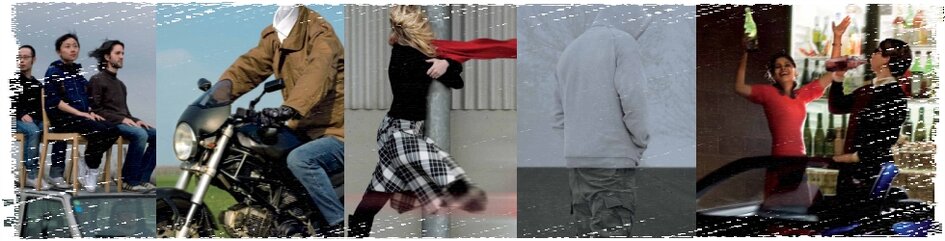
YOURS is incredibly honoured with the award for outstanding Graphics Design for the Surreal Poster Series, which were released to coincide with the Decade of Action for Road Safety. The posters feature five key road safety messages; wearing a seatbelt, wearing a helmet on two wheels, being visible on the road and an anti drink driving and anti speeding message. These are five simple safety precautions that could potentially save millions of lives worldwide.

Creation of the Posters
The Surreal Poster Series was designed and created by Fabrica– a powerhouse of international design solutions who have designed for the United Nations, World Health Organization and a range of internationally recognized brands. The design of the posters was supported by the World Health Organization Violence and Injury Prevention and Disability Department (VIP) and YOURS thanks WHO for its assistance in designing these posters.

Fabrica is no stranger to YOURS, the very conception of our logo and branding were the design of this world leading design company. With this award for the Surreal Poster Series as recognized by the Good Design Awards, it is testament to the impact of these posters; the high potential of awareness raising of this simple tool that was the motivation behind publishing  such designs during the Decade of Action.

“GOOD DESIGN is referred as the ‘Oscars’ of industrial design, states Christian K. Narkiewicz-Laine, Museum President, The Chicago Athenaeum: Museum of Architecture and Design and chief curator of the GOOD DESIGN program.

Why the posters?
One of the issues in preventing road traffic crashes is the lack of awareness in the world about the global road safety crisis. Road traffic crashes are the biggest killer of young people. Therefore YOURS wanted to provide a range of tools to raise awareness about road safety and equipping young people with a fresh new poster series to use absolutely free! Of course it is free for others to use as well.

Seatbelts – Saving thousands of lives around the world everyday…

Seatbelts – Saving thousands of lives around the world everyday…

The Center for Disease Control and Prevention (CDC) report that since 1975 to 2008, figures have shown that the use of seatbelts in the United States alone has saved an estimated 255,000 lives! Although primary seatbelt law does not exist in every state in the US, it is clear, from the evidence presented by CDC that seatbelt laws and the use of seatbelts in vehicles save lives.

A seat belt, sometimes called a safety belt, is a safety harness designed to secure the occupant of a vehicle against harmful movement that may result from a collision or a sudden stop. A seat belt reduces the likelihood and severity of injury in a traffic collision by stopping the vehicle occupant from hitting hard against interior elements of the vehicle or other passengers (the so-called second impact), by keeping occupants positioned correctly for maximum benefit from the airbag, if the vehicle is so equipped, and by preventing occupants being ejected from the vehicle. The seat belt is designed to stretch at a controlled rate to absorb crash energy and reduce the severity of the occupant’s deceleration.

CDC states:

Seat belts protect people from needless death and injury. But whether it is because they are in a hurry, distracted, or they simply forget, many people don’t wear their seat belts, and thousands die as a result. CDC recommends effective, well-enforced seat belt laws to ensure that every person in every seat buckles up on every trip.

According to the National Highway Traffic Safety Administration (NHTSA), more than 15,000 lives are saved each year in the United States because drivers and their passengers were wearing seat belts when they were in a road traffic crash.

Seat Belt Safety: 5-Way Protection
“Seat belts prevent occupants of the vehicle from serious injury in five ways,” says Angela Osterhuber, director of the Pennsylvania Traffic Injury Prevention Project in Media, Pa. A seat belt:

  • Keeps the occupants of the vehicle inside. “It’s clearly a myth that people are better off being thrown clear from the crash,” Osterhuber says. “People thrown from a vehicle are four times more likely to be killed than those who remain inside.”
  • Restrains the strongest parts of the body. “Restraints are designed to contact your body at its strongest parts. For an older child and adult, these parts are the hips and shoulders, which is where the seat belt should be strapped,” Osterhuber says.
  • Spreads out any force from the collision. “Lap-and-shoulder belts spread the force of the crash over a wide area of the body. By putting less stress on any one area, they can help you avoid serious injury,” Osterhuber says. A shoulder strap also helps keep your head and upper body away from the dashboard, steering wheel, and other hard interior parts of the automobile should you stop suddenly or be hit by another vehicle.
  • Helps the body to slow down. “What is it that causes injury? A quick change in speed,” Osterhuber says. “Seat belts help extend the time it takes for you to slow down in a crash.”
  • Protects your brain and spinal cord. A seat belt is designed to protect these two critical areas. “Head injuries may be hard to see immediately, but they can be deadly,” Osterhuber says. Likewise, spinal cord injuries can have serious consequences.

CDC report that in the United States alone, in their study of seatbelt use from 1975-2008 an estimated 255,000 lives have been 

Seatbelts have saved an estimated over 250,000 lives since 1975

The use of seat-belts and child restraints is one of the most important actions that can be taken to prevent injury in a motor vehicle crash. While seat-belts and child restraints do not prevent crashes from taking place, they play a major role in reducing the severity of injury to vehicle occupants involved in a collision. An occupant’s chance of survival increases dramatically when appropriately restrained.

Facts about seatbelts

  • 75 % of passengers thrown from a car die. Unbelted occupants are 30 times more likely to be thrown from a car
  • In a crash at 30mph, if unrestrained, you will be thrown forward with a force up to 60 times your own bodyweight
  • The latest surveys show 93 per cent of adult front seat passengers and 94 per cent of drivers wear seatbelts. For back seat passengers, 93% of children (under 14) and 70% of adults are secured
  • All the safety features you paid for in your car were tested with the assumption you would be wearing a belt. Without a seatbelt, those safety features are not designed to work
  • If you are not wearing a seatbelt and you have a crash, there may be implications for how much your insurer might pay in respect of injuries
  • Once one person puts their seatbelt on, everyone else in the car is more likely to do so.
USA Today: Deaths rise among youngest drivers – a worrying trend

USA Today: Deaths rise among youngest drivers – a worrying trend

With global focuses shifting towards the growing crisis of road deaths of young people, USA Today; the American national media outlet features a headline on the issue. A report from the USA’s National Road Safety Group highlights a growing problem: an increase in fatalities of 16 and 17 year old drivers after a declining trend in the past decade.

This is a particularly worrying trend as road traffic crashes in most Western developed countries have stabilized or declined while low and middle-income countries have seen a dramatic rise in road crashes; especially amongst young people. While statistics illustrate that in the West, road traffic crashes have decreased, road crashes are still the biggest killer of young people aged 11-30 worldwide.

USA Today Reports:

The Governors Highway Safety Association (GHSA) examined deaths of 16- and 17-year-old drivers through the first six months of 2011 and found an 11% increase over the same period in 2010. Deaths of 16-year-olds rose 16% and 17-year-olds 7%, for an overall jump of 11%. Twenty-three states saw increases, 19 had decreases, and there was no change in eight states and the District of Columbia.

The study by the GHSA, which represents states on highway safety issues, covers only the first half of last year. Traffic deaths usually rise during the second half of the year, which includes summer and vacation driving. If data for the second half of 2011 continue the trend, it would be the first time in eight years that deaths have risen for this age group of drivers.

The rise is believed to be caused mainly by two things, says Allan Williams, a highway safety consultant who conducted the study:

  1. The improving economy means more teens on the roads. The recession probably helped reduced travel among teen drivers in 2008 and 2009; those drivers are returning to the highways. 
  2. The impact of phased-in driving privileges for teens — graduated driver licensing (GDL) programs — is leveling off. These initiatives, implemented or strengthened in the mid-1990s, are in place in every state. “Once you get that initial impact, you’re not going to get another 20% drop the next year, unless you can improve compliance,” Williams says.

The states that saw increases in deaths among young drivers “don’t stand out as weak” GDL states, Williams says. He says there is room for further strengthening of state GDL laws and for more consistent enforcement of some provisions, such as restrictions on teen passengers and nighttime driving.

Peter Kissinger, president and CEO of the AAA Foundation for Traffic Safety, cautions that “if you’re looking at six months’ worth of data, you’ve got to be careful about trying to draw global conclusions.” GDL programs are proven effective, and parental involvement is crucial, he says.

“Regardless of state laws, parents can just institute and enforce restrictions consistent with the best GDLs,” Kissinger says. “The best GDL programs are only as good as what is enforced. And parents are in a much better position than local police to enforce those provisions.”

Floor Lieshout, Director at YOURS –
 Youth for Road Safety, in response to this article stated, ´This is a disturbing sign in the US and needs immediate action. More than half of the states saw increases the first half year and with the forecast that during the second half of the year traffic deaths usually rise, it does not look good at all. We urge all stakeholders to take action and not wait till this trend continues’.

Additionally, the promotion of federal-laws such as those of Secretary of Transportation, Mr Ray LaHood; the ban of texting while driving could help to save thousands of young lives. When Mr LaHood met a YOURS delegation to the First Ministerial Conference on Road Safety in Moscow, Russia in late 2009,  his immediate response to the Moscow Youth Declaration for Road Safety was to encourage young people to pledge to never text-and drive. YOURS believes that laws, with multi-sectoral support; enforcement, education, infrastructure and so forth can save thousands of young lives.

Youth delegates with US Transportation Secretary Mr Ray LaHood

Where are they now? Pt.5 The YOURS CORE Group journey from WYA

Where are they now? Pt.5 The YOURS CORE Group journey from WYA

After almost half a decade since the United Nations World Youth Assembly for Road Safety, the youth movement for road safety has grown and is stronger than ever. In our last feature, we saw that the YOURS Staff team were all delegates to the WYA and have since dedicated their efforts to the youth and road safety cause. In part 5 of our WYA special feature, we take a look at the members of the CORE Group who attended the assembly.

After almost half a decade since the United Nations World Youth Assembly for Road Safety, the youth movement for road safety has grown and is stronger than ever. In our last feature, we saw that the YOURS Staff team were all delegates to the WYA and have since dedicated their efforts to the youth and road safety cause. In part 5 of our WYA special feature, we take a look at the members of the CORE Group who attended the assembly.

Over 400 young people came together on the foot of the Swiss Alps in April 2007 to discuss global road safety in a changing world. With over 100 countries represented at the United Nations HQ in Geneva, Switzerland, the youth empowering United Nations World Youth Assembly for Road Safety Changed many young lives. Youth delegates left the assembly as United Nations World Youth Ambassadors for Road Safety, we look at where they are now…

As a special feature celebrating 5 years since the first United Nations World Youth Assembly for Road Safety that took place in April 2007 at the United Nations HQ in Geneva, Switzerland, YOURS is putting special spotlights on the the United Nations World Youth Ambassadors for Road Safety! You can read all about the feature and the World Youth Assembly here.

More than 400 young people left the assembly as youth ambassadors having undergone pledges to make young people in their nations safer on the roads through campaigning and road safety work. YOURS will be featuring two ambassadors at a time and today our feature is on the CORE Group. While not all of our CORE Group representatives served as delegates to the World Youth Assembly, many of them did and after five years, their passion for road safety still burns strong as they join the YOURS team to maximize our road safety impact globally.

Stay tuned to see what other United Nations World Youth Ambassadors for Road Safety are up to!